Kirjojen hintavertailu. Mukana 11 627 064 kirjaa ja 12 kauppaa.

Kirjahaku

Etsi kirjoja tekijän nimen, kirjan nimen tai ISBN:n perusteella.

1000 tulosta hakusanalla David C. Hester

Upon These Steps: Brothers in NC 23rd Regiment (Second Edition)

Upon These Steps: Brothers in NC 23rd Regiment (Second Edition)

David C. Reavis

Createspace Independent Publishing Platform
2017
nidottu
Two brothers are faced with whether or not to join the War for Southern Independence. One decides to voluntarily enlist, while the other joins only after being drafted. Left behind on the family farm are their parents and siblings. Relive what a Southern family had to endure during the war years. All major events seem to originate on the home's unique circular rock steps. Soldiers leave for and return from war, slaves are freed, Sherman's troops pay a visit, and suitors come a calling.The epic story of this Southern family is a unique blending of historical fiction with a storyline that reflects the resilience of the human spirit. The book is the result of over 40 years of genealogy research of the author. This second edition adds another 50 pages of information, incorporating facts learned since the first edition was written in 2012, as well as many more photos and maps. An Afterword section is added to tell "What happened to them."The first edition received the "2013 Clark Cox Award for Historical Fiction," given by the NC Society of Historians. The second edition received the "2018 John Esten Cooke for Fiction Award," given by The Military Order of the Stars and Bars.
Profile of the Last Puritan

Profile of the Last Puritan

David C. Brand

Oxford University Press Inc
1991
nidottu
A work of theology and American church history, this volume examines the life and theology of the New England pastor-theologian Jonathan Edwards. Focusing on the glory of God as the dominant theme of Edwards' thought, the author examines Edward's use of Neoplatonist terminology and the language of the senses, and documents the Calvinistic and conventional underpinnings of Edwards' theology. In the process, critical issues such as the relationship between ethics and aesthetics, disinterested benevolence and self-love, are brought to light. Students will find here an overview of Puritan New England, from its spiritual precoception in Calvin's Geneva to its post-revolutionary demise, including the emergence of Unitarianism and the Second Great Awakening.
The Return of Philo T. McGiffin

The Return of Philo T. McGiffin

David C Poyer

Naval Institute Press
1997
pokkari
In this comic and irreverent novel, author and naval officer David Poyer--famous for such bestsellers as The Med, The Gulf, The Circle, and The Passage--brilliantly re-creates the hothouse world of the U.S. Naval Academy. When the book was first published in 1983 Roger Staubach, class of 1965, wrote, "Anyone who has attended a service academy will recognize Philo T. McGiffin and his classmates. However, anyone who has ever had a dream or a goal will feel a special kinship with Philo. This is a book worth reading."Poyer's Philo, burdened with the name of Annapolis's legendary prankster of the class of 1882, attracts attention from the day he reports for Plebe Summer, and the upperclassmen soon make his life a living hell. Stoop-shouldered and meek, he seems an unlikely candidate to carry on the tradition of the original Philo, whose outrageous escapades had served as a symbol of subversive individualism to generations of midshipmen. At first Philo nearly buckles under from the strain, but gradually "The Mouse" learns to roar and ultimately to triumph in the grand style of his predecessor. Funny, touching, and enormously realistic, this madcap novel will bring back to everyone what it was like to be 17--and in deep trouble.
Assessing the Human-animal Bond

Assessing the Human-animal Bond

David C. Anderson

Purdue University Press
2006
nidottu
This book gathers, in one place, those measures presently used to study the human-companion animal bond. The measures chosen for inclusion are the most heavily used by researchers, as well as measures that appear to be innovative or relate to the different aspects of the human-companion animal relationship. The measures cover the human-animal bond principally by attachment, but also by fear, abuse, or neglect.
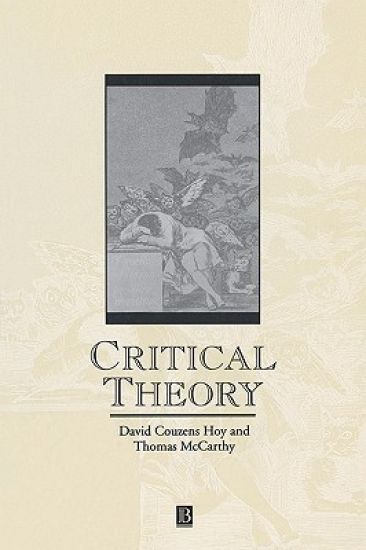
Critical Theory

Critical Theory

David C. Hoy; Thomas McCarthy

Blackwell Publishers
1994
nidottu
Philosophical controversies within contemporary critical theory arise largely from questions about the nature, scope and limits of human reason. As the linguistic turn in twentieth-century philosophy has increasingly given way to a sociocritical turn, traditional ideas of 'pure' reason have been left further and further behind. There is however considerable disagreement about what that shift entails for enlightenment ideals of self-consciousness, self-determination, and self-realization. In this book two prominent philosophers bring these disagreements into focus around a set of familiar philosophical issues concerning reason and the rational subject, truth and representation, knowledge and objectivity, identity and difference, relativism and universalism, the right and the good. But these "perennial problems" are resituated within the context of critical theory as it has developed from the work of the Frankfurt School in the 1930's and 1940's to the multiplicity of contemporary approaches: genealogical, hermeneutic, neopragmatist, deconstructive, and reconstructive.
Science as a Cultural Expression

Science as a Cultural Expression

David C Peaslee

Nova Science Publishers Inc
1998
sidottu
The essays presented here originated as contributions, generally lectures, to a 'Science Precept for Alumni Non-scientists' sponsored by the Princeton Class of 1943 on June 13-17, 1994. The aim of the precept was to expound the unity of science with general culture in our times a relation of reciprocal support as never before. Accordingly, the discussion sessions were organised into five groups: (1) initial learning processes underlying all the aspects of human culture; (2) trial and error as a source of human knowledge; (3) relation of science to the surrounding society; (4) cultural aspects external to science; and (5) distinctive features of science. In the following the first five articles are taken one each from the categories in the sequence listed above. the last article is an attempt to draw explicit parallels between science and humanities.
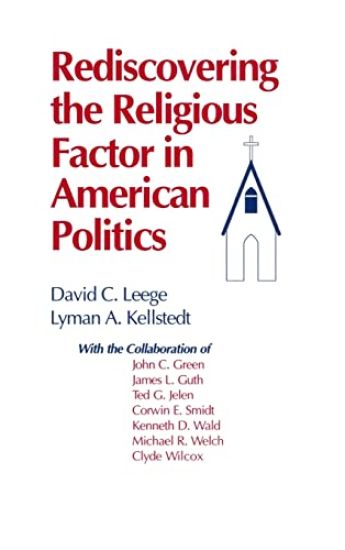
Rediscovering the Religious Factor in American Politics

Rediscovering the Religious Factor in American Politics

David C. Leege; Lyman A. Kellstedt

M.E. Sharpe
1993
sidottu
This text addresses whether and how religion and religious institutions affect American politics. For some time, analysts have argued that the conflicts of the New Deal era rendered cultural differences trivial and placed economic interests at the top of the political agenda. The authors and their collaborators - John C. Green, James L. Guth, Ted G. Jelen, Corwin E. Smidt, Kenneth D. Wald, Michael R. Welch, and Clyde Wilcox - disagree. They find that religious worldviews are still insinuated in American political institutions, and religious institutions still are points of reference. The book profits from the new religiosity measures employed in the 1990 National Election Studies. Part 1 discusses the study of religion in the context of politics. Part II examines religion as a source of group orientation. Part III takes up religious practices and their political ramifications. Part IV does the same for doctrinal and worldview considerations. Part V explores the sources of religious socialisation. In conclusion, Part VI reviews the research on religion and political behaviour and looks ahead to where work should proceed.
Rediscovering the Religious Factor in American Politics

Rediscovering the Religious Factor in American Politics

David C. Leege; Lyman A. Kellstedt

M.E. Sharpe
1993
nidottu
This text addresses whether and how religion and religious institutions affect American politics. For some time, analysts have argued that the conflicts of the New Deal era rendered cultural differences trivial and placed economic interests at the top of the political agenda. The authors and their collaborators - John C. Green, James L. Guth, Ted G. Jelen, Corwin E. Smidt, Kenneth D. Wald, Michael R. Welch, and Clyde Wilcox - disagree. They find that religious worldviews are still insinuated in American political institutions, and religious institutions still are points of reference. The book profits from the new religiosity measures employed in the 1990 National Election Studies. Part 1 discusses the study of religion in the context of politics. Part II examines religion as a source of group orientation. Part III takes up religious practices and their political ramifications. Part IV does the same for doctrinal and worldview considerations. Part V explores the sources of religious socialisation. In conclusion, Part VI reviews the research on religion and political behaviour and looks ahead to where work should proceed.
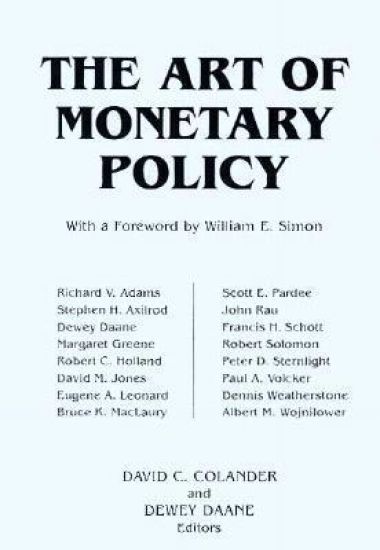
The Art of Monetary Policy

The Art of Monetary Policy

David C. Colander; Dewey Daane

M.E. Sharpe
1994
sidottu
Offering an introduction to the Japanese political system, this book covers the end of the Koizumi era, the brief and troubled premiership of Abe, and the selection of Fukuda as prime minister. It includes material on "bubble" and "post-bubble" economic developments, as well as coverage of health care policy.
The Art of Monetary Policy

The Art of Monetary Policy

David C. Colander; Dewey Daane

M.E. Sharpe
1994
nidottu
Offering an introduction to the Japanese political system, this book covers the end of the Koizumi era, the brief and troubled premiership of Abe, and the selection of Fukuda as prime minister. It includes material on "bubble" and "post-bubble" economic developments, as well as coverage of health care policy.
Saying No to Say Yes

Saying No to Say Yes

David C. Olsen; Nancy G. Devor

Alban Institute, Inc
2015
nidottu
This book explores the difficulties clergy face when they attempt to say no by setting effective boundaries in order to say yes to the life-giving call of ministry. It illustrates the benefits of good boundaries, even as it traces the legacy of denominational boundary trainings in the wake of the public clergy sexual misconduct crisis. Devor and Olsen supplement anecdotes from their experience leading boundary trainings with an examination of clergy/congregation dynamics through the lenses of both self-psychology and family systems theory elucidating how some obstacles to effective boundary setting are caused by innate personality tendencies that are exacerbated by a stressful church environment. A perfect storm occurs when clergy vulnerabilities and systemic congregational anxiety interact, leading to burn-out and boundary problems which hinder pastoral excellence. Readers will find both practice questions to assist them in a deeper assessment of personal and systemic obstacles as well as strategies for setting boundaries, creating the space needed to pursue excellence in ministry."
Saying No to Say Yes

Saying No to Say Yes

David C. Olsen; Nancy G. Devor

Alban Institute, Inc
2015
sidottu
This book explores the difficulties clergy face when they attempt to say no by setting effective boundaries in order to say yes to the life-giving call of ministry. It illustrates the benefits of good boundaries, even as it traces the legacy of denominational boundary trainings in the wake of the public clergy sexual misconduct crisis. Devor and Olsen supplement anecdotes from their experience leading boundary trainings with an examination of clergy/congregation dynamics through the lenses of both self-psychology and family systems theory elucidating how some obstacles to effective boundary setting are caused by innate personality tendencies that are exacerbated by a stressful church environment. A perfect storm occurs when clergy vulnerabilities and systemic congregational anxiety interact, leading to burn-out and boundary problems which hinder pastoral excellence. Readers will find both practice questions to assist them in a deeper assessment of personal and systemic obstacles as well as strategies for setting boundaries, creating the space needed to pursue excellence in ministry."