Kirjojen hintavertailu. Mukana 12 459 402 kirjaa ja 12 kauppaa.

Kirjahaku

Etsi kirjoja tekijän nimen, kirjan nimen tai ISBN:n perusteella.

1000 tulosta hakusanalla David H. Chestnut

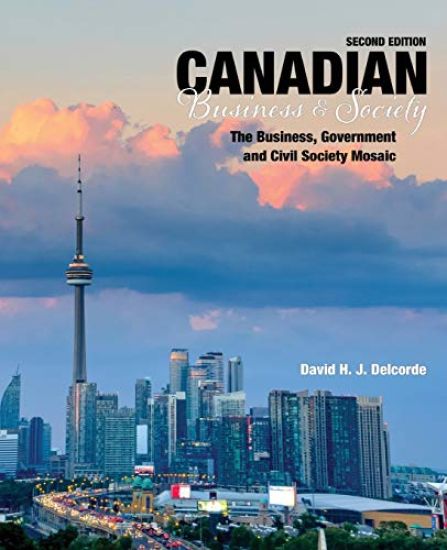
Canadian Business and Society - The Business, Government and Civil Society Mosaic
With the growing complexity of decision-making and the interdependence of business, political, and social issues, effective management requires not only an understanding of processes inside a company, but also of how business, government, and civil society interact. Many treatments of this subject are overly generalised, or conversely take a narrowly focused approach. Some authors focus on selected stakeholders, others on particular tracts of interest such as, for example, ethics. Many include a seemingly endless treatment of a barrage of government acts and legislation in their attempt to contextualise "business" in "society." While all of these are meritorious approaches to exploring "business and society" there is a need to present a more fulsome but yet focused view that is more closely representative of the organisations and their interactions occurring in the macro-environment in which future business managers will be required to operate in creating a sustainable competitive advantage for their organisations.Canadian Business and Society - The Business, Government and Civil Society Mosaic is organised on the following logic: that to understand business and society in Canada it is necessary first to partition the Canadian domestic macro- environment into recognisable segments, and then to develop an understanding of what is included in each segment, key issues peculiar to the segment, how each segment influences and is influenced by the other segments, and emerging issues that influence all three segments.Such an approach more accurately portrays the complexity of the macro-environment. At the same time, it provides the opportunity to control and focus the treatment of this very complex terrain. The ultimate goal is for the future manager to develop an understanding and appreciation of each segment in the Canadian business macro-environment – its unique characteristics, challenges, and interactions – the knowledge of which is essential for success in today's businesses.
Management

Management

David H.J. Delcorde; Cindi Delcorde

Kendall/Hunt Publishing Co ,U.S.
2021
nidottu
For years business schools have produced graduates competent in management theory and its several areas of specialization. Understanding business, government, and civil society and how these segments operate and interact in the context of business and management are also covered in business curricula. Emphasis is placed on understanding the critical areas of ethics, sustainability, cultural differences, and globalization. As dynamic as the management environment might have been over the years, the COVID-19 pandemic has redefined any number of paradigms, and many of these changes are sufficiently long term as to be perceived as 'permanent'. There is a need for students and instructors to consider, reflect, analyze, and debate what this pandemic has done to management. This is the purpose of Management: The COVID Effect. Whether instructing in a traditional sense or, more likely in an on-line paradigm, this book provides the basis from which teams can debate the new issues that are confronting business - the generator of our economy - issues for which there are growing multiple stakeholder interests and no straightforward answers.This companion reader is intended for use in concert with any management textbook.Each case study or scenario could be used as supportive material in concert with a traditional text, or individually as discussion group material, group assignments, term assignments, or examination material.Part I considers how the COVID-19 global pandemic changes each of the basic functions of management - planning, organizing, leading, and controlling; and four areas of specialization including: forms of business ownership, accounting and finance, human resources and organizational behavior, and marketing.Each case study focuses on one of the above concepts with the view to provoke thought and discussion around how the COVID-19 pandemic has changed how managers must adjust to their new environments and new challenges. The material is intended to cause students to think about what has been changed by COVID-19, and what are the implications of that change. Part II explores the broader aspects of management concepts that transverse the three sectors - public, private, and civil society: including the interaction of business and government, stakeholders, globalization, and ethics and sustainability.These case studies are more complex in that the subject matter is broader and touches on topics that span the implication of technology, the role of government, collaboration and lobbying practices, privacy, the public interest, and profit generation versus the public good. Each of these case studies is intended to provoke debate and discussion regarding what is critical to the survival of businesses and other organizations as they navigate through this pandemic.Part III is a selection of shorter case studies that provide 'scenarios' representative of what is happening in our world as this pandemic plays out. Each scenario while brief covers multiple themes. These cases are designed specifically to generate discussion on such topics as:Business and personal ethicsHealth and SafetyRegulation and enforcement, and responsibility and accountabilityBusiness or organizational modeling and structural changeDownsizing or 'rightsizing'Recruitment and hiring practicesPrivacy and technologyPerformance managementRisk management and strategic planningMarket shift & supply chainOrganization cultureCustomer serviceLabor shortages & service deliveryVolunteerism, and social mediaLandlord/tenancy relationsEmployer/employee relations.
Joy in Luke-Acts

Joy in Luke-Acts

David H Wenkel

Paternoster Press
2015
nidottu
This monograph explores the joy theme in Luke- Acts as it relates to the dynamics of rhetoric, narrative and emotion. The Gospel of Luke has been called the "gospel of joy", and the joy theme has also been recognised in Acts. This theme, though, has received relatively little attention in NT scholarship. Joy in Luke-Acts examines the joy theme from a socio-rhetorical vantage point, showing that the joy theme empowers the Lukan rhetoric of reversal. The theme is a primary method in which the narrator seeks to persuade the reader to enter into the values and beliefs that characterise the 'upside-down' world in which YHWH has visited his people in Jesus.
The Man Who Spoke to Owls

The Man Who Spoke to Owls

David H. W. Grubb

Shearsman Books
2009
pokkari
This new collection brings together three central elements in the poetry and prose of David Grubb. There is the world of surreal identities, of wonders, disturbances, angels, fire sermons and celebrations where animals and people speak with both words and silences. There is the unfinished business of growing up in a strict religious household and seeking meanings beyond rituals and texts. In the third section of the book Albania, Bosnia and other locations create a world where nothing is certain, the past provides constant challenges and distant voices call. The darkness is broken by stars. Throughout the book there are ordinary people facing the extraordinary and variations of identity; James Agee and Walker Evans reporting the images of poverty, Christopher Smart hauling his hardships, Emily Dickinson in a radiance, people from Porlock, Gogol and the horse dream doctor and the pig man, poets and ghosts expressed with a distinct compassion and sensitivity and a wide range of styles. The Man Who Spoke To Owls provides a rich and radiant stream of propositions and identities, a way of reaching beyond.
Notes Relating to an Idea of Blue

Notes Relating to an Idea of Blue

David H. W. Grubb

Shearsman Books
2011
pokkari
David Grubb has published novels, poetry and short stories. Much of his writing has been founded on an understanding of rural life and values and more recently by his experience of extreme poverty and human conflict as an aid worker in Rwanda, Bosnia, Albania and Kosovo. His novella, Fire Child, is published by Leaf. His first collection of short stories, Hullabaloo and Secret Pianos, is appearing in 2011. In this new collection collisions, wonders, ballyhoo and sudden light signal the way we walk a tightrope between the real and the imagined. Our human world encompasses clowns, angels, the dead, ghosts and saints, parrots and horses, the upsidedown and secret dancing, kazoo music and heart songs.
Classical Potential Theory

Classical Potential Theory

David H. Armitage; Stephen J. Gardiner

Springer London Ltd
2000
sidottu
From its origins in Newtonian physics, potential theory has developed into a major field of mathematical research. This book provides a comprehensive treatment of classical potential theory: it covers harmonic and subharmonic functions, maximum principles, polynomial expansions, Green functions, potentials and capacity, the Dirichlet problem and boundary integral representations. The first six chapters deal concretely with the basic theory, and include exercises. The final three chapters are more advanced and treat topological ideas specifically created for potential theory, such as the fine topology, the Martin boundary and minimal thinness.The presentation is largely self-contained and is accessible to graduate students, the only prerequisites being a reasonable grounding in analysis and several variables calculus, and a first course in measure theory. The book will prove an essential reference to all those with an interest in potential theory and its applications.
Gainsborough’s Family Album

Gainsborough’s Family Album

David H. Solkin

National Portrait Gallery Publications
2018
sidottu
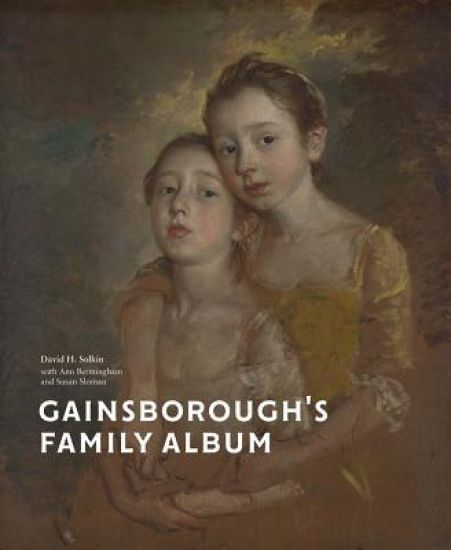
Despite this famous protestation in a letter to his friend William Jackson, Gainsborough was clearly prepared to make an exception when it came to making portraits of his own family and himself. This book, and the major exhibition it accompanies, features a dozen portraits of his daughters Mary and Margaret, the same number of himself and his wife Margaret (though, perhaps tellingly, only one of the couple together), as well as works depicting four of his five siblings, his handsome nephew Gainsborough Dupont (who became his studio assistant) , an aunt and uncle, several in - laws and – last, but not least – his beloved dogs, Tristram and Fox. Spanning more than four decades, Gainsborough’s family portraits chart the period from the mid - 1740s, when he plied his trade in his native Suffolk , through his time in Bath ( 1758 – 74 ), when he established hi mself with a rich and fashionable clientele , to his most successful latter years at his luxuriously appointed studio in London’s We st End. Alongside this story of a provincial 18th - century artist’s rise to fame and fortune runs a more private narrative, ab out the role of portraiture in the promotion of family values, at a time when these were assuming a recogni s ably modern form. In the first of three introductory essays, David H. Solkin writes on Gainsborough himself, placing his family portraits in the context of earlier practice – including that of the Flemish master Peter Paul Rubens and British portraitists from Mary Beale to Joseph Highmore . Ann Bermingham explores Gainsborough’s portraits of his daughters, with particular reference to two finished double portraits painted seven years apart and the tragic story arising from them. Susan Sloman discusses Margaret’s role as her husband’s business manager, its effect on the family dynamic and hence the visual representation of its members.
The American West

The American West

David H. Murdoch

Welsh Academic Press
2001
nidottu
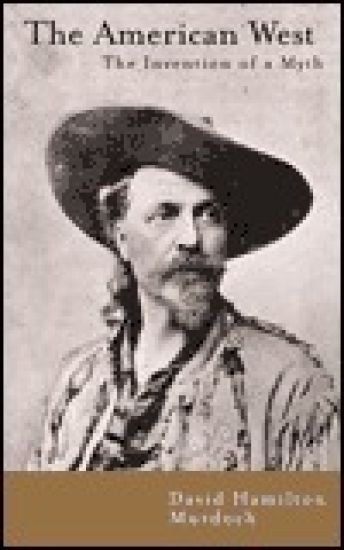
The Wild West of Hollywood and American folklore is nothing more than a functional myth asserts D.H. Murdoch in "The American West", which for the first time, presents a sustained analysis of how the myth originated, and why? He demonstrates that the myth was invented, for the most part deliberately, and then outgrew the purpose of its inventors. Murdoch answers the questions which have too often been ignored. Why should the American West become the focus for myth in the first place and why, given the long process of Western settlement, is the cowboy the mythic hero? And why should the myth have retained its potency up to the last decade of the twentieth century?
Learning for life

Learning for life

David H. Hargreaves

Policy Press
2004
nidottu
Working within the spirit of David Blunkett's visionary foreword to The learning age: A new renaissance for Britain, David H. Hargreaves' radical analysis challenges the myth that lifelong learning can or should be separated - in any sense - from school education. It asks the critical question: what changes in thinking, policy and practice are needed for the culture and process of lifelong learning, as visualised by David Blunkett, to become a reality? Starting with a clear, unequivocal statement that "whether people are motivated to learn beyond the end of compulsory education, and have the capacity to do so, depends very much on what happens to them during the school years", the author explores ways in which policy and practice at school level will need to change in order to meet the crucial challenge of sparking and sustaining a person's motivation and capacity to learn throughout life.
Messianic Judaism: A Modern Movement with an Ancient Past

Messianic Judaism: A Modern Movement with an Ancient Past

David H. Stern

Messianic Jewish Publishers
2007
nidottu
In the first century of the Common Era, tens of thousands of Jewish people followed Yeshua (Jesus), believing him to be the promised Messiah of Israel. They didn't renounce their heritage, their customs, nor their people. They remained Jews. Two thousand years later, hundreds of thousands of Jewish people follow Yeshua, also believing that he is the Messiah. They, too, have not renounced their heritage, customs, nor their people. Messianic Judaism is the modern movement that is bringing it all together, for Jews and non-Jews.
Restoring the Jewishness of the Gospel: A Message for Christians
A book the whole Church needs to read A challenge to conventional Christian ideas Clear thinking about neglected questions such as: - What central truth, ignored for 1,800 years, must be restored if the Church is to fulfill the Great Commission? - How are both the Jews and the Church God's people? - Is there a difference between Jew and Gentile in the body of the Messiah? - Will God fulfill all of his promises to the Jews? - Does the Law of Moses remain in force today? - Is the Church anti-Semitic? If so, what can you do about it? - Should the Church evangelize Jews today? If so, how? Surprising answers to these and other crucial questions, along with suggestions for godly action, are given in this exciting and insightful book by an Israeli Messianic Jew, a Jew who trusts Yeshua (Jesus).
Recovering a Voice

Recovering a Voice

David H. Weinberg

The Littman Library of Jewish Civilization
2015
sidottu
David Weinberg’s multi-national study focuses on the efforts by the Jews of France, Belgium, and the Netherlands to reconstruct their lives after the Second World War. These efforts have largely been ignored, perhaps because the emphasis on assisting survivors in displaced persons camps in occupied Germany, Austria, and Italy and in developing Israel as the centre of the Jewish world after the Holocaust diverted attention from the struggle by Jews in western Europe to recover their voice and sense of purpose. Weinberg attempts to set the record straight, presenting the challenges that were faced both in the national context and in the world Jewish arena and examining how they were dealt with. Weinberg begins his study by reviewing the action taken to revive Jewish communities in the three countries materially and institutionally, remodelling them as efficient, self-sustaining, and assertive bodies that could meet new challenges. With the creation of the State of Israel, Jews who stayed in western Europe had to defend their decision to do so while nevertheless showing public support for the new nation. There was also a felt need to respond quickly and effectively to any sign of antisemitism. In addition, tensions arose between Jews and non-Jews concerning wartime collaboration in deportations, and the need to memorialize Jewish victims of Nazism. The Cold War offered challenges of its own: the perceived need to exclude communist elements from communal affairs was countered by a resistance to pressures from American Jewish leaders to sever links with Jews in eastern Europe. Yet beneath the show of assertiveness Jewish life was fragile, not only because of the physical depletion of the population and of its leadership but because the Holocaust had shaken religious beliefs and affiliations and had raised questions about the value of preserving ethnic and religious identity. At the same time, new forms of Jewish consciousness had evolved, meaning that Jewish leaders had to provide for diverse educational, religious, and cultural needs. This book's comprehensive approach offers a broad and valuable addition to existing studies on the regeneration of Jewish life in individual European countries. Underscoring the similar political, cultural, social, and economic issues facing Jewish survivors in France, Belgium, and the Netherlands after the Holocaust, David Weinberg demonstrates how, with the aid of international Jewish organizations, they used unprecedented means to meet unprecedented challenges. It is a story worth telling that adds much to our understanding of postwar European Jewish life.