
Kirjahaku
Etsi kirjoja tekijän nimen, kirjan nimen tai ISBN:n perusteella.
1000 tulosta hakusanalla David L. Block; Kenneth C. Freeman









A Ticket to the Dance: A Civil War Soldier's Trip to Hell and Back
David L. McGowan
Booksurge Publishing
2008
nidottu
Follow the path of eight individuals from Randolph New York who volunteered to defeat the rebel insurection of 1861. Their names and military actions are historically accurate, their personalities have been developed by the author. They fought in every major battle for the Army of the Potomac and suffered in the infamous "Andersonville Prison".



Approximately 2,500 Anabaptists were martyred in sixteenth- and early seventeenth-century Europe. Their surviving brethren compiled stories of those who suffered and died for the faith into martyr books. The most historically and culturally significant of these, The Bloody Theater-more commonly known as Martyrs Mirror-was assembled by the Dutch Mennonite minister Thieleman van Braght and published in 1660. Today, next to the Bible, it is the single most important text to Anabaptists-Amish, Mennonites, and Hutterites. In some Anabaptist communities, it is passed to new generations as a wedding or graduation gift. David L. Weaver-Zercher combines the fascinating history of Martyrs Mirror with a detailed analysis of Anabaptist life, religion, and martyrdom. He traces the publication, use, and dissemination of this key martyrology across nearly four centuries and explains why it holds sacred status in contemporary Amish and Mennonite households. Even today, the words and deeds of these martyred Christians are referenced in sermons, Sunday school lessons, and history books. Weaver-Zercher argues that Martyrs Mirror was designed to teach believers how to live a proper Christian life. In van Braght's view, accounts of the martyrs helped to remind readers of the things that mattered, thus inspiring them to greater faithfulness. Martyrs Mirror remains a tool of revival, offering new life to the communities and people who read it by revitalizing Anabaptist ideals and values. Meticulously researched and illustrated with sketches from early publications of Martyrs Mirror, Weaver-Zercher's ambitious history weaves together the existing scholarship on this iconic text in an accessible and engaging way.

Nature and the Environment in Amish Life
David L. McConnell; Marilyn D. Loveless
Johns Hopkins University Press
2018
pokkari
The Amish relationship to the environment is much more complicated than you might think.The pastoral image of Amish communities living simply and in touch with the land strikes a deep chord with many Americans. Environmentalists have lauded the Amish as iconic models for a way of life that is local, self-sufficient, and in harmony with nature. But the Amish themselves do not always embrace their ecological reputation, and critics have long questioned the portrayal of the Amish as models of environmental stewardship.In Nature and the Environment in Amish Life, David L. McConnell and Marilyn D. Loveless examine how this prevailing notion of the environmentally conscious Amish fits with the changing realities of their lives. Drawing on 150 interviews conducted over the course of 7 years, as well as a survey of household resource use among Amish and non-Amish people, they explore how the Amish understand nature in their daily lives and how their actions impact the natural world. Arguing that there is considerable diversity in Amish engagements with nature at home, at school, at work, and outdoors, McConnell and Loveless show how the Amish response to regional and global environmental issues, such as watershed pollution and climate change, reveals their deep skepticism of environmentalists. They also demonstrate that Amish households are not uniformly lower in resource use compared to their rural, non-Amish neighbors, though aspects of their home economy are relatively self-sufficient.The first comprehensive study of Amish understandings of the natural world, this compelling book complicates the image of the Amish and provides a more realistic understanding of the Amish relationship with the environment.
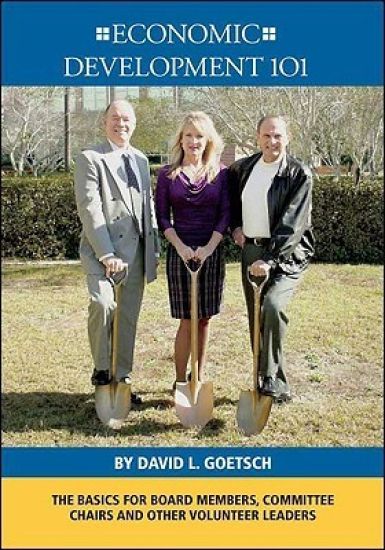
ECONOMIC DEVELOPMENT 101 is a comprehensive handbook covering the basics of economic development that all community leaders who serve in volunteer positions such as board member, committee chair, task force leaders, etc. should know about economic development at the local level. Economic development volunteers have invaluable experience in business and other professions, but many do not understandenough about economic development to be effective participants - to work closely with economic development professionals and make a real and valuable contribution. This book provides volunteers with the basics of economic development they need to know to be not just a participant, but an effective volunteer leader in local economic development organizations (EDOs). ECONOMIC DEVELOPMENT 101 is an excellent tool for conducting board training, planning retreats, strategic planning sessions, and training for volunteers. Major topics covered include: economic development defined, purpose of economic development, sustainable economic development, capacity building, effect of economic development on a community, critical factors and there effect on economic development, roles and responsibilities of the volunteer leader, the local economic development organization (EDO), hiring an economic development professional, strategic planning for economic development, business attraction and recruiting, business retention and expansion, technology transfer, entrepreneurship and business start-ups, and workforce development.