

Kirjahaku
Etsi kirjoja tekijän nimen, kirjan nimen tai ISBN:n perusteella.
1000 tulosta hakusanalla David L. Goetsch


New Testament writers offer varied and persuasive pictures of Jesus that seek to draw people into faith.For David Bartlett, New Testament Christology is "not so much a set of doctrines as a variety of stories, songs and scriptural interpretations that help Christian believers and Christian churches follow the Jesus they read about, hear about, and praise." Early Christians framed and told stories, shared teachings, testified to encounters, found solutions to problems, acted out in faith and love, and sang songs about and to Jesus Christ- the resurrected one who represents and shares God's very self to repair and redeem a broken world.Baptized by John the Baptist. Embarrassingly crucified. Teacher and interpreter of Torah. Reformer. Messiah. Proclaimer and agent of a new Kingdom era. Lord above and beyond Caesar's empire. And most of all, a suffering, resurrected savior addressed through poetry, songs, stories, titles, and ongoing encounters with the community gathered by and in his name. Bartlett takes readers on a quick look journey through the New Testament writers' understanding of Jesus and his saving significance. In the process, he reminds Christians and those who would understand their founding documents that these differing, context-dependent portraits of Jesus are vehicles of a practical, living faith. They don't just say something, they do something, revealing an underlying conviction: somehow God was in Jesus Christ reconciling the world to God's very self (2 Corinthians 5:19).




Throughout the world, the mass media are responsible for shaping the form and content of experiences. In this book, David L. Altheide examines how the mass media, including news and popular culture, have cast terrorism, propaganda and social control post 9/11. Altheide shows how fear works with terrorism to alter discourse, social meanings, and our sense of being in the world. Emphasis is placed on the different institutional interventions and how these particular stories become framed and inform the wider media narratives of terror. The author argues that post 9/11 we are witnessing the emergence of new communication formats that not only constitute counter-narratives, but also shape future communicative experience. The text is suitable for scholars and students interested in the ongoing relationship between the media and terror post 9/11.

Throughout the world, the mass media are responsible for shaping the form and content of experiences. In this book, David L. Altheide examines how the mass media, including news and popular culture, have cast terrorism, propaganda and social control post 9/11. Altheide shows how fear works with terrorism to alter discourse, social meanings, and our sense of being in the world. Emphasis is placed on the different institutional interventions and how these particular stories become framed and inform the wider media narratives of terror. The author argues that post 9/11 we are witnessing the emergence of new communication formats that not only constitute counter-narratives, but also shape future communicative experience. The text is suitable for scholars and students interested in the ongoing relationship between the media and terror post 9/11.
This book challenges social science to address the most important social change since the industrial revolution: the mediated communication order. More of our everyday lives and social institutions reflect the compelling media logic that resonates through conversation, interaction, marketing, as well as social programs, issues and foreign policy. We are beyond the time when people take into account media matters; rather, media matters are now incorporated as a kind of social form in routine and extraordinary activities. This thesis was first laid out in ‘Media Logic’, co-authored with Robert P. Snow in 1979. Thirty-five years on, Altheide discusses his recent thinking about how media logic and mediation is a basic element in constructing social reality. From the internet to the NSA, he shows how media logic has transformed audiences into personal networks guided by social media. He argues that we have reached the media edge as social media have all but eviscerated the audience as a significant factor in the communication equation; mediated communication is increasingly about media performances and individual selection to promote identity.
This book challenges social science to address the most important social change since the industrial revolution: the mediated communication order. More of our everyday lives and social institutions reflect the compelling media logic that resonates through conversation, interaction, marketing, as well as social programs, issues and foreign policy. We are beyond the time when people take into account media matters; rather, media matters are now incorporated as a kind of social form in routine and extraordinary activities. This thesis was first laid out in ‘Media Logic’, co-authored with Robert P. Snow in 1979. Thirty-five years on, Altheide discusses his recent thinking about how media logic and mediation is a basic element in constructing social reality. From the internet to the NSA, he shows how media logic has transformed audiences into personal networks guided by social media. He argues that we have reached the media edge as social media have all but eviscerated the audience as a significant factor in the communication equation; mediated communication is increasingly about media performances and individual selection to promote identity.

What does it look like to “walk in the light, as he is in the light,” to truly live as a follower of Christ? This all-important question finds its answer in three letters from the apostle John. Marked by their sermonic tone, devotional fervor, and emphasis on obedience to God’s commands, 1, 2, and 3 John lovingly teach us how to follow Jesus in open devotion to God. Professor of preaching David L. Allen guides us through 1–3 John with skill and wisdom, offering helpful insights into the Christian life as well as important themes such as: The divinity of ChristSpiritual rebirthThe work of Jesus on the crossOur responsibility to forsake sin and keep God’s commandmentsThe work of the SpiritThe danger of false teachers Hermeneutically sound, Christ-centered, and remarkably practical, this study opens up John’s letters anew and lays out the path for us to walk in light of God’s truth and love. Part of the Preaching the Word series.
Using excerpts from a letter written by famed astronomer Galileo in 1615, two modern-day astronomers explore the relationship between science and faith, arguing that our notion of ultimate truth must include both the physical and spiritual domains.

Malpractice in Psychology
David L. Shapiro; Steven R. Smith
American Psychological Association
2011
sidottu
With combined expertise in psychotherapy and law, David L. Shapiro and Steven R. Smith expertly navigate readers through the unfamiliar territories of professional liability, negligence, informed consent, privacy and confidentiality, HIPAA, defamation, violence and suicide, and malpractice trials and settlements. Through its illustrative case examples and up-to-date discussion of law and ethics, this book will help mental health practitioners enrich and protect their professional practice.


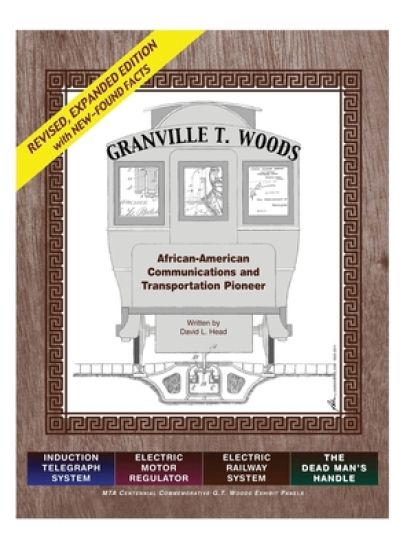
Granville T. Woods: African American Communication and Transportation Pioneer
David L. Head
Dorrance Publishing Co.
2020
sidottu
It began one quiet autumn evening during November of 1996. At home, David Head was viewing the PBS documentary Transportation in America and he noticed the film made no mention of African American contributions. But as chairman of the Black History Committee for Transport Workers Union Local 100, he knew there was much to share. At that moment Head determined his new purpose in life would be to share the extraordinary life and legacy of Granville T. Woods.After twelve years in pursuit of this goal, David Head has accomplished a great deal for his cause: - Metropolitan Transportation Authority Sponsorship of 2004 Subway Centennial Granville T. Woods Commemorative Exhibit - 4 million Granville T. Woods Commemorative Metro Cards (2 million in Spanish) - 2009: Brooklyn Street renamed "Granville T. Woods Way" - 2009: Figure 8, the world's first electric roller coaster created by Woods was inducted into the Coney Island Hall of Fame - 2010: Transit News Telly Award for GTW documentary - 2012: Granville T. Woods: African American Communication and Transportation Pioneer, an illustrated book for young readers, highlighting Woods' struggles and achievements, was published With his many successes, and realizing the impact he could have on others, Head decided to pursue his goals within an educational framework as well by: - Showcasing Woods' inspirational life and amazing innovative abilities - Revealing the purpose behind teaching the life and accomplishments of Woods, and his significant contributions to our American Society - Encouraging youth to cultivate their own talents, to stay in school and seek higher education, to discern their abilities and pursue them as Woods didIn the spirit of Granville T. Woods and his life of invention, Head is now spearheading a major effort to increase the participation of urban youth in the fields of science and technology. By integrating field trips and practical experience with his S.T.E.M. program classroom curriculum, youth will be motivated and guided in an innovative approach to comtemporary challenges. With this goal in mind, careers in science and technology will be encouraged and given direction.