Kirjahaku
Etsi kirjoja tekijän nimen, kirjan nimen tai ISBN:n perusteella.
1000 tulosta hakusanalla David Peter
Mediating Presence: Immersive Experience Design Workbook for UX Designers, Filmmakers, Artists, and Content Creators provides the foundation for a broader understanding of the impact of XR as the next medium. The methods presented draw from a wide range of disciplines and professional practice to provide a practical guide to design methods, production techniques, best practices, and terminology that provides an effective road map for developing immersive experiences using augmented reality, virtual reality, augmented virtuality, and other emerging immersive media forms.In this book, media designers Peter (Zak) Zakrzewski and David Tamés present a comprehensive framework for XR media experience design (XRXD) that will allow UX designers, filmmakers, artists, and content creators to connect their audiences to rich, multimodal, immersive experiences for entertainment, learning, creating, and healing. This book guides the reader through a 12+1-step design-based model for creating XR experiences. Each step is accompanied by specific media design methods expressly created for or adapted to XR content creation. The theoretical concepts and methods covered address the specific context and meaning aspects of the XR media environments being created.

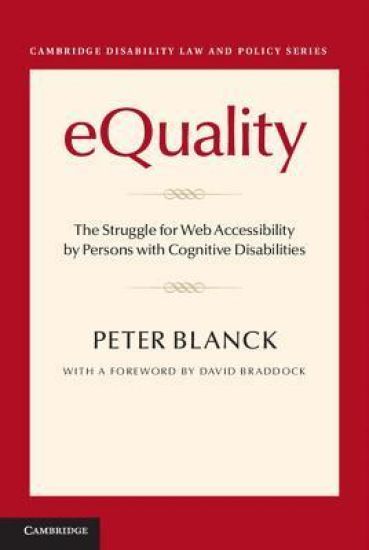
Never before have the civil rights of people with disabilities aligned so well with developments in information and communication technology. The center of the technology revolution is the Internet, which fosters unprecedented opportunities for engagement in democratic society. The Americans with Disabilities Act likewise is helping to ensure equal participation in society by people with disabilities. Globally, the Convention on the Rights of Persons with Disabilities further affirms that persons with disabilities are entitled to the full and equal enjoyment of fundamental personal freedoms. This book is about the lived struggle for disability rights, with a focus on Web equality for people with cognitive disabilities, such as intellectual disabilities, autism, and print-related disabilities. The principles derived from the right to the Web - freedom of speech and individual dignity - are bound to lead toward full and meaningful involvement in society for persons with cognitive and other disabilities.
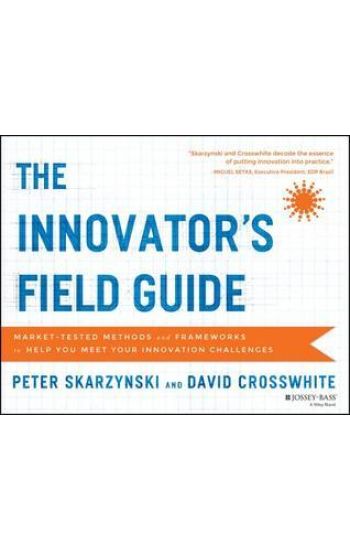
A step-by-step guide to successfully transforming any organization It is well recognized that succeeding at innovation is fundamental in today's hyper-competitive global marketplace. It is the only way to outperform current and emerging competitors sustainably. But what we call “innovation” is messy and difficult and too often lacks the rigor and discipline of other management processes. The Innovator's Field Guide: Market Tested Methods and Frameworks to Help You Meet Your Innovation Challenges changes that. It is a practical guide that moves beyond the “why” to the “how” of making innovation happen, for leaders and practitioners inside organizations of all sizes. Written by two pioneers in the field of embedding innovation in organization, The Innovator's Field Guide focuses on the most pressing innovation problems and specific challenges innovation leaders will face and offers concrete solutions, tools, and methods to overcome them. Each chapter describes a specific innovation challenge and details proven ways to address that challengeIncludes practical ideas, techniques, and leading practicesDescribes common obstacles and offers practical solutions Any leader or professional who needs concrete solutions—right now—to the critical challenges of innovation will find invaluable aid in the practical, easy-to-understand, and market-tested approaches of The Innovator's Field Guide.
Peter Goos, Department of Statistics, University of Leuven, Faculty of Bio-Science Engineering and University of Antwerp, Faculty of Applied Economics, BelgiumDavid Meintrup, Department of Mathematics and Statistics, University of Applied Sciences Ingolstadt, Faculty of Mechanical Engineering, GermanyThorough presentation of introductory statistics and probability theory, with numerous examples and applications using JMPJMP: Graphs, Descriptive Statistics and Probability provides an accessible and thorough overview of the most important descriptive statistics for nominal, ordinal and quantitative data with particular attention to graphical representations. The authors distinguish their approach from many modern textbooks on descriptive statistics and probability theory by offering a combination of theoretical and mathematical depth, and clear and detailed explanations of concepts. Throughout the book, the user-friendly, interactive statistical software package JMP is used for calculations, the computation of probabilities and the creation of figures. The examples are explained in detail, and accompanied by step-by-step instructions and screenshots. The reader will therefore develop an understanding of both the statistical theory and its applications.Traditional graphs such as needle charts, histograms and pie charts are included, as well as the more modern mosaic plots, bubble plots and heat maps. The authors discuss probability theory, particularly discrete probability distributions and continuous probability densities, including the binomial and Poisson distributions, and the exponential, normal and lognormal densities. They use numerous examples throughout to illustrate these distributions and densities.Key features: Introduces each concept with practical examples and demonstrations in JMP.Provides the statistical theory including detailed mathematical derivations.Presents illustrative examples in each chapter accompanied by step-by-step instructions and screenshots to help develop the reader’s understanding of both the statistical theory and its applications.A supporting website with data sets and other teaching materials. This book is equally aimed at students in engineering, economics and natural sciences who take classes in statistics as well as at masters/advanced students in applied statistics and probability theory. For teachers of applied statistics, this book provides a rich resource of course material, examples and applications.
Statistics with JMP: Hypothesis Tests, ANOVA and Regression
Peter Goos; David Meintrup
Wiley-Blackwell
2016
sidottu
Statistics with JMP: Hypothesis Tests, ANOVA and Regression Peter Goos, University of Leuven and University of Antwerp, Belgium David Meintrup, University of Applied Sciences Ingolstadt, Germany A first course on basic statistical methodology using JMP This book provides a first course on parameter estimation (point estimates and confidence interval estimates), hypothesis testing, ANOVA and simple linear regression. The authors approach combines mathematical depth with numerous examples and demonstrations using the JMP software. Key features: Provides a comprehensive and rigorous presentation of introductory statistics that has been extensively classroom tested.Pays attention to the usual parametric hypothesis tests as well as to non-parametric tests (including the calculation of exact p-values).Discusses the power of various statistical tests, along with examples in JMP to enable in-sight into this difficult topic.Promotes the use of graphs and confidence intervals in addition to p-values.Course materials and tutorials for teaching are available on the book's companion website. Masters and advanced students in applied statistics, industrial engineering, business engineering, civil engineering and bio-science engineering will find this book beneficial. It also provides a useful resource for teachers of statistics particularly in the area of engineering.
Clear, accessible and practical, this guide introduces the first-time researcher to the various instruments used in social research. It assesses a broad range of research instruments - from the well-established to the innovative - enabling readers to decide which are particularly well suited to their research.The book covers:questionnairesinterviewscontent analysisfocus groupsobservationresearching the things people say and do.This book is particularly suitable for work-based and undergraduate researchers in education, social policy and social work, nursing and business administration. It draws numerous examples from actual research projects, which readers can adapt for their own purposes. Written in a fresh and jargon-free style, the book assumes no prior knowledge and is firmly rooted in the authors' own extensive research experience.Using Research Instruments is the ideal companion volume to The Researcher's Toolkit. Together they offer a superb practical introduction to conducting a social research project.
Focusing on countermeasures against orchestrated cyber-attacks, Cyber Security Culture is research-based and reinforced with insights from experts who do not normally release information into the public arena. It will enable managers of organizations across different industrial sectors and government agencies to better understand how organizational learning and training can be utilized to develop a culture that ultimately protects an organization from attacks. Peter Trim and David Upton believe that the speed and complexity of cyber-attacks demand a different approach to security management, including scenario-based planning and training, to supplement security policies and technical protection systems. The authors provide in-depth understanding of how organizational learning can produce cultural change addressing the behaviour of individuals, as well as machines. They provide information to help managers form policy to prevent cyber intrusions, to put robust security systems and procedures in place and to arrange appropriate training interventions such as table top exercises. Guidance embracing current and future threats and addressing issues such as social engineering is included. Although the work is embedded in a theoretical framework, non-technical staff will find the book of practical use because it renders highly technical subjects accessible and links firmly with areas beyond ICT, such as human resource management - in relation to bridging the education/training divide and allowing organizational learning to be embraced. This book will interest Government officials, policy advisors, law enforcement officers and senior managers within companies, as well as academics and students in a range of disciplines including management and computer science.
This book offers an original Marxist critique of the European football business. It argues that the Marxist account of the difference between profits and surplus value is crucial to an understanding of the fluid and contradictory nature of the commodification of football. Section one analyses the nature of modern professional football and section two highlights attempts, via government agency and football clubs, to corral fans into ever greater identification with business logic aimed at breaking traditional social relations. Section three draws on a number of cases studies across Europe, to analyse how some fans are attempting to mount a counter ideological response to the assault of neo-liberalism on the game.
This fully updated edition of the successful book The Design of Lighting, provides the lighting knowledge needed by the architect in practice, the interior designer and students of both disciplines.The new edition offers a clear structure, carefully selected material and linking of lighting with other subjects, in order to provide the reader with a comprehensive and specifically architectural approach to lighting. Features of this new edition include:Technical knowledge of lighting in the context of architectural design.An emphasis on imagination in architectural light and presentation of the tools necessary in practice for creative design.Additional chapters on the behaviour of light and on the context of design.A strong emphasis on sustainable design and energy saving, with data and examples.Analyses of actual lighting schemes and references to current standards and design guides.An up-to-date review of lamp and lighting technology, with recommendations on the choice of equipment.A revision of the calculation section, with examples and step-by-step instructions, based on recent student feedback about the book.
This book offers an original Marxist critique of the European football business. It argues that the Marxist account of the difference between profits and surplus value is crucial to an understanding of the fluid and contradictory nature of the commodification of football. Section one analyses the nature of modern professional football and section two highlights attempts, via government agency and football clubs, to corral fans into ever greater identification with business logic aimed at breaking traditional social relations. Section three draws on a number of cases studies across Europe, to analyse how some fans are attempting to mount a counter ideological response to the assault of neo-liberalism on the game.
Y Cwtta Cyfarwydd
Peter Notary Roberts; David Richard Thomas
British Library, Historical Print Editions
2011
pokkari
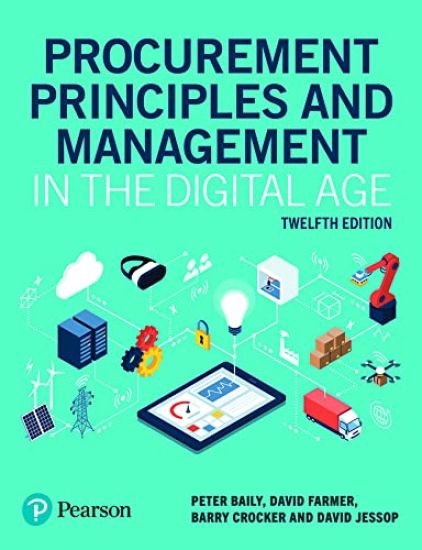
Procurement Principles and Management in the Digital Age
Peter Baily; David Farmer
PEARSON EDUCATION LIMITED
2021
pokkari
Loose-Leaf Version of Psychology 7e & Launchpad (Six Month Access) [With Access Code]
Peter Gray; David F. Bjorklund
WORTH PUBLISHERS
2016
irtolehti
Crime, Regulation and Control During the Blitz
Peter Adey; David J. Cox; Barry Godfrey
Bloomsbury Academic
2017
nidottu
Crime, Regulation and Control during the Blitz looks at the social effect of bombing on urban centres like Liverpool, Coventry and London, critically examining how the wartime authorities struggled to regulate and control crime and offending during the Blitz. Focusing predominantly on Liverpool, it investigates how the authorities and citizens anticipated the aerial war, and how the State and local authorities proposed to contain and protect a population made unruly, potentially deviant and drawn into a new landscape of criminal regulation.Drawing on a range of contemporary sources, the book throws into relief today's experiences of war and terror, the response in crime and deviancy, and the experience and practices of preparedness in anticipation of terrible threats. The authors reveal how everyday activities became criminalised through wartime regulations and explore how other forms of crime such as looting, theft and drunkenness took on a new and frightening aspect. Crime, Regulation and Control during the Blitz offers a critical contribution to how we understand crime, security, and regulation in both the past and the present.
Of German stock dating back to 1530 in Saxony, Eric George Ackermann GM was born on the Isle of Wight in 1919 and became a leading figure in the world of signals and electronic intelligence. As a Junior Scientific Officer at the Telecommunication Research Establishment, Boscombe Down, with an honorary commission in the Royal Air Force, he made numerous flights over occupied territory searching for, monitoring and destroying Germany's Wuerzburg, Knickebein and X Band radar systems. Much of his research was passed to the highest levels of wartime government, and was highly prized, ensuring that tactical plans could be executed that took full advantage of known, top secret German intelligence. A host of secret missions to assess the enemy's radar capabilities were carried out in North Africa, Gibraltar and Italy. This new and engaging biography explores the various highs and lows of his operational deployment at the vanguard of tactical intelligence operations in these exciting theaters of war. Winner of the George Medal for conspicuous gallantry, his efforts weren't confined to the offices of war. He saw conflict up close and personal, and was therefore aware of the urgency of his endeavours, and the extent to which his findings made a difference. The end of the war was a cause of great celebration, but it did not signal the end of Ackermann's role, far from it. He was to play a major part in the setting up and implementation of a string of listening stations built along the borders of Soviet Bloc countries which were destined to glean a wealth of invaluable post-war intelligence. Further work in aeronautics and satellite construction in the States followed, meaning the reach of Ackermann's influence could be allowed to stretch yet further. Yet despite the might and scale of his achievement, he has never before been the subject of a book-length study. The authors, Peter Jackson and David Haysom, have made every effort to rectify that in this new publication which is sure to appeal to aviation enthusiasts, as well as the more general reader curious to gain new insights into twentieth century intelligence practices and their often far-reaching consequences.
In 2002 the fullest evidence so far recovered for the Roman settlement at Nantwich, a historic salt-producing centre in Cheshire (north-western England), was revealed by an excavation carried out at Kingsley Fields, on the west side of the town, ahead of a housing development. This uncovered a previously unknown Roman road, linking the settlement at Nantwich to the main road network, and, positioned along this, evidence for the collection and storage of brine and the production of salt, together with buildings, enclosures, a well and a small number of cremation burials. Waterlogged conditions meant that organic remains, including structural timbers, were well preserved on the site. These included the two finest examples of timber-built brine tanks excavated from Roman Britain. This volume presents the wide-ranging finds of these investigations.
Focusing on countermeasures against orchestrated cyber-attacks, Cyber Security Culture is research-based and reinforced with insights from experts who do not normally release information into the public arena. It will enable managers of organizations across different industrial sectors and government agencies to better understand how organizational learning and training can be utilized to develop a culture that ultimately protects an organization from attacks. Peter Trim and David Upton believe that the speed and complexity of cyber-attacks demand a different approach to security management, including scenario-based planning and training, to supplement security policies and technical protection systems. The authors provide in-depth understanding of how organizational learning can produce cultural change addressing the behaviour of individuals, as well as machines. They provide information to help managers form policy to prevent cyber intrusions, to put robust security systems and procedures in place and to arrange appropriate training interventions such as table top exercises. Guidance embracing current and future threats and addressing issues such as social engineering is included. Although the work is embedded in a theoretical framework, non-technical staff will find the book of practical use because it renders highly technical subjects accessible and links firmly with areas beyond ICT, such as human resource management - in relation to bridging the education/training divide and allowing organizational learning to be embraced. This book will interest Government officials, policy advisors, law enforcement officers and senior managers within companies, as well as academics and students in a range of disciplines including management and computer science.
A Grand Success!: The Aardman Journey, One Frame at a Time
Peter Lord; David Sproxton
Harry N. Abrams
2019
sidottu
The creators of Chicken Run and the Wallace & Gromit series share the inside story of their Oscar award-winning animation company.Aardman Animations was founded in 1972 by Peter Lord and David Sproxton. Joined by animator Nick Park in 1985, Aardman pioneered a quirky, lovable style of stop-motion animation and brought to life a string of unforgettable movies and television shows, including the highest-grossing stop-animated film of all time, Chicken Run.With A Grand Success , Lord, Sproxton, and Park tell the 45-year history of Aardman. From their first short films, made on a lark on their kitchen table, to advertisements and music videos, A Grand Success recounts the adventures and challenges of developing their own unique style, growing their business, working with famous actors, and conquering Hollywood, all while animating at 24 painstaking moves per second.
Learn Raspberry Pi with Linux will tell you everything you need to know about the Raspberry Pi's GUI and command line so you can get started doing amazing things. You'll learn how to set up your new Raspberry Pi with a monitor, keyboard and mouse, and you'll discover that what may look unfamiliar in Linux is really very familiar. You'll find out how to connect to the internet, change your desktop settings, and you'll get a tour of installed applications. Next, you'll take your first steps toward being a Raspberry Pi expert by learning how to get around at the Linux command line. You'll learn about different shells, including the bash shell, and commands that will make you a true power user. Finally, you'll learn how to create your first Raspberry Pi projects: Making a Pi web server: run LAMP on your own network Making your Pi wireless: remove all the cables and retain all the functionality Making a Raspberry Pi-based security cam and messenger service: find out who's dropping by Making a Pi media center: stream videos and music from your Pi Raspberry Pi is awesome, and it's Linux. And it's awesome because it's Linux. But if you've never used Linux or worked at the Linux command line before, it can be a bit daunting. Raspberry Pi is an amazing little computer with tons of potential. And Learn Raspberry Pi with Linux can be your first step in unlocking that potential.