Kirjahaku
Etsi kirjoja tekijän nimen, kirjan nimen tai ISBN:n perusteella.
1000 tulosta hakusanalla Dmitri Mereschkowski



Have you ever dreamed about your love life. this how my dreams went.
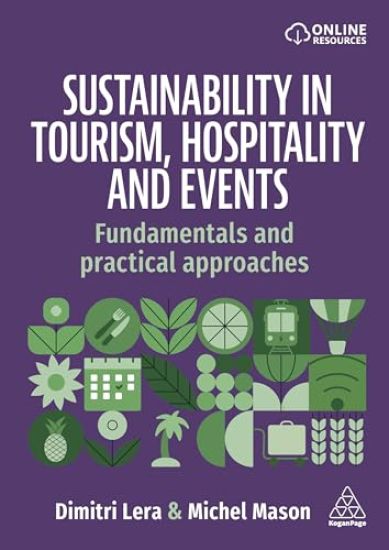
Sustainability in Tourism, Hospitality and Events
Dimitri Lera; Michel Mason
KOGAN PAGE LTD
2025
nidottu
Sustainability in Tourism, Hospitality and Events provides undergraduate students with the theory and practical steps for actioning sustainable strategies. This textbook is ideal for undergraduates studying sustainability as part of their Tourism, Hospitality and Events degrees. It is a comprehensive and accessible guide for implementing sustainable practices in tourism, hospitality and events businesses, and includes chapters on: - Eradicating plastic packaging and minimizing food wastage - Creating low-carbon menus with local food sourcing strategies - Other key concepts such as the circular economy, regenerative hospitality and carbon neutrality With practical insights from the authors' experiences of working in sustainability and the travel and events industries, Sustainability in Tourism, Hospitality and Events will empower a new generation of professionals to prioritize environmental and social responsibility in their decision-making processes. In-text learning features include learning outcomes, best practice tips from industry leaders and reflective questions and exercises to help students apply sustainability theory to practice. Online resources include PowerPoint lecturer slides and additional real-world examples.
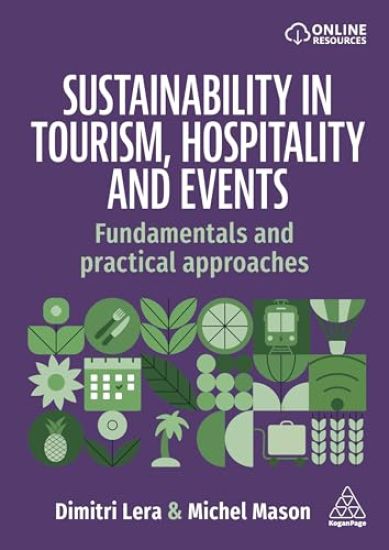
Sustainability in Tourism, Hospitality and Events
Dimitri Lera; Michel Mason
KOGAN PAGE LTD
2025
sidottu
Sustainability in Tourism, Hospitality and Events provides undergraduate students with the theory and practical steps for actioning sustainable strategies. This textbook is ideal for undergraduates studying sustainability as part of their Tourism, Hospitality and Events degrees. It is a comprehensive and accessible guide for implementing sustainable practices in tourism, hospitality and events businesses, and includes chapters on: - Eradicating plastic packaging and minimizing food wastage - Creating low-carbon menus with local food sourcing strategies - Other key concepts such as the circular economy, regenerative hospitality and carbon neutrality With practical insights from the authors' experiences of working in sustainability and the travel and events industries, Sustainability in Tourism, Hospitality and Events will empower a new generation of professionals to prioritize environmental and social responsibility in their decision-making processes. In-text learning features include learning outcomes, best practice tips from industry leaders and reflective questions and exercises to help students apply sustainability theory to practice. Online resources include PowerPoint lecturer slides and additional real-world examples.
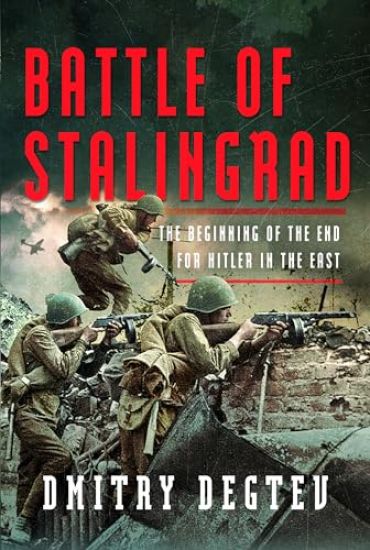
The Battle of Stalingrad was the bloodiest battle of the Second World War. An estimated 2 million individuals, military as well as civilian, became casualties in a savage struggle which lasted for more than five months. Stalingrad’s strategic position on the River Volga in southern Russia meant that whoever controlled the city controlled access to the oil fields of the Caucasus. Without that oil, the Germans were ultimately destined to fail on all fronts. The Battle of Stalingrad was, therefore, arguably, the most important conflict of the entire war. Yet, the author argues that both Hitler and Stalin lost sight of the real objectives of the campaign, with the capture of Stalingrad becoming seen as the end in itself. Stalingrad was not specified as a particular objective of the Germans in the original plan of Operation _Blau_. But when the defenders of Stalingrad unexpectedly stood in the way of the Germans, it became the focal point of the German effort. Hitler and his generals were naively sure that after the capture of Stalingrad, victory in the war was a certainty. Stalin and his generals thought that since the Wehrmacht stubbornly fought over the city’s ruins, regardless of the losses it suffered, it meant that the Germans knew more about its importance than they did, and so were determined to hold it at all costs. In fact, the strategic importance of Stalingrad was greatly exaggerated. The scale of the German operation to seize the Caucasus was immense, with an operation stretching for 1,500,00 kilometres (approximately equal to the distance between Berlin and Moscow). This involved laying routes for tank and infantry divisions through areas of virtual desert where there was an almost complete absence of railways and highways. No consideration was given to the needs of troops in fuel, ammunition, food or even water. At the same time, the unrealistic plan to capture the Caucasus did not provide any alternative options in case the main operation failed, which it was doomed to do. As for the Soviets, frightened and broken by the military disasters near Kerch and Kharkov, when entire armies were captured, Stalin authorized the retreat of the Red Army to the Volga, which turned into a stampede. But then the Soviet leader abruptly changed his mind and issued the famous order ‘Not a step back!’ While historians state that this order inspired the Soviet troops to resist and strengthened discipline, it in fact led to an increase in the number of defectors and collaborators. This ground-breaking study of the Battle of Stalingrad is a highly graphic chronicle of the fighting, shown from two sides, written by a Russian historian using much material previously unpublished in the West. It details the efforts of all branches of the armed forces; tanks, artillery, infantry, aviation and, for the first time, the important contribution of the Russian river flotilla.
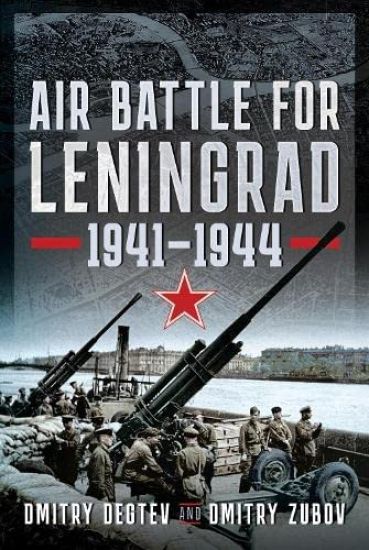
The Siege of Leningrad was one of the most brutal battles of the Second World War. The second largest and most populous city in the Soviet Union, Leningrad, now St. Petersburg, was one of the three priority targets of the German invasion, Operation Barbarossa. A total of 333 large military factories were concentrated in Leningrad and, accordingly, 565,000 workers lived there, producing tanks, aircraft, artillery and warships. On 10 July 1941, German tank divisions, having broken through the front south of the city of Pskov, reached the town of Luga. From there, Hitler's forces had just over 110 miles to go to Leningrad. Meanwhile, the city was feverishly preparing for defence. Stalin's deputies, Zhdanov and Voroshilov, planned to use the entire combat-ready population of Leningrad for that purpose. Believing that the city would soon be captured by the Germans, Stalin ordered the immediate evacuation of military factories and skilled workers from Leningrad to the East. Before the city was completely blockaded, most of the valuable equipment had been removed. However, the remaining civilian population, including about 400,000 children, were left to their fate. In early September 1941, German divisions supported by the Luftwaffe's VIII Fliegerkorps, captured the town of Shlisselburg. Leningrad was now cut off from the rest of the Soviet Union. Hitler believed that the city would soon echo to the sound of German jackboots. Leningrad, however, did not give up. In the autumn of 1941, the Wehrmacht did not have enough forces to take the city and for three long years the main means of fighting its defenders were the Luftwaffe and long-range artillery. In September 1941, when the systematic bombing and shelling began, many thousands of families tried to leave Leningrad, but nearly all of the escape routes were cut off. Food supplies in the city sharply decreased. In this book the authors explore the full story of the German and Soviet aerial battles in the Leningrad sector during the siege. There are devastating details of the bombing of the starving population, numerous attempts by the Luftwaffe to destroy the Red Baltic Fleet, and air attacks against the Road of Life', along which vital food and ammunition were delivered to the city, and combats in the skies over Leningrad and its surroundings. Revealing what was happening in the air and on the ground, as well as in the German and Russian headquarters, the authors explain why, in spite of numerous successes, the Luftwaffe failed to help force the surrender of Leningrad.
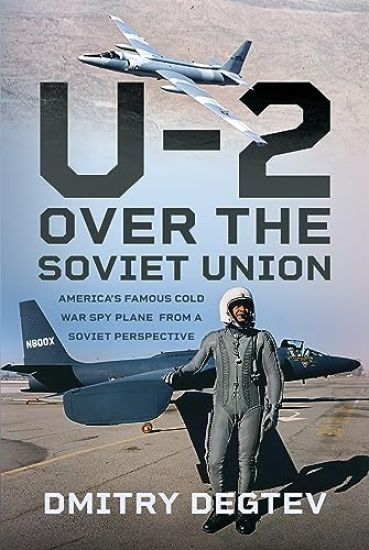
On 1 May 1960, a traditional military parade was held in Moscow. What stood it out from the previous ones, however, was the number of missiles, and in particular the ground-to-air anti-aircraft variants, that were present. There was perhaps nothing surprising in this dominance of missiles, for Nikita Khrushchev had already declared that the so-called Rocket Troops were to be the ‘main branch of the armed forces’. Not for nothing had the Politburo allocated huge sums of money and the best scientific minds to the on-going development of these weapons and units. In fact, there was no fly-past over the Red Square in 1960 as Khrushchev considered aircraft to be a ‘dying species’. From then on, it was being stated, military aviation would be assigned little more than an auxiliary role in the defence of the Soviet Bloc. Khrushchev’s assessment of the future of aircraft was seemingly confirmed by an incident that occurred more than 1,000km to the east of Moscow. For what the spectators and participants of the grand ‘rocket’ parade did not know was, that in one of the key events of the Cold War, an American high altitude reconnaissance Lockheed U-2 jet had, barely hours before, been shot down over the Urals by one of the types of missiles that were passing before them. Based on documents held in the CIA’s archives, declassified documents released by the Russian Ministry of Defence, and the memoirs of participants in the events in question, this book explores the true story of the preparation, implementation, and consequences of the U-2 reconnaissance flights over the Soviet Union, Eastern Europe and Cuba between 1956 and 1962. For the first time, the author reveals the military plans that were activated in the Eastern Bloc to combat the U-2 missions, and how the Soviets tried unsuccessfully to create a fighter-interceptor to operate in the stratosphere. This book also reveals which secret locations and objects were photographed by the U-2, including those which remained unidentified, and investigates where the secret centre of the Russian atomic project was actually located and whether the U-2 was able to find it. What was the true reliability and value of the information received from America’s U-2 operations? The reader will discover which objects were confiscated from Francis Gary Powers, the pilot of the U-2 brought down, following his capture, and why was he had been issued with women’s jewelry and watches before his fateful flight? The Soviet view of the incursions by Powers and his fellow U-2 pilots is laid bare – revealing just why the Powers’ name is as widely known in Russia as that of the cosmonaut Yuri Gagarin.
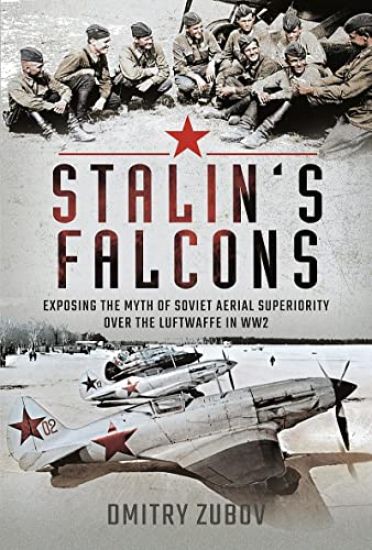
The Soviet history of the Second World War, written under the conditions of a totalitarian regime, reflected all its features, with the result that it includes solid sets of patriotic fables that have no connection with reality. Many of the events of the war were distorted beyond recognition or even made up from beginning to end. Archives containing original documents were available only to selected, specially verified KGB historians' who presented only the version of the war that was acceptable to the Soviet regime. After the collapse of the Soviet Union, the process of declassifying archives and gaining wide access to information gradually began to reveal the terrible truth of the crimes of the Soviet regime. One of which, of course, was the incompetent leadership of the Red Army, which led to massive loss of life across the military and civilians alike. However, the consequences of decades of Soviet propaganda had a strong impact on both Russian and world historical science. Because of this, not only Russian, but, unfortunately, many European and American historians found themselves repeating the Soviet myths they had been fed. The history of Soviet fighter aircraft did not escape this fate. The tale of Stalin's so-called Falcons', who allegedly shot down dozens and even hundreds of Luftwaffe aircraft, was persistently drummed into the heads of many generations of Russian people. These heroes, supposedly, flew Soviet fighters whose technical characteristics were many times superior to their German counterparts, with the result that Luftwaffe aces were reportedly afraid of meeting them in the air. These primitive propaganda clich s became a model for describing the actions of Stalin's fighter aircraft. In this stunning expos , Stalin's Falcons reveals the stark and dark truth of the terrible losses suffered by Soviet flyers, the inferiority of the Russian aircraft and the almost slave-like conditions in which those aircraft were made.

A BRIGHTER PAST. A DARKER FUTURE.The year is 2035. It's been twenty years since World War Three wiped out humankind. The only survivors were those who made it through the gates of the Metro, the subway system of Moscow city. It's there, hundreds of feet below the ground, that they try to outlive the end of the days. But the Metro's citizens, torn apart by religions and ideologies, are fighting for the now scarce commodities: air, water and space.Artyom is no stranger to the Metro. Driven by a desire to lead his people out from the depths and into the light, he relentlessly searches for signs of life on the surface. And he will stop at nothing be the saviour that humanity needs . . .Metro 2035 by Dmitry Glukhovsky is the final thrilling book in the Metro trilogy, a series that inspired the bestselling computer games Metro 2033, Metro: Last Light and Metro: Exodus.
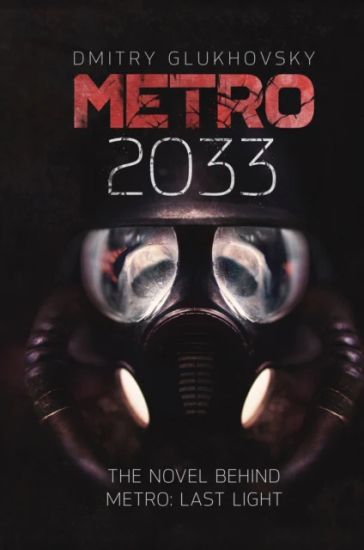
Now including a new translation, this is a chilling piece of Russian dystopian fiction and the basis of three bestselling computer games Metro 2033 and Metro Last Light, and Metro: ExodusThe year is 2033. The world has been reduced to rubble. Humanity is nearly extinct. The half-destroyed cities have become uninhabitable through radiation. Beyond their boundaries, they say, lie endless burned-out deserts and the remains of splintered forests. Survivors still remember the past greatness of humankind. But the last remains of civilisation have already become a distant memory, the stuff of myth and legend.More than 20 years have passed since the last plane took off from the earth. Rusted railways lead into emptiness. The ether is void and the airwaves echo to a soulless howling where previously the frequencies were full of news from Tokyo, New York, Buenos Aires. Man has handed over stewardship of the earth to new life-forms. Mutated by radiation, they are better adapted to the new world. Man's time is over.A few score thousand survivors live on, not knowing whether they are the only ones left on earth. They live in the Moscow Metro - the biggest air-raid shelter ever built. It is humanity's last refuge. Stations have become mini-statelets, their people uniting around ideas, religions, water-filters - or the simple need to repulse an enemy incursion. It is a world without a tomorrow, with no room for dreams, plans, hopes. Feelings have given way to instinct - the most important of which is survival. Survival at any price.VDNKh is the northernmost inhabited station on its line. It was one of the Metro's best stations and still remains secure. But now a new and terrible threat has appeared. Artyom, a young man living in VDNKh, is given the task of penetrating to the heart of the Metro, to the legendary Polis, to alert everyone to the awful danger and to get help. He holds the future of his native station in his hands, the whole Metro - and maybe the whole of humanity.Readers are hooked on Metro 2033:'The Russians have a skill in writing apocalyptic, nightmarish stories' Goodreads reviewer, ? ? ? ? ?'It is the best post-apocalyptic sci-fi I have ever read' Goodreads reviewer, ? ? ? ? ?'Those Russians know how to write dystopian, post-apocalyptic, creepy horror . . . a fantastic, immersive read' Goodreads reviewer, ? ? ? ? ?

The basis of three bestselling computer games Metro 2033 and Metro Last Light, and Metro: Exodus. The Metro books have put Dmitry Glukhovsky in the vanguard of Russian speculative fiction alongside the creator of Night Watch, Sergei Lukyanenko. A year after the events of METRO 2033 the last few survivors of the apocalypse, surrounded by mutants and monsters, face a terrifying new danger as they hang on for survival in the tunnels of the Moscow Metro.Featuring blistering action, vivid and tough characters, claustrophobic tension and dark satire the Metro books have become bestsellers across Europe.Readers can't get enough of the Metro series:'What can I say - once you pick up this book and start reading, it's just amazingly hard to actually put it down until you finish. And after that, you just want MORE!!' Goodreads reviewer, ? ? ? ?'This does everything right in its additions to the metro world. A great story with super fleshed out characters, who have all been warped by the new life humanity leads underground' Goodreads reviewer, ? ? ? ? ?'The author is particularly good at character development and world building. I've read a lot of dystopian novels but nothing like [Metro 2033] and [Metro 2034]' Goodreads reviewer, ? ? ? ?'What a sequel! From page 1 on you get soaked into this dark, creepy and yet beautiful universe' Goodreads reviewer, ? ? ? ? ?'Metro 2034 is an amazing book, it shows tremendous amount of thought. The post-apocalyptic/sci-fi feel of the book makes it very exciting' Goodreads reviewer, ? ? ? ? ?
This study brings together ideas developed over many years in various lectures in an endeavour to clarify the concept of hermeneutic fore-structure of scientific research. The starting point of my investigations was the outline of an interp- tative approach to the constitution of science’s cognitive content. In the late 1970s I was preoccupied with a question that nowadays should be formulated as follows: Is it possible to claim a validity of the hermeneutic view of the “situatedness in a tradition” also for the natural sciences? I was convinced that the negative answer implies a self-defeating position. It states that in order to champion the (cultural) universality of hermeneutics, one has to profess the non-hermeneutic nature of the natural sciences. Paradoxically enough, this a- wer presupposes a sharp dividing line (between dialogical experience and monological research) in culture in order to stress the universality of hermeneutics. Long before the period of perestroika in my corner, I learned from Joseph Kockelmans, Patrick Heelan, and Theodore Kisiel how the universalization of hermeneutics can include the natural sciences without ignoring their cognitive specificity. Somewhat later, in the aftermath of the discussions over the “finalization of science”, I began to confront the view that it would be a kind of trivializing the struggle for a philosophical hermeneutics if the theory-observation nexus is treated as a specific hermeneutic circle. No doubt, the view is correct. I was, however, dissatisfied with the way of arguing for it.


Physical Metallurgy of Direct Chill Casting of Aluminum Alloys
Dmitry G. Eskin
CRC Press Inc
2008
sidottu
Pulling together information previously scattered throughout numerous research articles into one detailed resource, Physical Metallurgy of Direct Chill Casting of Aluminum Alloys connects the fundamentals of structure formation during solidification with the practically observed structure and defect patterns in billets and ingots. The author examines the formation of a structure, properties, and defects in the as-cast material in tight correlation to the physical phenomena involved in the solidification and the process parameters.The book draws on the author’s advanced research to provide a unique application of physical metallurgy to direct chill (DC) casting technology. He examines structure and defect formation— including macrosegregation and hot tearing. Each technology-centered chapter provides historical background before reviewing current developments. The author supports his conclusions with computer simulation results that have been correlated with highly progressive experimental data. He presents a logical system of structure and defect formation based on the specific features of the DC casting process. He also demonstrates that the seemingly controversial results reported in literature are, in fact, caused by the different ratio of the same mechanisms. Compiling recent results and data, the book discusses the fundamentals of solidification together with metallurgical and technological aspects of DC casting. It gives new insight and perspective into DC casting research.

I've always had trouble describing this book, personal journey, historical expose relating to the troubles in Cyprus and the massacres of 1963 or, and, a wake-up call for Humanity? Most people would celebrate completing their first book, I went to bed and wept myself to sleep. The experience of writing my book, in a very short time, led me to the belief that I have read of myself in the Book of Revelations, the Lamb of God, it's a belief that's only been enforced these last nine years since it was written and it's also a belief that has been accepted in a British Crown Court in 1999. A case that was kept quiet and received minimal press, probably because of the mitigating evidence, this book in its original self-published form. Many have always believed that The Lamb of God from The Book of Revelations is Christ returned. In the Afterward section, the final chapter, you read of my life since that discovery and beyond the court case. Written as much in journal form, and at the time, you follow the story of the last nine years to bring it up to date and the final conclusion.You will discover as I do that far from being a belief I can escape from over time it is simply reinforced, until the journey's brought right up to date and beyond.So, I guess, you could call this book a resume, as proof that I'm genuine in what I'm saying and, why I'm saying it. By reading this text you will understand why I can't help but believe I am a messenger of God, as we enter the days of Judgement, and this book is my proof, you decide for yourself, as it's meant to be.