Kirjojen hintavertailu. Mukana 11 627 067 kirjaa ja 12 kauppaa.

Kirjahaku

Etsi kirjoja tekijän nimen, kirjan nimen tai ISBN:n perusteella.

1000 tulosta hakusanalla Dylan Howard

Under Milk Wood

Under Milk Wood

Dylan Thomas

New Directions Publishing Corporation
2019
nidottu
Under Milk Wood is the masterpiece "radio play for voices" Dylan Thomas finished just before his death in 1953. First commissioned by the BBC and broadcast in 1954, it has been performed and celebrated by Anthony Hopkins, Richard Burton, Elton John, Tom Jones, Catherine Zeta Jones, Elizabeth Taylor, Peter O'Toole, and many others. In Under Milk Wood, Thomas gave fullest expression to the magnificent flavor and variety of life. A moving and hilarious account of a spring day in a small Welsh town, the play begins with dreams and ghosts before dawn and closes "as the rain of dusk brings on the bawdy night."
A Child's Christmas in Wales

A Child's Christmas in Wales

Dylan Thomas

NEW DIRECTIONS PUBLISHING CORPORATION
2022
nidottu
This gem of lyric prose has enchanted both young and old for over half a century and is now a modern classic. Dylan Thomas (1914-1953), one of the greatest poets and storytellers of the twentieth century, captures a child's-eye view and an adult's fond memories of a magical time of presents, aunts and uncles, the frozen sea, and in the best of circumstances, newly fallen snow.
Collected Stories

Collected Stories

Dylan Thomas

NEW DIRECTIONS PUBLISHING CORPORATION
2023
nidottu
This gathering of all Dylan Thomas's stories--ranging chronologically from the dark, almost surrealistic tales of Thomas's youth to such gloriously rumbustious celebrations of life as "A Child's Christmas in Wales" and "Adventures in the Skin Trade"--charts the progress of "The Rimbaud of Cwmdonkin Drive" toward his mastery of the comic idiom. Here, too, are stories originally written for radio and television and, in a short appendix, the schoolboy pieces first published in the Swansea Grammar School Magazine. A high point of the collection is Thomas's "Portrait of the Artist as a Young Dog," a vivid collage of memories from his Swansea childhood that combines the lyricism of his poetry with the sparkle and sly humor of Under Milk Wood. Also here is the fiction from Quite Early One Morning, a collection planned by Thomas shortly before his death.Altogether there are more than forty stories, providing a rich and varied literary feast and showing Dylan Thomas in all his intriguing variety-somber fantasist, joyous word-spinner, and irrepressible comedian of smalltown Wales.
Apocalypse of the Alien God

Apocalypse of the Alien God

Dylan M. Burns

University of Pennsylvania Press
2014
sidottu
In the second century, Platonist and Judeo-Christian thought were sufficiently friendly that a Greek philosopher could declare, "What is Plato but Moses speaking Greek?" Four hundred years later, a Christian emperor had ended the public teaching of subversive Platonic thought. When and how did this philosophical rupture occur? Dylan M. Burns argues that the fundamental break occurred in Rome, ca. 263, in the circle of the great mystic Plotinus, author of the Enneads. Groups of controversial Christian metaphysicians called Gnostics ("knowers") frequented his seminars, disputed his views, and then disappeared from the history of philosophy-until the 1945 discovery, at Nag Hammadi, Egypt, of codices containing Gnostic literature, including versions of the books circulated by Plotinus's Christian opponents. Blending state-of-the-art Greek metaphysics and ecstatic Jewish mysticism, these texts describe techniques for entering celestial realms, participating in the angelic liturgy, confronting the transcendent God, and even becoming a divine being oneself. They also describe the revelation of an alien God to his elect, a race of "foreigners" under the protection of the patriarch Seth, whose interventions will ultimately culminate in the end of the world. Apocalypse of the Alien God proposes a radical interpretation of these long-lost apocalypses, placing them firmly in the context of Judeo-Christian authorship rather than ascribing them to a pagan offshoot of Gnosticism. According to Burns, this Sethian literature emerged along the fault lines between Judaism and Christianity, drew on traditions known to scholars from the Dead Sea Scrolls and Enochic texts, and ultimately catalyzed the rivalry of Platonism with Christianity. Plunging the reader into the culture wars and classrooms of the high Empire, Apocalypse of the Alien God offers the most concrete social and historical description available of any group of Gnostic Christians as it explores the intersections of ancient Judaism, Christianity, Hellenism, myth, and philosophy.
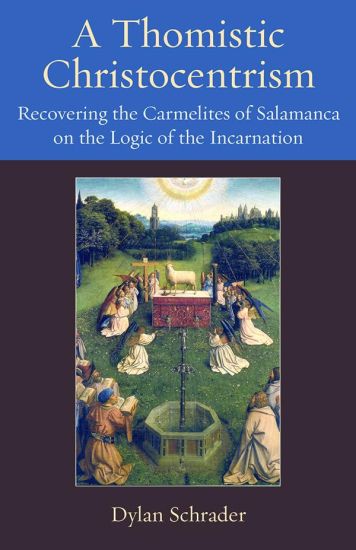
A Thomistic Christocentrism

A Thomistic Christocentrism

Dylan Schrader

The Catholic University of America Press
2021
sidottu
Saint Thomas Aquinas famously held the opinion that, in God’s actual plan for the world, the Word would not have become flesh except to redeem us from sin. Conversely, Blessed John Duns Scotus argued that God intended Christ first, such that Christ would have come even if there had been no sin. While Aquinas and Scotus were far from the first to consider this question, they became emblematic of two seemingly irreconcilable approaches. In this book, Father Dylan Schrader recovers the thought of the Salmanticenses, the Discalced Carmelites writing at the University of Salamanca in the seventeenth century. The Salmanticenses argue that Christ is primary in God’s intention precisely as redeemer, so that it is true both that God has made everything else for the sake of Christ and that Christ’s coming is essentially redemptive, connected with sin. In this way, the Salmanticenses offer a Thomistic Christocentrism.This book summarizes the historical background to the Salmanticenses, from the time of Anselm up through the early-modern period. Next, it presents and defends the Salmanticenses’ argument for the primacy of Christ the redeemer. A Thomistic Christocentrism then turns to two key post-conciliar figures, Karl Rahner and Hans Urs von Balthasar. Rahner sees Christ as the culmination of the world’s opening up to God. Balthasar sees Christ as the reconciler of divine and human freedom through his cross, descent, and resurrection. Both Christocentric approaches have good aspirations but suffer from serious flaws. In its final chapters, this book applies the Salamanca theory to Rahner and Balthasar, showing its enduring value for post-conciliar Christocentrism.
A Thomistic Christocentrism

A Thomistic Christocentrism

Dylan Schrader

THE CATHOLIC UNIVERSITY OF AMERICA PRESS
2025
nidottu
This book summarizes the historical background to the Salmanticenses, from the time of Anselm up through the early-modern period. Next, it presents and defends the Salmanticenses' argument for the primacy of Christ the redeemer. A Thomistic Christocentrism then turns to two key post-conciliar figures, Karl Rahner and Hans Urs von Balthasar. Rahner sees Christ as the culmination of the world's opening up to God. Balthasar sees Christ as the reconciler of divine and human freedom through his cross, descent, and resurrection. Both Christocentric approaches have good aspirations but suffer from serious flaws. In its final chapters, this book applies the Salamanca theory to Rahner and Balthasar, showing its enduring value for post-conciliar Christocentrism.
Mary, Mother of God's Word Made Flesh

Mary, Mother of God's Word Made Flesh

Dylan Schrader

THE CATHOLIC UNIVERSITY OF AMERICA PRESS
2026
pokkari
Mary, Mother of God Made Flesh overviews Catholic teaching on Mary, with a special focus on the "four Marian dogmas" and other major doctrines, such as Mary’s cooperation in the work of salvation and the distribution of graces. The book takes the relationship of Mary to Jesus as its starting point, while also drawing on insights from ecclesiotypical and Christotypical approaches to Mariology. This book emphasizes that Marian doctrine must be grounded in the revealed Word of God. Thus, it does not rely on private revelations but instead draws on scriptural, magisterial, patristic, and liturgical sources. At the same time, Mary, Mother of God Made Flesh is systematic and not merely historical. It strives to show how Catholic teachings on Mary fit together and explores precisely what they mean. In this task, Mary, Mother of God Made Flesh draws in a special way on St. Thomas Aquinas and the Thomistic school, while also incorporating insights from other approaches. Thus, it also engages with some speculative questions that have not received as much attention in other recent works of Mariology but that remain important for the correct understanding and elaboration of magisterial teachings. For example, it deals with the issue of the debitum peccati ("debt of sin"), which touches on how to connect the Immaculate Conception with the notion of redemption, and the question of precisely how Mary is involved in the conferral of graces. The most important parts of this book are the chapters on the dogmas of the divine maternity, the immaculate conception, the perpetual virginity of Mary, and her assumption intoheaven. There are also chapters on Mary’s holiness of life, her participation in Christ’s saving work, and Marian devotion in the life of the Church. The first appendix overviews the problem of what St. Thomas Aquinas taught about the Immaculate Conception, while the second discusses the magisterium’s current approach to private revelations and extraordinary phenomena.
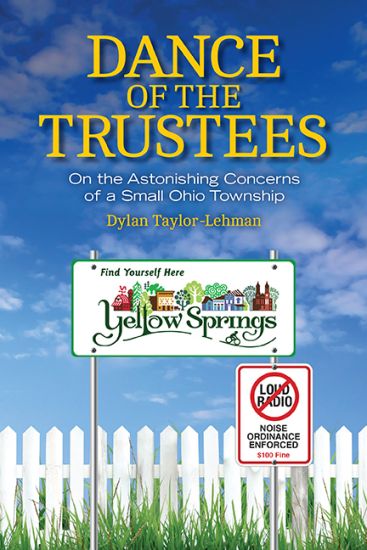
Dance of the Trustees

Dance of the Trustees

Dylan Taylor-Lehman

Trillium
2018
pokkari
On September 9, 2015, in the quirky village of Yellow Springs, Ohio, the Miami Township Board of Trustees arbitrated a dispute concerning an area bed and breakfast that was apparently causing problems in the neighborhood where it was located. People were irate: the B&B was considered too loud by some but unfairly under attack by others, while township officials were called incompetent by both sides for not ruling in their favor. The trustees were amused, concerned, and baffled at the situation before them. This quaint debate represents just one of many fascinating problems the trustees deal with on a daily basis. While Miami Township is small, the concerns are myriad--from cemeteries filled with unknown remains to a fire department to oversee to legal action required against properties clogged with junk. The responsibilities are doubly impressive considering no trustees have backgrounds in public office. This book combines entertaining nonfiction vignettes with well-researched township history--including a history of religious cults and the possibility that Lee Harvey Oswald was once in town--and elucidates the processes behind an entire civic division. Dance of the Trustees documents twenty-first-century small-town life with humor, warmth, and erudition.
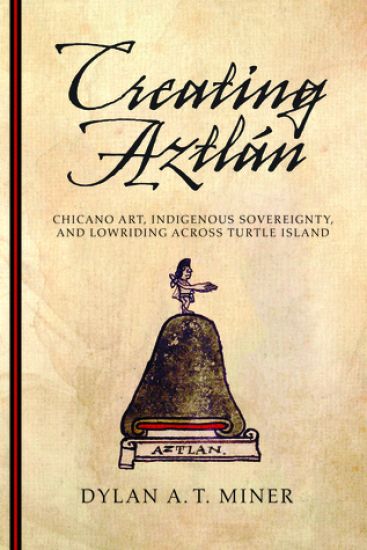
Creating Aztlán

Creating Aztlán

Dylan A. T. Miner

University of Arizona Press
2014
nidottu
In lowriding culture, the ride is many things—both physical and intellectual. Embraced by both Xicano and other Indigenous youth, lowriding takes something very ordinary—a car or bike—and transforms it and claims it.Using the idea that lowriding is an Indigenous way of being in the world, artist and historian Dylan A. T. Miner discusses the multiple roles that Aztlán has played at various moments in time, from the pre-Cuauhtemoc codices through both Spanish and American colonial regimes, past the Chicano Movement and into the present day. Across this “migration story,” Miner challenges notions of mestizaje and asserts Aztlán, as visualized by Xicano artists, as a form of Indigenous sovereignty.Throughout this book, Miner employs Indigenous and Native American methodologies to show that Chicano art needs to be understood in the context of Indigenous history, anticolonial struggle, and Native American studies. Miner pays particular attention to art outside the U.S. Southwest and includes discussions of work by Nora Chapa Mendoza, Gilbert “Magú” Luján, Santa Barraza, Malaquías Montoya, Carlos Cortéz Koyokuikatl, Favianna Rodríguez, and Dignidad Rebelde, which includes Melanie Cervantes and Jesús Barraza.With sixteen pages of color images, this book will be crucial to those interested in art history, anthropology, philosophy, and Chicano and Native American studies.Creating Aztlán interrogates the historic and important role that Aztlán plays in Chicano and Indigenous art and culture.
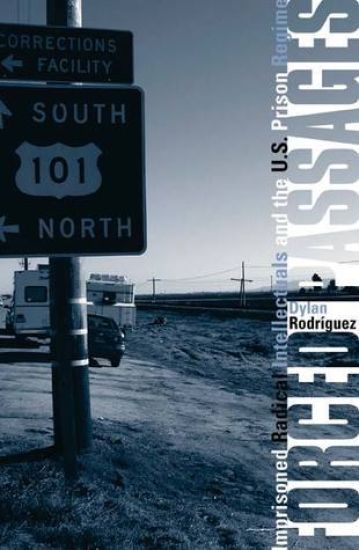
Forced Passages

Forced Passages

Dylan Rodríguez

University of Minnesota Press
2006
nidottu
More than two million people are currently imprisoned in the United States, and the nation's incarceration rate is now the highest in the world. The dramatic rise and consolidation of America's prison system has devastated lives and communities. But it has also transformed prisons into primary sites of radical political discourse and resistance as they have become home to a growing number of writers, activists, poets, educators, and other intellectuals who offer radical critiques of American society both within and beyond the prison walls. In Forced Passages, Dylan Rodríguez argues that the cultural production of such imprisoned intellectuals as Mumia Abu-Jamal, Angela Davis, Leonard Peltier, George Jackson, José Solis Jordan, Ramsey Muniz, Viet Mike Ngo, and Marilyn Buck should be understood as a social and intellectual movement in and of itself, unique in context and substance. Rodríguez engages with a wide range of texts, including correspondence, memoirs, essays, poetry, communiqués, visual art, and legal writing, drawing on published works by widely recognized figures and by individuals outside the public's field of political vision or concern. Throughout, Rodríguez focuses on the conditions under which imprisoned intellectuals live and work, and he explores how incarceration shapes the ways in which insurgent knowledge is created, disseminated, and received. More than a series of close readings of prison literature, Forced Passages identifies and traces the discrete lineage of radical prison thought since the 1970s, one formed by the logic of state violence and by the endemic racism of the criminal justice system. Dylan Rodríguez is assistant professor of ethnic studies at the University of California, Riverside.
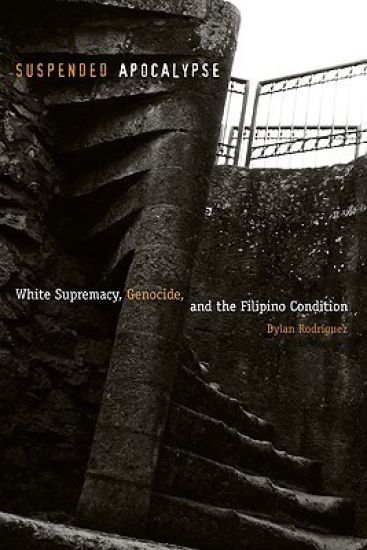
Suspended Apocalypse

Suspended Apocalypse

Dylan Rodríguez

University of Minnesota Press
2009
nidottu
Suspended Apocalypse is a rich and provocative meditation on the emergence of the Filipino American as a subject of history. Culling from historical, popular, and ethnographic archives, Dylan Rodríguez provides a sophisticated analysis of the Filipino presence in the American imaginary. Radically critiquing current conceptions of Filipino American identity, community, and history, he puts forth a genealogy of Filipino genocide, rooted in the early twentieth-century military, political, and cultural subjugation of the Philippines by the United States.Suspended Apocalypse critically addresses what Rodríguez calls "Filipino American communion," interrogating redemptive and romantic notions of Filipino migration and settlement in the United States in relation to larger histories of race, colonial conquest, and white supremacy. Contemporary popular and scholarly discussions of the Filipino American are, he asserts, inseparable from their origins in the violent racist regimes of the United States and its historical successor, liberal multiculturalism.Rodríguez deftly contrasts the colonization of the Philippines with present-day disasters such as Hurricane Katrina and Mount Pinatubo to show how the global subjection of Philippine, black, and indigenous peoples create a linked history of genocide. But in these juxtapositions, Rodríguez finds moments and spaces of radical opportunity. Engaging the violence and disruption of the Filipino condition sets the stage, he argues, for the possibility of a transformation of the political lens through which contemporary empire might be analyzed, understood, and perhaps even overcome.
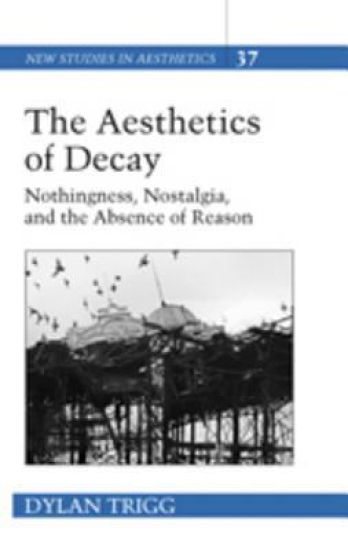
The Aesthetics of Decay

The Aesthetics of Decay

Dylan Trigg

Peter Lang Publishing Inc
2006
sidottu
In The Aesthetics of Decay, Dylan Trigg confronts the remnants from the fallout of post-industrialism and postmodernism. Through a considered analysis of memory, place, and nostalgia, Trigg argues that the decline of reason enables a critique of progress to emerge. In this ambitious work, Trigg aims to reassess the direction of progress by situating it in a spatial context. In doing so, he applies his critique of rationality to modern ruins. The derelict factory, abandoned asylum, and urban alleyway all become allies in Trigg's attack on a fixed image of temporality and progress. The Aesthetics of Decay offers a model of post-rational aesthetics in which spatial order is challenged by an affirmative ethics of ruin.
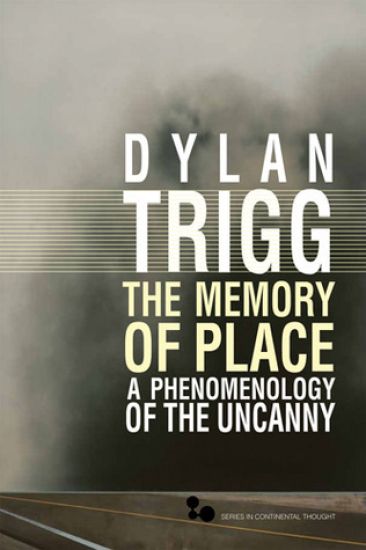
The Memory of Place

The Memory of Place

Dylan Trigg

Ohio University Press
2012
sidottu
From the frozen landscapes of the Antarctic to the haunted houses of childhood, the memory of places we experience is fundamental to a sense of self. Drawing on influences as diverse as Merleau-Ponty, Freud, and J. G. Ballard, The Memory of Place charts the memorial landscape that is written into the body and its experience of the world. Dylan Trigg's The Memory of Place offers a lively and original intervention into contemporary debates within "place studies," an interdisciplinary field at the intersection of philosophy, geography, architecture, urban design, and environmental studies. Through a series of provocative investigations, Trigg analyzes monuments in the representation of public memory; "transitional" contexts, such as airports and highway rest stops; and the "ruins" of both memory and place in sites such as Auschwitz. While developing these original analyses, Trigg engages in thoughtful and innovative ways with the philosophical and literary tradition, from Gaston Bachelard to Pierre Nora, H. P. Lovecraft to Martin Heidegger. Breathing a strange new life into phenomenology, The Memory of Place argues that the eerie disquiet of the uncanny is at the core of the remembering body, and thus of ourselves. The result is a compelling and novel rethinking of memory and place that should spark new conversations across the field of place studies. Edward S. Casey, Distinguished Professor of Philosophy at Stony Brook University and widely recognized as the leading scholar on phenomenology of place, calls The Memory of Place "genuinely unique and a signal addition to phenomenological literature. It fills a significant gap, and it does so with eloquence and force." He predicts that Trigg's book will be "immediately recognized as a major original work in phenomenology."
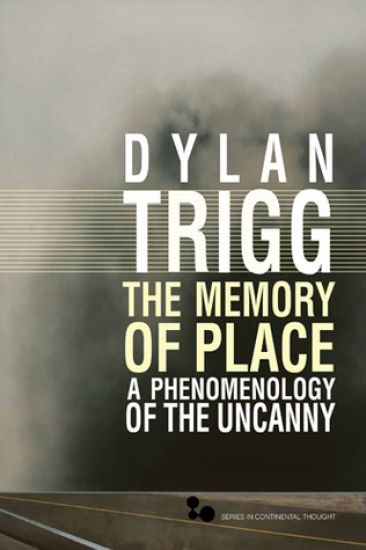
The Memory of Place

The Memory of Place

Dylan Trigg

Ohio University Press
2013
pokkari
From the frozen landscapes of the Antarctic to the haunted houses of childhood, the memory of places we experience is fundamental to a sense of self. Drawing on influences as diverse as Merleau-Ponty, Freud, and J. G. Ballard, The Memory of Place charts the memorial landscape that is written into the body and its experience of the world. Dylan Trigg's The Memory of Place offers a lively and original intervention into contemporary debates within "place studies," an interdisciplinary field at the intersection of philosophy, geography, architecture, urban design, and environmental studies. Through a series of provocative investigations, Trigg analyzes monuments in the representation of public memory; "transitional" contexts, such as airports and highway rest stops; and the "ruins" of both memory and place in sites such as Auschwitz. While developing these original analyses, Trigg engages in thoughtful and innovative ways with the philosophical and literary tradition, from Gaston Bachelard to Pierre Nora, H. P. Lovecraft to Martin Heidegger. Breathing a strange new life into phenomenology, The Memory of Place argues that the eerie disquiet of the uncanny is at the core of the remembering body, and thus of ourselves. The result is a compelling and novel rethinking of memory and place that should spark new conversations across the field of place studies. Edward S. Casey, Distinguished Professor of Philosophy at Stony Brook University and widely recognized as the leading scholar on phenomenology of place, calls The Memory of Place "genuinely unique and a signal addition to phenomenological literature. It fills a significant gap, and it does so with eloquence and force." He predicts that Trigg's book will be "immediately recognized as a major original work in phenomenology."
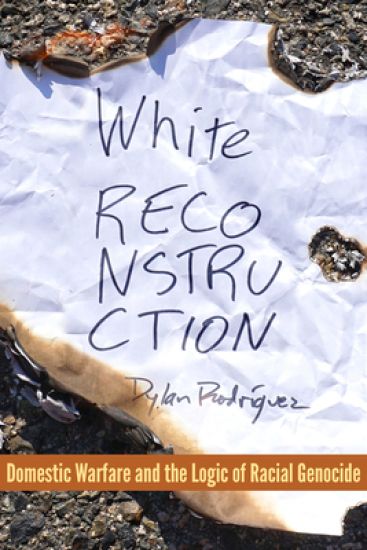
White Reconstruction

White Reconstruction

Dylan Rodríguez

FORDHAM UNIVERSITY PRESS
2020
sidottu
Winner, The Frantz Fanon Award for an Outstanding Book in Caribbean Thought We are in the fray of another signature moment in the long history of the United States as a project of anti Black and racial–colonial violence. Long before November 2016, white nationalism, white terrorism, and white fascist statecraft proliferated. Thinking across a variety of archival, testimonial, visual, and activist texts—from Freedmen's Bureau documents and the "Join LAPD" hiring campaign to Barry Goldwater's hidden tattoo and the Pelican Bay prison strike—Dylan Rodríguez counter-narrates the long "post–civil rights" half-century as a period of White Reconstruction, in which the struggle to reassemble the ascendancy of White Being permeates the political and institutional logics of diversity, inclusion, formal equality, and "multiculturalist white supremacy." Throughout White Reconstruction, Rodríguez considers how the creative, imaginative, speculative collective labor of abolitionist praxis can displace and potentially destroy the ascendancy of White Being and Civilization in order to create possibilities for insurgent thriving.
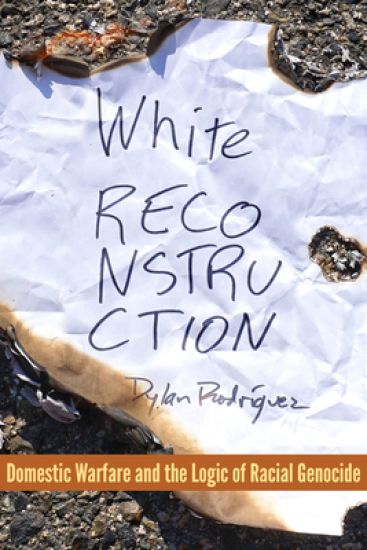
White Reconstruction

White Reconstruction

Dylan Rodríguez

Fordham University Press
2020
pokkari
Winner, The Frantz Fanon Award for an Outstanding Book in Caribbean Thought We are in the fray of another signature moment in the long history of the United States as a project of anti Black and racial–colonial violence. Long before November 2016, white nationalism, white terrorism, and white fascist statecraft proliferated. Thinking across a variety of archival, testimonial, visual, and activist texts—from Freedmen's Bureau documents and the "Join LAPD" hiring campaign to Barry Goldwater's hidden tattoo and the Pelican Bay prison strike—Dylan Rodríguez counter-narrates the long "post–civil rights" half-century as a period of White Reconstruction, in which the struggle to reassemble the ascendancy of White Being permeates the political and institutional logics of diversity, inclusion, formal equality, and "multiculturalist white supremacy." Throughout White Reconstruction, Rodríguez considers how the creative, imaginative, speculative collective labor of abolitionist praxis can displace and potentially destroy the ascendancy of White Being and Civilization in order to create possibilities for insurgent thriving.
A Child's Christmas in Wales: Gift Edition
The enduring holiday classic, lavishly illustrated by multiple Caldecott Medalist Trina Schart Hyman, is now available in a gift edition for a new generation of readers. This nostalgic recollection of Christmas past by celebrated Welsh poet Dylan Thomas evokes the beauty and tradition of the season at every turn: the warmth of a family gathering; the loveliness of a mistletoe-decked home; the predictability of cats by the fire; the mischief and fun of children left to their own devices; and the sheer delight of gifts--be they Useful or Useless. Readers will cherish this beautiful hardcover edition of the classic A Child's Christmas in Wales complete with gold-foil stars, a debossed, glossy front picture, and sparkling snowflakes. Once inside, readers are rewarded with stunning, midnight-blue endpapers sprinkled with a flurry of more snowflakes. This book is a must-have gift for the season. Brilliantly illustrated by Caldecott medalist Trina Schart Hyman with a combination of more than 40 full-color and sepia-toned images, this beautiful edition of Thomas's beloved classic will enchant readers of all ages, year after year. An ALA Notable Book.
London Sartorial

London Sartorial

Dylan Jones

Rizzoli International Publications
2017
sidottu
Combining the unique heritage of gentlemen s tailoring with a progressive approach to street style, London is fast becoming the world s capital of men s fashion. For this book, Dylan Jones presents a discerning sartorialist s guide to the capital, from London s coolest neighbourhoods to the studios of its most influential designers and beyond. Beginning with an exploration of London s chicest urban villages, the book reflects the extraordinary eclecticism of the city s street style from envelope-pushing streetwear in Shoreditch to classic tailoring in Mayfair. Forays into the coolest and hardest-to-find menswear shops in the city at once reveal the sources of the fashions on display and capture the atmosphere of the capital. At the heart of the book are profiles of London s top designers from world renowned brands to up-and-coming names, these are the designers whose work is shaping the future of menswear. Legends such as Paul Smith and Vivienne Westwood, whose flair for subversion colors their refinement, sit alongside younger designers such as Christopher Shannon and Agi and Sam, pioneers of bringing graphics and pattern to luxury streetwear. Icons of classic elegance such as Tom Ford and Burberry contrast with a new generation of designers, from Nigel Cabourn to Mr. Hare, whose redefined silhouettes and innovative materials take the traditions of Savile Row into the new millennium.
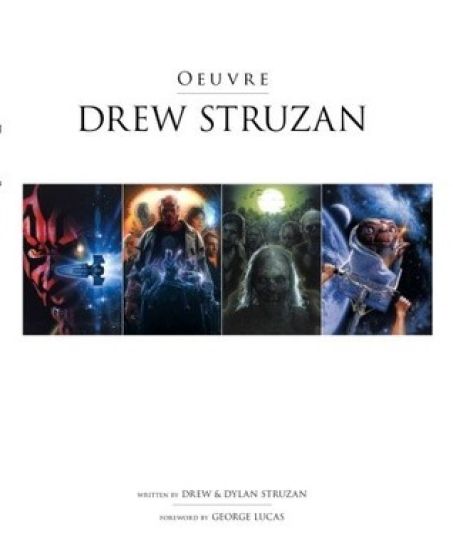
Drew Struzan: Oeuvre

Drew Struzan: Oeuvre

Dylan Struzan

Titan Books Ltd
2011
sidottu
Drew Struzan has created some of the most iconic movie posters of the last 30 years, from "Raiders of the Lost Ark" to "Star Wars: Episode III". This sumptuous hardcover edition, with an Introduction by George Lucas, features over 250 pieces of art, including all of Drew's most iconic movie images, as well as other career highlights, from album and book covers, to original works.
A Child's Christmas in Wales

A Child's Christmas in Wales

Dylan Thomas

David R. Godine Publisher Inc
2014
sidottu
A reminiscence of Christmas, from the viewpoint of a young boy, that has been a holiday favorite for decades. In rich, humorous, magical prose, poet Dylan Thomas recalls the church-going, the tree-trimming, the food, the carols and games of his childhood Christmases. And, of course, Mrs. Prothero and the firemen. It is one of Thomas' most popular works. Always on Christmas night there was music, he writes. An uncle played the fiddle, a cousin sang "Cherry Ripe," and another uncle sang "Drake's Drum." It was very warm in the little house. Auntie Hannah, who had got on to the parsnip wine, sang a song about Bleeding Hearts and Death, and then another in which she said her heart was like a Bird's Nest; and then everybody laughed again; and then I went to bed. Looking through my bedroom window, out into the moonlight and the unending smoke-colored snow, I could see the lights in the windows of all the other houses on our hill and hear the music rising from them up the long, steady falling night. For this edition, Edward Ardizzone created the perfect accompaniment in 30 delightful watercolors and drawings. This is a timeless classic--a wonderful evocation of a gentle and seemingly endless Christmas made charming and endearing through language. Published in a format for reading aloud to young people, this is truly a book for all ages.