Kirjahaku
Etsi kirjoja tekijän nimen, kirjan nimen tai ISBN:n perusteella.
1000 tulosta hakusanalla E.C. Segar
James Hannington, First Bishop of Eastern Equatorial Africa;
E C Dawson
Creative Media Partners, LLC
2019
sidottu
This large-scale comparative endeavor, complete in two volumes, reflects increasing concern with the population factor in economic and social change worldwide. Demographers, on their side, have been focusing on history. In response to this, Population in History represents the work of two practitioners that have begun to work together, using their combined approaches in an attempt to assess and account for population growth experienced by the West since the seventeenth century.There is a long record of interest in the history of population. But the interest now displayed is likely to be both more persistent and far more fruitful in its consequences. New studies have been initiated in many countries. And because the studies are more informed and systematic than many of those of earlier periods, they are already provoking the further spread of research. A much more positive part is now also being played by national and international associations of historians and demographers. It is not unlikely that, within the next fifteen or twenty years, the main outlines of population change in the seventeenth and eighteenth centuries will be firmly established for much of Europe.Previous research has tended to appear in specialist journals and academic publications. This volume is intended to provide a more easily accessible publication. It has been thought appropriate to include some earlier work, both because of its intrinsic interest and because it provided the background and part of the stimulus to the later research. Of the twenty-seven contributions to this outstanding volume, seven are unabridged reprints of earlier work; the remaining contributions are either entirely new or represent substantial revisions of work published elsewhere.
Primary teachers have always been required to master a wealth of knowledge and professional skills and recent debate has led to pressure for ever higher levels of competence. Ted Wragg's book provides a comprehensive guide to the skills needed by today's primary teachers. Separate chapters cover such central demands of the job as explaining new topics, asking stimulating questions and settling down with a new class and one is devoted to the particular problems of supply teachers. Based on extensive research in classrooms over the last three years, Primary Teaching Skills will enlighten and entertain both student and novice teachers and their more experienced colleagues at all stages of their professional development.
Primary teachers have always been required to master a wealth of knowledge and professional skills and recent debate has led to pressure for ever higher levels of competence. Ted Wragg's book provides a comprehensive guide to the skills needed by today's primary teachers. Separate chapters cover such central demands of the job as explaining new topics, asking stimulating questions and settling down with a new class and one is devoted to the particular problems of supply teachers. Based on extensive research in classrooms over the last three years, Primary Teaching Skills will enlighten and entertain both student and novice teachers and their more experienced colleagues at all stages of their professional development.
This book is one of a set of eight innovative yet practical resource books for teachers, focussing on the classroom and covering vital skills for primary and secondary teachers. The books are strongly influenced by the findings of numerous research projects during which hundreds of teachers were observed at work. The first editions of the series were best sellers, and these revised second editions of the series will be equally welcomed by teachers eager to improve their teaching skills. Successful secondary teachers operate in many different ways, but they have one thing in common - an ability to manage their classrooms effectively. Without the skills required to do this, the most inspiring and knowledgeable teacher will fail.In Class Management in the Secondary School, Ted Wragg helps teachers to clarify their own aims and to find the strategies which will work for them. Topics covered include:*first encounters*the establishment of rules*relationships*management of time and space*specific discipline problemsThere are certain skills that teachers possess that are of paramount importance - class management is one of those areas. Effective classroom management can be the single most influential factor in getting it right and is a core teaching skill that both trainee and experienced teachers should constantly be improving on.
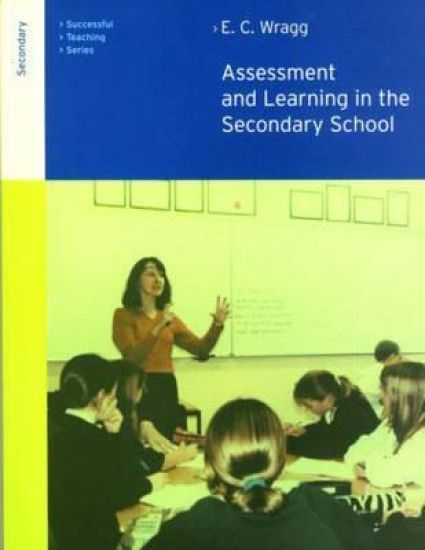
Assessment is now regarded as a 'high stakes' issue: schools, teachers, and individual pupils are often judged by the results of national tests and public examinations.This book addresses both formal and informal ways of assessing children's work and progress. Pupils' learning is often neglected in the debate, so this book puts what children actually learn right at its centre and involves them sensibly and appropriately in the improvement of teaching and learning.The book is divided into six units where Ted Wragg address topics such as: * principles and purposes of assessment* written, oral and practical evaluation* self-assessment the 'whole school' approach* staff development and appraisal.The inclusion of tried and tested practical activities, discussion topics, photographs, cartoons and case examples makes this a very user-friendly book for both trainee and experienced teachers in secondary schools.This is one of a set of eight innovative yet practical resource books for teachers, focussing on the classroom and covering vital skills for primary and secondary teachers. The books are strongly influenced by the findings of numerous research projects during which hundreds of teachers were observed at work. The first editions of the series were bestsellers, and these revised second editions will be equally welcomed by teachers eager to improve their teaching skills.


Magnesium and Man provides the physician with a brief yet comprehensive overview of magnesium as a biochemical agent in human metabolism and disease. The first half of the book introduces techniques of measurement as well as the role of magnesium in normal biochemistry and physiology. The remaining chapters discuss magnesium squarely in the context of human disease: neonatal deficiency, thyroid disease, kidney disease, malignant osteolytic disease, alcoholism, and cirrhosis. Written by a clinician who is also a dominant figure in magnesium research, this book greatly advances communication between laboratory and clinic and will be essential reading for anyone involved in patient care.
Now in an updated and expanded new edition, The Nutritionist: Food, Nutrition, and Optimal Health, 2nd Edition, provides readers with vital information about how to simply but radically improve their daily lives with the science of nutrition, balance their diets to achieve more energy, and improve health and longevity. Complete with many informative and easy-to-read tables and charts, The Nutritionist: Food, Nutrition, and Optimal Health, 2nd Edition, utilizes the findings of the latest biological and medical studies to give experts and non-experts alike a comprehensive account of the needs of our bodies and the ways that healthy eating can improve performance in day-to-day activities. Author Dr. Robert Wildman, renowned nutrition expert, debunks myths about carbohydrates, fat, and cholesterol, elucidates the role of water in nutrition, and clearly explains the facts of human anatomy and physiognomy, the process of digestion, and vitamin supplements. Complete with a practical and comprehensive guide to the nutrition information printed on the packaging of most food items, The Nutritionist: Food, Nutrition, and Optimal Health, 2nd Edition is a necessary and extremely useful nutrition resource for anyone interested in the science and practical benefits of good nutrition.
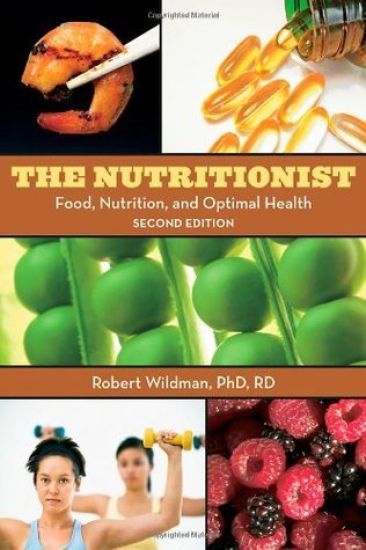
Now in an updated and expanded new edition, The Nutritionist: Food, Nutrition, and Optimal Health, 2nd Edition, provides readers with vital information about how to simply but radically improve their daily lives with the science of nutrition, balance their diets to achieve more energy, and improve health and longevity. Complete with many informative and easy-to-read tables and charts, The Nutritionist: Food, Nutrition, and Optimal Health, 2nd Edition, utilizes the findings of the latest biological and medical studies to give experts and non-experts alike a comprehensive account of the needs of our bodies and the ways that healthy eating can improve performance in day-to-day activities. Author Dr. Robert Wildman, renowned nutrition expert, debunks myths about carbohydrates, fat, and cholesterol, elucidates the role of water in nutrition, and clearly explains the facts of human anatomy and physiognomy, the process of digestion, and vitamin supplements. Complete with a practical and comprehensive guide to the nutrition information printed on the packaging of most food items, The Nutritionist: Food, Nutrition, and Optimal Health, 2nd Edition is a necessary and extremely useful nutrition resource for anyone interested in the science and practical benefits of good nutrition.
This text begins with an in-depth overview into the human organism at the molecular, cellular, tissue and organ levels, and develops into a discussion of the objectives and features of organ systems of the evolved human. The book also covers the relationship between the human body and the environment in which it exists including other organisms that co-habitate the environment. Discussions of the nature of other organisms such as various animals, plants, and micro-organisms makes later information about food science, nutrient density in various food sources, and nutraceuticals easier to comprehend. Advanced Human Nutrition examines human nutrient requirements, the basis for RDA and other recommendations; human nutrition, digestion, and absorption with relation to organs, exocrine and endocrine functions, histology, and absorptive activities; macronutrients and micronutrients; eicosanoid chemistry and function, and more. The present and future of nutrition research is examined, including everything from the HANES studies to electron microscopy and molecular biology. Features ·