Kirjojen hintavertailu. Mukana 12 016 292 kirjaa ja 12 kauppaa.

Kirjahaku

Etsi kirjoja tekijän nimen, kirjan nimen tai ISBN:n perusteella.

1000 tulosta hakusanalla Ellen Devlin

Opening Israel's Scriptures

Opening Israel's Scriptures

Ellen F. Davis

Oxford University Press Inc
2019
nidottu
Opening Israel's Scriptures is a collection of thirty-six essays on the Hebrew Bible, from Genesis to Chronicles, which gives powerful insight into the complexity and inexhaustibility of the Hebrew Scriptures as a theological resource. Based on more than two decades of lectures on Old Testament interpretation, Ellen F. Davis offers a selective yet comprehensive guide to the core concepts, literary patterns, storylines, and theological perspectives that are central to Israel's Scriptures. Underlying the whole study is the primary assumption that each book of the canon has literary and theological coherence, though not uniformity. In both her close readings of individual texts and in her broad demonstrations of the coherence of whole books, Davis models the best practices of contemporary exegesis, integrating the insights of contemporary scholars with those of classical theological resources in Jewish and Christian traditions. Throughout, she keeps an eye to the experiences and concerns of contemporary readers, showing through multiple examples that the critical interpretation of texts is provisional, open-ended work--a collaboration across generations and cultures. Ultimately what she offers is an invitation into the more spacious world that the Bible discloses, which challenges ordinary conceptions of how things "really" are.
The Units of Life

The Units of Life

Ellen Clarke

Oxford University Press
2025
sidottu
Where are the edges of a tree? What makes arms different from daughters? What have corals got in common with Necker cubes? Biological individuality has become a dizzying topic since researchers began, at the turn of the millennium, to realize that we can't go on taking organisms for granted as basic particles of the living world. Ellen Clarke takes us on a disorienting romp through the natural world and argues that our way of conceptualizing living things-of understanding life as carved up into separate chunks-is best understood as an idealization. Vivid examples animate some fairly arcane philosophical topics concerning identity over time, natural kinds, and the fundamental furniture of reality, as well as serious biological issues concerning natural selection, the emergence of compositional hierarchies, and the evolution of cooperation. Readers will come away with newfound respect for humankind's ingenuity in engineering concepts that make sense of the complex and ever-changing wonders of life on earth.
Love and Toil

Love and Toil

Ellen Ross

Oxford University Press Inc
1994
sidottu
The history of the British working classes has until recently been written with a focus on the workplace or on such male organizations as clubs, unions, or national political parties. This study of mothers in London before the First World War stresses the distinctiveness of their experiences from those of other classes, and of the post World War I period, and demonstrates the ways in which mothers and their domestic choices were essential to the survival and cultural perpetuation of the working classes.
From Christian Science to Jewish Science

From Christian Science to Jewish Science

Ellen M. Umansky

Oxford University Press Inc
2004
sidottu
During the late nineteenth and early twentieth centuries, thousands of American Jews were drawn to the teachings of Christian Science. Viewing such attraction with alarm, American Reform Rabbis sought to counter Christian Science's appeal by formulating a Jewish vision of happiness and health. Unlike Christian Science, it acknowledged the benefits of modern medecine yet, sharing the belief in God as the true source of healing, similarly emphasized the power of visualization and affirmative prayer. Though the numbers of those formally affiliated with Jewish science would remain small, its emphasis on the connection between mind and body influenced scores of rabbis and thousands if not hundreds of thousands of American Jews, predating contemporary Jewish interest in spiritual healing by more than seventy years. Examining an important and previously unwritten chapter in the story of American Judaism, this book sheds light on religious and social concerns of twentieth-century American Jewry, including ways in which adherence to Jewish Science helped thousands bridge the perceived gap between Judaism and modernity.
Split Signals

Split Signals

Ellen Mickiewicz

Oxford University Press Inc
1992
nidottu
Television has changed drastically in the Soviet Union over the last three decades. In 1960, only five percent of the population had access to TV, but now the viewing population has reached near total saturation. Today's main source of information in the USSR, television has become Mikhail Gorbachev's most powerful instrument for paving the way for major reform. Containing a wealth of interviews with major Soviet and American media figures and fascinating descriptions of Soviet TV shows, Ellen Mickiewicz's wide-ranging, vividly written volume compares over one hundred hours of Soviet and American television, covering programs broadcast during both the Chernenko and Gorbachev governments. Mickiewicz describes the enormous significance and popularity of news programs and discusses how Soviet journalists work in the United States. Offering a fascinating depiction of the world seen on Soviet TV, she also explores the changes in programming that have occurred as a result of glasnost.
Restless Genius

Restless Genius

Ellen Tan Drake

Oxford University Press Inc
1996
sidottu
This book interprets Robert Hooke's Lectures and Discourses of Earthquakes, and Subterraneous Eruptions (1667-1694). Hooke's hypotheses concerning the origin of terrestrial features were of major importance to the development of geology. The volume consists of the original text of the Discourses transposed into modern type and paired with explanatory annotations; a brief up-to-date biography of Hooke, with emphasis on his geological contributions; and a comparison of selected passages from James Hutton, to show the transmission of ideas and Hooke's influence on later geologists.
Love and Toil

Love and Toil

Ellen Ross

Oxford University Press Inc
1994
nidottu
The feisty warm-hearted "mum" has long figured as a symbol of the working class in Britain, yet working-class history has emphasized male organizations such as clubs, unions, or political parties. Investigating a different dimension of social history, Love and Toil focuses on motherhood among the London poor in the late Victorian and Edwardian years, and on the cultures, communities, and ties with husbands and children that women created. Mothers' skills in managing the family budget, earning income, and caring for their children were critical in protecting households from the worst hardships of industrial capitalism, yet poverty or the threat of it molded intimate relationships and left its imprint on personalities. This book is also a case study demonstrating the larger argument that the concept of "motherhood" is more socially and historically constructed than biologically determined. Shaky household economics, pressure toward respectability, the close proximity of neighbors, the precariousness of infant and child life, and little chance of better lives for their children shaped the work and emotions of motherhood much more than did the biological experiences of pregnancy, birth, and lactation. This beautifully written book, embellished with Cockney slang and music hall songs, addresses fascinating questions in the fields of women's studies, labor history, social policy, and family history.
Changing Channels

Changing Channels

Ellen Mickiewicz

Oxford University Press Inc
1997
sidottu
At 7:20 pm on October 3, 1993, a nervous and shaky anchor broke into coverage of a soccer match to tell Russian viewers that their state television was shutting down. In the opening salvos of the parliamentary revolt against Boris Yeltsin's government, a mob had besieged the station's headquarters. A man had just been killed in front of the news director. Moments later, screens all across Russia went blank, leaving audiences in the dark. But in less than an hour, Russia's second state channel went on the air. Millions watched as Sergei Torchinsky anchored thirteen straight hours of coverage, often with the sound of shooting clearly audible in the background. Streams of politicians, trade union leaders, writers, television personalities, and other well-known figures braved gunfire to reach Channel Two's makeshift studios and speak directly to the nation. In one stunning moment, a famous actress extemporaneously pleaded with viewers not to return to the horrors of Stalinism. Boris Yeltsin, who had been glued to his television set like everyone else, later recalled, "For the rest of my life I will remember the anxious but resolute and courageous expression of Liya Akhedzhakova. . . her hoarse, cracking voice remains in my memory." In that time of crisis, television bound the nation together, a continuing emblem of legitimate authority which lent an image of stability and credibility to Yeltsin's besieged government. "Television saved Russia," the Russian president said. Changing Channels vividly recreates this exciting time, as television both helped and hindered the Russian nation's struggle to create a new democracy. From the moribund, state-controlled television broadcasts at the end of the Soviet Union, through Mikhail Gorbachev's glasnost, up to Yeltsin's victory in the most recent Russian presidential elections of 1996, Mickiewicz charts the omnipresent role of television, drawing on interviews, public opinion surveys, research, and the television programming itself. Analyzing the rise of political advertising (sometimes with controversial US participation), the birth of journalists as opinionated television personalities, and the changing news coverage of coups, elections, and wars, she shows both how the gradual development of private, independent stations has begun to make real pluralism possible and how the authoritarian legacy of the Soviet state structure continues to affect Russian television even today. With television in 97% of all Russian households, and the nightly news watched by a viewership matching that for the Super Bowl in the US, the struggle for control over television became the struggle for control over the nation. Mickiewicz illuminates the efforts of those both in and out of power to control the media. Behind the momentous political changes are the stories of the men and women who chose to resist, test, or submit to the system. Mickiewicz offers brilliant sketches of these individuals: Yegor Ligachev, Gorbachev's second in command, a man of strongly held opinions who, in retirement, still orated loudly, even over tea; Boris Yeltsin, having not even put on his shirt yet, watching the early morning coverage of the attempted coup against Gorbachev; or the new breed of Russian journalists covering the war in Chechnya with footage of bombed out streets and charred corpses for privately owned NTV, despite continuing government intimidation. In vivid interviews, all the key players, including Gorbachev himself, offered Mickiewicz their unique insights and frank personal commentary. Drawing on these interviews and on her extensive research on the interactions of politics, economics, and society, Mickiewicz presents a rich and authoritative analysis of television in Russia. In many ways, Mickiewicz writes, no other country in the world offers television a greater opportunity and a greater role. Changing Channels tells the fascinating story of a truly modern phenomenon: the struggle to create genuine political pluralism, helped and hindered by the barrage of information, advertisements, and media-created personalities that make up modern television.
The Grief of God

The Grief of God

Ellen M. Ross

Oxford University Press Inc
1997
sidottu
Between the thirteenth and fifteenth centuries images of a wounded and bloody Christ proliferated in England, appearing in sermons, drama, church decorations, and spiritual treatises. Some scholars see these graphic portrayals of suffering as signs of a new emphasis on Jesus's humanity, while others see renewed emphasis on a terrifying God of vengeance. Ross, however, argues that these explanations have misunderstood the nature of medieval attitudes toward the suffering Christ. Analysing a wide range of textual and pictorial evidence, she finds that in their encounters with the wounded Jesus - the Saviour whose blood nurtures, feeds, and heals human persons - medieval believers found the God of mercy and love.
The Adman in the Parlor

The Adman in the Parlor

Ellen Gruber Garvey

Oxford University Press Inc
1996
nidottu
How did advertising come to seem natural and ordinary to magazine readers by the end of the nineteenth century? The Adman in the Parlor explores readers' interactions with advertising during a period when not only consumption but advertising itself became established as a pleasure. Garvey argues that readers' participation in advertising, rather than top-down dictation by advertisers, made advertizing a central part of American culture. Garvey's analysis interweaves such texts and artifacts as advertising trade journals, magazines addressed to elite, middle class, and poorer readerships, scrapbooks, medical articles, paper dolls, chromolithographed trade cards, and contest rules. She tracks new forms of fictional realism that contained brand name references, courtship stories, and other fictional forms. As magazines became dependant on advertising rather than sales for their revenues, women's magazines led the way in making consumers of readers through the interplay of fiction, editorials, and advertising. General magazines, too, saw little conflict between these different interests. Instead, advertising and fiction came to act on one another in complex, unexpected ways. Magazine stories illustrated the multiple desires and social meanings embodied in the purchase of a product. Garvey takes the bicycle as a case study, and tracks how magazines mediated among competing medical, commercial, and feminist discourses to produce an alluring and unthreatening model of women bicycling in their stories. Advertising formed the national vocabulary. At once invisible, familiar, and intrusive, advertising both shaped fiction of the period and was shaped by it. The Adman in the Parlor unearths the lively conversations among writers and advertisers about the new prevalence of advertising for mass-produced, nationally distributed products.
By the Renewing of Your Minds

By the Renewing of Your Minds

Ellen T. Charry

Oxford University Press Inc
1999
nidottu
Through close readings of a number of classic texts, Charry develops the thesis that classic Christian theology is thoroughly shaped by pastoral and moral purposes. Charry's hope is to show contemporary theologians how to teach the faith in a morally constructive fashion, transcending the current destructive opposition between 'academic' and 'pastoral' theology.
Writing with Scissors

Writing with Scissors

Ellen Gruber Garvey

Oxford University Press Inc
2012
sidottu
Scrapbooks have been around since printed matter began to flow into the lives of ordinary people, a flow that became an ocean in nineteenth-century America. Though libraries can show us the vast archive--literally thousands of dailies, weeklies, monthlies, quarterlies, and annuals were flooding the public once mass-circulation was common--we have little knowledge of what, and particularly how people read. Writing with Scissors follows swimmers through that first ocean of print. We know that thousands of people were making meaning out of the swirl of paper that engulfed them. Ordinary readers processed the materials around them, selected choice examples, and created book-like collections that proclaimed the importance of what they read. Writing with Scissors explores the scrapbook making practices of men and women who had varying positions of power and access to media. It considers what the bookmakers valued and what was valued by the people or institutions that sheltered them over time. It compares nineteenth-century scrapbooking methods with current techniques for coping with an abundance of new information on the Web, such as bookmarks, favorites lists, and links. The book is part of a developing literature in cultural studies and book history exploring reading practices of ordinary readers. Scholars interested in the burgeoning field of print culture have not yet taken full advantage of scrapbooks, these great repositories of American memory. Rather than just using evidence from scrapbooks, Garvey turns to the scrapbook as a genre on its own. Her book offers a fascinating view of the semi-permeable border between public and domestic realms, illuminating the ongoing negotiation between readers and the press.
Arts Management: Uniting Arts and Audiences in the 21st Century
Arts Management serves students at both the undergraduate and graduate levels in the Introduction to Arts Management course. This edition combines both theory and practical approaches, and addresses major issues including incorporating new technology and research into management programs; new information on fundraising by using programs like Kickstarter; effectively using "futuring" exercises in organizational planning; and addressing issues of diversity and inclusion.
Oxford AQA GCSE History: Conflict and Tension: The Inter-War Years 1918-1939 Revision Guide (9-1)
This Conflict and Tension 1918-1939 Revision Guide is part of the popular Oxford AQA GCSE History series. Written by our original author team to match the new AQA specification, this guide covers exactly what your students require to succeed in the Paper 1 Conflict and Tension 1918-39 Wider World Depth Study exams. - Recap key events with clear visual diagrams and brief points - Apply knowledge with targeted revision activities that tests basic comprehension, then apply understanding towards exam-style questions - Review and track revision with progress checklists, suggested activity answers and Exam Practice sections - Step-by-step exam guidance based on the popular 'How to' student book feature - Examiner Tip features most up-to-date expert advice and identifies common exam mistakes - Boost student confidence on all AQA GCSE Conflict and Tension question types with revision activities such as Source Analysis and How Far Do You Agree - Perfect for use alongside the Student Book or as a stand-alone resource for independent revision. This revision guide helps your students Recap, Apply, and Review their way towards exam success.
Television and New Media Audiences

Television and New Media Audiences

Ellen Seiter

Clarendon Press
1998
nidottu
Why is talk about television forbidden at certain schools? Why does a mother feel guilty about watching Star Trek in front of her four-year-old child? Why would retired men turn to daytime soap operas for entertainment? Cliches about television mask the complexity of our relationship to media technologies. Through case studies, the author explains what audience research tells us about the uses of technologies in the domestic sphere and the classroom, the relationship between gender and genre, and the varied interpretation of media technologies and media forms. Television and New Media Audiences reviews the most important research on television audiences and recommends the use of ethnographic, longitudinal methods for the study of media consumption and computer use at home as well as in the workplace. The book discusses reactions of audiences to many internationally known television programmes including The Flintstones, The Jetsons, Street Fighter, Mighty Morphin Power Rangers, X-Men, Sesame Street, Dallas, Star Trek, The Cosby Show, Teenage Mutant Ninja Turtles, National Geographic, etc.
Television and New Media Audiences

Television and New Media Audiences

Ellen Seiter

Clarendon Press
1998
sidottu
Why is talk about television forbidden at certain schools? Why does a mother feel guilty about watching Star Trek in front of her four-year-old child? Why would retired men turn to daytime soap operas for entertainment? Cliches about television mask the complexity of our relationship to media technologies. Through case studies, the author explains what audience research tells us about the uses of technologies in the domestic sphere and the classroom, the relationship between gender and genre, and the varied interpretation of media technologies and media forms. Television and New Media Audiences reviews the most important research on television audiences and recommends the use of ethnographic, longitudinal methods for the study of media consumption and computer use at home as well as in the workplace. The book discusses reactions of audiences to many internationally known television programmes including The Flintstones, The Jetsons, Street Fighter, Mighty Morphin Power Rangers, X-Men, Sesame Street, Dallas, Star Trek, The Cosby Show, Teenage Mutant Ninja Turtles, National Geographic, etc.
Roman Artefacts and Society

Roman Artefacts and Society

Ellen Swift

Oxford University Press
2017
sidottu
In this book, Ellen Swift uses design theory, previously neglected in Roman archaeology, to investigate Roman artefacts in a new way, making a significant contribution to both Roman social history, and our understanding of the relationships that exist between artefacts and people. Based on extensive data collection and the close study of artefacts from museum collections and archives, the book examines the relationship between artefacts, everyday behaviour, and experience. The concept of 'affordances'-features of an artefact that make possible, and incline users towards, particular uses for functional artefacts-is an important one for the approach taken. This concept is carefully evaluated by considering affordances in relation to other sources of evidence, such as use-wear, archaeological context, the end-products resulting from artefact use, and experimental reconstruction. Artefact types explored in the case studies include locks and keys, pens, shears, glass vessels, dice, boxes, and finger-rings, using material mainly drawn from the north-western Roman provinces, with some material also from Roman Egypt. The book then considers how we can use artefacts to understand particular aspects of Roman behaviour and experience, including discrepant experiences according to factors such as age, social position, and left- or right-handedness, which are fostered through artefact design. The relationship between production and users of artefacts is also explored, investigating what particular production methods make possible in terms of user experience, and also examining production constraints that have unintended consequences for users. The book examines topics such as the perceived agency of objects, differences in social practice across the provinces, cultural change and development in daily practice, and the persistence of tradition and social convention. It shows that design intentions, everyday habits of use, and the constraints of production processes each contribute to the reproduction and transformation of material culture.
Roman Artefacts and Society

Roman Artefacts and Society

Ellen Swift

Oxford University Press
2020
nidottu
In this book, Ellen Swift uses design theory, previously neglected in Roman archaeology, to investigate Roman artefacts in a new way, making a significant contribution to both Roman social history, and our understanding of the relationships that exist between artefacts and people. Based on extensive data collection and the close study of artefacts from museum collections and archives, the book examines the relationship between artefacts, everyday behaviour, and experience. The concept of 'affordances'—features of an artefact that make possible, and incline users towards, particular uses for functional artefacts—is an important one for the approach taken. This concept is carefully evaluated by considering affordances in relation to other sources of evidence, such as use—wear, archaeological context, the end—products resulting from artefact use, and experimental reconstruction. Artefact types explored in the case studies include locks and keys, pens, shears, glass vessels, dice, boxes, and finger-rings, using material mainly drawn from the north-western Roman provinces, with some material also from Roman Egypt. The book then considers how we can use artefacts to understand particular aspects of Roman behaviour and experience, including discrepant experiences according to factors such as age, social position, and left- or right-handedness, which are fostered through artefact design. The relationship between production and users of artefacts is also explored, investigating what particular production methods make possible in terms of user experience, and also examining production constraints that have unintended consequences for users. The book examines topics such as the perceived agency of objects, differences in social practice across the provinces, cultural change and development in daily practice, and the persistence of tradition and social convention. It shows that design intentions, everyday habits of use, and the constraints of production processes each contribute to the reproduction and transformation of material culture.
A Social Archaeology of Roman and Late Antique Egypt

A Social Archaeology of Roman and Late Antique Egypt

Ellen Swift; Jo Stoner; April Pudsey

Oxford University Press
2021
sidottu
Artefact evidence has the unique power to illuminate many aspects of life that are rarely explored in written sources, yet this potential has been underexploited in research on Roman and Late Antique Egypt. This book presents the first in-depth study that uses everyday artefacts as its principal source of evidence to transform our understanding of the society and culture of Egypt during these periods. It represents a fundamental reference work for scholars, with much new and essential information on a wide range of artefacts, many of which are found not only in Egypt but also in the wider Roman and late antique world. By taking a social archaeology approach, it sets out a new interpretation of daily life and aspects of social relations in Roman and Late Antique Egypt, contributing substantial insights into everyday practices and their social meanings in the past. Artefacts from University College London's Petrie Museum of Egyptian Archaeology are the principal source of evidence; most of these objects have not been the subject of any previous research. The book integrates the close study of artefact features with other sources of evidence, including papyri and visual material. Part one explores the social functions of dress objects, while part two explores the domestic realm and everyday experience. An important theme is the life course, and how both dress-related artefacts and ordinary functional objects construct age and gender-related status and facilitate appropriate social relations and activities. There is also a particular focus on wider social experience in the domestic context, as well as broader consideration of economic and social changes across the period.
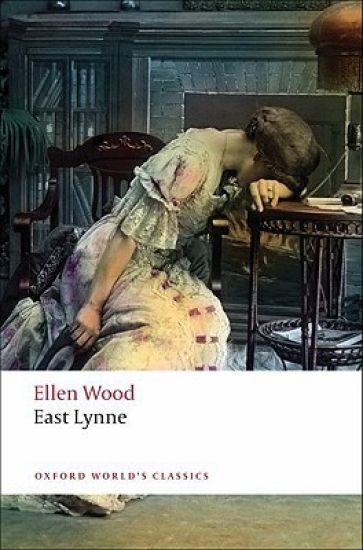
East Lynne

East Lynne

Ellen Wood

Oxford University Press
2008
nidottu
'Coward! Sneak! May good men shun him, from henceforth! may his Queen refuse to receive him! You, an earl's daughter! Oh, Isabel! How utterly you have lost yourself!' When the aristocratic Lady Isabel abandons her husband and children for her wicked seducer, more is at stake than moral retribution. Ellen Wood played upon the anxieties of the Victorian middle classes who feared a breakdown of the social order as divorce became more readily available and promiscuity threatened the sanctity of the family. In her novel the simple act of hiring a governess raises the spectres of murder, disguise, and adultery. Her sensation novel was devoured by readers from the Prince of Wales to Joseph Conrad and continued to fascinate theatre-goers and cinema audiences well into the next century. This edition returns for the first time to the racy, slang-ridden narrative of the first edition, rather than the subsequent stylistically 'improved' versions hitherto reproduced by modern editors. ABOUT THE SERIES: For over 100 years Oxford World's Classics has made available the widest range of literature from around the globe. Each affordable volume reflects Oxford's commitment to scholarship, providing the most accurate text plus a wealth of other valuable features, including expert introductions by leading authorities, helpful notes to clarify the text, up-to-date bibliographies for further study, and much more.