
Kirjahaku
Etsi kirjoja tekijän nimen, kirjan nimen tai ISBN:n perusteella.
1000 tulosta hakusanalla Erasmus Wilson

A Grammar Of The Icelandic Or Old Norse Tongue (1843)
Erasmus Rask
KESSINGER PUBLISHING, LLC
2008
sidottu

Biographia Evangelica V1: Or An Historical Account Of The Lives And Deaths Of The Most Eminent And Evangelical Authors Or Preachers (1810)
Erasmus Middleton
KESSINGER PUBLISHING, LLC
2008
sidottu
Guide To The Anglo-Saxon Tongue
Erasmus Rask; Edward Johnston Vernon
KESSINGER PUBLISHING CO
2009
pokkari


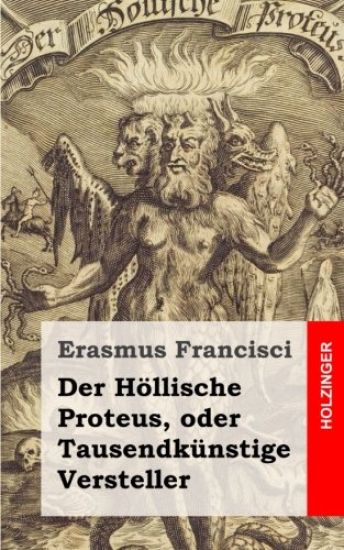
Der Höllische Proteus, oder Tausendkünstige Versteller
Erasmus Francisci
Createspace Independent Publishing Platform
2013
nidottu
Erasmus Francisci: Der H llische Proteus, oder Tausendk nstige Versteller Edition Holzinger. Taschenbuch Berliner Ausgabe, 2015, 3. Auflage Vollst ndiger, durchgesehener Neusatz bearbeitet und eingerichtet von Michael Holzinger Francisci, Erasmus: Der H llische Proteus, oder Tausendk nstige Versteller ...]. N rnberg: Wolfgang Moritz Endters, 1690. Textgrundlage ist die Ausgabe: Francisci, Erasmus: Der H llische Proteus, oder Tausendk nstige Versteller ...]. N rnberg: Wolfgang Moritz Endters, 1690. Herausgeber der Reihe: Michael Holzinger Reihengestaltung: Viktor Harvion Gesetzt aus Minion Pro, 10 pt.
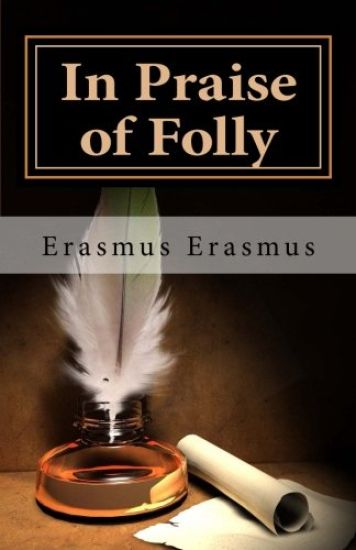
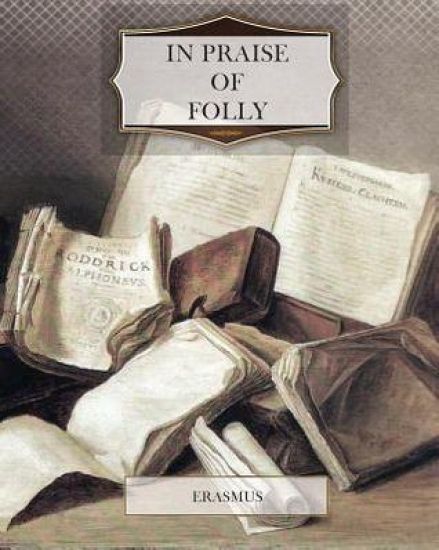
In Praise of Folly is an essay written in 1509 by Desiderius Erasmus of Rotterdam and first printed in 1511. The essay was inspired by De Triumpho Stultitiae, written by Italian humanist Faustino Perisauli, born at Tredozio, near Forl . Erasmus revised and extended the work, which he originally wrote in the space of a week while sojourning with Sir Thomas More at More's estate in Bucklersbury. In Praise of Folly is considered one of the most notable works of the Renaissance and one of the catalysts of the Protestant Reformation. It starts off with a satirical learned encomium after the manner of the Greek satirist Lucian, whose work Erasmus and Sir Thomas More had recently translated into Latin, a piece of virtuoso foolery; it then takes a darker tone in a series of orations, as Folly praises self-deception and madness and moves to a satirical examination of pious but superstitious abuses of Catholic doctrine and corrupt practices in parts of the Roman Catholic Church-to which Erasmus was ever faithful-and the folly of pedants (including Erasmus himself). Erasmus had recently returned disappointed from Rome, where he had turned down offers of advancement in the curia, and Folly increasingly takes on Erasmus' own chastising voice. The essay ends with a straightforward statement of Christian ideals. Erasmus was a good friend of More, with whom he shared a taste for dry humor and other intellectual pursuits. The title "Moriae Encomium" can also be read as meaning "In praise of More". The double or triple meanings go on throughout the text. The essay is filled with classical allusions delivered in a style typical of the learned humanists of the Renaissance. Folly parades as one of the gods, offspring of Plutos and Freshness and nursed by Inebriation and Ignorance, whose faithful companions include Philautia (self-love), Kolakia (flattery), Lethe (oblivion), Misoponia (laziness), Hedone (pleasure), Anoia (madness), Tryphe (wantonness), Komos (intemperance) and Eegretos Hypnos (dead sleep).
The Temple Of Nature: Or The Origin Of Society: A Poem With Philosophical Notes
Erasmus Darwin
Literary Licensing, LLC
2014
sidottu

The Temple of Nature: Or the Origin of Society: A Poem with Philosophical Notes
Erasmus Darwin
Literary Licensing, LLC
2014
nidottu

History of the Epidemic Yellow Fever, at New Orleans, Louisiana in 1853 (1854)
Erasmus Darwin Fenner
Literary Licensing, LLC
2014
nidottu
The Temple of Nature, or, the Origin of Society: A Poem with Philosophical Notes
Erasmus Darwin
Createspace Independent Publishing Platform
2014
nidottu
The Origin of Society: A Poem with Philosophical Notes
Erasmus Darwin
Createspace Independent Publishing Platform
2014
nidottu


The Botanic Garden - Part II
Erasmus Darwin
Createspace Independent Publishing Platform
2015
nidottu
The Temple of Nature or the Origin of Society
Erasmus Darwin
Createspace Independent Publishing Platform
2015
nidottu