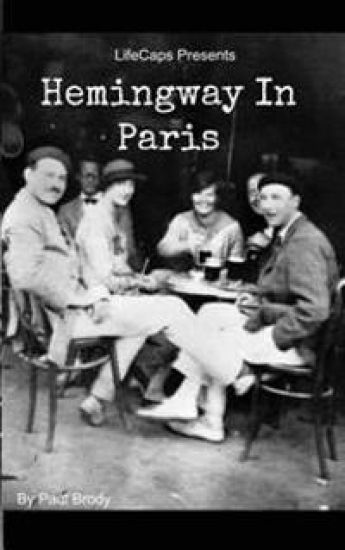
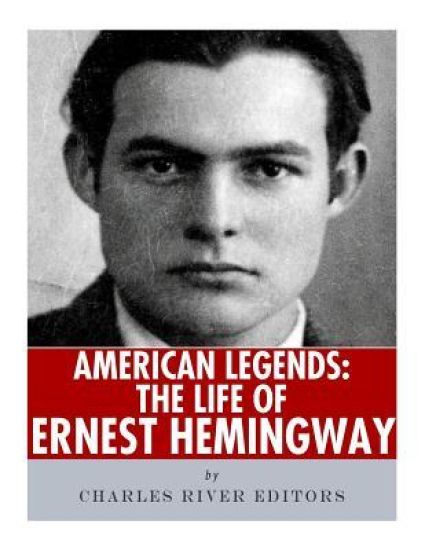
In 20th century American literature, few individuals stand as tall as Ernest Hemingway. He singlehandedly defined Modernist fiction with his short, simple, declarative writing style. His years in Paris during the 1920s were his "apprenticeship," when he made the transition from newspaper writer to bona fide fiction writer and from an unknown to a celebrity. He also rubbed elbows with some of the most important intellectuals, artists and writers of his generation. While his first marriage did not survive Paris, some of his best and most representative fiction emerged from the experience.This is the story of some of Hemingway's most important years.
"A must-purchase picture book biography of a figure sure to inspire awe and admiration among readers."--School Library Journal (starred review) Extraordinary illustrations and lyrical text present pioneering African American scientist Ernest Everett Just. Ernest Everett Just was not like other scientists of his time. He saw the whole, where others saw only parts. He noticed details others failed to see. He persisted in his research despite the discrimination and limitations imposed on him as an African American. His keen observations of sea creatures revealed new insights about egg cells and the origins of life.Through stunning illustrations and lyrical prose, this picture book presents the life and accomplishments of this long overlooked scientific pioneer.
Unsere moderne Welt ist eine Welt der Nationalstaaten und Nationalismus ist zum wichtigsten Kriterium politischer Legitimit t geworden. Warum haben sich die Visionen der Aufkl rung hinsichtlich einer kosmopolitischen Zukunft nicht verwirklicht? Warum pr gen nationale Identit ten sowohl die weltpolitische Arena als auch unser individuelles Selbstverst ndnis? Der britische Philosoph, Sozialwissenschaftler und Sozialanthropologe Ernest Gellner (1925-1995) war einer der wichtigsten Denker des zwanzigsten Jahrhunderts und geh rt zu den profiliertesten Nationalismustheoretikern. Gellner hat eine Nationalismustheorie entwickelt, die uns hilft zu verstehen, wie es im Zuge der Moderne zu der Fusion von Macht und Kultur gekommen ist. Bianca T bbe Gon alves liefert mit Eine Gesellschaft im Gewand einer Gemeinschaft - Ernest Gellners Nationalismustheorie deutschsprachigen Interessierten einen umfassenden Zugang zu Gellners Nationalismusforschung und damit einige analytische Werkzeuge, um unsere moderne Welt und den aus ihr entsprungenen Nationalismus besser verstehen zu k nnen.
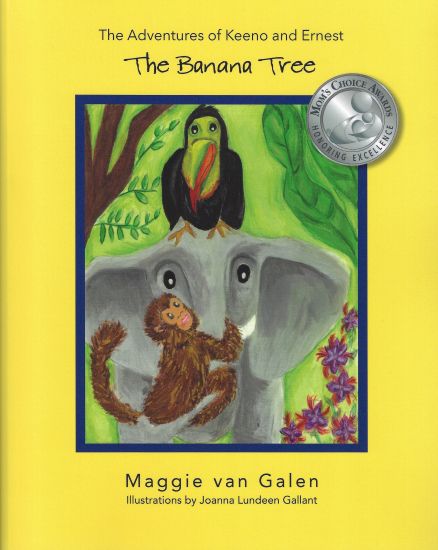
Will Keeno's Monkey Business Get Him in Trouble?Keeno is a mischievous little monkey, and his best friend in the jungle is a clever and responsible young elephant named Ernest. One day, Keeno spots a shiny new banana tree, but it is far away -- all the way on the other side of the river and his parents have told him NEVER to cross the river without an adult. Ernest reminds him of this, but Keeno decides to go anyway. When he finds himself in great danger, he must rely on his friend Ernest to rescue him In the end, Keeno learns two very valuable lessons about friendship and following family rules.
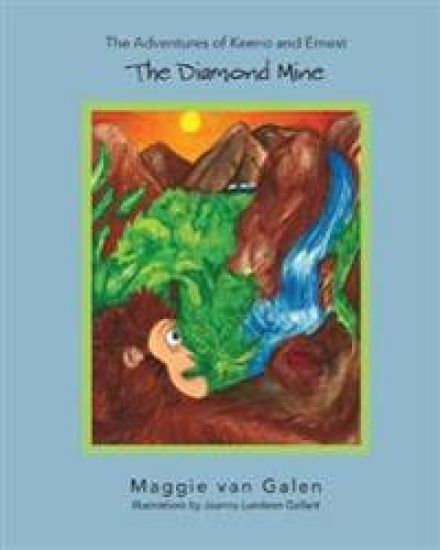
Will Ernest Save The Day For Keeno?Keeno and Ernest are the best of friends living in the jungle. Keeno, a very mischievous monkey, wants to give his mom a beautiful diamond from the diamond mine. He plans to swap it out for the river rock he found. Ernest explains that this would be stealing, but Keeno decides it is just a trade. Follow the adventure as Keeno finds himself in great danger and relies on Ernest to rescue him. In the end, Keeno learns two very valuable lessons about friendship and asking before taking.
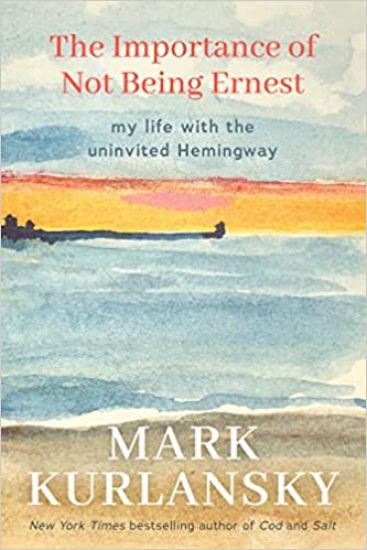
An Ernest Hemingway Biography Like No Other“...illuminates his life and works in ways not seen before.” —Sigrid Nunez, National Book Award winner and author of The Friend and What Are You Going Through#1 New Release in Historical Latin America BiographiesDiscover Hemingway’s biography through the eyes of a fellow author and journalist. New York Times bestselling author of Salt, Mark Kurlansky turns his historical eye to the life of Ernest Hemingway. Sometimes funny, sometimes sad, The Importance of Not Being Ernest shows the huge shadow Hemingway casts. The perfect gift for writers. By a series of coincidences, Mark Kurlansky’s life has always been intertwined with Ernest Hemingway's legend, starting with being in Idaho the day of Hemingway’s death. The Importance of Not Being Ernest explores the intersections between Hemingway’s and Kurlansky’s lives, resulting in creative accounts of two inspiring writing careers. Travel the world with Mark Kurlansky and Ernest Hemingway in this personal memoir, where Kurlansky details his ten years in Paris and his time as a journalist in Spain—both cities important to Hemingway’s adventurous life and prolific writing. Paris, Basque Country, Havana and Idaho. Get to know the extraordinary people he met there—those who had also fallen under the Hemingway spell, including a Vietnam veteran suffering from the same syndrome the author did, two winners of the Key West Hemingway look-alike contest, and the man in Idaho who took Hemingway hunting and fishing.In this unique gift for writers, find:A memoir full of entertaining and illuminative storiesLittle-known historical facts about Hemingway’s lifeAnecdotes about those who suffer from what the Kurlansky calls “hemitis”Readers of Haruki Murakami’s What I Talk About When I Talk About Running, John Steinbeck’s Travels with Charley in Search of America, or The Boys will love The Importance of Not Being Ernest.
Ernest Hemingway, as the author of this graphic adaptation acknowledges, may be culturally out of fashion, but his short stories, especially those that appeared in the first 1924 version of in our time, are timeless. The stories from that edition are, as the cartoonist Jason Novaks writes in his introduction, "the shortest Hemingway ever wrote. Most of them could more properly be described as vignettes. Any one of them taken alone might be better classified as a prose poem; it is only when read together that they achieve a cohesion as 'stories'. In this new adaptation, Novaks finds the graphic equivalent of Hemingway's lean, muscular prose -- stark, punchy, beautifully composed panels that illustrate the understated poetics of those early, famously groundbreaking stories.
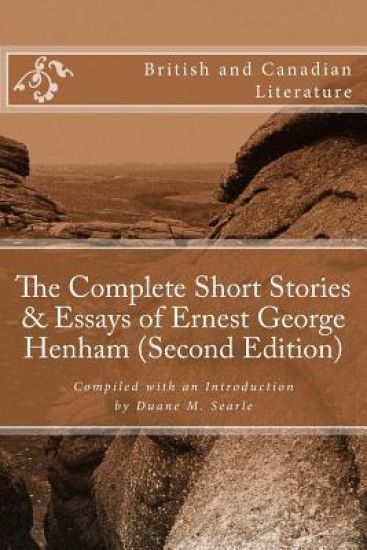
Ernest George Henham (1870-1948) was a prolific English author who frequently wrote under the pseudonym of John Trevena. His works centered on the wilderness frontier in Canada and the rural Dartmoor area of England. In many ways Henham carried on the traditions of Thomas Hardy, Eden Philpotts and George Alfred Henty. He published more than two dozen novels, the most famous of which are "Menotah," "Furze the Cruel," "Heather," and "Granite." Henham also wrote numerous short stories and several essays in various periodicals that are combined for the first time in this collection. They consist of 56 pieces published between 1896 and 1917, including two short stories from the files of Henham's London literary agent that were unpublished during Henham's lifetime. In excess of forty original illustrations and photographs from the works are also included. The introduction to this collection of rare works is a detailed biography that sheds new light on an author who was regarded as a reclusive and mysterious hermit of the moors, but whose actual life was much more interesting and filled with adventure than his public ever imagined.
*Includes pictures *Includes contemporary accounts *Includes online resources and a bibliography for further reading Most anyone who has received a basic education in world history knows the story of how "in 1492, Columbus sailed the ocean blue." Most also know that Christopher Columbus made first contact with the Americas while searching for a water route to Asia. However, far fewer people remember that the search for such a route continued for centuries after Columbus' death. After the discovery of the Americas, several European countries were interested in finding the route, and nations from France to Spain sent out explorers searching for the mysterious route. While these voyages did not reveal the hoped for route, they did result in large parts of both North and South America being mapped, and as more of the new land mass was determined, the parameters of the search for such a route were narrowed. By the 18th century, explorers began to seek such a route to the north, looking for the legendary Northwest Passage. Eventually, some countries lost interest, but England remained determined, and the masters of the waves continued to send ship after ship and crew after crew across the Atlantic. By the early 19th century, the search was taking expeditions to the Arctic, and each time a team returned to England telling stories of how it was stymied by ice or bad weather, another team confidently went out, certain that it would be the one to make it through. This ultimately led to the voyage of Captain John Franklin, who left Britain in 1845 for the Arctic in the hopes of completing mapping the Northwest Passage. Instead of returning with spices and silks, Franklin and his men disappeared, leaving behind them a mystery that plagued the English conscience for decades. Ironically, the ill-fated trip only became more legendary when its mystery was solved than it was when it remained a curiosity. It was a tale of ice and cold, starvation and desperation, and a tragically fatal one. Exploration of Earth's wilderness areas became an international obsession in the late 19th and early 20th centuries, as economically advantaged nations, in particular European powers and the United States were well equipped to mount exhaustive expeditions. From previously inaccessible forests and jungle country to the world's great mountain ranges, adventurers sought out the greatest extremes of climate and terrain in a race to plant the first flag where humanity struggled to survive. Locating the North Pole was, in a navigational sense, far more problematic than its counterpart in the south. The North Pole is situated on a moving foundation of ice, constantly shifting its position. To plant a flag there is useless, as it is prone to drift great distances in an unpredictable direction. However, reaching the South Pole presented the most torturous climatic obstacle on the planet, and with the size of the ice continent in the early years of the century, the distance from a ship in harbor to the center required a vast trek carrying minimal rations. Britain made its first and finest statement for actually reaching the South Pole in the first years of the 20th century. The dangers of the Antarctic, including scurvy, dehydration, and hypothermia, were well known to all major explorers. They also understood that even the most incidental detail of an expedition going amiss could spell doom for all parties involved. The era was universally dubbed the Heroic Age of Antarctic Exploration, but its greatest story did not stem from the actual achievement of reaching the pole. It was, rather, one of the most profound and heroic rescues ever witnessed that affirmed the empire's greatness, embodied by the inspired insistence and exemplary conduct of Sir Ernest Henry Shackleton. This unlikely figure entered the rich man's world of polar exploration through an astonishing persistence.
*Includes pictures *Includes contemporary accounts *Includes online resources and a bibliography for further reading Most anyone who has received a basic education in world history knows the story of how "in 1492, Columbus sailed the ocean blue." Most also know that Christopher Columbus made first contact with the Americas while searching for a water route to Asia. However, far fewer people remember that the search for such a route continued for centuries after Columbus' death. After the discovery of the Americas, several European countries were interested in finding the route, and nations from France to Spain sent out explorers searching for the mysterious route. While these voyages did not reveal the hoped for route, they did result in large parts of both North and South America being mapped, and as more of the new land mass was determined, the parameters of the search for such a route were narrowed. By the 18th century, explorers began to seek such a route to the north, looking for the legendary Northwest Passage. Eventually, some countries lost interest, but England remained determined, and the masters of the waves continued to send ship after ship and crew after crew across the Atlantic. By the early 19th century, the search was taking expeditions to the Arctic, and each time a team returned to England telling stories of how it was stymied by ice or bad weather, another team confidently went out, certain that it would be the one to make it through. This ultimately led to the voyage of Captain John Franklin, who left Britain in 1845 for the Arctic in the hopes of completing mapping the Northwest Passage. Instead of returning with spices and silks, Franklin and his men disappeared, leaving behind them a mystery that plagued the English conscience for decades. Ironically, the ill-fated trip only became more legendary when its mystery was solved than it was when it remained a curiosity. It was a tale of ice and cold, starvation and desperation, and a tragically fatal one. Exploration of Earth's wilderness areas became an international obsession in the late 19th and early 20th centuries, as economically advantaged nations, in particular European powers and the United States were well equipped to mount exhaustive expeditions. From previously inaccessible forests and jungle country to the world's great mountain ranges, adventurers sought out the greatest extremes of climate and terrain in a race to plant the first flag where humanity struggled to survive. Locating the North Pole was, in a navigational sense, far more problematic than its counterpart in the south. The North Pole is situated on a moving foundation of ice, constantly shifting its position. To plant a flag there is useless, as it is prone to drift great distances in an unpredictable direction. However, reaching the South Pole presented the most torturous climatic obstacle on the planet, and with the size of the ice continent in the early years of the century, the distance from a ship in harbor to the center required a vast trek carrying minimal rations. Britain made its first and finest statement for actually reaching the South Pole in the first years of the 20th century. The dangers of the Antarctic, including scurvy, dehydration, and hypothermia, were well known to all major explorers. They also understood that even the most incidental detail of an expedition going amiss could spell doom for all parties involved. The era was universally dubbed the Heroic Age of Antarctic Exploration, but its greatest story did not stem from the actual achievement of reaching the pole. It was, rather, one of the most profound and heroic rescues ever witnessed that affirmed the empire's greatness, embodied by the inspired insistence and exemplary conduct of Sir Ernest Henry Shackleton. This unlikely figure entered the rich man's world of polar exploration through an astonishing persistence.
*Includes pictures of important people and places. *Includes some of Hemingway's most famous quotes. *Analyzes the real life inspirations behind Hemingway's work and separates fact from fiction regarding Hemingway's life. *Includes a Bibliography for further reading. "If a writer of prose knows enough of what he is writing about he may omit things that he knows and the reader, if the writer is writing truly enough, will have a feeling of those things as strongly as though the writer had stated them. The dignity of movement of an ice-berg is due to only one-eighth of it being above water. A writer who omits things because he does not know them only makes hollow places in his writing." - Ernest Hemingway, Death in the Afternoon A lot of ink has been spilled covering the lives of history's most influential figures, but how much of the forest is lost for the trees? In Charles River Editors' American Legends series, readers can get caught up to speed on the lives of America's most important men and women in the time it takes to finish a commute, while learning interesting facts long forgotten or never known. Ernest Hemingway is famous across the world and has been remembered in his own country as an American icon widely considered one of the most influential American authors of the 20th century. Students are unlikely to leave high school without reading one of Hemingway's classics, especially The Sun Also Rises (1926), and they are usually introduced to rudimentary details about Hemingway's eclectic life and controversial death. Hemingway's literary career included several unquestioned classics, but a great deal of his fame and notoriety today comes from the fact that it has become impossible to separate his work from his life. In fact, Hemingway's service in World War I and his time as a war correspondent at places like Normandy during D-Day in World War II have also established him as the kind of masculine, adventurous man that Americans have long held out as cultural heroes. This is made even more ironic by the fact that Hemingway spent so much time overseas, both in Europe and Africa, to the extent that he became one of the most identifiable members of the "Lost Generation" of American expatriates, which included literary stars like F. Scott Fitzgerald and Gertrude Stein. It is possible today for people to be familiar with the basic outline of his life despite rarely coming into contact with his writing. Of course, Hemingway's life story is incomplete without discussion of his suicide, which naturally makes the man come across as even more enigmatic. As people continue to debate the exact physical and mental reasons behind Hemingway's suicide, it has helped ensure that a spotlight remains fixated on his life as a whole, and everything from the controversial relationships he had to the mysterious nature of his death continues to provide grist for literature and Hollywood today. American Legends: The Life of Ernest Hemingway profiles the life and career of one of America's most famous authors. Along with pictures of important people, places, and events, you will learn about Hemingway like you never have before, in no time at all.
Lettres inedites de Victor Cousin a Ernest Bersot (1842-1865) / publ. par E. Delerot et A. TaphanelDate de l'edition originale: 1897Sujet de l'ouvrage: Cousin, Victor (1792-1867) -- CorrespondanceCe livre est la reproduction fidele d'une oeuvre publiee avant 1920 et fait partie d'une collection de livres reimprimes a la demande editee par Hachette Livre, dans le cadre d'un partenariat avec la Bibliotheque nationale de France, offrant l'opportunite d'acceder a des ouvrages anciens et souvent rares issus des fonds patrimoniaux de la BnF.Les oeuvres faisant partie de cette collection ont ete numerisees par la BnF et sont presentes sur Gallica, sa bibliotheque numerique.En entreprenant de redonner vie a ces ouvrages au travers d'une collection de livres reimprimes a la demande, nous leur donnons la possibilite de rencontrer un public elargi et participons a la transmission de connaissances et de savoirs parfois difficilement accessibles.Nous avons cherche a concilier la reproduction fidele d'un livre ancien a partir de sa version numerisee avec le souci d'un confort de lecture optimal. Nous esperons que les ouvrages de cette nouvelle collection vous apporteront entiere satisfaction.Pour plus d'informations, rendez-vous sur www.hachettebnf.fr