
Kirjahaku
Etsi kirjoja tekijän nimen, kirjan nimen tai ISBN:n perusteella.
1000 tulosta hakusanalla Francesca Gavin
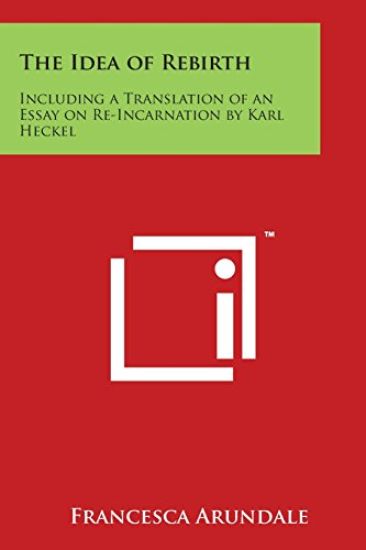
The Idea of Rebirth: Including a Translation of an Essay on Re-Incarnation by Karl Heckel
Francesca Arundale
Literary Licensing, LLC
2014
nidottu
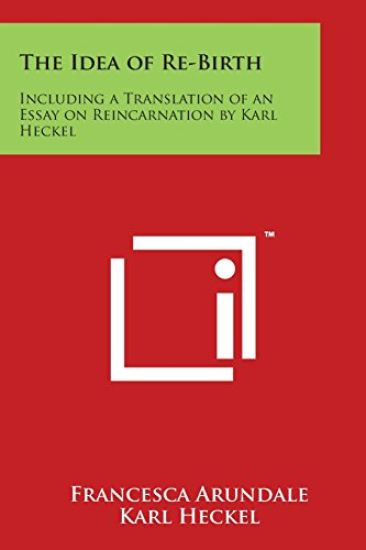
The Idea of Re-Birth: Including a Translation of an Essay on Reincarnation by Karl Heckel
Francesca Arundale; Karl Heckel
Literary Licensing, LLC
2014
nidottu
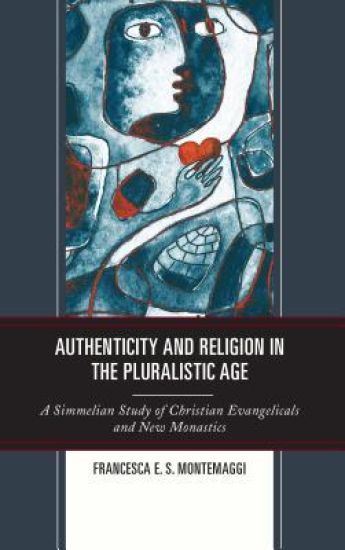
Authenticity and Religion in the Pluralistic Age
Francesca E.S. Montemaggi
Lexington Books
2019
sidottu
This book provides an original concept of authenticity to illuminate the transformation of Christian consciousness in the increasingly more secular and pluralistic culture of Western societies. The present work is unique in offering an in-depth study of Simmel’s sociology and philosophy in dialogue with an ethnographic account of contemporary Christians. It develops original concepts drawing on Simmel’s writings on individuality and religion and connecting them with classical and contemporary scholarship in sociology and philosophy. The theoretical framework is illustrated through an analysis of the narratives and practices of Christians in an evangelical church in the UK and several New Monastic communities in the UK, US, and Canada. The book proposes an understanding of belief as relational and experiential and a concept of authenticity, as self-transcendence articulated in dialogue with religious tradition and the Other. Religious tradition is developed through an on-going process of interpretation and sacralization of what is considered within and without the tradition’s boundaries. The book also proposes an innovative approach to the study of morality by distinguishing between a people-centered ethic (ethic of compassion) and a norm-centered ethic (ethic of purity) to account for the the different ways in which Christians engage with the Other. This allows an exploration of the relationship between ethics and the making and breaking of boundaries in a given community. The case studies in this book show that committed Christians attempt to reconcile commitment to their tradition with the value of inclusiveness and to affirm their moral and religious identity as a distinctive moral lifestyle, not superior, but of equal worth to those of non-Christians.
Growing up in Walltown, Italy presents an ethnographic account of the culture of early childhood education, as it is constructed in two municipal schools (a nursery and a childhood school) of an Italian town, explored through extensive participant observation and interviews of educators, teachers, school coordinators, mothers, and cooks and school staff. After providing background information on Italian early childhood education, the author describes and interprets the process of children's insertion into the world of the school as a "passage" whose ritual steps—initially accompanied by a parent—are carefully prepared by educators and teachers, so that the "passengers" will successfully settle in, and become competent members and participants of the respective educational communities. The authors focuses on the educational and cultural learning that children between six months and five years of age attain by exercising their agency, capacity for communication, interaction and responsibility, and imagination in planned educational projects, daily activities as the "reading time" and convivial appointments as meals. The educators' and teachers' professional and personal engagement and care, together with the collaboration of the other school people, are thoroughly illustrated, and their meaningful attention to, and respect for children's pace of learning and participation are pointed out.

Girl, Get a Grip!: A Woman's Guide to Surviving Adversity
Francesca L. Stubbs
Createspace Independent Publishing Platform
2014
nidottu
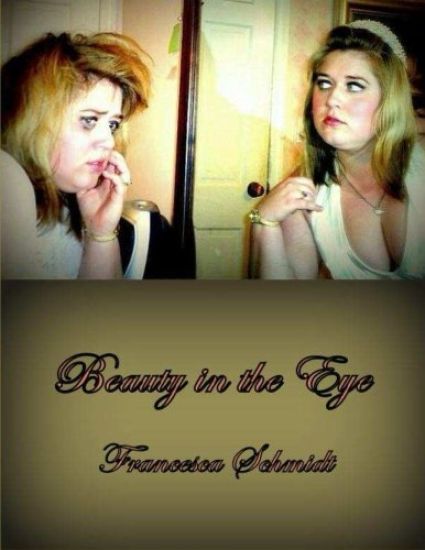
Beauty in the Eye: A Compilation of Sestinas
Francesca LeBlanc Schmidt
Createspace Independent Publishing Platform
2014
nidottu
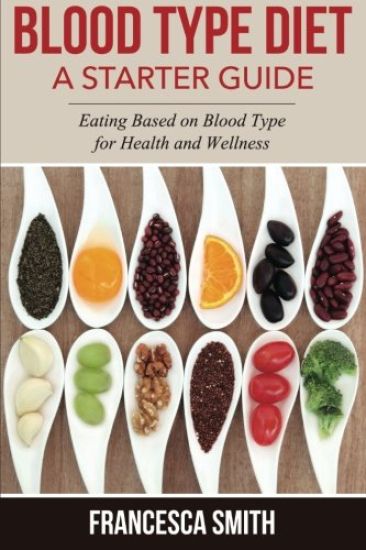
Blood Type Diet: A Starter Guide: Eating Based on Blood Type for Health and Wellness
Francesca Smith
Createspace Independent Publishing Platform
2014
nidottu
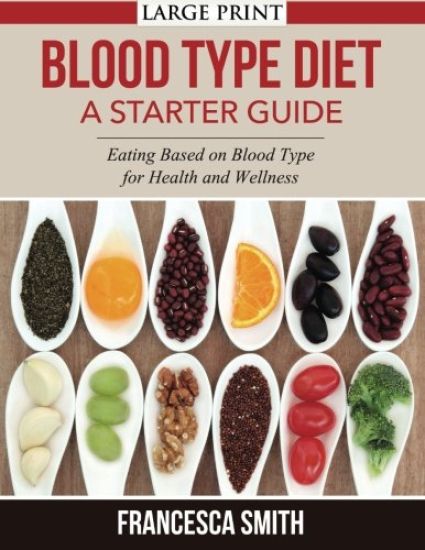
Blood Type Diet: A Starter Guide LARGE PRINT: Eating Based on Blood Type for Health and Wellness
Francesca Smith
Createspace Independent Publishing Platform
2014
nidottu
After a discussion of the Bridgintine Breviary, given by Our Lord to Saint Bridget we proceed to her life. THE. life of a saint who, played so important a part in the history of her time as St. Bridget of Sweden seems to require a slight sketch of the state of Europe, of the Church, and especially of the Papacy, during the period in which she lived, 1808-78, as a prelude to her biography and as a help to the understanding of her work and character. She lived throughout the greater part of the fourteenth century. Now the. watchword of that century was 'Reform.' In 1811, when Clement V consulted William Durandus as to how to hold the Council of Vienna, he answered, 'The Church ought to be reformed in its head and in its members.' The reformation of the clergy, and especially of the religious, Orders, was the leading idea of the time among thoughtful churchmen; it was, as we should say, 'in the air.' It rang through all the fourteenth century, and it's octave note was struck at the Council of Pisa in 1409. As this idea of reformation developed, it became twofold: there was the reformation desired by loyal Catholics, the friends of the Church, and there was, later on the so-called reformation desired, and unfortunately accomplished only too successfully, by the enemies of the Church, those schismatics and heretics known as the Protestant Reformers. It is sometimes said that St. Bridget was a pioneer of the Reformers. If by this is meant that she belonged to the Catholic Reformers, the true sons of the Church, it is true; but no one would have detested more the heresies of Luther, Huss, Calvin, and Knox, and the rest of the Protestant Reformers, than the Swedish seer had she lived in their time. Laxity in the observance of monastic discipline, especially with regard to the precept of Holy Poverty, had crept into most of the religious Orders, and a reaction had set- in among the Franciscans, and had led to quarrels between the two parties, among the Friars Minor, of the 'spirituals' and the 'conventuals.' The spirituals went to the length of maintaining that a friar had no right of property even in his own food; but they were theP1selves split up into several parties. While St. Bridget was still a child, Pope John XXII published his celebrated constitutions, condemning the Fraticelli and their communistic ideas. Then arose another dispute, when the General of the Franciscan Order land our William Ockham, known as the 'invincible doctor, ' also a Friar Minor, maintained that Our Lord and His Apostles possessed nothing, either individually or in common; they and their followers belonged to a school of philosophic thought called the Nominalists. A year later John XXII published a second decree pronouncing this to be heresy, and, as the authors of it persisted in teaching it, he excommunicated them, and they went over to the party of the Emperor, Louis of Bavaria. Notwithstanding these decrees, the echoes of these disputes were heard when St. Bridget was in Italy, in 1350-73, pursuing her great work of bringing the Popes back from A vignon to Rome.
Special Someone: ...it's all about love
Francesca G. MacDonald
Createspace Independent Publishing Platform
2014
nidottu
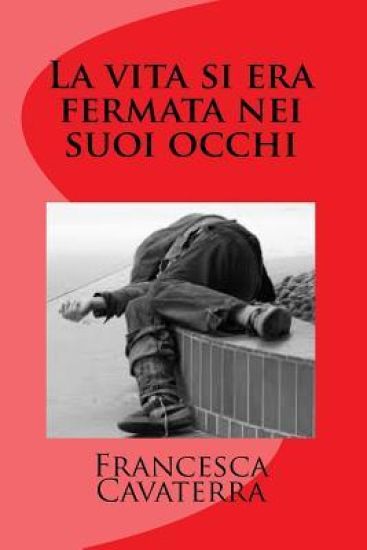
La vita si era fermata nei suoi occhi
Francesca Cavaterra
Createspace Independent Publishing Platform
2014
nidottu
sempre la forza della vita a scrivere la nostra storia, con caratteri storti su pagine dritte, che molto spesso non riusciamo a decifrare, ma a poco serve opporsi a quel filo che segna la linea della nostra esistenza. Dobbiamo solo lasciarci guidare, da qualche parte ci porter
Questa la storia di una bambina che si ritrova a fare i conti con l'improvvisa morte di suo padre e delle scelte che la condurr a fare nella sua vita quella mancanza.
Una Cenerentola con lo scarpone
Francesca Cavaterra
Createspace Independent Publishing Platform
2014
nidottu
una storia di fantasia basata su un'esperienza reale, come quella di un incidente stradale.