Love and Freindship sic] is a juvenile story by Jane Austen, dated 1790. From the age of eleven until she was eighteen, Austen wrote her tales in three notebooks. These still exist, one in the Bodleian Library and the other two in the British Museum. They contain, among other works, Love and Freindship, written when she was fourteen, and The History of England, written when she was fifteen.This presents a glimpse into the life of Laura from Isabel's perspective. Isabel asks Laura to tell the "misfortunes and adventures" of her life to Isabel's daughter Marianne (Austen 516). Isabel argues that because Laura is turning 55, she is past the danger of "disagreeable lovers" and "obstinate fathers" (Austen 516). This initial letter sets up the rest of Austen's narrative through Laura's letters to Marianne. Letter The Second Laura to Isabel This consists of a reply from Laura to Isabel. Laura initially disagrees with Isabel's assessment that she is safe from "misfortunes" simply because of her advanced age (Austen 516). Laura agrees to write to Marianne and detail her life experiences to "satisfy the curiosity of Marianne" and to teach her useful lessons (Poplawski 183). The useful lessons are lessons learned from the misfortunes caused by "disagreeable lovers" and "obstinate fathers" (Poplawski 183). Poplawski highlights the importance of the relationship between females and their lovers and also between females and their fathers as a means through which Austen is able to criticise stereotypical female behaviour. As seen throughout the work, these two relationships are constantly criticised by satirical anecdotes. Janetta's relations with her father and with her lover, Capitan M'Kenzie in the twelfth letter, shows Austen mocking the fickleness of family ties and romantic relationships.... Jane Austen ( 16 December 1775 - 18 July 1817) was an English novelist known primarily for her six major novels, which interpret, critique and comment upon the British landed gentry at the end of the 18th century. Austen's plots often explore the dependence of women on marriage in the pursuit of favourable social standing and economic security. Her works critique the novels of sensibility of the second half of the 18th century and are part of the transition to 19th-century literary realism.... Gilbert Keith Chesterton, KC*SG (29 May 1874 - 14 June 1936), better known as G. K. Chesterton, was an English writer, poet, philosopher, dramatist, journalist, orator, lay theologian, biographer, and literary and art critic. Chesterton is often referred to as the "prince of paradox".Time magazine has observed of his writing style: "Whenever possible Chesterton made his points with popular sayings, proverbs, allegories-first carefully turning them inside out."
Linsey finds herself broken down on a dark and rainy highway. She'd walked out on her career as senior editor to attend her daughter's first violin solo with the middle school orchestra. Her husband, Jason is already there waiting. When a utility truck pulls up, she thinks herself saved. What she gets instead, is a terrifying and brutal encounter with a man in a yellow suit, who has the power to control her every move. Forced to follow the predetermined destinations on her vehicle's GPS, the Man in Yellow sets Linsey to preform tasks so horrible it would make even the most twisted person cringe. And perhaps the most terrifying thing of all - He makes her like it.Buckle up and hold on tight, there's Murder Next Exit.
Do you believe that you have the authority to CHOOSE your outcome? It all comes down to being INTENTIONAL in your approach and deciding that you want more. No matter how long you've been stagnant, no matter how long you've been stuck, no matter how long you've been down you can DECIDE TO GET UP This book will lead you through 4 principles found in the compelling story of a lame beggar we learned about in the Bible, in the book of Acts. Something as simple as your own DECISION can lead you into the life you were created to live.
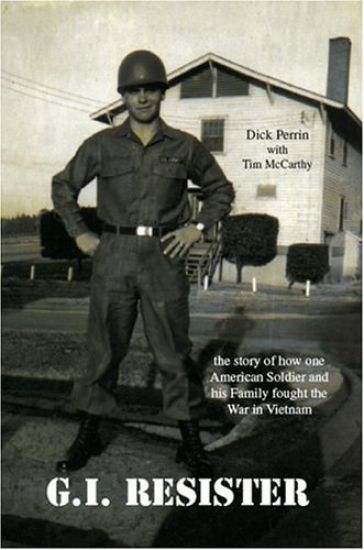
G.I. Resister has to do with a nation so deeply cleaved by the ill-fated and unjust war in Vietnam that a generation later the United States has only just begun to heal. Perrin's story is a part of that, both in the hurt and the healing.
The acclaimed short story that inspired the award-winning novel, The Enemy Within. February, 1964: Two men die in a squalid alley in a bad neighborhood. New York Homicide Detective Seamus O'Reilly receives the shock of his life when he looks at the men's identification: J. Edgar Hoover, the famous, tyrannical director of the FBI, and his number one assistant, Clyde Tolson. O'Reilly teams up with FBI agent Frank Bryce to solve the high-level assassination before the murders unleash even greater consequences. In our world, Hoover kept his secrets until long after his death. In Seamus O'Reilly's world, Hoover's secrets get him killed. Two different best of the year collections, including the prestigious Best American Mystery Stories, chose "G-Men" as one of the best stories of the year. Nominated for the Sidewise Award for Best Alternate History. New York Times bestselling author Jeffery Deaver says of "G-Men," "If you liked E.L. Doctorow's Ragtime or the writing of Caleb Carr (The Alienist), you'll enjoy this. Part police procedural, part political thriller, this clever tale features real life characters interacting with fictional ones."
The acclaimed short story that inspired the award-winning novel, The Enemy Within. February, 1964: Two men die in a squalid alley in a bad neighborhood. New York Homicide Detective Seamus O'Reilly receives the shock of his life when he looks at the men's identification: J. Edgar Hoover, the famous, tyrannical director of the FBI, and his number one assistant, Clyde Tolson. O'Reilly teams up with FBI agent Frank Bryce to solve the high-level assassination before the murders unleash even greater consequences. In our world, Hoover kept his secrets until long after his death. In Seamus O'Reilly's world, Hoover's secrets get him killed. Two different best of the year collections, including the prestigious Best American Mystery Stories, chose "G-Men" as one of the best stories of the year. Nominated for the Sidewise Award for Best Alternate History. New York Times bestselling author Jeffery Deaver says of "G-Men," "If you liked E.L. Doctorow's Ragtime or the writing of Caleb Carr (The Alienist), you'll enjoy this. Part police procedural, part political thriller, this clever tale features real life characters interacting with fictional ones."
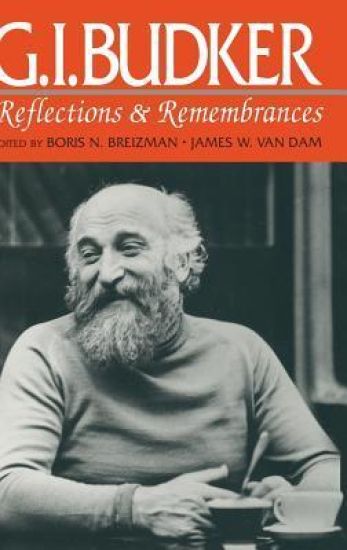
In this wonderful collection, friends and colleagues of Russian physicist G.I. Budker--founder of the Novosibirsk Institute--reminisce on the man and his science. Two articles by Budker himself are included as well. None of this material has ever appeared in English and includes work by Kapitsa, Landau, and Sakharov.
G.K.Chesterton (1874-1936), was one of the great Catholic writers of the twentieth century. He brought a distinctive Catholic perspective to scores of books and articles - even to the genre of detective novels in the famous Father Brown mysteries. As this collection shows, Chestertons writing contains a spiritual dimension. In his ability to combine matters of great seriousness with great humour the contours of his distinctive and "paradoxical" spirituality emerge.
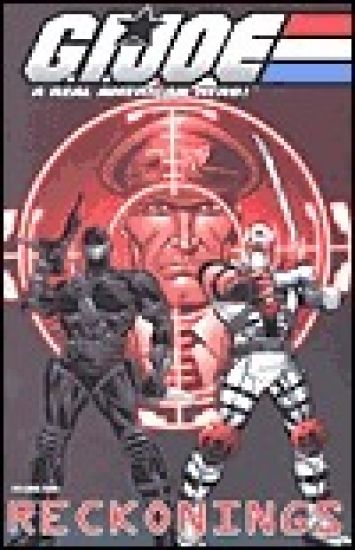
Cobra Commander returns to action with the aid of his own personal ninja, Stormshadow. Where one ninja goes, another follows — Stormshadow faces off with Snake Eyes!
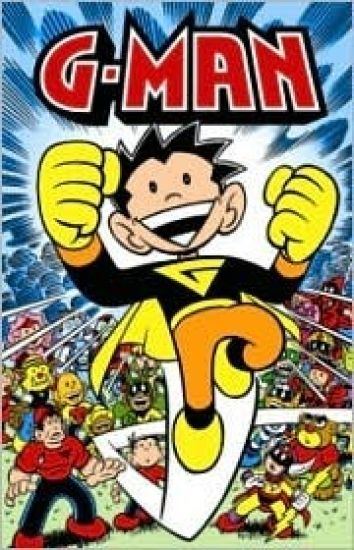
Chris Giarrusso brings you his very own kid super-heroes, G-Man and his pals, in this full-color, 64-page one-shot! It's the origin of G-Man in an all-new 34-page lead story! Plus, a 30-page collection of "Comic Bits," Giarrusso's comic strips featuring G-Man and the gang! It's all here in one great package!
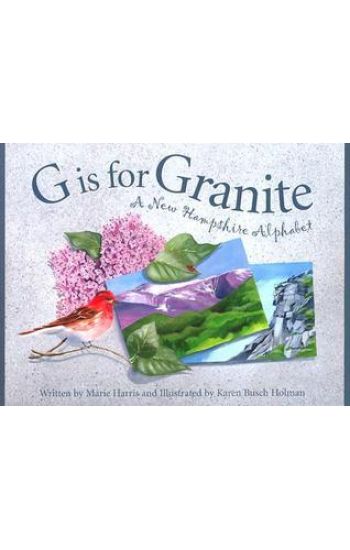
Discover New Hampshire and its rich heritage, unique natural history, and groundbreaking citizens. G is for Granite: A New Hampshire Alphabet is a detailed picture book that introduces children to the beauty and wonder of New Hampshire, from its numerous covered bridges to the delightful call of the ovenbird and even the coveted New Hampshire primary elections. G is for Granite: A New Hampshire Alphabet is written in simple rhyme for preschool through second graders, and features side bar expository text for older students and adults.
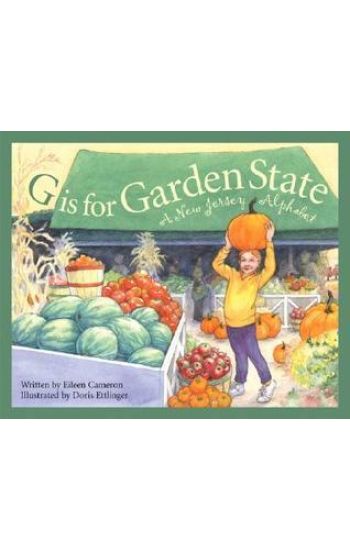
Readers will be delighted to discover the many wonders of the Garden State, from her famous sons and daughters (inventor Thomas Edison and the Revolutionary War heroine Molly Pitcher) to her beautiful sights (the Highlands, the Pinelands, and New Jersey's famous shoreline), and her unique institutions (The Seeing Eye training institute for seeing eye dogs and Haddy, the largest complete dinosaur skeleton of its time, found in 1858). G is for Garden State explores the places, people, and landmarks that make New Jersey a fascinating place to live in and to visit again and again. Written in the popular two-tier format for our Discover America State by State alphabet series, young readers will explore state facts through colorful illustrations, rhyming verses, and expository text. Used in schools throughout the country, this series effectively expands classroom curriculum.Author/preservationist Eileen Cameron is interested in protecting our natural and historical resources. She serves on the board of the Washington Association of New Jersey at Morristown National Historical Park. Eileen has hiked the Appalachian Trail at High Point, rafted on the Delaware River, and now lives in Morristown, New Jersey. Doris Ettlinger has illustrated numerous children's books including Springtime in the Big Woods and Mr. Edwards Meets Santa Claus, both adapted from the Little House books by Laura Ingalls Wilder. She graduated from the Rhode Island School of Design. Doris lives and works in a 150-year old gristmill in western New Jersey with her family and a Welsh Corgi.
Here is a special two-in-one book that is both by G.K. Chesterton and about Chesterton. This volume offers an irresistible opportunity to see who this remarkable man really was. Chesterton was one of the most stimulating and well-loved writers of the 20th century. His 100 books, and hundreds of essays and columns on a great variety of themes have made G.K. Chesterton the most widely quoted writers of modern times. Here is Chesterton in his own words, in a book he preferred not to write, but did so near the end of his life after much insistence by friends and admirers. Critic Sydney Dark wrote after Chesterton died that "perhaps the happiest thing that happened in Gilbert Chesterton's extraordinarily happy life was that his autobiography was finished a few weeks before his death. It is a stimulating, exciting, tremendously interesting book. It is a draught--indeed, several draughts one after the other--of human and literary champagne."


![Love and freindship [i.e. friendship]: and other early works. By: Jane Austen, with a preface By: G. K. Chesterton: Love and Freindship is a juvenile](/covers/9781545551158.jpg)