Kirjojen hintavertailu. Mukana 12 390 323 kirjaa ja 12 kauppaa.

Kirjahaku

Etsi kirjoja tekijän nimen, kirjan nimen tai ISBN:n perusteella.

1000 tulosta hakusanalla Gary Griffiths

Difficult Reputations

Difficult Reputations

Gary Alan Fine

University of Chicago Press
2001
sidottu
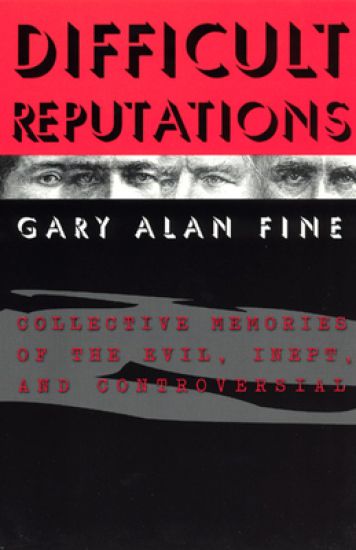
We take reputations for granted. Believing in the bad and the good natures of our notorious or illustrious forebears is part of our shared national heritage. Yet we are largely ignorant of how such reputations came to be, who was instrumental in creating them, and why. Even less have we considered how villains, just as much as heroes, have helped our society define its values. Presenting essays on America's most reviled traitor, its worst president, and its most controversial literary ingenue (Benedict Arnold, Warren G. Harding, and Lolita), among others, sociologist Gary Alan Fine analyzes negative, contested, and subcultural reputations. This volume offers eight compelling historical case studies as well as a theoretical introduction situating the complex roles in culture and history that negative reputations play. Arguing the need for understanding real conditions that lead to proposed interpretations, as well as how reputations are given meaning over time, this book marks an important contribution to the sociologies of culture and knowledge.
Difficult Reputations

Difficult Reputations

Gary Alan Fine

University of Chicago Press
2001
nidottu
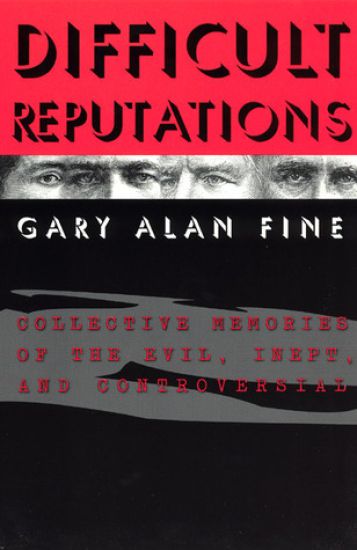
We take reputations for granted. Believing in the bad and the good natures of our notorious or illustrious forebears is part of our shared national heritage. Yet we are largely ignorant of how such reputations came to be, who was instrumental in creating them, and why. Even less have we considered how villains, just as much as heroes, have helped our society define its values. Presenting essays on America's most reviled traitor, its worst president, and its most controversial literary ingenue (Benedict Arnold, Warren G. Harding, and Lolita), among others, sociologist Gary Alan Fine analyzes negative, contested, and subcultural reputations. This volume offers eight compelling historical case studies as well as a theoretical introduction situating the complex roles in culture and history that negative reputations play. Arguing the need for understanding real conditions that lead to proposed interpretations, as well as how reputations are given meaning over time, this book marks an important contribution to the sociologies of culture and knowledge.
Shared Fantasy

Shared Fantasy

Gary Alan Fine

University of Chicago Press
2002
nidottu
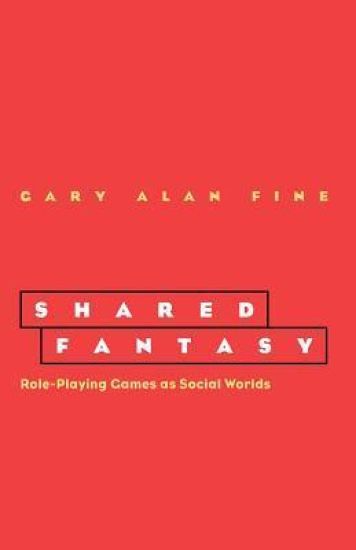
This classic study still provides one of the most astute descriptions available of an often misunderstood subculture: that of fantasy role playing games like Dungeons & Dragons. Gary Alan Fine immerses himself in several different gaming systems, offering insightful details on the nature of the games and the patterns of interaction among players - as well as their reasons for playing.
Everyday Genius

Everyday Genius

Gary Alan Fine

University of Chicago Press
2004
sidottu
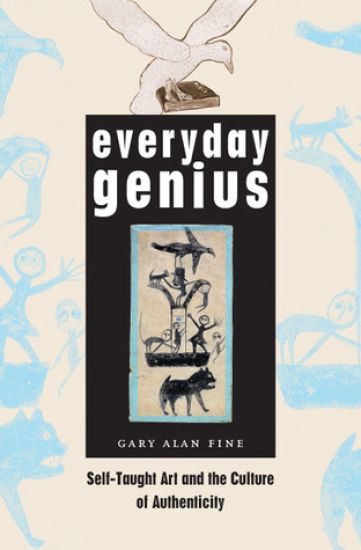
From Henry Darger's elaborate works of young girls caught in a brutal war to the New Mexican artist who sells animal-hide sculptures by the side of the road, the work of "outsider" artists has achieved unique status in the art world. Celebrated for their lack of traditional training and their position on the fringes of the social system, outsider artists nonetheless participate in a traditional network of value, status, and money. After spending years immersed in the world of self-taught artists, Gary Alan Fine presents Everyday Genius, one of the most insightful and comprehensive examinations of this network and how it confers artistic value. Fine considers the differences among folk art, outsider art, and self-taught art, explaining the economics of this distinctive art market and exploring the dimensions of its artistic production and distribution. Interviewing dealers, collectors, curators, and critics, and venturing into the backwoods and inner-city homes of dozens of self-taught artists, Fine describes how authenticity is central to this system in which artists - often poor, elderly, members of a minority group, or mentally ill - are seen as having an unfettered form of expression highly valued in the art world. Respected dealers, he shows, have a hand in burnishing biographies of the artists, and both dealers and collectors trade in identities as much as objects. Revealing the inner workings of an elaborate and prestigious world in which money, personalities, and values affect one another, and speaking eloquently to both experts and general readers, Fine provides access to a world of creative invention - both by self-taught artists and by those who profit from their work.
Everyday Genius

Everyday Genius

Gary Alan Fine

University of Chicago Press
2006
nidottu
From Henry Darger's elaborate paintings of young girls caught in a vicious war to the sacred art of the Reverend Howard Finster, the work of outsider artists has achieved unique status in the art world. Celebrated for their lack of traditional training and their position on the fringes of society, outsider artists nonetheless participate in a traditional network of value, status, and money. After spending years immersed in the world of self-taught artists, Gary Alan Fine presents Everyday Genius, one of the most insightful and comprehensive examinations of this network and how it confers artistic value.Fine considers the differences among folk art, outsider art, and self-taught art, explaining the economics of this distinctive art market and exploring the dimensions of its artistic production and distribution. Interviewing dealers, collectors, curators, and critics and venturing into the backwoods and inner-city homes of numerous self-taught artists, Fine describes how authenticity is central to the system in which artists—often poor, elderly, members of a minority group, or mentally ill—are seen as having an unfettered form of expression highly valued in the art world. Respected dealers, he shows, have a hand in burnishing biographies of the artists, and both dealers and collectors trade in identities as much as objects.Revealing the inner workings of an elaborate and prestigious world in which money, personalities, and values affect one another, Fine speaks eloquently to both experts and general readers, and provides rare access to a world of creative invention-both by self-taught artists and by those who profit from their work. “Indispensable for an understanding of this world and its workings. . . . Fine’s book is not an attack on the Outsider Art phenomenon. But it is masterful in its anatomization of some of its contradictions, conflicts, pressures, and absurdities.”—Eric Gibson, Washington Times
Authors of the Storm

Authors of the Storm

Gary Alan Fine

University of Chicago Press
2007
sidottu
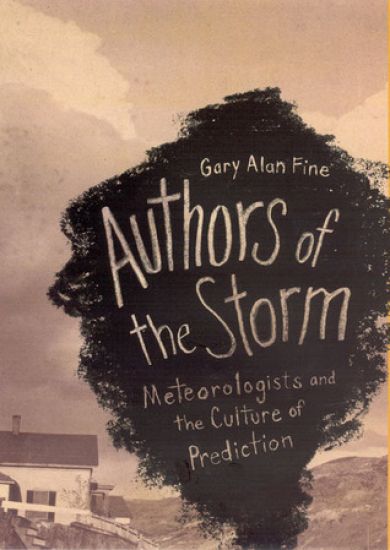
In "Authors of the Storm", Gary Alan Fine offers an inside look at how meteorologists and forecasters predict the weather. Through field observation and interviews, Fine finds a supremely hard-working, insular clique of professionals who often refer to themselves as a 'band of brothers'. In Fine's skilled hands, we learn their lingo, how they 'read' weather conditions, how forecasts are written, and, of course, how those messages are conveyed to the public. Weather forecasts, he shows, are often shaped as much by social and cultural factors inside local offices as they are by approaching cumulus clouds.
Authors of the Storm

Authors of the Storm

Gary Alan Fine

University of Chicago Press
2010
nidottu
In "Authors of the Storm", Gary Alan Fine offers an inside look at how meteorologists and forecasters predict the weather. Through field observation and interviews, Fine finds a supremely hard-working, insular clique of professionals who often refer to themselves as a 'band of brothers'. In Fine's skilled hands, we learn their lingo, how they 'read' weather conditions, how forecasts are written, and, of course, how those messages are conveyed to the public. Weather forecasts, he shows, are often shaped as much by social and cultural factors inside local offices as they are by approaching cumulus clouds.
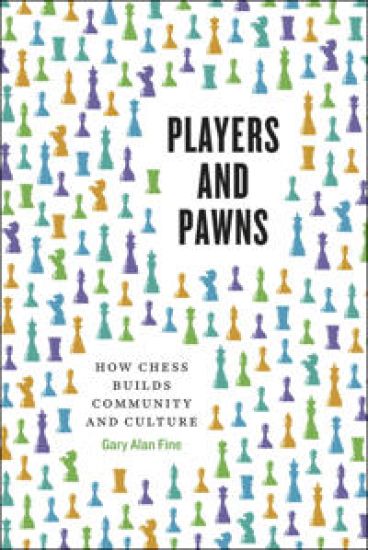
Players and Pawns

Players and Pawns

Gary Alan Fine

University of Chicago Press
2015
sidottu
A chess match seems as solitary an endeavor as there is in sports: two minds, on their own, in fierce opposition. In contrast, Gary Alan Fine argues that chess is a social duet: two players in silent dialogue who always take each other into account in their play. Surrounding that one-on-one contest is a community life that can be nearly as dramatic and intense as the across-the-board confrontation. Fine has spent years immersed in the communities of amateur and professional chess players, and with Players and Pawns he takes readers deep inside them, revealing a complex, brilliant, feisty world of commitment and conflict. Opening with a close look at a typical tournament in Atlantic City, Fine carries us from planning and setup through the climactic final day's match-ups between the weekend's top players, introducing us along the way to countless players and their relationships to the game. At tournaments like that one, as well as in locales as diverse as collegiate matches and community chess clubs, players find themselves part of what Fine terms a "soft community," an open, welcoming space built on their shared commitment to the game. Within that community, chess players find both support and challenges, all amid a shared interest in and love of the long-standing traditions of the game, traditions that help chess players build a communal identity. Full of idiosyncratic characters and dramatic gameplay, Players and Pawns is a celebration of the ever-fascinating world of serious chess.
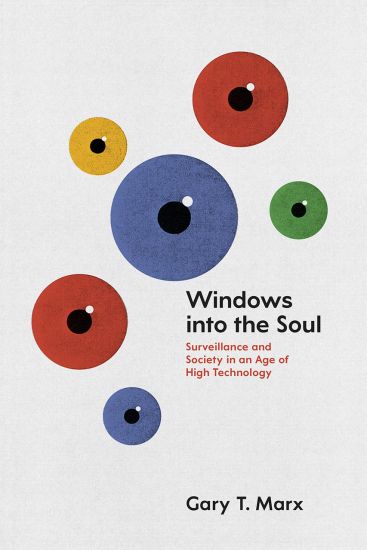
Windows into the Soul

Windows into the Soul

Gary T. Marx

University of Chicago Press
2016
nidottu
We live in an age saturated with surveillance. Our personal and public lives are increasingly on display for governments, merchants, employers, hackers-and the merely curious-to see. In Windows into the Soul, Gary T. Marx, a central figure in the rapidly expanding field of surveillance studies, argues that surveillance itself is neither good nor bad, but that context and comportment make it so. In this landmark book, Marx sums up a lifetime of work on issues of surveillance and social control by disentangling and parsing the empirical richness of watching and being watched. Using fictional narratives as well as the findings of social science, Marx draws on decades of studies of covert policing, computer profiling, location and work monitoring, drug testing, caller identification, and much more, Marx gives us a conceptual language to understand the new realities and his work clearly emphasizes the paradoxes, trade-offs, and confusion enveloping the field. Windows into the Soul shows how surveillance can penetrate our social and personal lives in profound, and sometimes harrowing, ways. Ultimately, Marx argues, recognizing complexity and asking the right questions is essential to bringing light and accountability to the darker, more iniquitous corners of our emerging surveillance society.
Machines of Youth

Machines of Youth

Gary S. Cross

University of Chicago Press
2018
sidottu
For American teenagers, getting a driver’s license has long been a watershed moment, separating teens from their childish pasts as they accelerate toward the sweet, sweet freedom of their futures. With driver’s license in hand, teens are on the road to buying and driving(and maybe even crashing) their first car, a machine which is home to many a teenage ritual—being picked up for a first date, “parking” at a scenic overlook, or blasting the radio with a gaggle of friends in tow. So important is this car ride into adulthood that automobile culture has become a stand-in, a shortcut to what millions of Americans remember about their coming of age. Machines of Youth traces the rise, and more recently the fall, of car culture among American teens. In this book, Gary S. Cross details how an automobile obsession drove teen peer culture from the 1920s to the 1980s, seducing budding adults with privacy, freedom, mobility, and spontaneity. Cross shows how the automobile redefined relationships between parents and teenage children, becoming a rite of passage, producing new courtship rituals, and fueling the growth of numerous car subcultures. Yet for teenagers today the lure of the automobile as a transition to adulthood is in decline.Tinkerers are now sidelined by the advent of digital engine technology and premolded body construction, while the attention of teenagers has been captured by iPhones, video games, and other digital technology. And adults have become less tolerant of teens on the road, restricting both cruising and access to drivers’ licenses. Cars are certainly not going out of style, Cross acknowledges, but how upcoming generations use them may be changing. He finds that while vibrant enthusiasm for them lives on, cars may no longer be at the center of how American youth define themselves. But, for generations of Americans, the modern teen experience was inextricably linked to this particularly American icon.
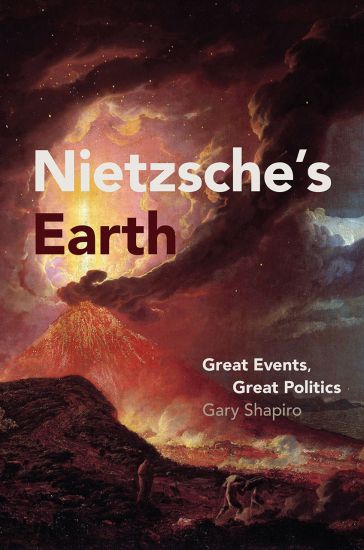
Nietzsche's Earth

Nietzsche's Earth

Gary Shapiro

University of Chicago Press
2016
sidottu
We have Nietzsche to thank for some of the most important accomplishments in intellectual history, but as Gary Shapiro shows in this unique look at Nietzsche's thought, the nineteenth-century philosopher actually anticipated some of the most pressing questions of our own era. Putting Nietzsche into conversation with contemporary philosophers such as Deleuze, Agamben, Foucault, Derrida, and others, Shapiro links Nietzsche's powerful ideas to topics that are very much on the contemporary agenda: globalization, the nature of the livable earth, and the geopolitical categories that characterize people and places. Shapiro explores Nietzsche's rejection of historical inevitability and its idea of the end of history. He highlights Nietzsche's prescient vision of today's massive human mobility and his criticism of the nation state's desperate efforts to sustain its exclusive rule by declaring emergencies and states of exception. Shapiro then explores Nietzsche's vision of a transformed garden earth and the ways it sketches an aesthetic of the Anthropocene. He concludes with an explanation of the deep political structure of Nietzsche's "philosophy of the Antichrist," by relating it to traditional political theology. By triangulating Nietzsche between his time and ours, between Bismarck's Germany and post-9/11 America, Nietzsche's Earth invites readers to rethink not just the philosopher himself but the very direction of human history.
Evidence of the Law

Evidence of the Law

Gary Lawson

University of Chicago Press
2017
sidottu
How does one prove the law? If a neighbor breaks your window, the law regulates how you can show your claim to be true or false; but how do you prove that in breaking your window your neighbor has broken your law? American jurisprudence devotes an elaborate body of doctrine and an equally elaborate body of accompanying scholarly commentary to worrying about how to prove facts. It establishes rules for the admissibility of evidence, creates varying standards of proof, and assigns burdens of proof that determine who wins or loses when the facts are unclear. But the law is shockingly inexplicit when addressing these issues with respect to the proof of legal claims. Indeed, the entire language of evidentiary proof, so sophisticated when it comes to questions of fact, is largely absent from the American legal system with respect to questions of law. As Gary Lawson shows, legal claims are inherently objects of proof, and whether or not the law acknowledges the point openly, proof of legal claims is just a special case of the more general norms governing proof of any claim. As a result, similar principles of evidentiary admissibility, standards of proof, and burdens of proof operate, and must operate, in the background of claims about the law. This book brings these evidentiary principles for proving law out of the shadows so that they can be analyzed, clarified, and discussed. Viewing legal problems through this lens of proof illuminates debates about everything from constitutional interpretation to the role of stipulations in litigation. Rather than prescribe resolutions to any of those debates, Evidence of the Law instead provides a set of tools that can be used to make those debates more fruitful, whatever one's substantive views may be. As lawyers, judges, and legal subjects confront uncertainty about what the law is, they can, should, and must, Lawson argues, be guided by the same kinds of abstract considerations, structures, and doctrines long used to make determinations about questions of fact.
Ethics and the Orator

Ethics and the Orator

Gary A. Remer

University of Chicago Press
2017
sidottu
For thousands of years, critics have attacked rhetoric and the actual practice of politics as unprincipled, insincere, and manipulative. In Ethics and the Orator, Gary A. Remer disagrees, offering the Ciceronian rhetorical tradition as a rejoinder. He argues that the Ciceronian tradition is based on practical or "rhetorical" politics, rather than on idealistic visions of a politics-that-never-was a response that is ethically sound, if not altogether morally pure. Remer's study is distinct from other works on political morality in that it turns to Cicero, not Aristotle, as the progenitor of an ethical rhetorical perspective. Contrary to many, if not most, studies of Cicero since the mid-nineteenth century, which have either attacked him as morally indifferent or have only taken his persuasive ends seriously (setting his moral concerns to the side), Ethics and the Orator demonstrates how Cicero presents his ideal orator as exemplary not only in his ability to persuade, but in his capacity as an ethical person. Remer makes a compelling case that Ciceronian values balancing the moral and the useful, prudential reasoning, and decorum are not particular only to the philosopher himself, but are distinctive of a broader Ciceronian rhetorical tradition that runs through the history of Western political thought post-Cicero, including the writings of Quintilian, John of Salisbury, Justus Lipsius, Edmund Burke, the authors of The Federalist, and John Stuart Mill.
Improvising Improvisation

Improvising Improvisation

Gary Peters

University of Chicago Press
2017
sidottu
There are an ever-increasing number of books on improvisation, ones that richly recount experiences in the heat of the creative moment, theorize on the essence of improvisation, and offer convincing arguments for improvisation's impact across a wide range of human activity. This book is nothing like that. In a provocative and at times moving experiment, Gary Peters takes a different approach, turning the philosophy of improvisation upside down and inside out. Guided by Kant, Hegel, Heidegger, and especially Deleuze and exploring a range of artists from Hendrix to Borges Peters illuminates new fundamentals about what, as an experience, improvisation truly is. As he shows, improvisation isn't so much a genre, idiom, style, or technique it's a predicament we are thrown into, one we find ourselves in. The predicament, he shows, is a complex entwinement of choice and decision. The performativity of choice during improvisation may happen "in the moment," but it is already determined by an a priori mode of decision. In this way, improvisation happens both within and around the actual moment, negotiating a simultaneous past, present, and future. Examining these and other often ignored dimensions of spontaneous creativity, Peters proposes a consistently challenging and rigorously argued new perspective on improvisation across an extraordinary range of disciplines.
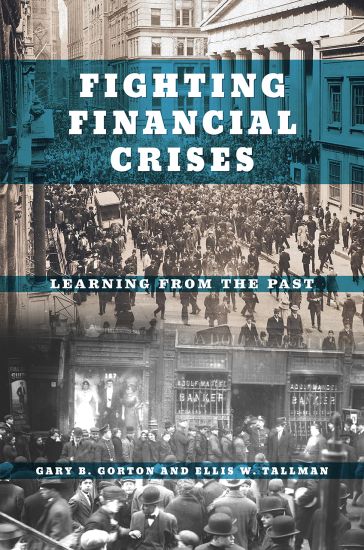
Fighting Financial Crises

Fighting Financial Crises

Gary B. Gorton; Ellis W. Tallman

University of Chicago Press
2018
sidottu
If you’ve got some money in the bank, chances are you’ve never seriously worried about not being able to withdraw it. But there was a time in the United States, an era that ended just over a hundred years ago, in which bank customers had to pay close attention to whether the banking system would remain solvent, knowing they might have to rush to retrieve their savings before the bank collapsed. During the National Banking Era (1863–1914), before the establishment of the Federal Reserve, widespread banking panics were indeed rather common. Yet these pre-Fed banking panics, as Gary B. Gorton and Ellis W. Tallman show, bear striking similarities to our recent financial crisis. In both cases, something happened to make depositors—whether individual customers or corporate investors—“act differently” and find reason to question the value of their bank debt. Fighting Financial Crises thus turns to the past for a fuller understanding of our uncertain present, investigating how panics during the National Banking Era played out and how they were eventually quelled and prevented. Gorton and Tallman open with a survey of the period’s “information environment,” tracing the development of national bank notes, checks, and clearing houses to show how the key to keeping order was to disseminate information very carefully. Identifying the most effective responses based on the framework of the National Banking Era, they then consider the Fed’s and the SEC’s reactions to the recent crisis, building an informative new perspective on how the modern economy works.
The Eloquent Shakespeare

The Eloquent Shakespeare

Gary Logan

University of Chicago Press
2009
sidottu
An actor's deepest desire is to be understood. But when asked to pronounce such words as 'chanson,' 'phantasime,' or 'quaestor,' many otherwise unflappable actors can be rendered speechless."The Eloquent Shakespeare" aims to untie those tongues and help anyone speak Shakespeare's language with ease. More than 17,000 entries make it the most comprehensive pronunciation guide to Shakespeare's words, from the common to the arcane. Each entry is written in the International Phonetic Alphabet and represents standard American pronunciations, making this dictionary perfect for North American professionals or non-native speakers of American English.Renowned Shakespearean voice and text coach Gary Logan has spent years teaching Shakespeare's works to some of the best actors in the world. His book includes proper names and foreign words and phrases, as well as an extensive introduction that covers everything from how to interpret the entries to scansion dynamics. Designed especially for actors, directors, stage managers, and teachers, "The Eloquent Shakespeare" is a one-of-a-kind resource for performing Shakespeare's dramatic works.
The Future of Conservation in America

The Future of Conservation in America

Gary E. Machlis

University of Chicago Press
2018
sidottu
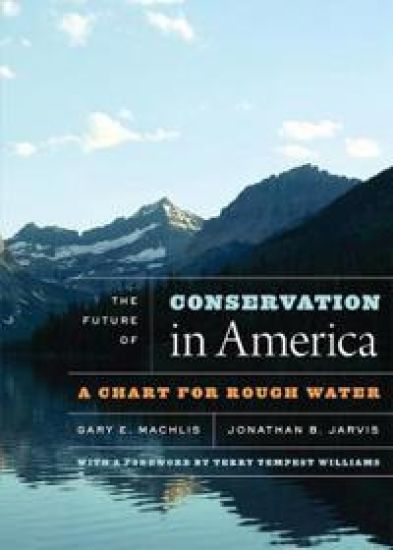
This is a turbulent time for the conservation of America's natural and cultural heritage. From the current assaults on environmental protection to the threats of climate change, biodiversity loss, and disparity of environmental justice, the challenges facing the conservation movement are both immediate and long term. In this time of uncertainty, we need a clear and compelling guide for the future of conservation in America; a declaration to inspire the next generation of conservation leaders. This is that guide--what the authors describe as "a chart for rough water." Written by the first scientist appointed as science advisor to the director of the National Park Service and the eighteenth director of the National Park Service, this is a candid, passionate, and ultimately hopeful book. The authors describe a unified vision of conservation that binds nature protection, historical preservation, sustainability, public health, civil rights and social justice, and science into common cause--and offer real-world strategies for progress. To be read, pondered, debated, and often revisited, The Future of Conservation in America is destined to be a touchstone for the conservation movement in the decades ahead.
The Future of Conservation in America

The Future of Conservation in America

Gary E. Machlis

University of Chicago Press
2018
pokkari
This is a turbulent time for the conservation of America's natural and cultural heritage. From the current assaults on environmental protection to the threats of climate change, biodiversity loss, and disparity of environmental justice, the challenges facing the conservation movement are both immediate and long term. In this time of uncertainty, we need a clear and compelling guide for the future of conservation in America; a declaration to inspire the next generation of conservation leaders. This is that guide--what the authors describe as "a chart for rough water." Written by the first scientist appointed as science advisor to the director of the National Park Service and the eighteenth director of the National Park Service, this is a candid, passionate, and ultimately hopeful book. The authors describe a unified vision of conservation that binds nature protection, historical preservation, sustainability, public health, civil rights and social justice, and science into common cause--and offer real-world strategies for progress. To be read, pondered, debated, and often revisited, The Future of Conservation in America is destined to be a touchstone for the conservation movement in the decades ahead.
Deliberative Choices

Deliberative Choices

Gary Mucciaroni; Paul J. Quirk

University of Chicago Press
2006
sidottu
The task of deliberating public policy falls preeminently to Congress. But decisions on matters ranging from budget deficits to the war with Iraq, among others, raise serious doubts about its performance. In "Deliberative Choices", Gary Mucciaroni and Paul J. Quirk assess congressional deliberation by analyzing debate on the House and Senate floors. Does debate genuinely inform members of Congress and the public? Or does it mostly mislead and manipulate them? Mucciaroni and Quirk argue that in fashioning the claims they use in debate, legislators make a strategic trade-off between boosting their rhetorical force and ensuring their ability to withstand scrutiny. Using three case studies - welfare reform, repeal of the estate tax, and telecommunications deregulation - the authors show how legislators' varying responses to such a trade-off shape the issues they focus on, the claims they make, and the information they provide in support of those claims. Mucciaroni and Quirk conclude that congressional debate generally is only moderately realistic and informed. It often trades in half-truths, omissions, and sometimes even outright falsehoods. Yet some debates are highly informative. Moreover, the authors believe it's possible to improve congressional deliberation, and they recommend reforms designed to do so.
Deliberative Choices

Deliberative Choices

Gary Mucciaroni; Paul J. Quirk

University of Chicago Press
2006
nidottu
The task of deliberating public policy falls preeminently to Congress. But decisions on matters ranging from budget deficits to the war with Iraq, among others, raise serious doubts about its performance. In "Deliberative Choices", Gary Mucciaroni and Paul J. Quirk assess congressional deliberation by analyzing debate on the House and Senate floors. Does debate genuinely inform members of Congress and the public? Or does it mostly mislead and manipulate them? Mucciaroni and Quirk argue that in fashioning the claims they use in debate, legislators make a strategic trade-off between boosting their rhetorical force and ensuring their ability to withstand scrutiny. Using three case studies - welfare reform, repeal of the estate tax, and telecommunications deregulation - the authors show how legislators' varying responses to such a trade-off shape the issues they focus on, the claims they make, and the information they provide in support of those claims. Mucciaroni and Quirk conclude that congressional debate generally is only moderately realistic and informed. It often trades in half-truths, omissions, and sometimes even outright falsehoods. Yet some debates are highly informative. Moreover, the authors believe it's possible to improve congressional deliberation, and they recommend reforms designed to do so.