Kirjahaku
Etsi kirjoja tekijän nimen, kirjan nimen tai ISBN:n perusteella.
1000 tulosta hakusanalla Geoff Nelder
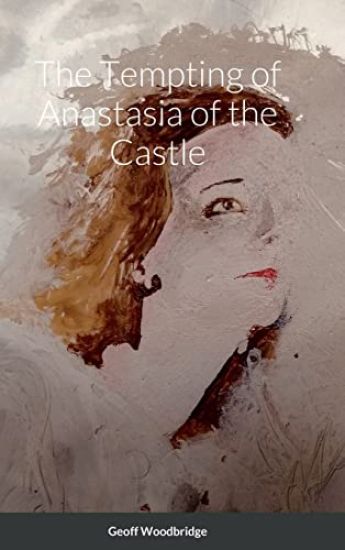
A teenage novella exploring hammer horror romance within a gothic world of werewolves, vampires and a mad professor.
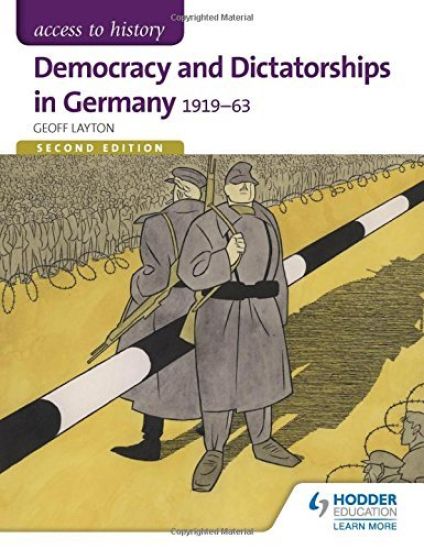
Access to History: Democracy and Dictatorships in Germany 1919-63 for OCR Second Edition
Geoff Layton
Hodder Education
2015
nidottu
Exam Board: AQA, Edexcel, OCR & WJECLevel: A-levelSubject: HistoryFirst Teaching: September 2015First Exam: June 2016Give your students the best chance of success with this tried and tested series, combining in-depth analysis, engaging narrative and accessibility. Access to History is the most popular, trusted and wide-ranging series for A-level History students.This title:- Supports the content and assessment requirements of the 2015 A-level History specifications- Contains authoritative and engaging content- Includes thought-provoking key debates that examine the opposing views and approaches of historians- Provides exam-style questions and guidance for each relevant specification to help students understand how to apply what they have learntThis title is suitable for a variety of courses including:- OCR: Democracy and Dictatorships in Germany 1919-1963

Exam Board: AQA, Edexcel & EduqasLevel: AS/A-levelSubject: Modern LanguagesFirst Teaching: September 2016First Exam: June 2017Film analysis made easy. Build your students' confidence in their language abilities and help them develop the skills needed to critique their chosen work: putting it into context, understanding the themes and director's technique, as well as specialist terminology.Breaking down each scene, character and theme in Das Leben der Anderen (The Lives of Others), this accessible guide will enable your students to understand the historical and social context of the film and give them the critical and language skills needed to write a successful essay.- Strengthen language skills with relevant grammar, vocab and writing exercises throughout- Aim for top marks by building a bank of textual examples and quotes to enhance exam response- Build confidence with knowledge-check questions at the end of every chapter- Revise effectively with pages of essential vocabulary and key mind maps throughout- Feel prepared for exams with advice on how to write an essay, plus sample essay questions, two levels of model answers and examiner commentary
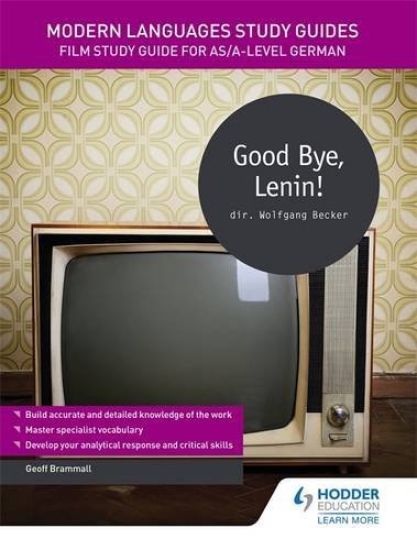
Exam Board: AQA, Edexcel, Eduqas & CCEALevel: AS/A-levelSubject: Modern LanguagesFirst Teaching: September 2016First Exam: June 2017Film analysis made easy. Build your students' confidence in their language abilities and help them develop the skills needed to critique their chosen work: putting it into context, understanding the themes and director's technique, as well as specialist terminology.Breaking down each scene, character and theme in Good bye, Lenin!, this accessible guide will enable your students to understand the historical and social context of the film and give them the critical and language skills needed to write a successful essay.- Strengthen language skills with relevant grammar, vocab and writing exercises throughout- Aim for top marks by building a bank of textual examples and quotes to enhance exam response- Build confidence with knowledge-check questions at the end of every chapter- Revise effectively with pages of essential vocabulary and key mind maps throughout- Feel prepared for exams with advice on how to write an essay, plus sample essay questions, two levels of model answers and examiner commentary
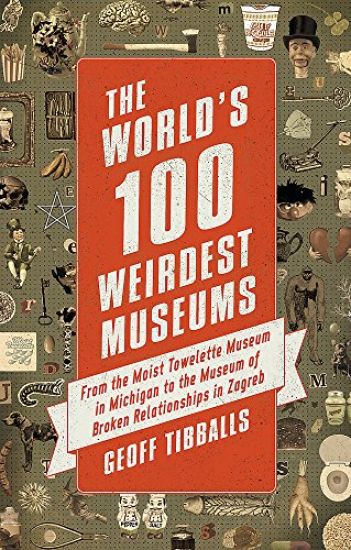
When we think of the world's great museums, we tend to think of the Louvre, the Guggenheim or the Victoria and Albert. We do not immediately think of the Dog Collar Museum, the Kansas Barbed Wire Museum, the Museum of Broken Relationships or Barney Smith's Toilet Seat Art Museum. Yet scattered across the globe are museums dedicated to every conceivable subject, from bananas to Bigfoot, lawnmowers to leprechauns, teapots to tapeworms, mustard to moist towelettes, and pencils to penises. Many are serious collections housed in grand buildings, others are located in tiny premises and are open to visitors by appointment only, often the result of one person's crazy lifetime obsession. This book lists the world's 100 weirdest museums in order of quirkiness, encompassing such delights as The Museum of Witchcraft in Cornwall, a museum in Kentucky that houses 800 ventriloquists' dolls, the Museum of Bad Art in Massachusetts, the Paris Sewer Museum, the French Fry Museum in Bruges, the Museum of Contraception and Abortion in Vienna, the Salt and Pepper Shaker Museum in Tennessee, Japan's Momofuku Ando Instant Ramen Museum (quite possibly the world's only museum devoted to instant noodles), and the Kunstkamera in St Petersburg, home to Peter the Great's collection of oddities including deformed fetuses and the decapitated head of a love rival preserved in vinegar. After all, what holiday is complete until you have seen a 300-year-old decapitated human head in a jar?Each entry will include address, contact and admission details, so the next time you are in Berlin there is no excuse for missing out on a visit to the Currywurst Museum, the world's leading museum dedicated to sausages in hot ketchup.
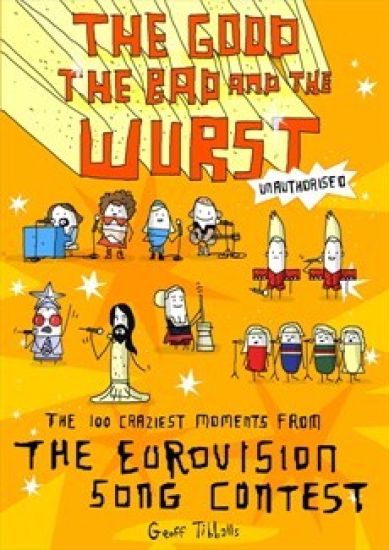
Sixty extraordinary years of Eurovision, from Céline Dion to Dustin the Turkey, from Abba to Conchita Wurst - the drag acts, the bad acts and all the nul points heroes.For 60 years the Eurovision Song Contest has existed in a parallel universe where a song about the construction of a hydro-electric power station is considered cutting-edge pop, where half a dozen warbling Russian grandmothers are considered Saturday night entertainment, where a tune repeating the word 'la' 138 times is considered a winner, and where Australia is considered part of Europe During those sixty years we have witnessed scandals: in 1957, Denmark's Birthe Wilke and Gustav Winckler enjoyed an outrageously long 13-second kiss because the stage manager forgot to say 'cut' during the live broadcast. We have witnessed national outrage: the 1976 Greek entry was a savage indictment of Turkish foreign policy in Cyprus. But most have all we have witnessed silly costumes, terrible lyrics and performers as diverse as Celine Dion and Dustin the Turkey.This book chronicles the 100 craziest moments in the history of Eurovision - the drag acts, the bad acts, the nul points heroes and the night in Luxembourg when the floor manager warned the audience not to stand up while they applauded because they might be shot by security forces. It captures some of the magic from this yearly event that continues to beguile and bemuse in equal measure.

Stocking a garden with plants can be an expensive business, so there are few things more frustrating than when the prized specimen for which you have paid a king's ransom either online or at a garden centre shrivels up and dies within a year or so of purchase. If you can prove that the plant was half-dead when it arrived, you may able to obtain a refund from some online retailers, but for the most part you have to put it down to experience and make a firm mental note not to buy fussy plants in future.The problem is that many websites and catalogues claim that everything they stock is easy to grow. Herbaceous perennials are a particular minefield. Too often you are told that a certain plant 'will come back year after year' without fail when in reality it is either so tender that the only chance of it surviving an average British winter is in a greenhouse or it is a short-lived perennial that is unlikely to flourish beyond two years anyway - and even then only if the local slugs and snails are on a diet. This book cuts through the horticultural sales pitches by listing 100 plants which, for little care beyond the essential watering at planting time, can reliably be expected to thrive in just about any garden. These plants are all but indestructible - pests give them a wide berth, they will prosper in any reasonable garden soil and will withstand anything that the UK climate throws at them. Divided into sections for shrubs, conifers, climbers, perennials, grasses, annuals, alpines and bulbs and with each entry having a Value For Money (VFM) rating out of 10, this easy-to-use guide will prove invaluable not only for the new gardener but also for old hands who are fed up with wasting time and money on plants that all too rapidly lose the will to live. With these suggestions, you can be assured of year-round colour and interest in your garden for the minimum of effort.
A side-splitting compendium of over 3,500 gems of recent wit, wisdom, one-liners and wisecracks.
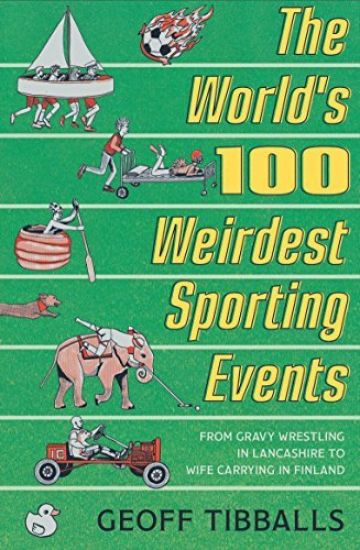
A light-hearted look at some truly weird sporting events from every part of the world.
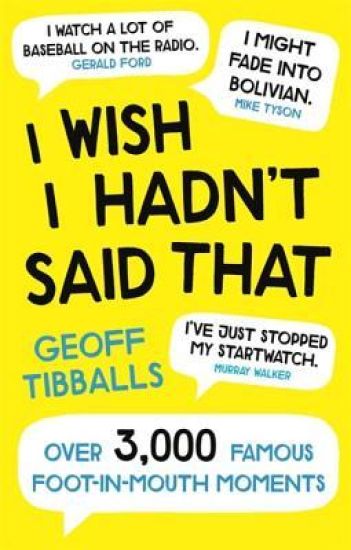
Ever since Mrs Malaprop first took to the stage in 1775 and described a gentleman as 'the very pineapple of politeness', some famous figures have become better known for their slips of the tongue than for anything they said intentionally. In particular, the careers of a number of broadcasters, sporting figures and politicians have become defined by their verbal blunders. Former US Vice-President Dan Quayle is remembered solely for making unfortunate remarks such as 'Republicans understand the importance of bondage between a mother and child.' Welsh naturalist Iolo Williams sent Twitter into meltdown when, discussing diving sea birds on Springwatch 2016, he asked a female conservationist: 'Is that the deepest shag you've ever had?' Even respected sports broadcaster Harry Carpenter was probably haunted forever by his seemingly innocent comment at the end of the 1977 Boat Race: 'Ah, isn't that nice? The wife of the Cambridge President is kissing the cox of the Oxford crew.' I WISH I HADN'T SAID THAT is a collection of over 3,000 spoken and written blunders - including unintentional double entendres, spoonerisms, mixed metaphors, malapropisms, jaw-dropping remarks, misguided quiz show answers, embarrassing newspaper misprints, and foreign signs and notices that have sadly become lost in translation.
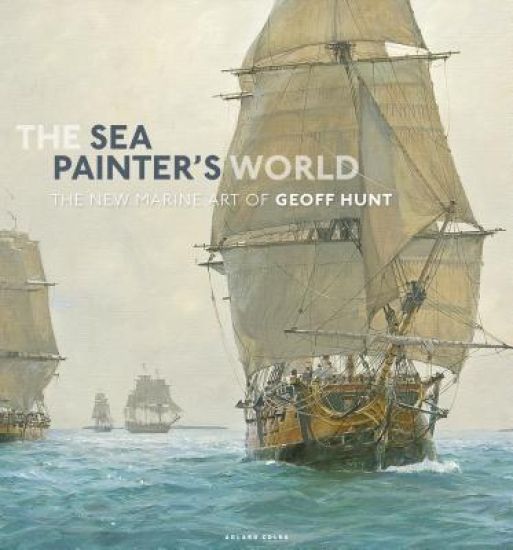
This timely follow-up to Conway’s highly successful Marine Art of Geoff Hunt (2004) presents the considerable artistic output of Britain’s leading marine painter since 2003. This new volume is heavily illustrated with images ranging from large paintings to sketchbook drawings with text written by the artist himself. The new book reflects Hunt's developing career during a time in which he served a five-year term as President of the Royal Society of Marine Artists, worked on large-scale paintings such as the definitive Mary Rose,and also completed numerous outdoor sketches and paintings. The book is divided into six sections: 1. The Sea Painter's World, an introduction to the artist's studio work at Merton Place, London and his plein air work on the River Thames; 2. Home Waters; 3. The Mediterranean; 4. In the Wake of Nelson; 5. North America and 6. The West Indies and Beyond. This concept sets Geoff's work in a broadly geographical context, showcasing the artist's freer plein air style alongside the exhaustively researched maritime history paintings to which he owes his standing as Britain’s leading marine artist.

After the Second World War, Britain’s railways were rundown and worn out, requiring massive investment and modernisation. The ‘Big Four’ railway companies were nationalised from 1948 and the newly formed British Railways embarked on a programme of building new ‘Standard’ steam locomotives to replace older types. These started to come on stream from 1951. This programme was superseded by the 1955 scheme to dieselise and electrify many lines and so the last loco of the ‘Standard’ types was built in 1960 – and the steam locomotives had been swept entirely from the BR network by 1968. This series of books, ‘The Geoff Plumb Collection’, is a photographic account of those last few years of the steam locomotives, their decline and replacement during the transition years. Each book covers one of the former ‘Big Four’, in the form of the BR Regions they became: the Southern Railway, London Midland & Scottish Railway, Great Western Railway and London & North Eastern Railway, including some pictures of the Scottish lines of the LMS and LNER. The books are not intended to convey a complete history of the railways but to illustrate how things were, to a certain extent, in the relatively recent past and impart some information through comprehensive captions, which give a sense of occasion – often a ‘last run’ of a locomotive type or over a stretch of line about to be closed down. The photos cover large parts of the country, though it was impossible to get everywhere given the overall timetable of just a few years – mainly when the author was still a schoolboy with limited time and disposable income to get around. Pictures are of the highest quality that could be produced with the equipment then available, but they do reflect real life and real times. In simple terms, a look at a period not so long ago but now gone forever.

Fred West. Ian Brady. Harold Shipman. These names haunt the national consciousness and yet none was as prolific as the little-known 'Underground Killer', Kieran Kelly. Operating without motive or rationale he pushed sixteen souls to their deaths on the tracks of the London Underground, before vanishing back into the crowd. Geoff Platt has painstakingly researched the 'career' of Kelly, whose name may be unfamiliar even to those who study the minds and misdeeds of the criminal underworld. In a time of greater governmental control of the media, the case was hushed up, lest the residents of London be gripped by mass hysteria at the thought of a faceless killer lurking on the platforms of the Central line. Kelly's first victim was his best friend and could have been called a crime passionnel, as it was committed in the heat of an argument after an evening of heavy drinking. However when Kelly realised his crime had gone undetected he felt a rush of power which he sought to recreate again and again.The killer took delight in his apparent cunning - he often passed himself off as a star witness, who had been talking to the 'poor, depressed man about his unfaithful wife, when the train arrived at the station and he jumped underneath it'. The implications of Kelly's actions spread wide, leaving families unable to claim life insurance once the death was ruled as suicide. The officers involved in the case were a small, select cadre of elite Flying Squad and Serious Crime Squad Officers from South London, the same ones who had also been dealing with the Krays and the Richardsons. Their story is equally compelling, involved as they were in extreme, unusual and certainly unorthodox tactics. These intricate strands of a murky underworld weave together to make a fascinating, if gruesome, story.
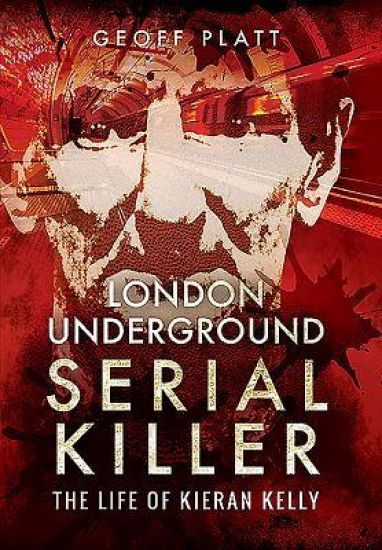
London Underground Serial Killer: The Life of Kieran Kelly
Geoff Platt
Pen Sword Books Ltd
2016
nidottu
The full story of the life and times of Kieran Patrick Kelly, the London Underground Serial Killer, who wandered up and down the Northern Line of the London Underground between 1960 and 1983, pushing innocent people that he had never met under trains, and who finished up killing over thirty people. The book provides a full biography of Kelly, discussing the details of his crimes, his victims and his ability to evade justice; he managed to secure mistrials or acquittals in twenty-five trials before being eventually convicted and sentenced to die to prison, which he did in Durham, in 2001. It could be argued that Kelly is the most investigated serial killer in the history of the world. His murders were investigated as they occurred between 1953 and 1983; they were re-investigated in 1983 and again in 2015. The author of this book played major roles in the two latter enquiries, conducting the entire enquiry in 1983 and acting as a consultant to the 2015 enquiry. More is known about Kelly than any other serial killer in history.He was arrested before he had finished killing, then murdered his cellmate in the police station and was interviewed by the author ten minutes after this final murder, before spending the next two years discussing his crimes and his motivations with the author. The end result is a truly unique insight into the mind of a serial killer!
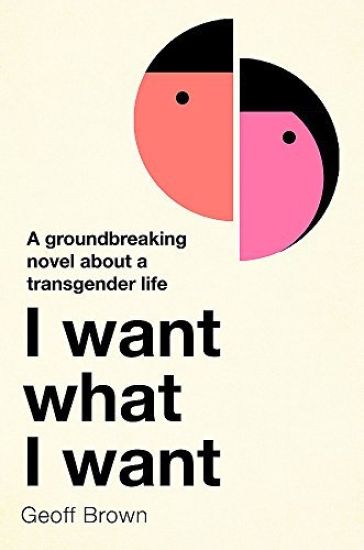
A reissue of Geoff Brown's groundbreaking classic novel about a man who wants to be a woman. Published in 1966, I Want What I Want was one of the first novels to explore the life of a trans woman.
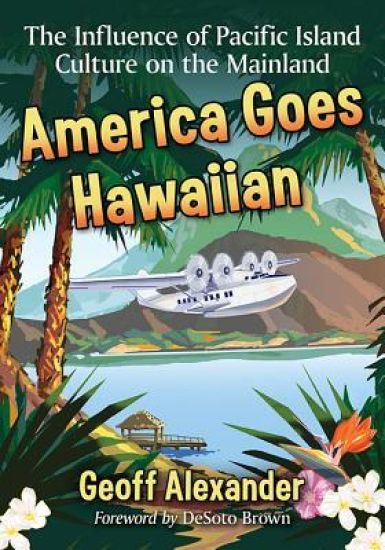
How did Hawaiian and Polynesian culture come to dramatically alter American music, fashion and decor, as well as ideas about race, in less than a century? It began with mainland hula and musical performances in the late 19th century, rose dramatically as millions shipped to Hawaii during the Pacific War, then made big leap with the advent of low-cost air travel. By the end of the 1950s, mainlanders were hosting tiki parties, listening to exotic music, lazing on rattan furniture in Hawaiian shirts and, of course, surfing. Increasingly, they were marrying people outside of their own racial groups as well. The author describes how this cultural conquest came about and the people and events that led to it.
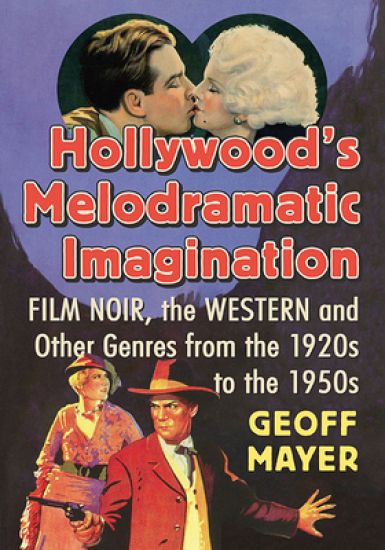
Melodrama is the foundation of American cinema. It is, however, a poorly understood term. While it is a pervasive and persuasive dramatic mode, it is not tied to any specific moral or ideological system. It is not a singular genre; rather, it operates as a "genre generating machine" capable of determining the aesthetics and structure of the drama within many genres. Melodrama centers the conflict around the clash between good and evil and provides a sense of poetic justice--but the specific values embedded in notions of good and evil are determined by the culture, and they shift from nation to nation, region to region, and period to period. This book explores the "populist" westerns of the 1930s, the propaganda films that followed the Japanese attack on Pearl Harbor, and the popularity of Sax Rohmer's master villain Fu Manchu. "Melodramas of passion" and film noir also offer a challenge to melodrama with its seemingly alienated protagonists and downbeat endings. Yet, with few exceptions, Hollywood was able to assimilate these genres within its melodramatic imagination.
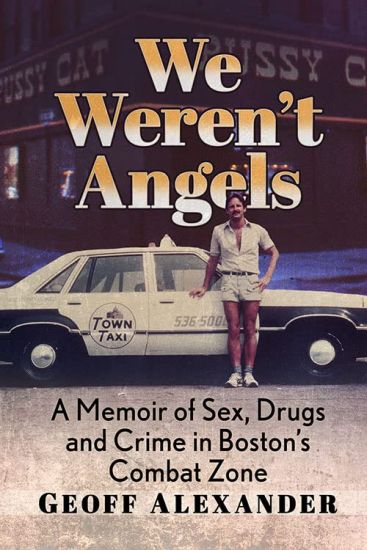
A hub of sex, crime, and drugs, Boston's Combat Zone, the nation's largest adult entertainment district during the last half of the 20th century, lured white- and blue-collar workers, lawyers, professors, judges and cops to watch and chat up its adult performers, many of whom earned more than white-collar professionals. By 1985, its multi-decade run was over. Why did it last so long, despite constant attempts to destroy it? What drew thousands of women to perform there, despite the potential for danger? And what became of them, after the lights dimmed and the music stopped? This first comprehensive history of the Combat Zone authored by an active participant, is told through the gritty perspective of a Boston cab driver married to a star dancer. It introduces the district's strippers, club owners, transgender performers, prostitutes and cops, depicting them as neither saints nor sinners as they fought for survival and success in a time of sexual revolution and political upheaval. This is their story, much of it told in their own words.