Kirjojen hintavertailu. Mukana 11 342 296 kirjaa ja 12 kauppaa.

Kirjahaku

Etsi kirjoja tekijän nimen, kirjan nimen tai ISBN:n perusteella.

1000 tulosta hakusanalla Geoffrey H. Block

Understanding Victory

Understanding Victory

Geoffrey Till

Praeger Publishers Inc
2014
sidottu
Using four warship-centered examples, this book shows how naval battles are won or lost—and how technological advantage is rarely as decisive in defeat or victory as is often claimed.Providing a unique assessment of naval strategy and historic outcomes across centuries of warfare, Understanding Victory: Naval Operations from Trafalgar to the Falklands presents four case studies that examine each ship-based battle narrative to expose and analyze the factors that contributed to each side's success or defeat. The work opens with an overview of the general causes of success and failure in naval operations. Each case study starts with a detailed narrative of the battle and then reviews the conflict from the key perspectives identified in the introduction. These classic examples of naval warfare underscore how the outcome of naval operations is often predetermined by the clarity and quality of the mission aim, and point out striking constants in naval warfare despite the obvious differences in military technologies over a long span of time.
A Short History of Christianity

A Short History of Christianity

Geoffrey Blainey

SPCK Publishing
2016
nidottu
From the pen of a great historian, here is the most accessible and affordable one-volume history of Christianity you can buy. As well providing a masterly panoramic survey of the religion itself, Professor Blainey keeps you informed about the social and economic forces that influenced it, making fascinating connections with politics, literature, popular culture, other religions and wider historical events along the way. The result is a vivid account of the world’s largest religion, packed with illuminating insights into the ideas and achievements of some of the most powerful people and movements that have shaped our world right up to the present day.
Aeschylus’s Suppliant Women

Aeschylus’s Suppliant Women

Geoffrey W. Bakewell

University of Wisconsin Press
2013
nidottu
This book offers a provocative interpretation of a relatively neglected tragedy, Aeschylus's Suppliant Women. Although the play's subject is a venerable myth, it frames the flight of the daughters of Danaus from Egypt to Greece in starkly contemporary terms, emphasising the encounter between newcomers and natives. Although some scholars read Suppliant Women as modelling successful social integration, Geoffrey W. Bakewell argues that the play demonstrates, above all, the difficulties and dangers noncitizens brought to the polis. Rigourously historical, Bakewell situates Suppliant Women in light of the unprecedented immigration that Athens experienced in the sixth and fifth centuries BCE. The flow of foreigners to Attika increased under the Pisistratids but became a flood following liberation, Cleisthenes, and the Persian Wars. As Athenians of the classical era became increasingly aware of their own collective identity, they sought to define themselves and exclude others. They created a formal legal status to designate the free noncitizens living among them, calling them metics and calling their status metoikia. When Aeschylus dramatised the mythical flight of the Danaids from Egypt in his play Suppliant Women, he did so in light of his own time and place. Throughout the play, directly and indirectly, he casts the newcomers as metics and their stay in Greece as metoikia. Bakewell maps the manifold anxieties that metics created in classical Athens, showing that although citizens benefited from the many immigrants in their midst, they also feared the effects of immigration in political, sexual, and economic realms. Bakewell finds metoikia was a deeply flawed solution to the problem of large-scale immigration. Aeschylus's Argives accepted the Danaids as metics only under duress and as a temporary response to a crisis. Like the historical Athenians, they opted for metoikia because they lacked better alternatives.
All Abroad

All Abroad

Geoffrey Weill

University of Wisconsin Press
2021
sidottu
Yearning for an escape from a claustrophobic childhood, Geoffrey Weill became infatuated with travel. At twenty-three, the budding British connoisseur made his way across the Atlantic on an ocean liner. The year was 1973, and he was bound for New York to pursue a promising role as consultant-in-training at the headquarters of the world's oldest travel agency, Thomas Cook. The idyllic trip was reminiscent of those from the early twentieth century but made distinctly modern by a nightly reminder—at the onboard dance club, one was sure to run into a sequin-clad David Bowie.All Abroad is the memoir of a man hungry for the logistics of travel: getting there, staying there, and feeling at home on any continent. Woven into his entertaining anecdotes is an informative account of a lost era in travel. As a witness to compelling and monumental changes in the industry, Weill offers a unique view into how our vacations have been shaped deeply by human trends, tragedies, and technologies. While some long for the grandeur of tourism from decades ago, Weill insists that travel—the conveyances and hotels that await journey's end—remains as glamorous as ever.
The Grand Strategy of Philip II

The Grand Strategy of Philip II

Geoffrey Parker

Yale University Press
2000
pokkari
From 1556 until his death in 1598, Philip II of Spain ruled the first global empire in history, yet no one so far has analyzed precisely how he accomplished this feat. The author investigates the strengths and weaknesses of Philip’s strategic vision, the priorities that underlay his policies, the practices and prejudices that influenced his decision-making, and the external factors that affected the achievement of his goals.Geoffrey Parker begins by defining the characteristics of Spain’s strategic culture: the king’s distinctive system of government, the “information overload” that threatened to engulf it, and the various strategic priorities and assumptions used to overcome the disparity between aims and means. He then explores the surviving documentation (from the Habsburgs, their allies, and their adversaries) on the formation of strategy in three crucial case studies: Philip’s unsuccessful efforts to maintain his authority in the Netherlands, his defective peacetime management of foreign relations with Scotland and England, and his failed Armada campaign against England. Finally Parker examines the small but fatal flaws in the execution of Philip’s Grand Strategy, assesses the response of the king and his ministers to their failures, and questions whether the outcome might have been different with other policy options, another ruler, or a different strategic culture. Pointing to modern parallels between Philip’s problems of governance and those facing Hitler and Churchill, or Kennedy and Johnson, this powerfully argued book provides a fascinating commentary on the nature of empires and the decision-making process as practiced by great powers.
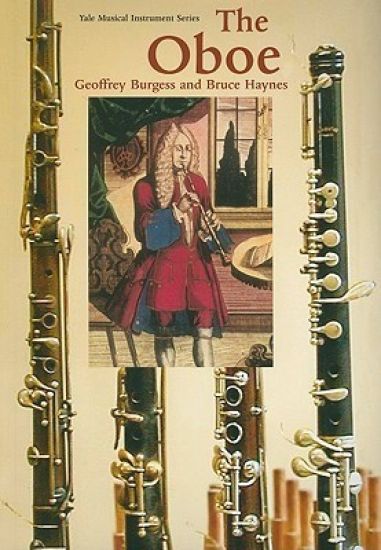
The Oboe

The Oboe

Geoffrey Burgess; Bruce Haynes

Yale University Press
2010
pokkari
The oboe, including its earlier forms the shawm and the hautboy, is an instrument with a long and rich history. In this book two distinguished oboist-musicologists trace that history from its beginnings to the present time, discussing how and why the oboe evolved, what music was written for it, and which players were prominent. Geoffrey Burgess and Bruce Haynes begin by describing the oboe’s prehistory and subsequent development out of the shawm in the mid-seventeenth century. They then examine later stages of the instrument, from the classical hautboy to the transition to a keyed oboe and eventually the Conservatoire-system oboe. The authors consider the instrument’s place in Romantic and Modernist music and analyze traditional and avant-garde developments after World War II. Noting the oboe’s appearance in paintings and other iconography, as well as in distinctive musical contexts, they examine what this reveals about the instrument’s social function in different eras. Throughout the book they discuss the great performers, from the pioneers of the seventeenth century to the traveling virtuosi of the eighteenth, the masters of the romantic period and the legends of the twentieth century such as Gillet, Goossens, Tabuteau, and Holliger. With its extensive illustrations, useful technical appendices, and discography, this is a comprehensive and authoritative volume that will be the essential companion for every woodwind student and performer.
The Way and the Word

The Way and the Word

Geoffrey Lloyd; Nathan Sivin

Yale University Press
2003
pokkari
The rich civilizations of ancient China and Greece built sciences of comparable sophistication—each based on different foundations of concept, method, and organization. In this engrossing book, two world-renowned scholars compare the cosmology, science, and medicine of China and Greece between 400 B.C. and A.D. 200, casting new light not only on the two civilizations but also on the evolving character of science.Sir Geoffrey Lloyd and Nathan Sivin investigate the differences between the thinkers in the two civilizations: what motivated them, how they understood the cosmos and the human body, how they were educated, how they made a living, and whom they argued with and why. The authors’ new method integrally compares social, political, and intellectual patterns and connections, demonstrating how all affected and were affected by ideas about cosmology and the physical world. They relate conceptual differences in China and Greece to the diverse ways that intellectuals in the two civilizations earned their living, interacted with fellow inquirers, and were involved with structures of authority. By A.D. 200 the distinctive scientific strengths of both China and Greece showed equal potential for theory and practice. Lloyd and Sivin argue that modern science evolved not out of the Greek tradition alone but from the strengths of China, Greece, India, Islam, and other civilizations, which converged first in the Muslim world and then in Renaissance Europe.
Criticism in the Wilderness

Criticism in the Wilderness

Geoffrey Hartman; Hayden White

Yale University Press
2007
pokkari
Originally published in 1980, this now classic work of literary theory explores the wilderness of positions that grew out of the collision between Anglo-American practical criticism and Continental philosophic criticism. This second edition includes a new preface by the author as well as a foreword by Hayden White.“A key text for understanding ‘the fate of reading’ in the Anglophone world over the last fifty years.”—Hayden White, from the Foreword“Criticism in the Wilderness may be the best, most brilliant, most broadly useful book yet written by an American about the sudden swerve from the safety of established decorum toward bravely theoretical, mainly European forms of literary criticism.”—Terrence Des Pres, Nation“A polemical survey that reaffirms the value of the Continental tradition of philosophical literary criticism.”—Notable Books of the Year, New York Times Book Review
Berkshire

Berkshire

Geoffrey Tyack; Simon Bradley; Nikolaus Pevsner

Yale University Press
2010
sidottu
This work covers the English county of Berkshire. Stretching from the fringes of London, Berkshire originally covered much of present day Oxfordshire. The variety of architecture is, consequently, broad and remarkable, from the towns of the home counties to the farmhouses and churches of its west.
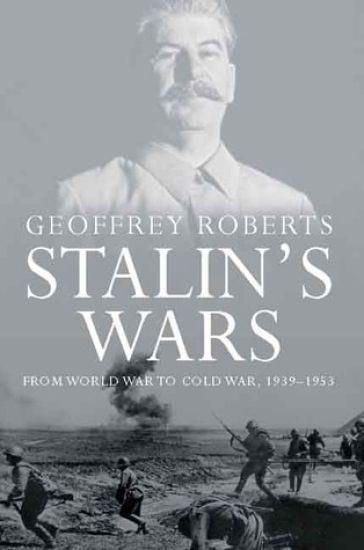
Stalin's Wars

Stalin's Wars

Geoffrey Roberts

Yale University Press
2008
pokkari
A provocative reassessment of Stalin’s military and political leadership during the most important years of his career This breakthrough book provides a detailed reconstruction of Stalin’s leadership from the outbreak of the Second World War in 1939 to his death in 1953. Making use of a wealth of new material from Russian archives, Geoffrey Roberts challenges a long list of standard perceptions of Stalin: his qualities as a leader; his relationships with his own generals and with other great world leaders; his foreign policy; and his role in instigating the Cold War. While frankly exploring the full extent of Stalin’s brutalities and their impact on the Soviet people, Roberts also uncovers evidence leading to the stunning conclusion that Stalin was both the greatest military leader of the twentieth century and a remarkable politician who sought to avoid the Cold War and establish a long-term detente with the capitalist world. By means of an integrated military, political, and diplomatic narrative, the author draws a sustained and compelling personal portrait of the Soviet leader. The resulting picture is fascinating and contradictory, and it will inevitably change the way we understand Stalin and his place in history. Roberts depicts a despot who helped save the world for democracy, a personal charmer who disciplined mercilessly, a utopian ideologue who could be a practical realist, and a warlord who undertook the role of architect of post-war peace.
The Spirit of the Quakers

The Spirit of the Quakers

Geoffrey Durham

Yale University Press
2010
pokkari
An inspiring and enlightening introduction to Quakerism, the second title in the Yale University Press “The Spirit of . . .”series Who are the Quakers, what do they believe, and what do they practice? The Religious Society of Friends—also known as Quakers-—believes that everyone can have a direct experience of God. Quakers express this in a unique form of worship that inspires them to work for change in themselves and in the world. In The Spirit of the Quakers, Geoffrey Durham, himself a Friend, explains Quakerism through quotations from writings that cover 350 years, from the beginnings of the movement to the present day.Peace and equality are major themes in the book, but readers will also find thought-provoking passages on the importance of action for social change, the primacy of truth, the value of simplicity, the need for a sense of community, and much more. The quoted texts convey a powerful religious impulse, courage in the face of persecution, the warmth of human relationships, and dedicated perseverance in promoting just causes.The extended quotations have been carefully selected from well-known Quakers such as George Fox, William Penn, John Greenleaf Whittier, Elizabeth Fry and John Woolman, as well as many contemporary Friends. Together with Geoffrey Durham’s enlightening and sympathetic introductions to the texts, the extracts from these writers form an engaging, often moving guide to this accessible and open-hearted religious faith.
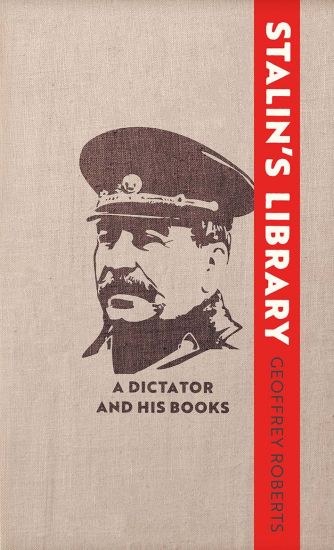
Stalin's Library

Stalin's Library

Geoffrey Roberts

YALE UNIVERSITY PRESS
2022
sidottu
A compelling intellectual biography of Stalin told through his personal library “[A] fascinating new study.”—Michael O’Donnell, Wall Street Journal In this engaging life of the twentieth century’s most self-consciously learned dictator, Geoffrey Roberts explores the books Stalin read, how he read them, and what they taught him. Stalin firmly believed in the transformative potential of words, and his voracious appetite for reading guided him throughout his years. A biography as well as an intellectual portrait, this book explores all aspects of Stalin’s tumultuous life and politics. Stalin, an avid reader from an early age, amassed a surprisingly diverse personal collection of thousands of books, many of which he marked and annotated, revealing his intimate thoughts, feelings, and beliefs. Based on his wide-ranging research in Russian archives, Roberts tells the story of the creation, fragmentation, and resurrection of Stalin’s personal library. As a true believer in communist ideology, Stalin was a fanatical idealist who hated his enemies—the bourgeoisie, kulaks, capitalists, imperialists, reactionaries, counter-revolutionaries, traitors—but detested their ideas even more.
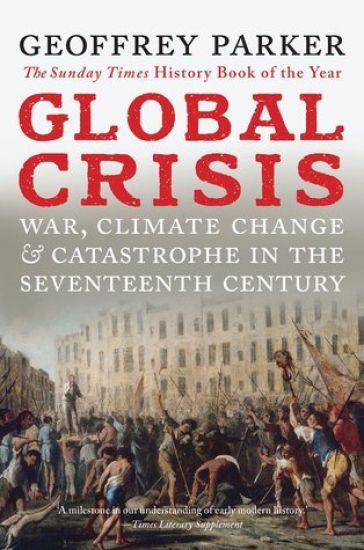
Global Crisis

Global Crisis

Geoffrey Parker

Yale University Press
2014
pokkari
How to account for decades of worldwide war, revolution, and human suffering in the seventeenth century? A master historian uncovers the disturbing answer. Revolutions, droughts, famines, invasions, wars, regicides – the calamities of the mid-seventeenth century were not only unprecedented, they were agonisingly widespread. A global crisis extended from England to Japan, and from the Russian Empire to sub-Saharan Africa. North and South America, too, suffered turbulence. The distinguished historian Geoffrey Parker examines first-hand accounts of men and women throughout the world describing what they saw and suffered during a sequence of political, economic and social crises that stretched from 1618 to the 1680s. Parker also deploys scientific evidence concerning climate conditions of the period, and his use of ‘natural’ as well as ‘human’ archives transforms our understanding of the World Crisis. Changes in the prevailing weather patterns during the 1640s and 1650s – longer and harsher winters, and cooler and wetter summers – disrupted growing seasons, causing dearth, malnutrition, and disease, along with more deaths and fewer births. Some contemporaries estimated that one-third of the world died, and much of the surviving historical evidence supports their pessimism. Parker’s demonstration of the link between climate change and worldwide catastrophe 350 years ago stands as an extraordinary historical achievement. And the contemporary implications of his study are equally important: are we at all prepared today for the catastrophes that climate change could bring tomorrow?
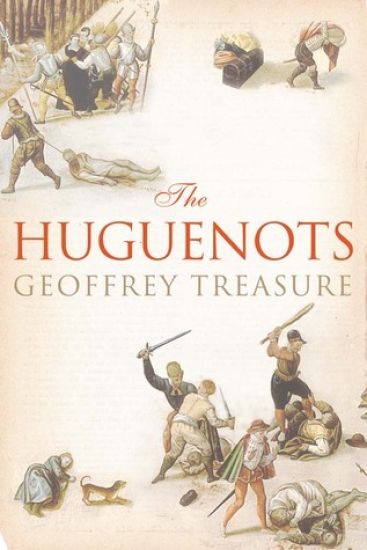
The Huguenots

The Huguenots

Geoffrey Treasure

Yale University Press
2014
pokkari
Following the Reformation, a growing number of radical Protestants came together to live and worship in Catholic France. These Huguenots survived persecution and armed conflict to win—however briefly—freedom of worship, civil rights, and unique status as a protected minority. But in 1685, the Revocation of the Edict of Nantes abolished all Huguenot rights, and more than 200,000 of the radical Calvinists were forced to flee across Europe, some even farther. In this capstone work, Geoffrey Treasure tells the full story of the Huguenots’ rise, survival, and fall in France over the course of a century and a half. He explores what it was like to be a Huguenot living in a “state within a state,” weaving stories of ordinary citizens together with those of statesmen, feudal magnates, leaders of the Catholic revival, Henry of Navarre, Catherine de’ Medici, Louis XIV, and many others. Treasure describes the Huguenots' disciplined community, their faith and courage, their rich achievements, and their unique place within Protestantism and European history. The Huguenot exodus represented a crucial turning point in European history, Treasure contends, and he addresses the significance of the Huguenot story—the story of a minority group with the power to resist and endure in one of early modern Europe’s strongest nations.
Wordsworth’s Poetry 1787-1814

Wordsworth’s Poetry 1787-1814

Geoffrey Hartman

Yale University Press
2015
pokkari
The drama of consciousness and maturation in the growth of a poet's mind is traced from Wordsworth's earliest poems to The Excursion of 1814. Mr. Hartman follows Wordsworth's growth into self-consciousness, his realization of the autonomy of the spirit, and his turning back to nature. The apocalyptic bias is brought out, perhaps for the first time since Bradley's Oxford Lectures, and without slighting in any way his greatness as a nature poet. Rather, a dialectical relation is established between his visionary temper and the slow and vacillating growth of the humanized or sympathetic imagination. Mr. Hartman presents a phenomenology of the mind with important bearings on the Romantic movement as a whole and as confirmation of Wordsworth's crucial position in the history of English poetry. Mr. Hartman is professor of English and comparative literature at the University of Iowa. "A most distinguished book, subtle, penetrating, profound."—Rene Wellek. "If it is the purpose of criticism to illuminate, to evaluate, and to send the reader back to the text for a fresh reading, Hartman has succeeded in establishing the grounds for such a renewal of appreciation of Wordsworth."—Donald Weeks, Journal of Aesthetics and Art Criticism.
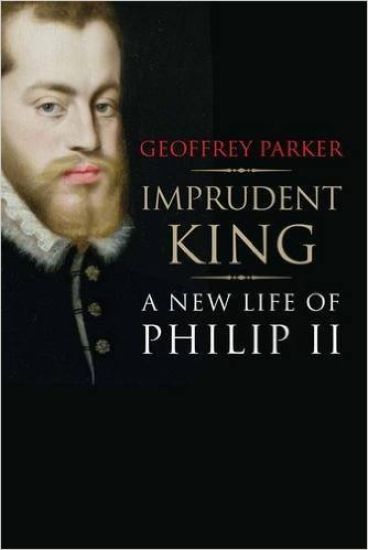
Imprudent King

Imprudent King

Geoffrey Parker

Yale University Press
2015
pokkari
A vast archive of documents, unread since the sixteenth century, revises the portrait of Philip II, Spain’s best-known king"A superbly informed narrative of Philip II’s long career as Europe’s most powerful king."—Henry Kamen, Little Reviews"This authoritative, intelligently revisionist biography must stand now as the primary reference."—Iain Finlayson, The Times Philip II (1527-1598) is not only the most famous king in Spanish history, but one of the most famous monarchs in English history: the man who married Mary Tudor and later launched the Spanish Armada against her sister Elizabeth I. This compelling biography of the most powerful European monarch of his day begins with his conception (1526) and ends with his ascent to Paradise (1603), two occurrences surprisingly well documented by contemporaries. Eminent historian Geoffrey Parker draws on four decades of research on Philip as well as a recent, extraordinary archival discovery—a trove of 3,000 documents in the vaults of the Hispanic Society of America in New York City, unread since crossing Philip’s own desk more than four centuries ago. Many of them change significantly what we know about the king. The book examines Philip’s long apprenticeship; his three principal interests (work, play, and religion); and the major political, military, and personal challenges he faced during his long reign. Parker offers fresh insights into the causes of Philip’s leadership failures: was his empire simply too big to manage, or would a monarch with different talents and temperament have fared better?
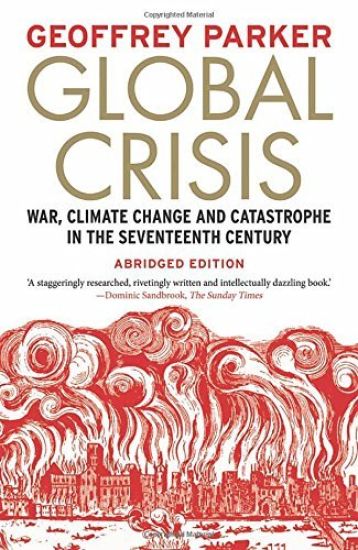
Global Crisis

Global Crisis

Geoffrey Parker

Yale University Press
2017
pokkari
An accessible synthesis of the prescient best seller exploring seventeenth-century catastrophe and the impact of climate change First published in 2013, Geoffrey Parker’s prize-winning best seller Global Crisis analyzes the unprecedented calamities—revolutions, droughts, famines, invasions, wars, and regicides—that befell the mid-seventeenth-century world and wiped out as much as one-third of the global population, and reveals climate change to be the root cause. Examining firsthand accounts of the crises and scrutinizing the prevailing weather patterns during the 1640s and 1650s—longer and harsher winters, and cooler and wetter summers—Parker reveals evidence of disrupted growing seasons causing malnutrition, disease, a higher death toll, and fewer births. This new abridged edition distills the original book’s prodigious research for a broader audience while retaining and indeed emphasizing Parker’s extraordinary historical achievement: his dazzling demonstration of the link between climate change and worldwide catastrophe 350 years ago. Yet, the contemporary implications of his study are equally important: are we prepared today for the catastrophes that climate change could bring tomorrow? At half the original length, this user-friendly abridgment is ideal for students and general readers seeking a rapid handle on the key issues.
To Rule Eurasia’s Waves

To Rule Eurasia’s Waves

Geoffrey F. Gresh

Yale University Press
2021
sidottu
The first book to weave Eurasia together through the perspective of the oceans and seas “A detailed account of the growing importance of the Chinese, Indian, and Russian navies and how this competition is playing out in waters stretching from the Indo-Pacific area to the Arctic and the Mediterranean.”—Lawrence D. Freedman, Foreign Affairs “It is a must-read for scholars, policymakers, and anyone interested in the great power competition.”—Yongzheng Parker Li, Pacific Affairs “[E]xtremely thought-provoking and well researched.”—Bruce A. Elleman, Russian Review Eurasia’s emerging powers—India, China, and Russia—have increasingly embraced their maritime geographies as they have expanded and strengthened their economies, military capabilities, and global influence. Maritime Eurasia, a region that facilitates international commerce and contains some of the world’s most strategic maritime chokepoints, has already caused a shift in the global political economy and challenged the dominance of the Atlantic world and the United States. Climate change is set to further affect global politics. With meticulous and comprehensive field research, Geoffrey Gresh considers how the melting of the Arctic ice cap will create new shipping lanes and exacerbate a contest for the control of Arctic natural resources. He explores as well the strategic maritime shifts under way from Europe to the Indian Ocean and Pacific Asia. The race for great power status and the earth’s changing landscape, Gresh shows, are rapidly transforming Eurasia and thus creating a new world order.
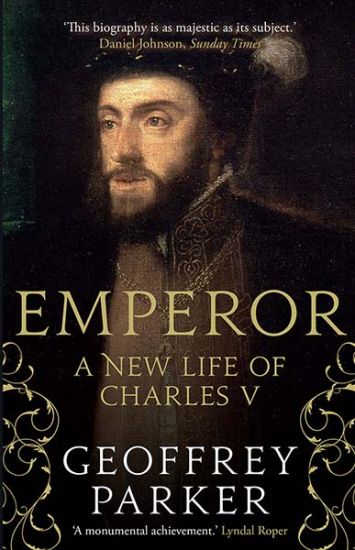
Emperor

Emperor

Geoffrey Parker

Yale University Press
2020
pokkari
Drawing on vital new evidence, a top historian dramatically reinterprets the life and reign of Holy Roman Emperor Charles V, ruler of the world’s first transatlantic empire “Masterly.”—William Anthony Hay, Wall Street Journal “Seldom does one find a work of such profound scholarship delivered in such elegant and engaging prose. Drawing deftly on an astonishing volume of documentary evidence, Parker has produced a masterpiece: an epic, detailed and vivid life of this complex man and his impossibly large empire.”—Susannah Lipscomb, Financial Times Selected as a book of the year (2020) by Simon Sebag Montefiore in Aspects of History magazine The life of Emperor Charles V (1500–1558), ruler of Spain, Germany, the Netherlands, and much of Italy and Central and South America, has long intrigued biographers. But the elusive nature of the man (despite an abundance of documentation), his relentless travel and the control of his own image, together with the complexity of governing the world’s first transatlantic empire, complicate the task. Geoffrey Parker, one of the world’s leading historians of early modern Europe, has examined the surviving written sources in Dutch, French, German, Italian, Latin, and Spanish, as well as visual and material evidence. He explores the crucial decisions that created and preserved this vast empire, analyzes Charles’s achievements within the context of both personal and structural factors, and scrutinizes the intimate details of the ruler’s life for clues to his character and inclinations. The result is a unique biography that interrogates every dimension of Charles’s reign and views the world through the emperor’s own eyes.