Kirjojen hintavertailu. Mukana 11 342 296 kirjaa ja 12 kauppaa.

Kirjahaku

Etsi kirjoja tekijän nimen, kirjan nimen tai ISBN:n perusteella.

1000 tulosta hakusanalla George Barrell Cheever

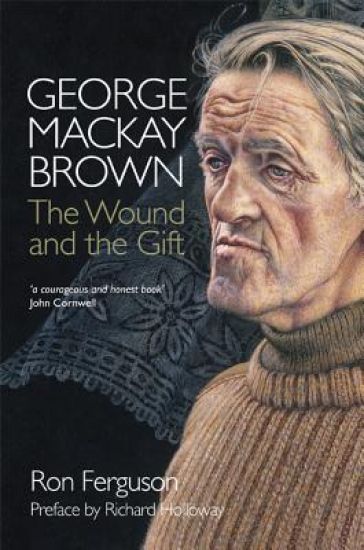
George MacKay Brown

George MacKay Brown

Ron Ferguson

Saint Andrew Press
2012
nidottu
Enigmatic – mysterious – intriguing: George Mackay Brown was a notoriously private man. He rarely left his native Orkney, and yet became one of the 20th century’s finest poets and prose stylists. In his prolific writings, George Mackay Brown’s spirituality and his love of the wind-scoured island landscape fused to give us some of the most beautiful poetry and prose in the English language. His work is shot through with glimpses of the divine. Ron Ferguson, who was described by George Mackay Brown as 'a true craftsman in litereature' tracks with curiosity and passion his friend’s literary and spiritual journey, including his controversial move from Presbyterianism to Roman Catholicism. He explores the darker, more tormented, side of Orkney’s Bard and uncovers the intense relationship between alcohol, suffering and creativity. This is a riveting journey. Along the way, the author is forced to question some of his own assumputions. And the reader is swept along on a literary and spiritual voyage of discovery that compels to the very end. Weaving a brilliant, enriching narrative, the author draws extensively on the poet's writings, unpublished letters, conversations with the Bard's friends and many well-known writers. SHORTLISTED FOR THE SALTIRE AWARD FOR BEST RESEARCH BOOK OF THE YEAR
George Cruikshank's Life, Times and Art: Volume I: 1792-1835
The etchings and wood-engravings of George Cruikshank (1792-1878) recorded, commented on and satirised his times to such an extent that they have frequently been used to represent the age. Cruikshank, a popular artist in the propaganda war against Napoleon, an ardent campaigner for Reform and Temperance, and the foremost illustrator of such classics as Grimms' Fairy Tales, The etchings and wood-engravings of George Cruikshank (1792-1878) recorded, commented on and satirised his times to such an extent that they have frequently been used to represent the age. Cruikshank, a popular artist in the propaganda war against Napoleon, an ardent campaigner for Reform and Temperance, and the foremost illustrator of such classics as Grimms' Fairy Tales, Scott's novels and Dicken's Oliver Twist, is known for his versatility, imagination, humour and incisive images. His long life, marked by a ceaseless struggle to win recognition for his art, intersected with the lives of many of Britain's important political, social and cultural leaders. In this first volume of Robert Patten's two-volume biography, which covers the artist's Regency caricatures and early book illustrations, Patten demonstrates the ways in which Cruikshank was, as his contemporaries frequently declared, the Hogarth of the nineteenth century. Having reviewed over 8,500 unpublished letters and most of Cruikshank's 12,000 or more printed images, Patten gives a thorough and reliable account of the artist's career. He puts Cruikshank's achievement into a variety of larger contexts - publishing history, political and cultural history, the traditions of figuration practised by Cruikshank's contemporaries, and the literary and social productions of nineteenth century Britain. This biography provides both the general reader and the specialist with a wealth of new information conveyed in lively, non-technical prose. Patten's book contributes to current investigation of the rich interactions between high art and low, texts and pictures, politics and imagination. Scott's novels and Dicken's Oliver Twist, is known for his versatility, imagination, humour and incisive images. His long life, marked by a ceaseless struggle to win recognition for his art, intersected with the lives of many of Britain's important political, social and cultural leaders. In this first volume of Robert Patten's two-volume biography, which covers the artist's Regency caricatures and early book illustrations, Patten demonstrates the ways in which Cruikshank was, as his contemporaries frequently declared, the Hogarth of the nineteenth century. Having reviewed over 8,500 unpublished letters and most of Cruikshank's 12,000 or more printed images, Patten gives a thorough and reliable account of the artist's career. He puts Cruikshank's achievement into a variety of larger contexts - publishing history, political and cultural history, the traditions of figuration practised by Cruikshank's contemporaries, and the literary and social productions of nineteenth century Britain. This biography provides both the general reader and the specialist with a wealth of new information conveyed in lively, non-technical prose. Patten's book contributes to current investigation of the rich interactions between high art and low, texts and pictures, politics and imagination. The etchings and wood-engravings of George Cruikshank (1792-1878) recorded, commented on and satirised his times to such an extent that they have frequently been used to represent the age. Cruikshank, a popular artist in the propaganda war against Napoleon, an ardent campaigner for Reform and Temperance, and the foremost illustrator of such classics as Grimms' Fairy Tales, The etchings and wood-engravings of George Cruikshank (1792-1878) recorded, commented on and satirised his times to such an extent that they have frequently been used to represent the age. Cruikshank, a popular artist in the propaganda war against Napoleon, an ardent campaigner for Reform and Temperance, and the foremost illustrator of such classics as Grimms' Fairy Tales, Scott's novels and Dicken's Oliver Twist, is known for his versatility, imagination, humour and incisive images. His long life, marked by a ceaseless struggle to win recognition for his art, intersected with the lives of many of Britain's important political, social and cultural leaders. In this first volume of Robert Patten's two-volume biography, which covers the artist's Regency caricatures and early book illustrations, Patten demonstrates the ways in which Cruikshank was, as his contemporaries frequently declared, the Hogarth of the nineteenth century. Having reviewed over 8,500 unpublished letters and most of Cruikshank's 12,000 or more printed images, Patten gives a thorough and reliable account of the artist's career. He puts Cruikshank's achievement into a variety of larger contexts - publishing history, political and cultural history, the traditions of figuration practised by Cruikshank's contemporaries, and the literary and social productions of nineteenth century Britain. This biography provides both the general reader and the specialist with a wealth of new information conveyed in lively, non-technical prose. Patten's book contributes to current investigation of the rich interactions between high art and low, texts and pictures, politics and imagination. Scott's novels and Dicken's Oliver Twist, is known for his versatility, imagination, humour and incisive images. His long life, marked by a ceaseless struggle to win recognition for his art, intersected with the lives of many of Britain's important political, social and cultural leaders. In this first volume of Robert Patten's two-volume biography, which covers the artist's Regency caricatures and early book illustrations, Patten demonstrates the ways in which Cruikshank was, as his contemporaries frequently declared, the Hogarth of the nineteenth century. Having reviewed over 8,500 unpublished letters and most of Cruikshank's 12,000 or more printed images, Patten gives a thorough and reliable account of the artist's career. He puts Cruikshank's achievement into a variety of larger contexts - publishing history, political and cultural history, the traditions of figuration practised by Cruikshank's contemporaries, and the literary and social productions of nineteenth century Britain. This biography provides both the general reader and the specialist with a wealth of new information conveyed in lively, non-technical prose. Patten's book contributes to current investigation of the rich interactions between high art and low, texts and pictures, politics and imagination. The etchings and wood-engravings of George Cruikshank (1792-1878) recorded, commented on and satirised his times to such an extent that they have frequently been used to represent the age. Cruikshank, a popular artist in the propaganda war against Napoleon, an ardent campaigner for Reform and Temperance, and the foremost illustrator of such classics as Grimms' Fairy Tales, The etchings and wood-engravings of George Cruikshank (1792-1878) recorded, commented on and satirised his times to such an extent that they have frequently been used to represent the age. Cruikshank, a popular artist in the propaganda war against Napoleon, an ardent campaigner for Reform and Temperance, and the foremost illustrator of such classics as Grimms' Fairy Tales, Scott's novels and Dicken's Oliver Twist, is known for his versatility, imagination, humour and incisive images. His long life, marked by a ceaseless struggle to win recognition for his art, intersected with the lives of many of Britain's important political, social and cultural leaders. In this first volume of Robert Patten's two-volume biography, which covers the artist's Regency caricatures and early book illustrations, Patten demonstrates the ways in which Cruikshank was, as his contemporaries frequently declared, the Hogarth of the nineteenth century. Having reviewed over 8,500 unpublished letters and most of Cruikshank's 12,000 or more printed images, Patten gives a thorough and reliable account of the artist's career. He puts Cruikshank's achievement into a variety of larger contexts - publishing history, political and cultural history, the traditions of figuration practised by Cruikshank's contemporaries, and the literary and social productions of nineteenth century Britain. This biography provides both the general reader and the specialist with a wealth of new information conveyed in lively, non-technical prose. Patten's book contributes to current investigation of the rich interactions between high art and low, texts and pictures, politics and imagination. Scott's novels and Dicken's Oliver Twist, is known for his versatility, imagination, humour and incisive images. His long life, marked by a ceaseless struggle to win recognition for his art, intersected with the lives of many of Britain's important political, social and cultural leaders. In this first volume of Robert Patten's two-volume biography, which covers the artist's Regency caricatures and early book illustrations, Patten demonstrates the ways in which Cruikshank was, as his contemporaries frequently declared, the Hogarth of the nineteenth century. Having reviewed over 8,500 unpublished letters and most of Cruikshank's 12,000 or more printed images, Patten gives a thorough and reliable account of the artist's career. He puts Cruikshank's achievement into a variety of larger contexts - publishing history, political and cultural history, the traditions of figuration practised by Cruikshank's contemporaries, and the literary and social productions of nineteenth century Britain. This biography provides both the general reader and the specialist with a wealth of new information conveyed in lively, non-technical prose. Patten's book contributes to current investigation of the rich interactions between high art and low, texts and pictures, politics and imagination.
George Cruikshank's Life, Times and Art: Volume II: 1835-1878
In the conclusion to the biography of the caricaturist and illustrator George Cruikshank, Robert Patten narrates the second half of the artist's long career. It is an examination of Cruikshank's cooperations with some of the writers who are known as remakers of British fiction, particularly Harrison Ainsworth, Charles Dickens and William Makepeace Thackeray. Patten also examines Cruikshank's illustrated periodicals, especially the Comic Almernack, which preceded Punch, and which contains an invaluable record of three decades of London life in the artist's hundreds of etchings. Beginning in 1847, Cruikshank became a leading advocate of Temperance, producing two dramatic series of prints, a gigantic oil painting, and many other forms of propaganda. Patten provides the fullest account ever of Cruikshank's many friendships and contextualises his art, showing how the subjects, mediums, treatments, publishers and audiences affected the artist's productions. He is especially good at elucidating Dickens' very public quarrel with Cruikshank, a quarrel that severed twenty years of friendship. The artist's friendship with John Ruskin, who became for a time Cruikshank's patron and champion, is also illuminated by Patten. Cruikshank's later years were not successful either artistically or financially. He was bedevilled by economic crisis, inadequate commissions, and the upkeep of two households - one with his second wife and the other with his mistress and ten children. This volume of the biography foregrounds the changing image of the artist, as he refashioned himself and is refashioned by others to suit or to offend Victorian sensibilities. The intertwining of charity and art, Temperance and propaganda, children's imagination and adult's criticism, Scots heritage and English propriety, complicated and confused Cruikshank's declining years. Patten's engaging and energetic narrative sorts out the contradictory impulses within Cruikshank's life, times and art. This title is named as the Best Biography of the '90s by "The Guardian". Also available in this series is: "Volume I: 1792-1835"
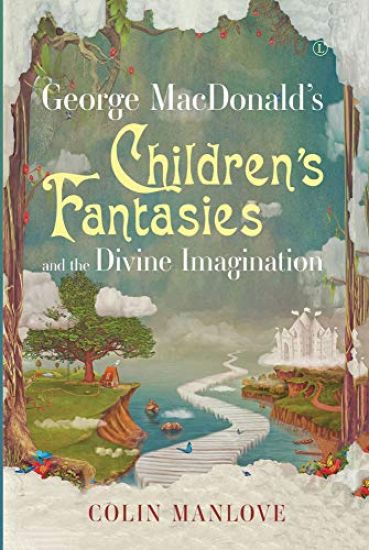
George MacDonald's Children's Fantasies and the Divine Imagination PB
The great Victorian Christian author George MacDonald is the well-spring of the modern fantasy genre. In this book Colin Manlove offers explorations of MacDonald's eight shorter fairy tales and his longer stories At the Back of the North Wind, The Princess and the Goblin, The Wise Woman, and The Princess and Curdie. MacDonald saw the imagination as the source of fairy tales and of divine truth together. For he believed that God lives in the depths of the human mind and "sends up from thence wonderful gifts into the light of the understanding". This makes MacDonald that very rare thing: a writer of mystical fiction whose work can give us experience of the divine. Throughout his children's fantasy stories MacDonald is describing the human and divine imagination. In the shorter tales he shows how the imagination has different regions and depths, each able to shift into the other. With the longer stories we see the imagination in relation to other aspects of the self and to its position in the world. Here the imagination is portrayed as often embattled in relation to empiricism, egotism, and greed.
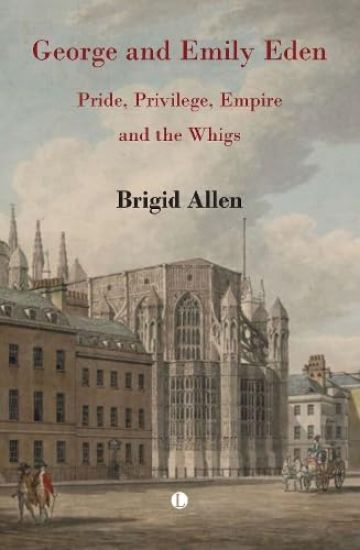
George and Emily Eden

George and Emily Eden

Brigid Allen

JAMES CLARKE CO LTD
2024
nidottu
George and Emily Eden were a devoted sibling pair. Both unmarried, they were accepted as a mildly unconventional couple by friends in the dynastically conscious governing class. George (1784-1849) entered politics as a Whig to replace his elder brother, who had been groomed for success but drowned in the Thames off Westminster one January night in 1810. Four years later George inherited his father's peerage as 2nd Baron Auckland. In 1835 he was appointed Governor-General of India, and Emily (1797-1869), although reluctant to leave her close friend, the Prime Minister Lord Melbourne, went with him. A witty and perceptive writer, who later published a distinctively voiced pair of novels, Emily chronicled the Indian period, as she did her entire adult life, in letters. Allen traces the development of her closeness to George, their interlocking private and public lives and the events that impacted on them, including the Afghan disaster of January 1842 and the mixture of blame and forbearance that George attracted at home. A poignant coda describes Emily's final twenty years as Victorian invalid, author, and observer of the political scene.
George and Emily Eden

George and Emily Eden

Brigid Allen

JAMES CLARKE CO LTD
2024
sidottu
George and Emily Eden were a devoted sibling pair. Both unmarried, they were accepted as a mildly unconventional couple by friends in the dynastically conscious governing class. George (1784-1849) entered politics as a Whig to replace his elder brother, who had been groomed for success but drowned in the Thames off Westminster one January night in 1810. Four years later George inherited his father's peerage as 2nd Baron Auckland. In 1835 he was appointed Governor-General of India, and Emily (1797-1869), although reluctant to leave her close friend, the Prime Minister Lord Melbourne, went with him. A witty and perceptive writer, who later published a distinctively voiced pair of novels, Emily chronicled the Indian period, as she did her entire adult life, in letters. Allen traces the development of her closeness to George, their interlocking private and public lives and the events that impacted on them, including the Afghan disaster of January 1842 and the mixture of blame and forbearance that George attracted at home. A poignant coda describes Emily's final twenty years as Victorian invalid, author, and observer of the political scene.
George III

George III

Peter Thomas

Manchester University Press
2002
nidottu
The eighteenth-century was long deemed 'the classical age of the constitution' in Britain, with cabinet government based on a two-party system of Whigs and Tories in Parliament, and a monarchy whose powers had been emasculated by the Glorious Revolution o. This study furthers the work of Sir Lewis Namier who argued in 1929 that no such party system existed, George III was not a cypher and that Parliament was an administration comprising of factions and opposition. George III was a high-profile and well-known character in British history whose policies have often been blamed for the loss of Britain's American colonies, around whom rages a perennial dispute over his aims: was he seeking to restore royal power, or merely excercising his constitutional rights?. The first chronological survey of the first ten years of George III’s reign through power politics and policy-making.An electronic edition of this book is freely available under a Creative Commons (CC BY-NC-ND) licence.
George Fox and Early Quaker Culture

George Fox and Early Quaker Culture

Hilary Hinds

Manchester University Press
2011
sidottu
What was distinctive about the founding principles and practices of Quakerism? In George Fox and Early Quaker Culture, Hilary Hinds explores how the Light Within became the organizing principle of this seventeenth-century movement, inaugurating an influential dissolution of the boundary between the human and the divine. Taking an original perspective on this most enduring of radical religious groups, Hinds combines literary and historical approaches to produce a fresh study of Quaker cultural practice. Close readings of Fox’s Journal are put in dialogue with the voices of other early Friends and their critics to argue that the Light Within set the terms for the unique Quaker mode of embodying spirituality and inhabiting the world. In this important study of the cultural consequences of a bedrock belief, Hinds shows how the Quaker spiritual self was premised on a profound continuity between sinful subjects and godly omnipotence. This study will be of interest not only to scholars and students of seventeenth-century literature and history, but also to those concerned with the Quaker movement, spirituality and the changing meanings of religious practice in the early modern period.
George Mackay Brown

George Mackay Brown

Maggie Fergusson

John Murray Publishers Ltd
2007
pokkari
George Mackay Brown was one of Scotland's greatest twentieth-century writers, but in person a bundle of paradoxes. He had a wide international reputation, but hardly left his native Orkney. A prolific poet, admired by such fellow poets as Seamus Heaney, Ted Hughes and Charles Causley, and hailed by the composer Peter Maxwell Davies as 'the most positive and benign influence ever on my own efforts at creation', he was also an accomplished novelist (shortlisted for the 1994 Booker Prize for Beside the Ocean of Time) and a master of the short story. When he died in 1996, he left behind an autobiography as deft as it is ultimately uninformative. 'The lives of artists are as boring and also as uniquely fascinating as any or every other life,' he claimed. Never a recluse, he appeared open to his friends, but probably revealed more of himself in his voluminous correspondence with strangers. He never married - indeed he once wrote, 'I have never been in love in my life.' But some of his most poignant letters and poems were written to Stella Cartwright, 'the Muse of Rose Street', the gifted but tragic figure to whom he was once engaged and with whom he kept in touch until the end of her short life.Maggie Fergusson interviewed George Mackay Brown several times and is the only biographer to whom he, a reluctant subject, gave his blessing. Through his letters and through conversations with his wide acquaintance, she discovers that this particular artist's life was not only fascinating but vivid, courageous and surprising.
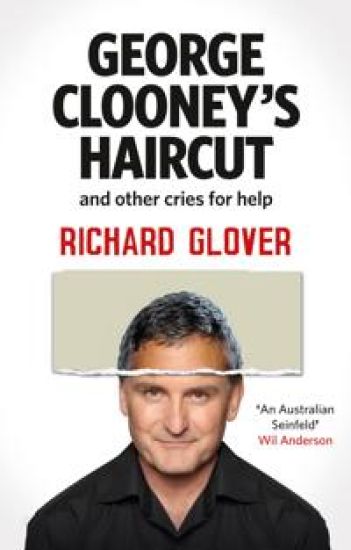
George Clooney's Haircut and Other Cries for Help

George Clooney's Haircut and Other Cries for Help

Richard Glover

HARPERCOLLINS PUBLISHERS (AUSTRALIA) PTY LTD
2013
nidottu
'Full-on, uncontrollable, laugh-till-you-weep stories. Glover has become the indispensable chronicler of Australian family life' Geraldine Brooks Richard Glover's deeply skewed stories of everyday life are heard each week on ABC radio's 'thank God It's Friday'. He creates a world which is both weird and wry-a world in which Henry VIII provides marriage advice, JD Salinger celebrates tap-water and naked French women bring forth a medical miracle. It's also a world in which shampoo is eschewed, the second-rate is praised and George Clooney's haircut can help save a relationship. Bizarre yet commonplace, funny yet relatable, absurd yet oddly warm-hearted, in Richard Glover's hands you'll experience the true strangeness of the life you are living right now. INCLUDES: the Bin-It List: 25 things to avoid before you die. "Warning: Until you know how Glover's writing affects you, do not read in public. Noisy, convulsive laughter and uncontrollable hilarity among probable side effects..." Geraldine Brooks "Like an Australian Seinfeld, Richard has the great gift of highlighting the ridiculous nature of human beings, and finding delight in this crazy thing the rest of us call life." Wil Anderson
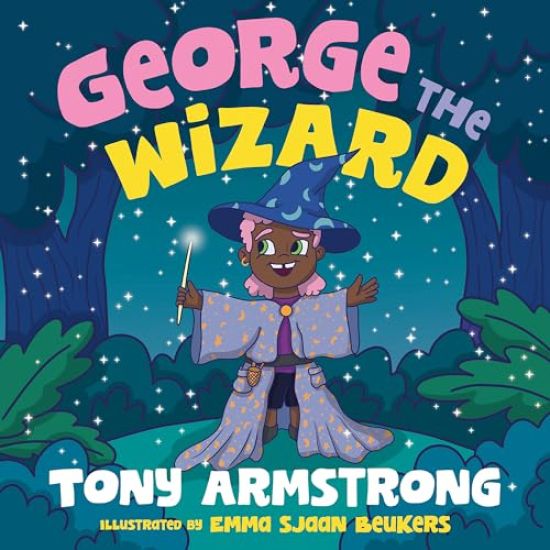
George the Wizard

George the Wizard

Tony Armstrong

HACHETTE AUSTRALIA
2024
sidottu
George the Wizard loves life on top of his mountain. He loves speeding around on his flying cloud, playing hide-and-seek with the animals and looking after his crystal gardens.The only thing missing from life on George's mountain is friends to share it all with. But does George have the courage to show others who he really is?An uplifting story about friendship and the rewards that come from being the real you, from beloved TV personality TONY ARMSTRONG, with artwork by EMMA SJAAN BEUKERS.'A zany, flamboyant, near-psychedelic world of colour and action ... Brings subtle diversity and enthusiastic energy to its story, showcasing a fairytale world where fantasy creatures of all sizes, shapes and colours share spaces' Books+Publishing'Inventive and uplifting . . . Armstrong and Beukers have crafted a quirky, psychedelic universe in which creatures of all shapes and sizes have a place' Sydney Morning Herald
George W. Bush and China

George W. Bush and China

Chi Wang

Lexington Books
2008
sidottu
This study analyzes the United States policies regarding China during the administration of President George W. Bush. Chi Wang examines the relationship between the United States and China from its tense origins to its current stability and shows that the China policy of the U.S. is ultimately based on pragmatic national interest that eventually overcomes short-term ideological difficulties or mistakes by inexperienced American administrations. Briefly touching on the China-policy legacy of Presidents George H.W. Bush and Bill Clinton, Wang provides a review of significant developments in U.S.-China policy during President George W. Bush's first term in office. By following with an analysis of the varied agendas of Bush's foreign policy advisors during his second term, readers are able to trace the influence of advisors on the president's China policy. Wang chronicles the reordering of U.S. security priorities after September 11, showing how this prompted Washington to embrace China in a measured partnership and has resulted in the short-term stabilization of U.S.-China relations.
George Herbert Mead in the Twenty-first Century
This volume is composed of extended versions of selected papers presented at an international conference held in June 2011 at Opole University—the seventh in a series of annual American and European Values conferences organized by the Institute of Philosophy, Opole University, Poland. The papers were written independently with no prior guidelines other than the obvious need to address some aspect of George Herbert Mead’s work. While rooted in careful study of Mead’s original writings and transcribed lectures and the historical context in which that work was carried out, these papers have brought that work to bear on contemporary issues in metaphysics, epistemology, cognitive science, and social and political philosophy. There is good reason to classify Mead as one of the original classical American pragmatists (along with Charles Peirce, William James, and John Dewey) and consequently as a major figure in American philosophy. Nevertheless his thought has been marginalized for the most part, at least in academic philosophy. It is our intention to help recuperate Mead’s reputation among a broader audience by providing a small corpus of significant contemporary scholarship on some key aspects of his thought.
George Santayana's Philosophy of Religion

George Santayana's Philosophy of Religion

Edward W. Lovely

Lexington Books
2012
sidottu
George Santayana (1862-1952) of Spanish descent, and generally claimed to be in the canon of American philosophers, was substantially influenced by his Roman Catholic origins in his philosophical disposition toward the value of tradition, religious symbols and dogma. His philosophical project sustained a respectful attitude toward the spiritual value of orthodox religion while the thrust of his philosophy was naturalistic and materialistic throughout. There is a perception by some scholars that Santayana’s philosophy evolved from a humanistic perspective to a more spiritual one in his later years. It is the position of this thesis that his philosophy, at the “core” depicting a harmonious striving toward individual happiness, remained essentially consistent from his earliest publication of Interpretations of Poetry and Religion and The Life of Reason through his later works of Scepticism and Animal Faith, Realms of Being, Dominations and Powers and The Idea of Christ in the Gospels. Santayana’s philosophical approach is both phenomenological and social constructionist in its methodology, significantly preempting the methodology of social constructionist theology and a post-modern interpretation of religion. His idiosyncratic phenomenological approach is compared with a “benchmark” methodology of Edmund Husserl, the generally accepted founder of the phenomenological method. There are also important similarities between Santayana’s phenomenological approach and those of Charles Sanders Peirce and Alfred North Whitehead. The basis for the comparison of the phenomenological methodology of Santayana and Husserl is their mutually similar fundamental theory of intuited essence. Santayana’s contribution to religious studies is not only philosophical but also theological where he has utilized Christian theological language in transposing and interpolating his philosophy of religion to the Christian drama of the salvational Christ. Santayana’s essay “Ultimate Religion” reflects his perspective of a disillusioned but still spiritual vision incorporating the piety, discipline, and spirituality; of a life of reason. Within the framework of this “model” Santayana’s philosophy of religion is developed and explored. Finally, the relevance of Santayana’s philosophy of religion to contemporary religious studies and selected religious issues is addressed with a delineation and discussion of some important aspects of his philosophical vision.
George Santayana at 150
Santayana at 150: International Interpretations is a collection of essays by seventeen authors celebrating the life and thought of Spanish–American philosopher George Santayana. This book appears on the occasion of the one hundred and fiftieth anniversary of Santayana’s birth. Appropriately, the authors come from both sides of the Atlantic and put forth a range of insights that demonstrate the continuing life and relevance of Santayana’s thinking. The book includes considerations of the major themes of his philosophy—materialism, naturalistic ethics, and aesthetics—and of the influence exerted on Santayana’s work by his life circumstances and geographic surroundings, especially of Rome.
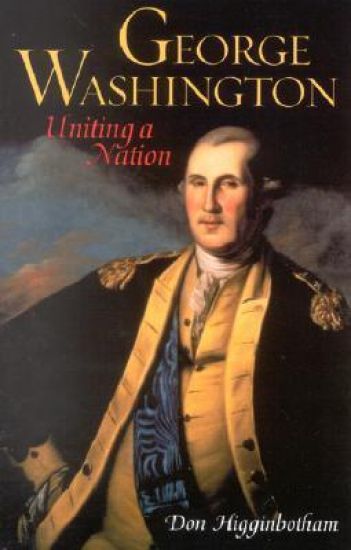
George Washington

George Washington

Don Higginbotham

Rowman Littlefield Publishers
2004
nidottu
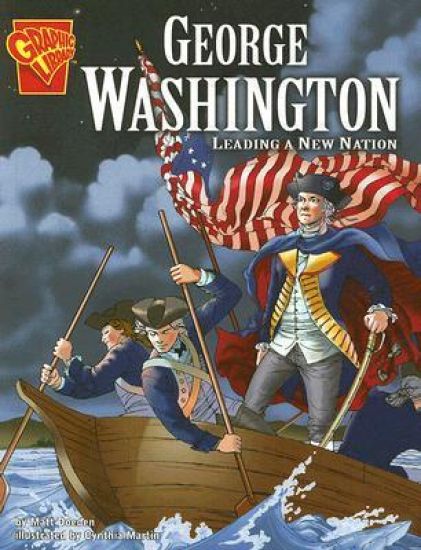
In 1776, thirteen colonies declared their independence from Britain. Although they came together to fight a war, the colonies were far from a unified nation. In George Washington: Uniting a Nation, Don Higginbotham argues that Washington's greatest contribution to American life was creating a sense of American unity. In clear and concise prose, Higginbotham shows that as Revolutionary War commander, proponent of the Constitution, and president, George Washington focused on building national identity and erecting institutions to cement the fledgling nation. The first book on Washington to examine exclusively his role in state formation, George Washington is essential reading for scholars, students, and everyone interested in America's first, and most formative, president.
George G. Higgins and the Quest for Worker Justice
George G. Higgins and the Quest for Worker Justice: The Evolution of Catholic Social Thought in America is a comprehensive and fascinating examination of the Catholic Church's involvement in social issues from the late 19th to the end of the 20th century through the lens of the life, career, writings, and ministry of the legendary Monsignor Higgins. Inspiring to both the clergy and laity, Msgr. George G. Higgins put a human face on the institutional commitments of the Church, advocated the role of the laity, remained loyal to the vision of the Second Vatican Council, and took the side of the working poor in his movement with organized labor. Much more than a limited biography, author John O' Brien offers a sweeping history of the "social questions" facing America over the past 100 years, the thought behind one of the leading figures in the worker justice movement, and a moving application of the rich heritage of Catholic Social Thought.