Kirjojen hintavertailu. Mukana 11 717 486 kirjaa ja 12 kauppaa.

Kirjahaku

Etsi kirjoja tekijän nimen, kirjan nimen tai ISBN:n perusteella.

1000 tulosta hakusanalla Gerald M. Edelman

Children and Society: The Sociology of Children and Childhood Socialization

Children and Society: The Sociology of Children and Childhood Socialization

Gerald Handel; Spencer Cahill; Frederick Elkin

Oxford University Press
2006
nidottu
Children and Society presents a comprehensive sociological portrayal of children and childhood from birth to the beginning of adolescence. A major theme is the tension between children's active agency and the socializing influences of the family, school, peer groups, and mass media. The book incorporates the most recent research and theories of childhood socialization. Its theoretical perspective is primarily symbolic interactionism which emphasizes the development of the self. The volume features research that documents cultural variations within American society shaped by social class, race and ethnicity, and gender. Children and Society is organized into four parts, each with an introduction. Part I, "Understanding Childhood Socialization," consists of four chapters. Chapter One reviews how social scientists have conceptualized children, leading to today's understanding of childhood as a social construction. Chapter Two briefly discusses the characteristics of the human organism that both require and make socialization possible, and the characteristics of society that receives the newborn. Chapter Three reveals the range of meaning of the concept of socialization in western and non-western societies and includes a review of the history of western childhoods. Chapter Four offers a careful exposition of the development of the self. Part II, "Agencies of Socialization," focuses on the major agencies that help shape the development of the self in the United States and similar societies. One chapter each covers families, schools, peer groups, and mass media respectively. "Diversities of Socialization" are the focus of Part III. Whereas Chapter Four presented a general account of how the self develops, the three chapters of Part III examine the variations that are shaped by social class, race, ethnicity and neighborhood, and gender. The single chapter in Part IV, "Looking Back and Looking Ahead," stresses that socialization is a life-long process. It briefly sketches issues of continuity and discontinuity in socialization throughout adolescence, adult life, old age, and death.
Understanding Jonathan Edwards

Understanding Jonathan Edwards

Gerald R McDermott

Oxford University Press Inc
2008
nidottu
Jonathan Edwards (1703-58) is widely recognized as America's greatest religious mind. A torrent of books, articles, and dissertations on Edwards have been released since 1949, the year that Perry Miller published the intellectual biography that launched the modern explosion of Edwards studies. This collection offers an introduction to Edwards's life and thought, pitched at the level of the educated general reader. Each chapter serves as a general introduction to one of Edwards's major topics, including revival, the Bible, beauty, literature, philosophy, typology, and even world religions. Each is written by a leading expert on Edwards's work. The book will serve as an ideal first encounter with the thought of "America's theologian."
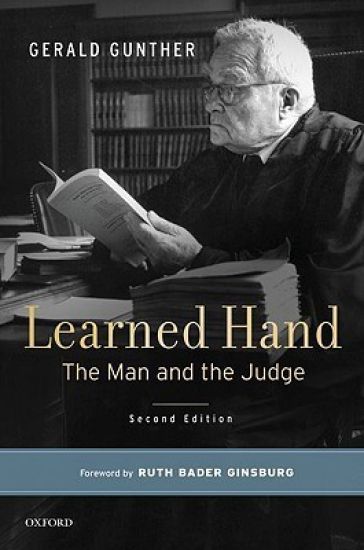
Learned Hand

Learned Hand

Gerald Gunther

Oxford University Press Inc
2010
sidottu
Billings Learned Hand was one of the most influential judges in America. In Learned Hand: The Man and the Judge, Gerald Gunther provides a complete and intimate account of the professional and personal life of Learned Hand. He conveys the substance and range of Hand's judicial and intellectual contributions with eloquence and grace. This second edition features photos of Learned Hand throughout his life and career, and includes a foreword by Ruth Bader Ginsburg. Gunther, a former law clerk for Hand, reviewed much of Hand's published work, opinions, and correspondence. He meticulously describes Hand's cases, and discusses the judge's professional and personal life as interconnected with the political and social circumstances of the times in which he lived. Born in 1872, Hand served on the United States District Court for the Southern District of New York and the United States Court of Appeals for the Second Circuit. He clearly crafted and delivered thousands of decisions in a wide range of cases through extensive, conscientious investigation and analysis, while at the same time exercising wisdom and personal detachment. His opinions are still widely quoted today, and will remain as an everlasting tribute to his life and legacy.
The Parents' Guide to Psychological First Aid

The Parents' Guide to Psychological First Aid

Gerald Koocher; Annette La Greca

Oxford University Press Inc
2010
nidottu
Does your young daughter talk endlessly about invisible friends, dragons in the basement, and monsters in the closet? Is your teenager about to start high school or being victimized by bullies? Is your son mortally afraid of certain insects or of injections at the doctor's office? Compiled by two seasoned clinical psychologists, The Parents' Guide to Psychological First Aid brings together articles by recognized experts who provide you with the information you need to help your child navigate the many trying problems that typically afflict young people. Written in an engaging style, this book offers sage advice on a raft of everyday problems that have psychological solutions. The contributors cover such topics as body image and physical appearance; cigarettes, drugs, and alcohol; overeating and obesity; dental visits; the birth of a sibling and sibling rivalries; temper tantrums; fostering self-esteem; shyness and social anxiety; and much more. Each expert article provides an overview of the issues, offers reassurance for minor problems and strategies for crisis management, and discusses the red flags that indicate that professional help is needed. In addition, the book is organized into various categories to make it easier to find information. For instance, the "Family Issues" section includes articles on Blended Families, Divorce, and Traveling; the "Adolescent Issues" section covers such topics as Dating and Driving; and the "Social/Peer Issues" section explores such subjects as "Sportsmanship," "Homesickness," and "Making Friends." An encyclopedic reference for parents concerned with maintaining the mental health of their children, this indispensable volume will help you help your child to deal effectively with stress and pressure, to cope with everyday challenges, and to rebound from disappointments, mistakes, trauma, and adversity.
The Oxford Handbook of New York State Government and Politics

The Oxford Handbook of New York State Government and Politics

Gerald Benjamin

Oxford University Press Inc
2012
sidottu
The thirty-one chapters in The Oxford Handbook of New York State Government and Politics assemble new scholarship in key areas of governance in New York, document the state's record in comparison to other US states, and identify directions for future research. Following editor Gerald Benjamin's introduction, the handbook chapters are organized in five sections that look at the state constitution, state political processes, state governmental insitutions, intergovernmental relations, and management and policy areas. Chapters will address a wide array of topics including political parties, campaign finance policy, public opinion polling, elections and election management, lobbying and interest group systems, the state legislature, the governorship, the judiciary, the state's "foreign policy, " education, health care policy, public safety, economic development, transportation policy, energy policy, and more. A final chapter, compiled by the state archivist, will consist of an annotated bibliography of resources on state history, state political history, the state constitution, and state political processes. Chapter authors include both scholars of New York State and current and former state officials.
Eugenics, Genetics, and Disability in Historical and Contemporary Perspective
Eugenics, Genetics, and Disability in Historical and Contemporary Perspective focuses on the conceptual relationship between the American eugenic movement of the early 1900s and contemporary genetic research, policy and practices, and their relevance for social work and related professions. While the expansion of pre-natal testing and other genetic innovations are often couched as a form of "new eugenics," this description is only partially correct. This book provides the first in-depth exploration of the relationship between the emerging social work profession and the eugenic movement during the first quarter of the twentieth century and considers the historical importance of this for the profession today. Social workers played a particularly important role in the movement of eugenic policies from targeting persons with disabilities to limiting procreation among "welfare" recipients, especially minority women. As the profession attempts to come to terms with this problematic history, it also needs to understand the dual "faces" it displays to persons with disabilities. Often purported as supporters of such persons, social workers' continued embracement of the medical model of disabilities keeps them from being accepted by many as true allies in the fight for social justice related to disability inclusion.
Shaping the Nation

Shaping the Nation

Gerald Harriss

Clarendon Press
2005
sidottu
The Black Death, the Peasants' Revolt, the Hundred Years War, the War of the Roses... A succession of dramatic social and political events reshaped England in the period 1360 to 1461. In his lucid and penetrating account of this formative period, Gerald Harriss draws on the research of the last thirty years to illuminate late medieval society at its peak, from the triumphalism of Edward III in 1360 to the collapse of Lancastrian rule. The political narrative centres on the deposition of Richard II in 1399 and the establishment of the House of Lancaster, which was in turn overthrown in the Wars of the Roses. Abroad, Henry V's heroic victory at Agincourt in 1415 led to the English conquest of northern France, lasting until 1450. Both produced long term consequences: the first shaped the English constitution up to the Stuart civil war, while the second generated lasting hostility between England and France, and a residual wariness of military intervention in Europe. Equally significant changes occurred in English society. The Black Death produced a crisis in agrarian structures, marked by the Peasants' Revolt in 1381 and the end of serfdom. In landed society distinctive grades of knights, esquires and gentlemen emerged, linked to the nobility in a web of patronage and service, with an ethos of 'good lordship' and fidelity. While the nobility were the king's immediate counsellors, the gentry reflected the concerns of the community of the realm in parliament. An increasingly well-educated and articulate class, they served as MPs and JPs and staffed the growing legal profession. The greater merchants controlled the wool trade, the source of England's wealth, and distributed commodities through a network of towns and markets. The marked individualism of this society, memorably depicted in The Canterbury Tales, was accompanied by a growing sense of national identity, expressed in the use of standard London English. A spate of church building in perpendicular, a distinctive national style, was matched on the one hand by the intensity of Catholic devotion and on the other hand by the proto-Protestantism of John Wyclif and the Lollards. THE NEW OXFORD HISTORY OF ENGLAND The aim of the New Oxford History of England is to give an account of the development of the country over time. It is hard to treat that development as just the history which unfolds within the precise boundaries of England, and a mistake to suggest that this implies a neglect of the histories of the Scots, Irish, and Welsh. Yet the institutional core of the story which runs from Anglo-Saxon times to our own is the story of a state-structure built round the English monarchy and its effective successor, the Crown in Parliament. While the emphasis of individual volumes in the series will vary, the ultimate outcome is intended to be a set of standard and authoritative histories, embodying the scholarship of a generation.
Feynman's Operational Calculus and Beyond

Feynman's Operational Calculus and Beyond

Gerald W Johnson; Michel L. Lapidus; Lance Nielsen

Oxford University Press
2015
sidottu
This book is aimed at providing a coherent, essentially self-contained, rigorous and comprehensive abstract theory of Feynman's operational calculus for noncommuting operators. Although it is inspired by Feynman's original heuristic suggestions and time-ordering rules in his seminal 1951 paper An operator calculus having applications in quantum electrodynamics, as will be made abundantly clear in the introduction (Chapter 1) and elsewhere in the text, the theory developed in this book also goes well beyond them in a number of directions which were not anticipated in Feynman's work. Hence, the second part of the main title of this book. The basic properties of the operational calculus are developed and certain algebraic and analytic properties of the operational calculus are explored. Also, the operational calculus will be seen to possess some pleasant stability properties. Furthermore, an evolution equation and a generalized integral equation obeyed by the operational calculus are discussed and connections with certain analytic Feynman integrals are noted. This volume is essentially self-contained and we only assume that the reader has a reasonable, graduate level, background in analysis, measure theory and functional analysis or operator theory. Much of the necessary remaining background is supplied in the text itself.
Humanitarians at War

Humanitarians at War

Gerald Steinacher

Oxford University Press
2017
sidottu
The Geneva-based International Committee of the Red Cross (ICRC) is one of the world's oldest, most prominent, and revered aid organizations. But at the end of World War II things could not have looked more different. Under fire for its failure to speak out against the Holocaust or to extend substantial assistance to Jews trapped in Nazi camps across Europe, the ICRC desperately needed to salvage its reputation in order to remain relevant in the post-war world. Indeed, the whole future of Switzerland's humanitarian flagship looked to hang in the balance at this time. Torn between defending Swiss neutrality and battling Communist critics in the early Cold War, the Red Cross leadership in Geneva emerged from the world war with a new commitment to protecting civilians caught in the crossfire of conflict. Yet they did so while interfering with Allied de-nazification efforts in Germany and elsewhere, and coming to the defence of former Nazis at the Nuremberg Trials. Not least, they provided the tools for many of Hitler's former henchmen, notorious figures such as Joseph Mengele and Adolf Eichmann, to slip out of Europe and escape prosecution - behaviour which did little to silence those critics in the Allied powers who unfavourably compared the 'shabby' neutrality of the Swiss with the 'good neutrality' of the Swedes, their eager rivals for leadership in international humanitarian initiatives. However, in spite of all this, by the end of the decade, the ICRC had emerged triumphant from its moment of existential crisis, navigating the new global order to reaffirm its leadership in world humanitarian affairs against the challenge of the Swedes, and playing a formative role in rewriting the rules of war in the Geneva Conventions of 1949. This uncompromising new history tells the remarkable and intriguing story of how the ICRC achieved this - successfully escaping the shadow of its ambiguous wartime record to forge a new role and a new identity in the post-1945 world.
Humanitarians at War

Humanitarians at War

Gerald Steinacher

Oxford University Press
2021
nidottu
From the brink of dissolution in 1945 to the triumph of the Geneva Conventions in 1949, via the Nuremberg Trials, runaway Nazis, and furious battles with communist critics on the eve of the Cold War, this is the intriguing and remarkable story of the International Red Cross - and how it survived its ambiguous relationship with the Nazis during the Second World War. The Geneva-based International Committee of the Red Cross (ICRC) is one of the world's oldest, most prominent, and revered aid organizations. But at the end of World War II things could not have looked more different. Under fire for its failure to speak out against the Holocaust or to extend substantial assistance to Jews trapped in Nazi camps across Europe, the ICRC desperately needed to salvage its reputation in order to remain relevant in the post-war world. Indeed, the whole future of Switzerland's humanitarian flagship looked to hang in the balance at this time. Torn between defending Swiss neutrality and battling Communist critics in the early Cold War, the Red Cross leadership in Geneva emerged from the world war with a new commitment to protecting civilians caught in the crossfire of conflict. But they did so while defending former Nazis at the Nuremberg Trials and issuing travel papers to many of Hitler's former henchmen. These actions did little to silence the ICRC's critics, who unfavourably compared the 'shabby' neutrality of the Swiss with the 'good' neutrality of the Swedes, their eager rivals for leadership in international humanitarian initiatives. In spite of all this, by the end of the decade, the ICRC had emerged triumphant from its moment of existential crisis, navigating the new global order to reaffirm its leadership in world humanitarian affairs against the challenge of the Swedes, and playing a formative role in rewriting the rules of war in the Geneva Conventions of 1949. This uncompromising new history tells the remarkable and intriguing story of how the ICRC achieved this - successfully escaping the shadow of its ambiguous wartime record to forge a new role and a new identity in the post-1945 world.
Bentham and the Common Law Tradition

Bentham and the Common Law Tradition

Gerald J. Postema

Oxford University Press
2019
sidottu
This work explores the relationship between Bentham's utilitarian practical philosophy and his positivist jurisprudence. These theories appear to be in tension because his utilitarian commitment to the sovereignty of utility as a practical decision principle seems inconsistent with his positivist insistence on the sovereignty of the will of the lawmaker. Two themes emerge from the attempt in this work to reconcile these two core elements of Bentham's practical thought. First, Bentham's conception of law does not fit the conventional model of legal positivism. Bentham was not just a utilitarian and a positivist; he was a positivist by virtue of his commitment to a utilitarian understanding of the fundamental task of law. Moreover, his emphasis on the necessary publicity and the systemic character of law, led him to insist on an essential role for utilitarian reasons in the regular public functioning of law. Second, Bentham's radical critique of common law theory and practice convinced him of the necessity to reconcile the need for certainty of law with an equally great need for its flexibility. He eventually developed a constitutional framework for adjudication in the shadow of codified law that accorded to judges discretion to decide particular cases according to their best judgment of the balance of utilities, guaranteeing the accountability and appropriate motivation of judicial decision-making through institutional incentives. The original text of this work, first published in 1986, remains largely unchanged, but an afterword reconsiders and revises some themes in response to criticism.
Utility, Publicity, and Law

Utility, Publicity, and Law

Gerald J. Postema

Oxford University Press
2019
sidottu
The essays in this volume offer a reassessment of Jeremy Bentham's strikingly original legal philosophy. Early on, Bentham discovered his 'genius for legislation' - 'legislation' included not only lawmaking and code writing, but also political and social institution building and engineering of public spaces for effective control of the exercise of political power. In his general philosophical work, Bentham sought to articulate a public philosophy to guide and direct all of his 'legislative' efforts. Part I explores the philosophical foundations of his public philosophy: his theory of meaning and framework for analysis and definition of key concepts, his theory of human affections and motivations, and his utilitarian theory of value. It is argued that, while concepts of pleasure and happiness play nominal roles in his theory of value, concepts of publicity, equality, and interests emerge as the dominant concepts of his public philosophy. Part II explores several dimensions of Bentham's jurisprudence, including his radically revised command model of law, his early reflections on justice and law in adjudication, his theories of judicial evidence, constitutional rights, the rule of law, and international law. The concluding essay demonstrates the centrality of the notion of publicity in his moral, legal and political thought. Emerging from this study is a positivist legal theory and a utilitarian moral-political philosophy that challenge in fundamental ways contemporary understandings of those doctrines.
Catholicism

Catholicism

Gerald O'Collins

Oxford University Press
2017
nidottu
Despite a long history of external threats and internal strife, the Roman Catholic Church remains a vast and influential presence in our modern world. But what were its origins, and how has it changed and adapted over the centuries? After Pope Benedict XVI dramatically resigned in early 2013 (the first Pope to resign since the fifteenth century), and Pope Francis was elected, many wondered what direction he would lead the Church in, and whether the Church could modernise in the face of the demands of our world. In this Very Short Introduction, Gerald O'Collins covers the history of the Catholic Church, and considers some of the key issues facing Catholicism today, such as the catastrophic revelations about clerical child abuse, the impact of the growth of Islam, and the destruction in the Middle East of ancient Christian church communities. He also shows how Catholics are being increasingly challenged by an opposition between their traditional Christian values and rights which are endorsed by the secular world, such as the right to physician assisted suicide or same-sex marriage, and considers the future for the largest and oldest institution in the world. ABOUT THE SERIES: The Very Short Introductions series from Oxford University Press contains hundreds of titles in almost every subject area. These pocket-sized books are the perfect way to get ahead in a new subject quickly. Our expert authors combine facts, analysis, perspective, new ideas, and enthusiasm to make interesting and challenging topics highly readable.
Strokes of Luck

Strokes of Luck

Gerald Lang

Oxford University Press
2021
sidottu
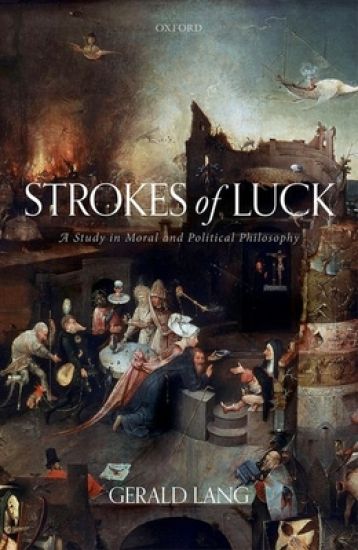
Strokes of Luck provides a detailed and wide-ranging examination of the role of luck in moral and political philosophy. The first part tackles debates in moral luck, which are concerned with the assignment of blameworthiness to individuals who are separated only by lucky differences. 'Anti-luckists' think that one who, for example, attempts and succeeds in an assassination and one who attempts and fails are equally blameworthy. This book defends an anti-anti-luckist argument, according to which the successful assassin is more blameworthy than the unsuccessful one. Moreover, the successful assassin is, all things equal, a worse person than the unsuccessful one. The worldly outcomes of our acts can make an all-important difference, not only to how bad our acts can be deemed, but to how bad we are. The second part enters into debates about distributive justice. Lang argues that the attempt to neutralize luck in the distribution of advantages among individuals does not deserve its prominence in political philosophy: the 'luck egalitarian' programme is flawed. A better way forward is to re-invest in John Rawls's 'justice as fairness', which demonstrates a superior way of taming the bad effects of luck and unchosen disadvantage.
Britain and the Islamic World, 1558-1713

Britain and the Islamic World, 1558-1713

Gerald MacLean; Nabil Matar

Oxford University Press
2011
sidottu
Before they had an empire in the East, the British travelled into the Islamic world to pursue trade and to form strategic alliances against the Catholic powers of France and Spain. First-hand encounters with Muslims, Jews, Greek Orthodox, and other religious communities living together under tolerant Islamic rule changed forever the way Britons thought about Islam, just as the goods they imported from Islamic countries changed forever the way they lived. Britain and the Islamic World tells the story of how, for a century and a half, merchants and diplomats travelled from Morocco to Istanbul, from Aleppo to Isfahan, and from Hormuz to Surat, and discovered a world that was more fascinating than fearful. Gerald MacLean and Nabil Matar examine the place of Islam and Muslims in English thought, and how British monarchs dealt with supremely powerful Muslim rulers. They document the importance of diplomatic and mercantile encounters, show how the writings of captives spread unreliable information about Islam and Muslims, and investigate observations by travellers and clergymen who reported meetings with Jews, eastern Christians, Armenians, and Shi'ites. They also trace how trade and the exchange of material goods with the Islamic world shaped how people in Britain lived their lives and thought about themselves.
Shaping the Nation

Shaping the Nation

Gerald Harriss

Oxford University Press
2006
nidottu
The Black Death, the Peasants' Revolt, the Hundred Years War, the War of the Roses... A succession of dramatic social and political events reshaped England in the period 1360 to 1461. In his lucid and penetrating account of this formative period, Gerald Harriss draws on the research of the last thirty years to illuminate late medieval society at its peak, from the triumphalism of Edward III in 1360 to the collapse of Lancastrian rule. The political narrative centres on the deposition of Richard II in 1399 and the establishment of the House of Lancaster, which was in turn overthrown in the Wars of the Roses. Abroad, Henry V's heroic victory at Agincourt in 1415 led to the English conquest of northern France, lasting until 1450. Both produced long term consequences: the first shaped the English constitution up to the Stuart civil war, while the second generated lasting hostility between England and France, and a residual wariness of military intervention in Europe. Equally significant changes occurred in English society. The Black Death produced a crisis in agrarian structures, marked by the Peasants' Revolt in 1381 and the end of serfdom. In landed society distinctive grades of knights, esquires and gentlemen emerged, linked to the nobility in a web of patronage and service, with an ethos of 'good lordship' and fidelity. While the nobility were the king's immediate counsellors, the gentry reflected the concerns of the community of the realm in parliament. An increasingly well-educated and articulate class, they served as MPs and JPs and staffed the growing legal profession. The greater merchants controlled the wool trade, the source of England's wealth, and distributed commodities through a network of towns and markets. The marked individualism of this society, memorably depicted in The Canterbury Tales, was accompanied by a growing sense of national identity, expressed in the use of standard London English. A spate of church building in perpendicular, a distinctive national style, was matched on the one hand by the intensity of Catholic devotion and on the other hand by the proto-Protestantism of John Wyclif and the Lollards.
Managed by the Markets

Managed by the Markets

Gerald F. Davis

Oxford University Press
2009
sidottu
The current economic crisis reveals just how central finance has become to American life. Problems with obscure securities created on Wall Street radiated outward to threaten the retirement security of pensioners in Florida and Arizona, the homes and college savings of families in Detroit and Southern California, and ultimately the global economy itself. The American government took on vast new debt to bail out the financial system, while the government-owned investment funds of Kuwait, Abu Dhabi, Malaysia, and China bought up much of what was left of Wall Street. How did we get into this mess, and what does it all mean? Managed by the Markets explains how finance replaced manufacturing at the center of the American economy and how its influence has seeped into daily life. From corporations operated to create shareholder value, to banks that became portals to financial markets, to governments seeking to regulate or profit from footloose capital, to households with savings, pensions, and mortgages that rise and fall with the market, life in post-industrial America is tied to finance to an unprecedented degree. Managed by the Markets provides a guide to how we got here and unpacks the consequences of linking the well-being of society too closely to financial markets.
The Analogy of Grace

The Analogy of Grace

Gerald McKenny

Oxford University Press
2010
sidottu
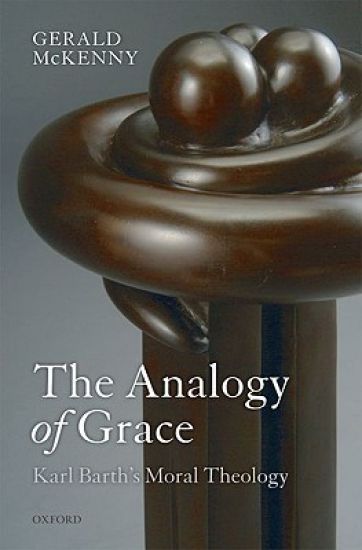
Once considered inimical to ethics, Karl Barth's theology is now rightly recognized for the central role ethics plays in it. But can Barth be safely placed in the mainstream tradition of Christian moral theology or does he offer a challenge to the latter? Gerald McKenny argues that the claim that God not only establishes the good from eternity but also brings it about in time is of fundamental importance to Barth's mature ethics. The good confronts us from the site of its fulfilment in Jesus Christ, who has accomplished it in our place. The result is a vision of the moral life as a human analogy to God's grace, a vision which contrasts with the bourgeois vision of the moral life as an expression of human capability. Barth's moral theology is presented here as the attempt to reorder ethical thought and practice in light of this fundamental claim. This lucid and well-argued study is the most comprehensive treatment of Barth's ethics to date, offering a thorough account of the development of Barth's ethical thought and a wide-ranging analysis of its chief concepts and arguments. McKenny explains why certain widespread assumptions about Barth's moral theology are mistaken and explores the rich, complex, and often surprising ways in which Barth's position engages the traditions of Christian ethics and modern continental moral thought. Above all, McKenny shows why Barth's moral theology deserves our attention in spite of, or rather because of, its uneasy fit in the mainstream tradition of Christian moral theology.
Rethinking Fundamental Theology

Rethinking Fundamental Theology

Gerald O'Collins

Oxford University Press
2011
sidottu
This book identifies the distinguishing features of fundamental theology, as distinct from philosophical theology, natural theology, apologetics, and other similar disciplines. Addressing the potential for confusion about basic Christian claims and beliefs, Gerald O'Collins sets out to relaunch fundamental theology as a discipline by presenting a coherent vision of basic theological questions and positions that lay the ground for work in specific areas of systematic theology. Rethinking Fundamental Theology examines central theological questions: about God, human experience and, specifically, religious experience; the divine revelation coming through the history of Israel and through the life, death and resurrection of Jesus; human faith that responds to revelation; the nature of tradition that transmits the record and reality of revelation; the structure of biblical inspiration and truth, as well as basic issues concerned with the formation of the canon; the founding of the Church with some leadership structures; the relationship between Christ's revelation and the faith of those who follow other religions. O'Collins concludes with some reflections on theological method. Written with the scholarship and accessibility for which O'Collins is known and valued, this book will relaunch fundamental theology as a distinct and necessary discipline in faculties and departments of theology and religious studies around the world.
The Analogy of Grace

The Analogy of Grace

Gerald McKenny

Oxford University Press
2013
nidottu
Once considered inimical to ethics, Karl Barth's theology is now rightly recognized for the central role ethics plays in it. But can Barth be safely placed in the mainstream tradition of Christian moral theology or does he offer a challenge to the latter? Gerald McKenny argues that the claim that God not only establishes the good from eternity but also brings it about in time is of fundamental importance to Barth's mature ethics. The good confronts us from the site of its fulfilment in Jesus Christ, who has accomplished it in our place. The result is a vision of the moral life as a human analogy to God's grace, a vision which contrasts with the bourgeois vision of the moral life as an expression of human capability. Barth's moral theology is presented here as the attempt to reorder ethical thought and practice in light of this fundamental claim. This lucid and well-argued study is the most comprehensive treatment of Barth's ethics to date, offering a thorough account of the development of Barth's ethical thought and a wide-ranging analysis of its chief concepts and arguments. McKenny explains why certain widespread assumptions about Barth's moral theology are mistaken and explores the rich, complex, and often surprising ways in which Barth's position engages the traditions of Christian ethics and modern continental moral thought. Above all, McKenny shows why Barth's moral theology deserves our attention in spite of, or rather because of, its uneasy fit in the mainstream tradition of Christian moral theology.