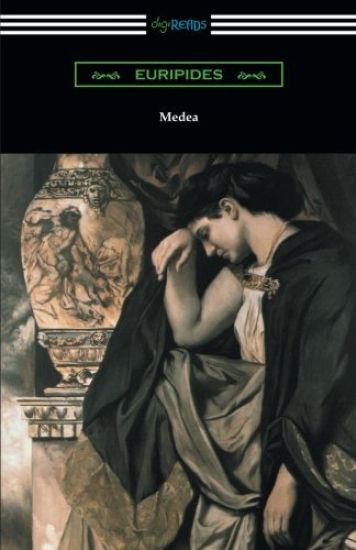
The influence of Euripides on the development of the dramatic genre cannot be overstated. Along with Sophocles and Aeschylus he is regarded as one of the three great Greek tragedians from classical antiquity. One of the most important of Euripides' surviving dramas is "Medea", the story of its title character, the wife of Jason of the Argonauts, who seeks revenge upon her unfaithful husband when he abandons her for a another bride. Set in Corinth sometime after Jason's quest for the Golden Fleece, the play begins with Medea raging against her husband's plans to marry Glauce, daughter of Creon, King of Corinth. Jason tries to explain his intent to marry Glauce as an effort to improve his status and that afterwards he intends to unify the two families taking Medea as his mistress. Medea however is unconvinced and pursues a path of murderous revenge. The play is controversial for its depiction of Medea murdering her own children as part of her revenge. This depiction was unconventional and not well received with the contemporary Athenian audience who expected the more traditional depiction of Medea's children being killed by the Corinthians after her escape. Regardless of this unfavorable initial reaction, "Medea" has come to be regarded as one of the most important tragedies of classical antiquity. This edition is printed on premium acid-free paper and is translated with an introduction and annotations by Gilbert Murray.
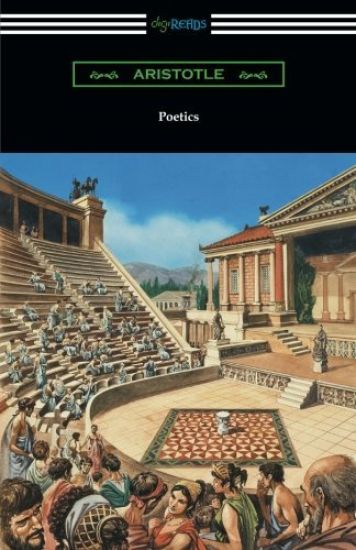
Greek philosopher and scientist, Aristotle, lived in the 4th century B.C. and is thought of as one of the most important figures from classical antiquity. Aristotle was probably the most famous member of Plato's Academy in Athens, whose writings would ultimately form the first comprehensive system of Western philosophy. His writings were not constrained to simply one field of inquiry but covered such various subjects as physics, biology, metaphysics, logic, ethics, aesthetics, rhetoric, linguistics, politics and government. Contained in this volume is Aristotle's "Poetics" which is regarded as the world's first comprehensive treatise on literature. It is a detailed analysis of drama and poetry with its greatest emphasis on tragedy. Aristotle outlines the elements of good drama drawing upon specific examples from the literature of ancient Greece. Lost for a time to the Western world, "Poetics" was rediscovered in the late medieval and early renaissance period from Arabic sources. An essential read for any student of classical literature, Aristotle's "Poetics" provides great insight into the study of drama from the classical period. This edition is printed on premium acid-free paper, is translated by Ingram Bywater, and includes a preface by Gilbert Murray.
In the 1950s, Ian Butler abandoned a short-lived career in the chemical industry to serve as a colonial officer in the Gilbert and Ellice Islands, against the advice of his father who told him the British Empire was "going down the drain". This memoir is a collection of evocative and wittily told stories that provide an insider's view of the life of a colonial administrator in one of Her Majesty's most far flung colonies, and recall a period in British history that will soon fade from living memory. "a marvellously vivid depiction of the islands, their people, their setting and aspects of life of the expatriate officer" - David le Breton, Secretary, OSPA "Let us hope that there are other memoirs of Empire out there as good, and yet to be discovered" - Michael Walsh, Honorary UK Consul for Kiribati (1996-present)
The Man Who Knew Too Much and other stories (1922) is a book of detective stories by English writer G. K. Chesterton, published by Cassell and Company in 1922.The book contains twelve stories, the first eight of which are about The Man Who Knew Too Much, while the final four are individual stories featuring separate heroes/detectives.Horne Fisher, "The Man Who Knew Too Much", is the main protagonist of the first eight stories. In the final story, "The Vengeance of the Statue", Fisher notes: "The Prime Minister is my father's friend. The Foreign Minister married my sister. The Chancellor of the Exchequer is my first cousin." Because of these intimate relationships with the leading political figures in the land, Fisher knows too much about the private politics behind the public politics of the day. This knowledge is a burden to him in the eight stories, because he is able to uncover the injustices and corruptions of the murders in each story, but in most cases the real killer gets away with the killing because to bring him openly to justice would create a greater chaos: starting a war, reinciting Irish rebellions or removing public faith in the government. In the seventh story, "The Fad of the Fisherman", the Prime Minister himself is the murderer, who kills the financier whose country house he is visiting because the financier is trying to start a war with Sweden over "the Danish ports". By killing his host, the Prime Minister seeks to avoid a war in which many more people would die, and the financier would profit at the cost of thousands of lives. In "The Vanishing Prince", an Irish rebel, Michael, is cornered in a tower, but a junior policeman named Wilson kills two senior police officers to be promoted in the field to become officer in charge of the case. He then tries to blame the two murders on the rebel to ensure he is hung. The rebel, otherwise a gentleman, is enraged and shoots (but only wounds) Wilson. Fisher, however, is forced to arrest Michael: "Wilson recovered, and we managed to persuade him to retire. But we had to pension that damnable murderer more magnificently than any hero who ever fought for England. I managed to save Michael from the worst, but we had to send that perfectly innocent man to penal servitude for a crime we know he never committed; but it was only afterwards that we could connive in a sneakish way at his escape. And Sir Walter Carey is Prime Minister of this country, which he would probably never have been if the truth had been told of such a horrible scandal in his department. It might have done for us altogether in Ireland; it would certainly have done for him. And he is my father's oldest friend, and has always smothered me in kindness. I am too tangled up in the whole thing, you see, and I was certainly never born to set it right." Fisher is accompanied in the stories by a political journalist, Harold March, but rather than being his "Watson", the stories are all written in the third person. Less a clumsy foil to reflect Fisher's brilliance, March is more of a sounding board for Fisher to discuss Chesterton's paradoxes and philosophy. Apart from the first story, in which March meets Fisher, and the final story, the stories have no internal chronology, and so can be read in any order.
Gilbert Keith Chesterton, KC*SG (29 May 1874 - 14 June 1936), better known as G. K. Chesterton, was an English writer, poet, philosopher, dramatist, journalist, orator, lay theologian, biographer, and literary and art critic. Chesterton is often referred to as the "prince of paradox". Time magazine has observed of his writing style: "Whenever possible G.K. Chesterton's collected essays on subjects ranging from detective stories and penny dreadfuls to heraldry and patriotism. The essays originally appeared in "The Speaker" but were edited and revised for republication.