Kirjojen hintavertailu. Mukana 11 715 423 kirjaa ja 12 kauppaa.

Kirjahaku

Etsi kirjoja tekijän nimen, kirjan nimen tai ISBN:n perusteella.

1000 tulosta hakusanalla Gregory

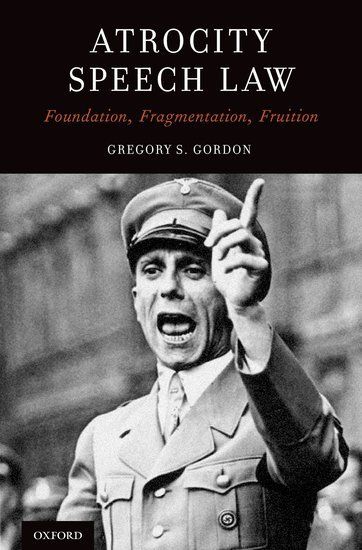
Atrocity Speech Law

Atrocity Speech Law

Gregory S. Gordon

Oxford University Press Inc
2017
sidottu
The law governing the relationship between speech and core international crimes -- a key component in atrocity prevention -- is broken. Incitement to genocide has not been adequately defined. The law on hate speech as persecution is split between the International Criminal Tribunal for Rwanda (ICTR) and the International Criminal Tribunal for the former Yugoslavia (ICTY). Instigation is confused with incitement and ordering's scope is too circumscribed. At the same time, each of these modalities does not function properly in relation to the others, yielding a misshapen body of law riddled with gaps. Existing scholarship has suggested discrete fixes to individual parts, but no work has stepped back and considered holistic solutions. This book does. To understand how the law became so fragmented, it returns to its roots to explain how it was formulated. From there, it proposes a set of nostrums to deal with the individual deficiencies. Its analysis then culminates in a more comprehensive proposal: a Unified Liability Theory, which would systematically link the core crimes of genocide, crimes against humanity, and war crimes with the four illicit speech modalities. The latter would be placed in one statutory provision criminalizing the following types of speech: (1) incitement (speech seeking but not resulting in atrocity); (2) speech abetting (non-catalytic speech synchronous with atrocity commission); (3) instigation (speech seeking and resulting in atrocity); and (4) ordering (instigation/incitement within a superior-subordinate relationship). Apart from its fragmentation, this body of law lacks a proper name as Incitement Law or International Hate Speech Law, labels often used, fail to capture its breadth or relationship to mass violence. So this book proposes a new and fitting appellation: atrocity speech law.

A Heinrich Schütz Reader

A Heinrich Schütz Reader

Gregory Johnston

Oxford University Press Inc
2016
nidottu
Heinrich Schütz (1585-1672) was the most important and influential German composer of the seventeenth century. Director of music at the electoral Saxon court in Dresden, he was lauded by his German contemporaries as "the father of our modern music", as "the Orpheus of our time." Yet despite the esteem in which his music is still held today, Schütz himself and the rich cultural environment in which he lived continue to be little known or understood beyond the linguistic borders of his native Germany. Drawing on original manuscript and print sources, A Heinrich Schütz Reader brings the composer to life through more than 150 documents by or about Heinrich Schütz, from his earliest studies under Giovanni Gabrieli to accounts of his final hours. Editor and translator Gregory S. Johnston penetrates the archaic script, confronts the haphazard orthography and obsolete vocabulary, and untangles the knotted grammatical constructions and syntax to produce translations that allow English speakers, as never before, to engage the composer directly. Most of the German, Latin and Italian documents included in this volume appear for the first time in English translation. A number of these texts have not even been printed in their original language. Dedications and prefaces of his printed music, letters and memoranda, poetry and petitions, travel passes and contracts, all offer immediate and unabridged access to the composer's life. To habituate the reader ever more in Schütz's world, the entries are richly annotated with biographical detail; clarifications of professional relationships and ancestral lines; information on geographic regions, domains, cities, courts and institutions; and references to biblical, classical and contemporary literary sources. Johnston opens a door for researchers and scholars across a broad range of disciplines, and at the same time provides an historical complement and literary companion for anyone who has come to appreciate the beauty of Schütz's music.
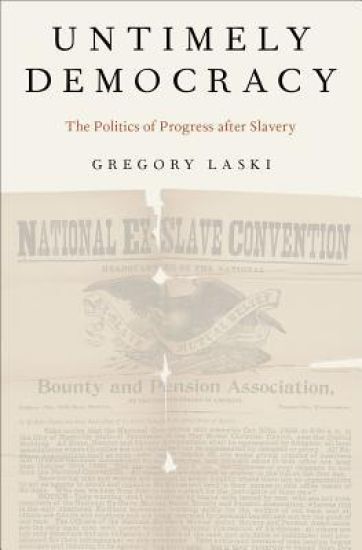
Untimely Democracy

Untimely Democracy

Gregory Laski

Oxford University Press Inc
2017
sidottu
From the abolition era to the Civil Rights movement to the age of Obama, the promise of perfectibility and improvement resonates in the story of American democracy. But what exactly does racial "progress" mean, and how do we recognize and achieve it? Untimely Democracy: The Politics of Progress After Slavery uncovers a surprising answer to this question in the writings of American authors and activists, both black and white. Conventional narratives of democracy stretching from Thomas Jefferson's America to our own posit a purposeful break between past and present as the key to the viability of this political form--the only way to ensure its continual development. But for Pauline E. Hopkins, Frederick Douglass, Stephen Crane, W. E. B. Du Bois, Charles W. Chesnutt, Sutton E. Griggs, Callie House, and the other figures examined in this book, the campaign to secure liberty and equality for all citizens proceeds most potently when it refuses the precepts of progressive time. Placing these authors' post-Civil War writings into dialogue with debates about racial optimism and pessimism, tracts on progress, and accounts of ex-slave pension activism, and extending their insights into our contemporary period, Laski recovers late-nineteenth-century literature as a vibrant site for doing political theory. Untimely Democracy ultimately shows how one of the bleakest periods in American racial history provided fertile terrain for a radical reconstruction of our most fundamental assumptions about this political system. Offering resources for moments when the march of progress seems to stutter and even stop, this book invites us to reconsider just what democracy can make possible.
Rethinking Ibn 'Arabi

Rethinking Ibn 'Arabi

Gregory A. Lipton

Oxford University Press Inc
2018
sidottu
The thirteenth century mystic Ibn `Arabi was the foremost Sufi theorist of the premodern era. For more than a century, Western scholars and esotericists have heralded his universalism, arguing that he saw all contemporaneous religions as equally valid. In Rethinking Ibn `Arabi, Gregory Lipton calls this image into question and throws into relief how Ibn `Arabi's discourse is inseparably intertwined with the absolutist vision of his own religious milieuthat is, the triumphant claim that Islam fulfilled, superseded, and therefore abrogated all previous revealed religions. Lipton juxtaposes Ibn `Arabi's absolutist conception with the later reception of his ideas, exploring how they have been read, appropriated, and universalized within the reigning interpretive field of Perennial Philosophy in the study of Sufism. The contours that surface through this comparative analysis trace the discursive practices that inform Ibn `Arabi's Western reception back to the eighteenth and nineteenth century study of "authentic" religion, where European ethno-racial superiority was wielded against the Semitic Otherboth Jewish and Muslim. Lipton argues that supersessionist models of exclusivism are buried under contemporary Western constructions of religious authenticity in ways that ironically mirror Ibn `Arabi's medieval absolutism.
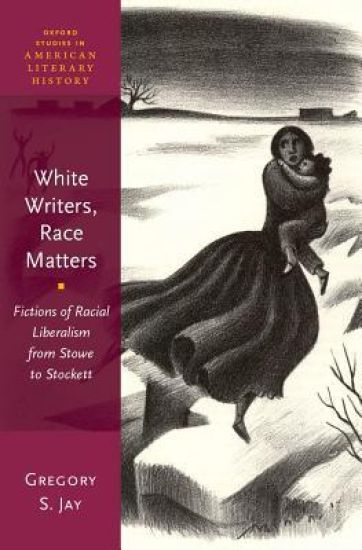
White Writers, Race Matters

White Writers, Race Matters

Gregory S. Jay

Oxford University Press Inc
2018
sidottu
What explains the enduring popularity of white-authored protest fiction about racism in America? How have such books spoken to the racial crises of their time, and why do they remain important in our own era? White Writers, Race Matters explores these questions and the controversies they raise by tracking this tradition in American literary history. Dating back to Uncle Tom's Cabin, the genre includes widely-read and taught works such as Huckleberry Finn and To Kill a Mockingbird along with period best-sellers now sometimes forgotten. This history also takes us to Hollywood, which regularly adapted them into blockbusters that spread their cultural influence further as well as incited debates over their politics. These novels strive to move readers emotionally toward ethical transformation and practical action. Their literary forms, styles and plots derive from the cultural work they intend to do in educating the minds and hearts of those who, in James Baldwin's words, "think they are white"--indeed, in making the social construction of that whiteness readable and thus more susceptible to reform. Each chapter provides a case study combining biography, historical analysis, close reading, and literary theory to map the significance of this genre and its ongoing relevance. This tradition remains vital because every generation must relearn the lessons of antiracism and formulate effective cultural narratives for transmitting intellectual and affective tools useful in fighting injustice.
Withdrawal

Withdrawal

Gregory A. Daddis

Oxford University Press Inc
2017
sidottu
A "better war." Over the last two decades, this term has become synonymous with US strategy during the Vietnam War's final years. The narrative is enticingly simple, appealing to many audiences. After the disastrous results of the 1968 Tet offensive, in which Hanoi's forces demonstrated the failures of American strategy, popular history tells of a new American military commander who emerged in South Vietnam and with inspired leadership and a new approach turned around a long stalemated conflict. In fact, so successful was General Creighton Abrams in commanding US forces that, according to the "better war" myth, the United States had actually achieved victory by mid-1970. A new general with a new strategy had delivered, only to see his victory abandoned by weak-kneed politicians in Washington, DC who turned their backs on the US armed forces and their South Vietnamese allies. In a bold new interpretation of America's final years in Vietnam, acclaimed historian Gregory A. Daddis disproves these longstanding myths. Withdrawal is a groundbreaking reassessment that tells a far different story of the Vietnam War. Daddis convincingly argues that the entire US effort in South Vietnam was incapable of reversing the downward trends of a complicated Vietnamese conflict that by 1968 had turned into a political-military stalemate. Despite a new articulation of strategy, Abrams's approach could not materially alter a war no longer vital to US national security or global dominance. Once the Nixon White House made the political decision to withdraw from Southeast Asia, Abrams's military strategy was unable to change either the course or outcome of a decades' long Vietnamese civil war. In a riveting sequel to his celebrated Westmoreland's War, Daddis demonstrates he is one of the nation's leading scholars on the Vietnam War. Withdrawal will be a standard work for years to come.
Property and Human Flourishing

Property and Human Flourishing

Gregory S. Alexander

Oxford University Press Inc
2018
sidottu
Many people assume that what morally justifies private ownership of property is either individual freedom or social welfare, defined in terms of maximizing personal preference-satisfaction. This book offers an alternative way of understanding the moral underpinning of private ownership of property. Rather than identifying any single moral value, this book argues that human flourishing, understood as morally pluralistic and objective, is property's moral foundation. The book goes on to develop a theory that connects ownership and human flourishing with obligations. Owners have obligations to members of the communities that enabled the owners to live flourishing lives by cultivating in their community members certain capabilities that are essential to leading a well-lived life. These obligations are rooted in the interdependence that exists between owners and their community members, and inherent in the human condition. Obligations have always been inherent in ownership. Owners are not free to inflict nuisances upon their neighbors, for example, by operating piggeries in residential neighborhoods. The human flourishing theory explains why owners at times have obligations that enable their fellow community members to develop certain necessary capabilities, such as health care and security. This is why, for example, farm owners may be required to allow providers of health care and legal assistance to enter their property to assist employees who are migrant workers. Moving from the abstract and theoretical to the practical, this book considers implications for a wide variety of property issues of importance both in the literature and in modern society. These include questions such as: When is a government's expropriation of property legitimated for the reason it is for public use? May the owner of a historic or architecturally significant house destroy it without restriction? Do institutions that owned African slaves or otherwise profited from the slave trade owe any obligations to members of the African-American community? What insights may be gained from the human flourishing concept into resolving current housing problems like homelessness, eviction, and mortgage foreclosure?
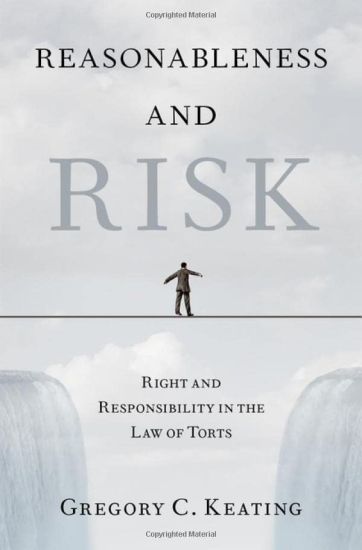
Reasonableness and Risk

Reasonableness and Risk

Gregory C. Keating

OXFORD UNIVERSITY PRESS INC
2023
sidottu
The law of torts is concerned with what we owe to one another in the way of obligations not to interfere with, or impair, each other's urgent interests as we go about our lives in civil society. The most influential contemporary account of tort law treats tort liability rules as shadow prices. Their role is not to vindicate claimants' own rights and interests, but to induce us to injure one another only when it is economically efficient to do so. The chief competitors to the economic view take tort law's importance to lie primarily in the duties of repair that it imposes on wrongdoers, or in the powers of recourse that it confers on the victims of tortious wrongs. This book argues that tort law's primary obligations address a domain of basic justice and that its rhetoric of reasonableness implies a distinctive morality of mutual right and responsibility. Modern tort law is preoccupied with, and responds to, the special moral significance of harm. That special significance sometimes justifies standards of precaution more stringent than those prescribed by efficiency. This book also examines the regulatory and administrative institutions with which the common law of torts cooperates and competes, treating these as part of a continuum of institutions that instantiate the primary role pursued by modern tort law - that is, to protect our physical integrity and other essential interests from impairment and interference by others, and to do so terms that all those affected might accept as justifiable.
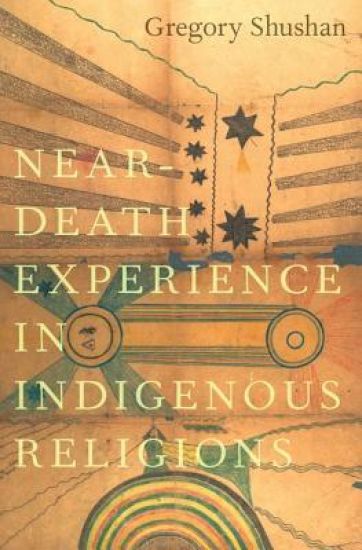
Near-Death Experience in Indigenous Religions

Near-Death Experience in Indigenous Religions

Gregory Shushan

Oxford University Press Inc
2018
sidottu
Near-death experiences are known around the world and throughout human history. They are sometimes reported by individuals who have revived from a period of clinical death or near-death and they typically feature sensations of leaving the body, entering and emerging from darkness, meeting deceased friends and relatives, encountering beings of light, judgment of one's earthly life, feelings of oneness, and reaching barriers, only to return to the body. Those who have NDEs almost invariably understand them as having profound spiritual or religious significance. In this book, Gregory Shushan explores the relationships between near-death experiences, shamanism, and beliefs about the afterlife in traditional indigenous societies in Africa, North America, and Oceania. Drawing on historical accounts of the earliest encounters with explorers, missionaries, and ethnologists, this study addresses questions such as: Do ideas about the afterlife commonly originate in NDEs? What role does culture play in how people experience and interpret NDEs? How can we account for cross-cultural similarities and differences between afterlife beliefs? Though NDEs are universal, Shushan shows that how they are actually experienced and interpreted varies by region and culture. As the historical documents reveal, in North America, they were commonly valorized, and attempts were made to replicate them through shamanic rituals. In Africa, however, they were largely considered aberrational events with links to possession or sorcery. In Oceania, Micronesia corresponded more to the African model, while Australia had a greater focus on afterlife journey shamanism. Polynesia and Melanesia showed an almost casual acceptance of the phenomenon as reflected in numerous myths, legends, and historical accounts. This study examines the continuum of similarities and differences between NDEs, shamanism, and afterlife beliefs in dozens of cultures throughout these regions. In the process, it makes a valuable contribution to our knowledge about the origins of afterlife beliefs around the world and the significance of related experiences in human history.
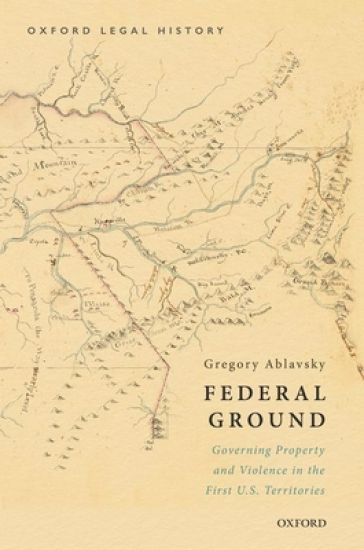
Federal Ground

Federal Ground

Gregory Ablavsky

Oxford University Press Inc
2021
sidottu
Federal Ground depicts the haphazard and unplanned growth of federal authority in the Northwest and Southwest Territories, the first U.S. territories established under the new territorial system. The nation's foundational documents, particularly the Constitution and the Northwest Ordinance, placed these territories under sole federal jurisdiction and established federal officials to govern them. But, for all their paper authority, these officials rarely controlled events or dictated outcomes. In practice, power in these contested borderlands rested with the regions' pre-existing inhabitants-diverse Native peoples, French villagers, and Anglo-American settlers. These residents nonetheless turned to the new federal government to claim ownership, jurisdiction, protection, and federal money, seeking to obtain rights under federal law. Two areas of governance proved particularly central: contests over property, where plural sources of title created conflicting land claims, and struggles over the right to use violence, in which customary borderlands practice intersected with the federal government's effort to establish a monopoly on force. Over time, as federal officials improvised ad hoc, largely extrajudicial methods to arbitrate residents' claims, they slowly insinuated federal authority deeper into territorial life. This authority survived even after the former territories became Tennessee and Ohio: although these new states spoke a language of equal footing and autonomy, statehood actually offered former territorial citizens the most effective way yet to make claims on the federal government. The federal government, in short, still could not always prescribe the result in the territories, but it set the terms and language of debate-authority that became the foundation for later, more familiar and bureaucratic incarnations of federal power.
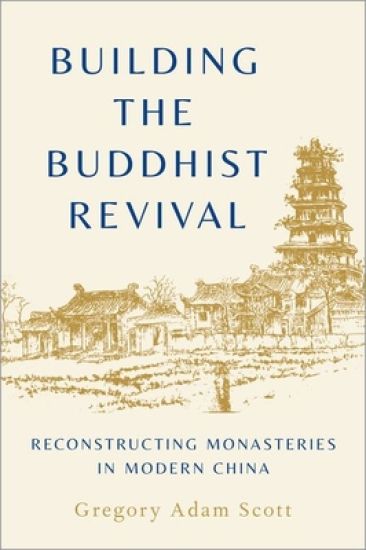
Building the Buddhist Revival

Building the Buddhist Revival

Gregory Adam Scott

Oxford University Press Inc
2020
sidottu
Between 1850 and 1966, tens of thousands of Buddhist sacred sites in China were destroyed, victims of targeted destruction, accidental damage, or simply neglect. During the same period, however, many of these sites were reconstructed, a process that involved both rebuilding material structures and reviving religious communities. The conventionally accepted narrative of Chinese Buddhism during the modern era is that it underwent a revival initiated by innovative monastics and laypersons, leaders who reinvented Buddhist traditions to meet the challenges of modernity. Gregory Adam Scott shows, however, that over time it became increasingly difficult for reconstruction leaders to resist the interests of state actors, who sought to refashion monastery sites as cultural monuments rather than as living religious communities. These sites were then intended to serve as symbols of Chinese history and cultural heritage, while their function as a frame for religious life was increasingly pushed aside. As a result, the power to determine whether and how a monastery would be reconstructed, and the types of activities that would be reinstated or newly introduced, began to shift from religious leaders and communities to state agencies that had a radically different set of motivations and values. Building the Buddhist Revival explores the history of Chinese Buddhist monastery reconstruction from the end of the Imperial period through the first seventeen years of the People's Republic. Over this century of history, the nature and significance of reconstructing Buddhist monasteries changes drastically, mirroring broader changes in Chinese society. Yet this book argues that change has always been in the nature of religious communities such as Buddhist monasteries, and that reconstruction, rather than a return to the past, represents innovative and adaptive change. In this way, it helps us understand the broader significance of the Buddhist "revival" in China during this era, as a creative reconstruction of religion upon longstanding foundations.
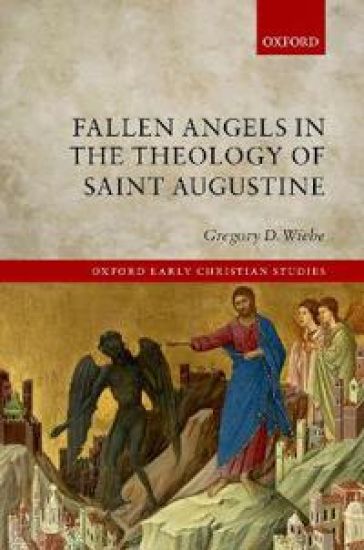
Fallen Angels in the Theology of St Augustine

Fallen Angels in the Theology of St Augustine

Gregory D. Wiebe

Oxford University Press
2021
sidottu
This book ventures to describe Augustine of Hippo's understanding of demons, including the theology, angelology, and anthropology that contextualize it. Demons are, for Augustine as for the Psalmist (95:5 LXX) and the Apostle (1 Cor 10:20), the "gods of the nations." This means that Augustine's demons are best understood neither when they are "spiritualized" as personifications of psychological struggles, nor in terms of materialist contagions that undergird a superstitious moralism. Rather, because the gods of the nations are the paradigm of demonic power and influence over humanity, Augustine sees the Christian's moral struggle against them within broader questions of social bonds, cultural form, popular opinion, philosophical investigation, liturgical movement, and so forth. In a word, Augustine's demons have a religious significance, particularly in its Augustinian sense of bonds and duties between persons, and between persons and that which is divine. Demons are a highly integrated component of his broader theology, rooted in his conception of angels as the ministers of all creation under God, and informed by the doctrine of evil as privation and his understanding of the fall, his thoughts on human embodiment, desire, visions, and the limits of human knowledge, as well as his theology of religious incorporation and sacraments. As false mediators, demons are mediated by false religion, the body of the devil, which Augustine opposes with an appeal to the true mediator, Christ, and the true religion of his body, the church.
Imagining and Knowing

Imagining and Knowing

Gregory Currie

Oxford University Press
2022
nidottu
Works of fiction are works of the imagination and for the imagination. Gregory Currie energetically defends the familiar idea that fictions are guides to the imagination, a view which has come under attack in recent years. Responding to a number of challenges to this standpoint, he argues that within the domain of the imagination there lies a number of distinct and not well-recognized capacities which make the connection between fiction and imagination work. Currie then considers the question of whether in guiding the imagination fictions may also guide our beliefs, our outlook, and our habits in directions of learning. It is widely held that fictions very often provide opportunities for the acquisition of knowledge and of skills. Without denying that this sometimes happens, this book explores the difficulties and dangers of too optimistic a picture of learning from fiction. It is easy to exaggerate the connection between fiction and learning, to ignore countervailing tendencies in fiction to create error and ignorance, and to suppose that claims about learning from fiction require no serious empirical support. Currie makes a case for modesty about learning from fiction -- reasoning that a lot of what we take to be learning in this area is itself a kind of pretence, that we are too optimistic about the psychological and moral insights of authors, that the case for fiction as a Darwinian adaptation is weak, and that empathy is both hard to acquire and not always morally advantageous.
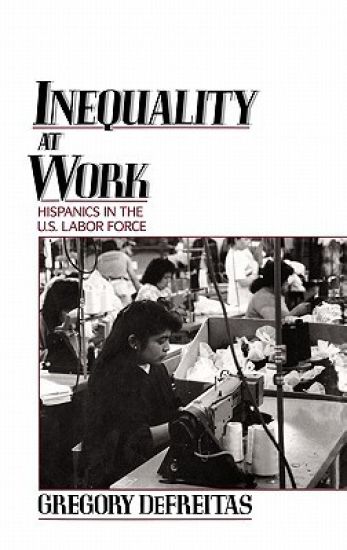
Inequality at Work

Inequality at Work

Gregory DeFreitas

Oxford University Press Inc
1992
sidottu
This book presents a comprehensive economic analysis of the rapidly growing Hispanic labour force in the U.S. The author evaluates the leading economic theories on immigration and on racial and ethnic inequality in incomes and employment. He then tests these theories empirically with a variety of recent national data sets. Many of the findings throw into question widely held views among the public, academics, and policymakers. The author surveys the evolution of each of the main national-origin subgroups: Mexicans, Puerto Ricans, Cubans, Central and South Americans, and other Hispanic Labour forces in the U.S. He finds that the Hispanic disadvantage in income, poverty, and unemployment has remained chronically large and has actually been increasing in recent years. He finds that Hispanics are unusually vulnerable to recessionary downturns in the national economy. His study of the impact of undocumented Hispanic immigration into the U.S. contradicts claims that immigration, either legal or illegal, increases the unemployment or lowers the earnings of American workers.
Liberalism, Fascism, or Social Democracy

Liberalism, Fascism, or Social Democracy

Gregory M. Luebbert

Oxford University Press Inc
1991
sidottu
This work provides a sweeping historical analysis of the political development of Western Europe in the late nineteenth and twentieth century. The author argues that the evolution of most European nations into liberal democracies, social democracies or fascist regimes was attributable to a discrete set of social and class alliances within individual nations. In Britain, France, and Switzerland, countries with a unified middle class, liberal forces established political hegemony before the First World War. In countries with a strong, cohesive working class and a fractured middle class, Luebbert points out, a liberal solution was impossible. In Norway, Sweden, Denmark, and Czechoslovakia, political coalitions of social democrats and `family peasantry' emerged as a result of the First World War, resulting in social democracies. In Spain, Italy, and Germany, on the other hand, the urban middle class united with a peasantry hostile to socialism to facilitate the rise of fascism.
Liberalism, Fascism, or Social Democracy

Liberalism, Fascism, or Social Democracy

Gregory M. Luebbert

Oxford University Press Inc
1991
nidottu
This work provides a sweeping historical analysis of the political development of Western Europe in the late 19th and early 20th century. The author argues that the evolution of most European nations into liberal democracies, social democracies or facist regimes was attributable to a discrete set of social and class alliances within individual nations. In Britain, France and Switzerland, countries with a unified middle class, liberal forces established political hegemony before World War I. By co-opting considerable sections of the working class with reforms that weakened union movements, liberals essentially excluded the fragmented working class from the political process, remaining in power throughout the inter-war period. In countries with a strong, cohesive working class and a fractured middle class, Luebbert points out, a liberal solution was impossible. In Norway, Sweden, Denmark and Czechoslovakia, political coalitions of social democrats and "family peasantry" emerged as a result of World War I, resulting in social democracies. In Spain, Italy and Germany, on the other hand, the urban middle class united with a peasantry hostile to socialism to facilitate the rise of fascism.
Dynamic Economics

Dynamic Economics

Gregory C. Chow

Oxford University Press Inc
1997
sidottu
This work provides a unified and simple treatment of dynamic economics using dynamic optimization as the main theme, and the method of Lagrange multipliers to solve dynamic economic problems. The author presents the optimization framework for dynamic economics in order that readers can understand the approach and use it as they see fit. Instead of using dynamic programming, the author chooses instead to use the method of Lagrange multipliers in the analysis of dynamic optimization because it is easier and more efficient than dynamic programming, and allows readers to understand the substance of dynamic economics better. The author treats a number of topics in economics, including economic growth, macroeconomics, microeconomics, finance and dynamic games. The book also teaches by examples, using concepts to solve simple problems; it then moves to general propositions.
Democratic Religion

Democratic Religion

Gregory A. Wills

Oxford University Press Inc
1997
sidottu
No American denomination identified itself more closely with the nation's democratic ideal than the Baptists. Most antebellum southern Baptist churches allowed women and slaves to vote on membership matters and preferred populists preachers who addressed their appeals to the common person. Paradoxically no denomination could wield religious authority as zealously as the Baptists. Between 1785 and 1860 they ritually excommunicated forty to fifty thousand church members in Georgia alone. Wills demonstrates how a denomination of freedom-loving individualists came to embrace an exclusivist spirituality--a spirituality that continues to shape Southern Baptist churches in contemporary conflicts between moderates who urge tolerance and conservatives who require belief in scriptural inerrancy. Wills's analysis advances our understanding of the interaction between democracy and religious authority, and will appeal to scholars of American religion, culture, and history, as well as to Baptist observers.
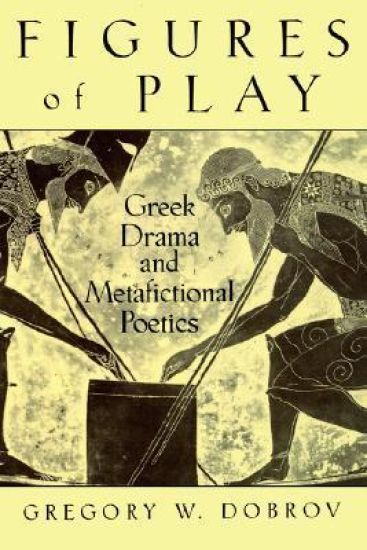
Figures of Play

Figures of Play

Gregory W. Dobrov

Oxford University Press Inc
1999
sidottu
Figures of Play explores the reflexive aspects of ancient theatrical culture across genres. Fifth century tragedy and comedy sublimated the agonistic basis of Greek civilization in a way that invited the community of the polis to confront itself. In the theatre, as in the courts and assemblies, a significant subset of the Athenian public was spectator and judge of contests where important social and ideological issues were played to it by its own members. The "syntax" of drama is shown to involve specific "figures of play" through which the theatrical medium turns back on itself to study the various contexts of its production. Greek tragedy and comedy were argued to be tempermentally metafictional in that they are always involved in recycling older fictions into contemporary scenarios of immediate relevance to the polis. The phemonenology of this process is discussed under three headings, each a "figure of play": 1) surface play--momentary disruption of the theatrical pretense through word, sign, gesture; 2) mise en abyme--a mini-drama embedded in a larger framework; 3) contrafact--an extended remake in which one play is based on another. Following three chapters in which this framework is set forth and illustrated with concrete examples there are five case studies named after the protagonists of the plays in question: Aias, Pentheus, Tereus, Bellerophontes, Herakles. Hence the other meaning of "figures of play" as stage figures. In the second section of the book on "the Anatomy of Dramatic Fiction," special attention is paid to the interaction between genres. In particular, Aristophanic comedy is shown to be engaged in an intense rivalry with tragedy that underscores the different ways in which each genre deployed its powers of representation. Tragedy refashions myth: in Bakkhai, for example, it is argued that Euripides reinvented Dionysis to be specifically a theatrical god, a symbol of tragedy's powers of representation. Comedy refashions tragedy: in a series of utopian comedies, Aristophanes re-enacts a tragic scenario in a way that revals comedy as a superior means of solving political and social crisis.
Russell's Hidden Substitutional Theory

Russell's Hidden Substitutional Theory

Gregory Landini

Oxford University Press Inc
1998
sidottu
This book explores an important central thread that unifies Russell's thoughts on logic in two works previously considered at odds with each other, the Principles of Mathematics and the later Principia Mathematica. This thread is Russell's doctrine that logic is an absolutely general science and that any calculus for it must embrace wholly unrestricted variables. The heart of Landini's book is a careful analysis of Russell's largely unpublished "substitutional" theory. On Landini's showing, the substitutional theory reveals the unity of Russell's philosophy of logic and offers new avenues for a genuine solution of the paradoxes plaguing Logicism.