Kirjojen hintavertailu. Mukana 11 717 486 kirjaa ja 12 kauppaa.

Kirjahaku

Etsi kirjoja tekijän nimen, kirjan nimen tai ISBN:n perusteella.

1000 tulosta hakusanalla Heather Lynn Colbert

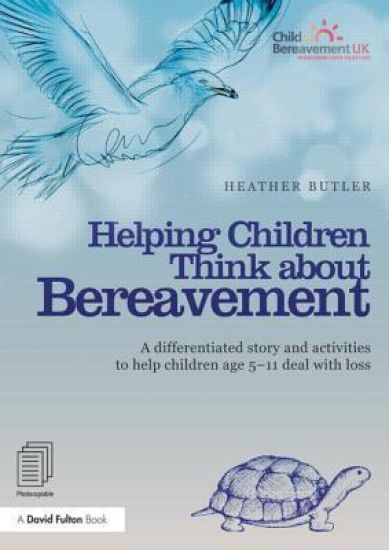
Helping Children Think about Bereavement
Each year, 3,000 children and young people between the ages of 1 and 19, die as a result of illness or accident.Around 5% of children will have experienced the death of a parent by the time they are 16. Statistics indicate that up to 70% of schools have a bereaved pupil in their care at any given time.Helping Children Think about Bereavement provides a four part differentiated story and activities to help normalise death and allow children to develop emotional literacy to talk about it. The author, along with Child Bereavement UK have devised activities and guidance for teachers on how to use the story to develop children’s emotional literacy and prepare them for bereavement, whether it affects them personally or through a friend’s bereavement. This book also offers support for teachers and parents outlining how children’s understanding of death develops and what can be helpful in supporting bereaved children. The story is presented at different levels:for children aged 9-11for children aged 7 -9for children aged 5-7for children who speak English as a Second Languagefor children in Early Years or with Learning DifficultiesDetails surrounding death and its aftermath are not always readily talked about or well handled. When it does happen, children need to be able to express themselves and know that their feelings are a normal part of grieving. This book is an invaluable resource for all key stage one and two teachers, teaching assistants and anyone who is involved in bereavement training.
Helping Children Think about Bereavement
Each year, 3,000 children and young people between the ages of 1 and 19, die as a result of illness or accident.Around 5% of children will have experienced the death of a parent by the time they are 16. Statistics indicate that up to 70% of schools have a bereaved pupil in their care at any given time.Helping Children Think about Bereavement provides a four part differentiated story and activities to help normalise death and allow children to develop emotional literacy to talk about it. The author, along with Child Bereavement UK have devised activities and guidance for teachers on how to use the story to develop children’s emotional literacy and prepare them for bereavement, whether it affects them personally or through a friend’s bereavement. This book also offers support for teachers and parents outlining how children’s understanding of death develops and what can be helpful in supporting bereaved children. The story is presented at different levels:for children aged 9-11for children aged 7 -9for children aged 5-7for children who speak English as a Second Languagefor children in Early Years or with Learning DifficultiesDetails surrounding death and its aftermath are not always readily talked about or well handled. When it does happen, children need to be able to express themselves and know that their feelings are a normal part of grieving. This book is an invaluable resource for all key stage one and two teachers, teaching assistants and anyone who is involved in bereavement training.

Metaphysics and the Representational Fallacy
This book is an investigation into metaphysics: its aims, scope, methodology and practice. Dyke argues that metaphysics should take itself to be concerned with investigating the fundamental nature of reality, and suggests that the ontological significance of language has been grossly exaggerated in the pursuit of that aim.
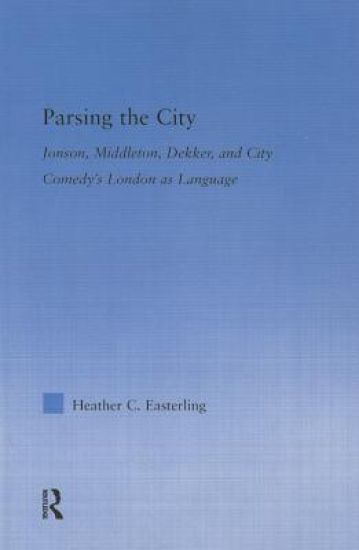
Parsing the City

Parsing the City

Heather Easterling

Routledge
2014
nidottu
Parsing the City updates our understanding of Jacobean city comedy’s discursive role in its London society. Working with three major plays by Ben Jonson and Thomas Middleton and Thomas Dekker, this book develops an updated reading of Jacobean city comedy as a dramatic subgenre whose engagement with early modern London was centrally linguistic and semiotic-- its plays staging and interrogating the city as a series of languages and language problems.
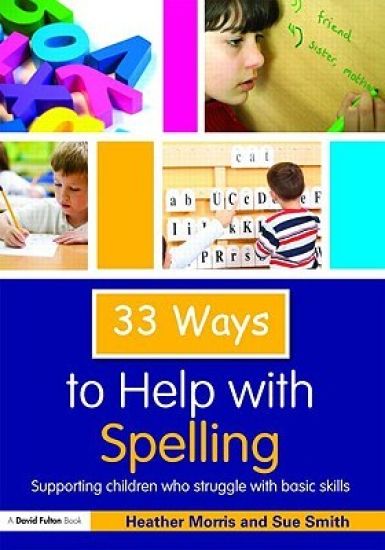
33 Ways to Help with Spelling

33 Ways to Help with Spelling

Heather Morris; Sue Smith

Routledge
2010
nidottu
33 Ways to Help with Spelling equips teachers and teaching assistants with a wide range of practical resources to help children who are having difficulties learning the basic skills of spelling. Offering a range of activities and games to engage children and encourage motivation in the classroom, this essential classroom companion provides ready-to-use material that doesn’t need lengthy forward preparation. Activities include auditory and visual mnemonics, phonetics and tactile tasks.These practical and fun ideas incorporate a variety of learning styles, using kinaesthetic and auditory techniques, that put the emphasis on ‘games’ rather than ‘work’. The activities are especially suitable for teaching assistants working with individuals or small groups. The book works step-by-step through practical activities which: keep children motivated and enjoying learning don't require extensive knowledge or experience from the adult are adult-led so children don't have the opportunity to repeat mistakes are grouped into different basic skills, so teachers can choose the activity best suited for the child’s needs have clear, concise and pedagogically sound reasons for the activity include extension activity where appropriate to challenge pupils. Aimed mainly at primary pupils, secondary teachers will also find this book invaluable to use with pupils who are falling behind. The series facilitates good inclusive provision and is a resource from which useful ideas and materials can be taken without having to plough through chapters of theory and research.
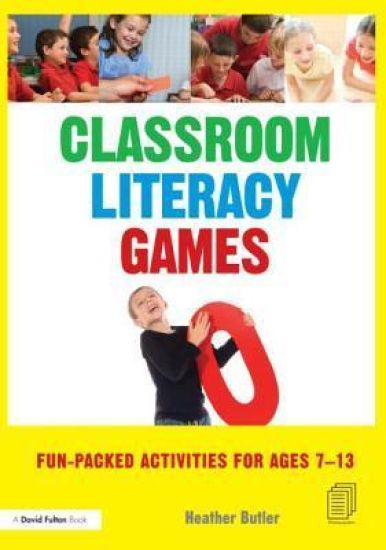
Classroom Literacy Games

Classroom Literacy Games

Heather Butler

Routledge
2011
nidottu
Children enjoyed it so much they didn’t realise they were being worked so hard.Jo Miles, Learning Support Assistant at Manor Farm Community Junior School, Hazlemere, BuckinghamshireGreat speaking and listening activity-setting-up ideas for the Big Write. The games extended the children’s vocabulary. Purposeful learning – love it!Liz Pilgrim, Senior Teacher at Manor Farm Community Junior School, Hazlemere, BuckinghamshireEducational games played in groups or pairs help develop key language and social skills. Based on a range of material to extend vocabulary, punctuation and cross-curricular creativity, Classroom Literacy Games contains original games with suggestions of how to develop writing tasks after playing them. Each game is differentiated four ways and aims to teach literacy (including vocabularly, connectives, openers and punctuation) to higher KS1, KS2 and lower KS3. Printed with dyslexia-friendly fonts, these cross-curricular games are suitable for mixed-ability classrooms, small groups or one-to-one teaching situations. As either photocopiable resources to be used in the classroom or as homework activities, these games will create situations to generate creative writing and for the children to create their own games. They can also be used for EAL, guided reading and weekly Big Write exercises.With minimal preparation time required and a vast number of games, these user-friendly, pick-up-and-go activities will be of interest to any practicing primary and lower KS3 teacher.
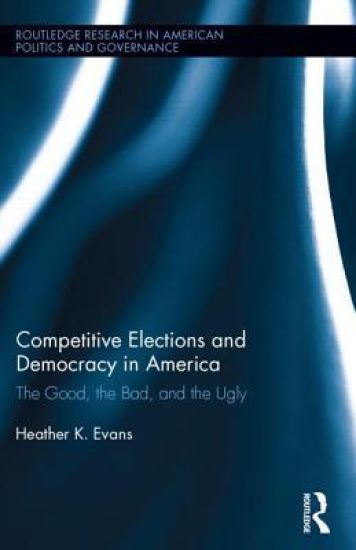
Competitive Elections and Democracy in America
Competition seems to be an inevitable part of present-day elections in the United States. However, recent publications have debated whether we should encourage or discourage competitive elections. In Competitive Elections and Democracy in America, Heather Evans closely examines the debate over competition in elections and questions whether or not they are beneficial for democracy in the US. Evans clearly lays out the basis of the debate over competition and defines what exactly constitutes a competitive election. She then uses an innovative data set that she assembled to analyze the 2006-2010 congressional elections, testing whether the competitiveness of an election affects citizens’ political knowledge, political interest, and opinions of Congress, their representatives, and the governmental system as a whole. She subsequently evaluates the positive effects that competitive elections have on constituencies, and in turn gives equal weight to the negative effects. An examination of the effects "ugly" campaigns have on voters is also incorporated, relevant to today’s oft-used "mud-slinging" campaign tactics. Evans concludes with a thoughtful and analytical assessment of whether competition is valuable for elections, and how to increase competition if it indeed has merit for political campaigns.Through the book’s analyses, Evans demonstrates that competitive elections do have lasting effects on voters that go beyond just the length of a campaign. Her research reinforces the vital role that political competition plays in modern democracies, and offers a careful evaluation of how and why competitive elections affect citizens in the US.
Rethinking Environmental Justice in Sustainable Cities

Rethinking Environmental Justice in Sustainable Cities

Heather E. Campbell; Yushim Kim; Adam M. Eckerd

Routledge
2015
sidottu
As the study of environmental policy and justice becomes increasingly significant in today’s global climate, standard statistical approaches to gathering data have become less helpful at generating new insights and possibilities. None of the conventional frameworks easily allow for the empirical modeling of the interactions of all the actors involved, or for the emergence of outcomes unintended by the actors. The existing frameworks account for the "what," but not for the "why."Heather E. Campbell, Yushim Kim, and Adam Eckerd bring an innovative perspective to environmental justice research. Their approach adjusts the narrower questions often asked in the study of environmental justice, expanding to broader investigations of how and why environmental inequities occur. Using agent-based modeling (ABM), they study the interactions and interdependencies among different agents such as firms, residents, and government institutions. Through simulation, the authors test underlying assumptions in environmental justice and discover ways to modify existing theories to better explain why environmental injustice occurs. Furthermore, they use ABM to generate empirically testable hypotheses, which they employ to check if their simulated findings are supported in the real world using real data.The pioneering research on environmental justice in this text will have effects on the field of environmental policy as a whole. For social science and policy researchers, this book explores how to employ new and experimental methods of inquiry on challenging social problems, and for the field of environmental justice, the authors demonstrate how ABM helps illuminate the complex social and policy interactions that lead to both environmental justice and injustice.
Transnational Financial Associations and the Governance of Global Finance
The role of business in global governance is now widely recognized, but exploration of its role in global financial governance has been more haphazard than systematic. This book provides the first comprehensive analysis of the role of transnational financial associations (TFAs) in the organization of global finance.This book develops three theoretical themes of assemblage, functionality, and power as enrolment. These themes challenge approaches that treat financial power as emanating from a single location or force. Whilst existing approaches tend to treat TFAs as irrelevant or as merely transmitting power originating elsewhere, this book argues that power must be created by painstakingly assembling actors, networks, and objects that are often quite autonomous and working at cross purposes to one another—a process in which TFAs play a central role. The book explores these themes in chapters examining the roles of TFAs in interacting with public authorities, constructing global financial markets, and creating financial communities. The authors additionally analyse the roles of TFAs in the European Union, in the Global South, and in promoting goals other than profitability, including Islamic finance, microfinancing, savings banks and cooperatives. Making a distinctive contribution to our understanding of global finance and global governance, Transnational Financial Associations and the Governance of Global Finance is an important book for students and scholars of international political economy, finance, global governance and international relations.
Transnational Financial Associations and the Governance of Global Finance
The role of business in global governance is now widely recognized, but exploration of its role in global financial governance has been more haphazard than systematic. This book provides the first comprehensive analysis of the role of transnational financial associations (TFAs) in the organization of global finance.This book develops three theoretical themes of assemblage, functionality, and power as enrolment. These themes challenge approaches that treat financial power as emanating from a single location or force. Whilst existing approaches tend to treat TFAs as irrelevant or as merely transmitting power originating elsewhere, this book argues that power must be created by painstakingly assembling actors, networks, and objects that are often quite autonomous and working at cross purposes to one another—a process in which TFAs play a central role. The book explores these themes in chapters examining the roles of TFAs in interacting with public authorities, constructing global financial markets, and creating financial communities. The authors additionally analyse the roles of TFAs in the European Union, in the Global South, and in promoting goals other than profitability, including Islamic finance, microfinancing, savings banks and cooperatives. Making a distinctive contribution to our understanding of global finance and global governance, Transnational Financial Associations and the Governance of Global Finance is an important book for students and scholars of international political economy, finance, global governance and international relations.
Global Justice, Kant and the Responsibility to Protect
This book provides an innovative contribution to the study of the Responsibility to Protect and Kantian political theory.The Responsibility to Protect (R2P) doctrine has been heralded as the new international security norm to ensure the protection of peoples against genocide, ethnic cleansing, war crimes and crimes against humanity. Yet, for all of the discussion, endorsements and reaffirmations of this new norm, R2P continues to come under fire for its failures, particularly, and most recently, in the case of Syria. This book argues that a duty to protect is best considered a Kantian provisional duty of justice. The international system ought to be considered a state of nature, where legal institutions are either weak or absent, and so duties of justice in such a condition cannot be considered peremptory. This book suggests that by understanding the duty’s provisional status, we understand the necessity of creating the requisite executive, legislative and judicial authorities. Furthermore, the book provides three innovative contributions to the literature, study and practice of R2P and Kantian political theory: it provides detailed theoretical analysis of R2P; it addresses the research gap that exists with Kant’s account of justice in states of nature; and it presents a more comprehensive understanding of the metaphysics of justice as well as R2P. This book will be of much interest to students of the Responsibility to Protect, humanitarian intervention, global ethics, international law, security studies and international relations (IR) in general.
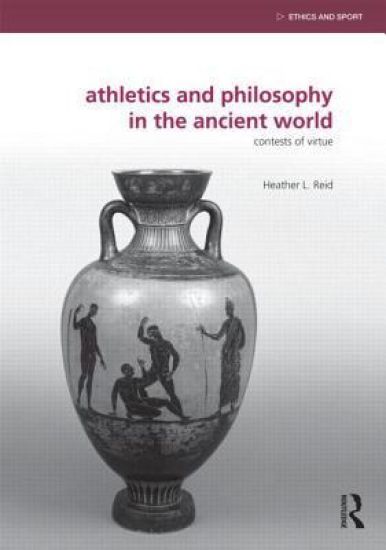
Athletics and Philosophy in the Ancient World
This book examines the relationship between athletics and philosophy in ancient Greece and Rome focused on the connection between athleticism and virtue. It begins by observing that the link between athleticism and virtue is older than sport, reaching back to the athletic feats of kings and pharaohs in early Egypt and Mesopotamia. It then traces the role of athletics and the Olympic Games in transforming the idea of aristocracy as something acquired by birth to something that can be trained. This idea of training virtue through the techniques and practice of athletics is examined in relation to Socrates, Plato, and Aristotle. Then Roman spectacles such as chariot racing and gladiator games are studied in light of the philosophy of Lucretius, Seneca, and Marcus Aurelius. The concluding chapter connects the book’s ancient observations with contemporary issues such as the use of athletes as role models, the relationship between money and corruption, the relative worth of participation and spectatorship, and the role of females in sport.The author argues that there is a strong link between sport and philosophy in the ancient world, calling them offspring of common parents: concern about virtue and the spirit of free enquiry.This book was previously published as a special issue of the Ethics and Sport.
The Law and the Dead

The Law and the Dead

Heather Conway

Routledge
2016
sidottu
The fate of the dead is a compelling and emotive subject, which also raises increasingly complex legal questions. This book focuses on the substantive laws around disposal of the recently deceased and associated issues around their post-mortem fate. It looks primarily at the laws in England and Wales but also offers a comparative approach, drawing heavily on material from other common law jurisdictions including Australia, New Zealand, Canada and the United States.The book provides an in-depth, contextual and comparative analysis of the substantive laws and policy issues around corpse disposal, exhumation and the posthumous treatment of the dead, including commemoration. Topics covered include: the legal frameworks around burial, cremation and other disposal methods; the hierarchy of persons who have a legal duty to dispose of the dead and who are entitled to possession of the deceased’s remains; offences against the dead; family burial disputes, and the legal status of burial instructions; the posthumous use of donated bodily material; and the rules around disinterment, and creating an appropriate memorial. A key theme of the book will be to look at the manner in which conflicts involving the dead are becoming increasingly common in secular, multi-cultural societies where the traditional nuclear family model is no longer the norm, and how such legal contests are resolved by courts.As the first comprehensive survey of the laws in this area for decades, this book will be of use to academics, lawyers and judges adjudicating on issues around the fate of the dead, as well as the death industry and funeral service providers.
The Making of Low Carbon Economies

The Making of Low Carbon Economies

Heather Lovell

Routledge
2014
sidottu
The Making of Low Carbon Economies looks at how more than two decades of sustained effort at climate change mitigation has resulted in a variety of new practices, rules and ways of doing things: a period of active construction of low carbon economies. From outer space observations of the carbon in tropical forests, to carbon financial reporting, and insulating solid masonry walls, these diverse things, activities and objects are integral to how climate change has been brought into being as a problem. The book takes a fresh look at society’s response to climate change by examining a diverse array of empirical sites where climate change is being made real through its incorporation into everyday lives – a process of stitching climate concerns into the discourse and practices of already existing economies, as well as creating new economies. The Making of Low Carbon Economies adds fresh insights to economic sociology and science and technology studies scholarship on the multiple origins and heterogeneous operation of markets, demonstrating the constraints and opportunities of an economic framing of the problem of climate change. It covers the obvious (and now well-researched) topic of carbon markets, as well as new more unusual material on the low carbon reframing of already existing markets and economies.
Fabricating Plasticity in Aluminum

Fabricating Plasticity in Aluminum

Heather Roberge

TAYLOR FRANCIS LTD
2025
sidottu
This book argues for the value of the material prototype as a critical site of design innovation, through a series of design and architectural case studies. Illustrated by physical objects such as chairs, columns, and building façades, these full-scale material investigations reflect their designers’ deep knowledge of material, manufacturing, and geometry. The projects do not simply express how they are made, rather their designers leverage the capacities of metal forming to exert distinctive influence on the object’s expression and performance, embracing manufacturing processes as instruments of material innovation.Organized in two parts, part one presents the material framework informing work by Arad, Newson, Heatherwick, Future Systems, Foster, OMA, Rex, Hadid and others. Seven metal forming techniques including Press Forming, Press Brake Forming, Spinning, Panel Beating, Casting, Extruding, and Superplastic Forming are presented alongside work implemented with these processes. Part two presents original design research. Thermoformed aluminum façade systems ask critical questions of The Part: Tessellation, The Mold: Tooling, The Seam, and the Finish: Post Processing, illustrating the potential of design inquiry when techniques of material production alter techniques of design. Aluminum is redefined, inheriting a plasticity which alters the intrinsic qualities of its raw production.For students and professionals in the fields of industrial design and architecture, this book presents an optimistic role for material in the design process.
Fabricating Plasticity in Aluminum

Fabricating Plasticity in Aluminum

Heather Roberge

TAYLOR FRANCIS LTD
2025
nidottu
This book argues for the value of the material prototype as a critical site of design innovation, through a series of design and architectural case studies. Illustrated by physical objects such as chairs, columns, and building façades, these full-scale material investigations reflect their designers’ deep knowledge of material, manufacturing, and geometry. The projects do not simply express how they are made, rather their designers leverage the capacities of metal forming to exert distinctive influence on the object’s expression and performance, embracing manufacturing processes as instruments of material innovation.Organized in two parts, part one presents the material framework informing work by Arad, Newson, Heatherwick, Future Systems, Foster, OMA, Rex, Hadid and others. Seven metal forming techniques including Press Forming, Press Brake Forming, Spinning, Panel Beating, Casting, Extruding, and Superplastic Forming are presented alongside work implemented with these processes. Part two presents original design research. Thermoformed aluminum façade systems ask critical questions of The Part: Tessellation, The Mold: Tooling, The Seam, and the Finish: Post Processing, illustrating the potential of design inquiry when techniques of material production alter techniques of design. Aluminum is redefined, inheriting a plasticity which alters the intrinsic qualities of its raw production.For students and professionals in the fields of industrial design and architecture, this book presents an optimistic role for material in the design process.
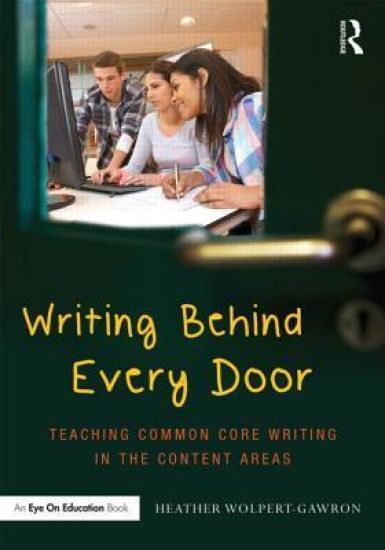
Writing Behind Every Door

Writing Behind Every Door

Heather Wolpert-Gawron

Routledge
2014
nidottu
For students to become college-ready writers, they must be exposed to writing throughout the school day, not just in English class. This practical book shows teachers in all subject areas how to meet the Common Core State Standards and make writing come alive in the classroom. Award-winning educator Heather Wolpert-Gawron provides effective and exciting ideas for teaching argument writing, informational writing, project-based writing, and writing with technology. Each chapter is filled with strategies, prompts, and rubrics you can use immediately. Special Features: A variety of writing strategies that work in any subject area Tips for developing meaningful prompts Diagrams and templates that you can use with your students Rubrics for assessing writing, as well as ideas for having students create their own rubrics Samples of student work in different formats Ideas for teaching students to break the Google homepage habit and conduct effective research Cross-curricular writing assignments for science, history, ELA, electives, and PE Suggestions for teaching summary writing, an essential academic skill Ideas for staff professional development on Common Core writing
Writing Behind Every Door

Writing Behind Every Door

Heather Wolpert-Gawron

Routledge
2014
sidottu
For students to become college-ready writers, they must be exposed to writing throughout the school day, not just in English class. This practical book shows teachers in all subject areas how to meet the Common Core State Standards and make writing come alive in the classroom. Award-winning educator Heather Wolpert-Gawron provides effective and exciting ideas for teaching argument writing, informational writing, project-based writing, and writing with technology. Each chapter is filled with strategies, prompts, and rubrics you can use immediately. Special Features: A variety of writing strategies that work in any subject area Tips for developing meaningful prompts Diagrams and templates that you can use with your students Rubrics for assessing writing, as well as ideas for having students create their own rubrics Samples of student work in different formats Ideas for teaching students to break the Google homepage habit and conduct effective research Cross-curricular writing assignments for science, history, ELA, electives, and PE Suggestions for teaching summary writing, an essential academic skill Ideas for staff professional development on Common Core writing
Hollywood and the Rise of Physical Culture
This book examines the relationship between cinema and physical culture i.e. activities such as dieting and muscle-building. It presents a case study of Hollywood's impact on the American reducing craze of the 1920s as the basis for speculating interrelationship of Hollywood and physical culture.
Developmental Couple Therapy for Complex Trauma
Developmental Couple Therapy for Complex Trauma provides therapists with comprehensive and practical guidance for integrating DCTCT into their work with traumatized couples. The book includes an evidence-based framework which emphasizes the importance of containing conflict and helps clients to build emotional regulation and mentalizing skills. The framework is an invaluable asset to all clinicians working with couples dealing with the ravaging impacts of complex trauma, who may not be able to benefit from traditional forms of couple therapy due to challenges in regulating emotions, mentalizing and other aspects of the complex trauma response that limit capacity to engage in relationships and couple therapy. The chapters guide you through the four key stages of DCTCT: Psychoeducation, Building Capacity, Dyadic Processing, and Consolidation. Each stage has accompanying activities and narratives in which to engage traumatized couples and includes a variety of case transcripts to illustrate the approach. Throughout the manual the author provides the reader with: insights from real-world scenarios based on her extensive clinical experience; worksheets that can be used as part of the therapeutic process; systematic analyses of the therapeutic process from the therapist’s point of view; comprehensive recommendations for further reading so that you can develop your expertise in any area of DCTCT. Never losing sight of the fact that the therapist plays an essential role as a coach and mentor for those undertaking couple therapy, this manual is a valuable tool for any clinician working to engage traumatized couples and equip them with the skills they need to develop and maintain a strong and vibrant couple relationship.