Kirjojen hintavertailu. Mukana 11 627 220 kirjaa ja 12 kauppaa.

Kirjahaku

Etsi kirjoja tekijän nimen, kirjan nimen tai ISBN:n perusteella.

1000 tulosta hakusanalla Henry Festing Jones

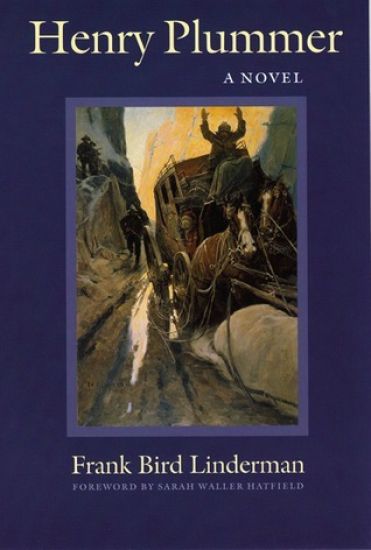
Henry Plummer

Henry Plummer

Frank B. Linderman; Sarah Waller Hatfield

Bison Books
2000
pokkari
Sheriff and outlaw Henry Plummer needed no introduction to the citizens of Montana Territory in the mid-nineteenth century. And well into the twentieth century, Frank Bird Linderman sought out the stories of the people who knew Plummer—and ultimately hanged him. In 1920 Linderman completed a novel about Plummer's life, but it was rejected by publisher after publisher. They felt that it showed too much fidelity to historical truth for a public increasingly enamored of western dime novels. Eighty years later, Linderman's lively interpretation of one of Montana's most enduring legends is being published for the first time. Plummer scarcely resembled the model sheriffs of movie and television westerns. Coolly calculating, he used his position as sheriff of Bannack during Montana Territory's first gold rush to organize a band of road agents who systematically robbed and murdered miners in remote areas. The highwaymen became so brazen that the miners felt compelled to band together and wage a vigorous lynch-law campaign to restore order. In 1864 these vigilantes caught up with Plummer and delivered their own brand of justice.

The Complete Letters of Henry James, 1880–1883

The Complete Letters of Henry James, 1880–1883

Henry James

University of Nebraska Press
2016
sidottu
Recipient of the “Approved Edition” seal from the Modern Language Association’s Committee on Scholarly Editions This volume of The Complete Letters of Henry James: 1880–1883 includes 122 letters, 67 of which are published for the first time, written between June 6, 1880, and October 20, 1881. The letters record Henry James’s confirmation of his identity as a London resident, follow his struggles with the complexities of his professional life, and illustrate his closer attention to family and friends. His friends, such as Henry and Clover Adams, and family members, such as his brother, William, view him as their resident Londoner. When his sister, Alice, and her companion, Katharine Loring, travel to Britain, James both supervises Alice’s state of health and also reports on its status to their parents. The letters show Henry James’s professional life as he shifts away from writing pot-boiling reviews and short fiction toward the greater novels that continue to be associated with him, especially The Portrait of a Lady. We also see James negotiating with publishers and arranging whenever possible simultaneous publication in Britain and the United States in order to maximize his writing income. This volume concludes with James’s much-anticipated return to his native America, buoyed by his completion of The Portrait of a Lady. The journey marked a significant milestone in the author’s life.
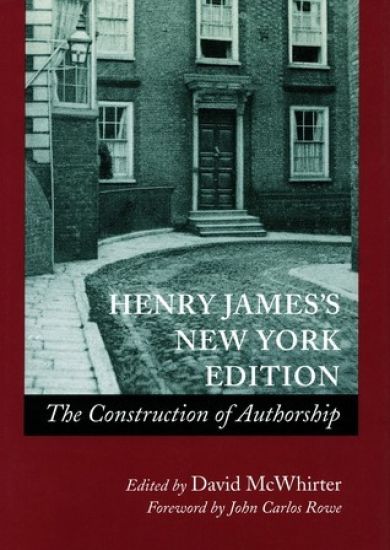
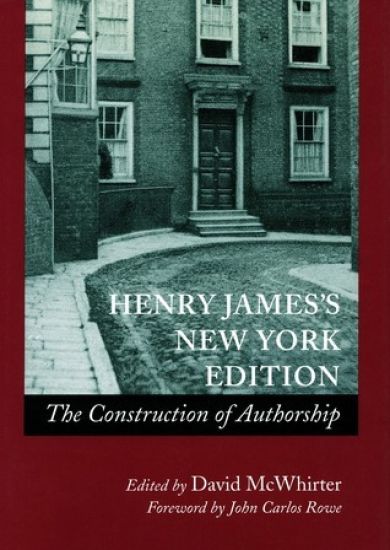
Henry James’s New York Edition

Henry James’s New York Edition

Stanford University Press
1995
sidottu
Toward the end of Henry James's career, Charles Scribner's Sons offered him the opportunity to publish his collected works in a single edition under the overall title The New York Edition of the Novels and Tales of Henry James (1907-1909). Rather than simply reprint his fictional oeuvre, James entered into a massive work of self-monumentalization: revising the texts extensively; writing prefaces that have become classic texts on prose aesthetics and the novelist's art; and omitting many works, among them some major novels. The thirty illustrations include all twenty-four frontispiece photographs made, under James's supervision, for the edition.
Henry James’s New York Edition

Henry James’s New York Edition

Rowe John Carlos

Stanford University Press
1998
pokkari
Toward the end of Henry James's career, Charles Scribner's Sons offered him the opportunity to publish his collected works in a single edition under the overall title The New York Edition of the Novels and Tales of Henry James (1907-1909). Rather than simply reprint his fictional oeuvre, James entered into a massive work of self-monumentalization: revising the texts extensively; writing prefaces that have become classic texts on prose aesthetics and the novelist's art; and omitting many works, among them some major novels. The thirty illustrations include all twenty-four frontispiece photographs made, under James's supervision, for the edition.
Henry James’s Thwarted Love

Henry James’s Thwarted Love

Stanford University Press
1999
sidottu
This provocative book argues that in his fiction Henry James was more canny about sexual identities, more focused on sexual pleasure, and more insistent on flouting heterosexual convention than has been acknowledged by his critics and biographers. Without leaping to the construction of a "gay" Henry James, whose writings aver a conscious sexual preference, the author demonstrates James's deep engagement with the construct of sexual "inversion," his familiarity with the tropes and traffic of the late-Victorian sexual underground, and his resistance to the cultural codes and institutions that disciplined social and private behavior. The volume aligns biographical and textual readings with specific topics in intellectual and cultural history, placing the novelist and his works within the key discursive frameworks that emerged during his lifetime: mental hygiene, sexology, psychiatry, and cultural anthropology. In reconsidering James's reputed celibacy and effeminacy, the author makes use of recent gender and queer theory, while remaining carefully attentive to the contemporary terms at James's disposal for understanding his own sexuality and gender identification. The author also elaborates the family dynamics that affected James's gender and professional identity conflicts, notably his turbulent relations with his brother William James, whose pathologizing of the "unhygienic" creative life conditioned his thinking about both sexuality and art. Extended discussions of four novels—Roderick Hudson, The Bostonians, The Princess Casamassima, and The Wings of the Dove—underscore James's resistance to the disciplinary mechanisms that regulate homoerotic desire under the aegis of mental hygiene and sexual "responsibility." Understanding, with queer theory, that sublimation can be a form of pleasure in a non-heterosexual community, the book views James's erotic economy of artistic production—even as it increasingly emphasized self-discipline—as a means of circumventing the suppression of sexual nonconformity.
Henry James’s Thwarted Love

Henry James’s Thwarted Love

Graham Wendy

Stanford University Press
1999
pokkari
This provocative book argues that in his fiction Henry James was more canny about sexual identities, more focused on sexual pleasure, and more insistent on flouting heterosexual convention than has been acknowledged by his critics and biographers. Without leaping to the construction of a "gay" Henry James, whose writings aver a conscious sexual preference, the author demonstrates James's deep engagement with the construct of sexual "inversion," his familiarity with the tropes and traffic of the late-Victorian sexual underground, and his resistance to the cultural codes and institutions that disciplined social and private behavior. The volume aligns biographical and textual readings with specific topics in intellectual and cultural history, placing the novelist and his works within the key discursive frameworks that emerged during his lifetime: mental hygiene, sexology, psychiatry, and cultural anthropology. In reconsidering James's reputed celibacy and effeminacy, the author makes use of recent gender and queer theory, while remaining carefully attentive to the contemporary terms at James's disposal for understanding his own sexuality and gender identification. The author also elaborates the family dynamics that affected James's gender and professional identity conflicts, notably his turbulent relations with his brother William James, whose pathologizing of the "unhygienic" creative life conditioned his thinking about both sexuality and art. Extended discussions of four novels—Roderick Hudson, The Bostonians, The Princess Casamassima, and The Wings of the Dove—underscore James's resistance to the disciplinary mechanisms that regulate homoerotic desire under the aegis of mental hygiene and sexual "responsibility." Understanding, with queer theory, that sublimation can be a form of pleasure in a non-heterosexual community, the book views James's erotic economy of artistic production—even as it increasingly emphasized self-discipline—as a means of circumventing the suppression of sexual nonconformity.
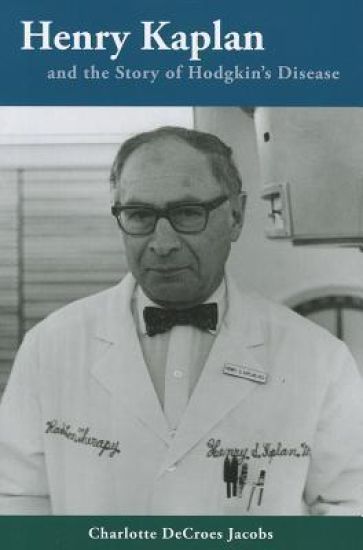
Henry Kaplan and the Story of Hodgkin's Disease

Henry Kaplan and the Story of Hodgkin's Disease

Charlotte Jacobs

Stanford University Press
2010
sidottu
In the 1950s, ninety-five percent of patients with Hodgkin's disease, a cancer of lymph tissue which afflicts young adults, died. Today most are cured, due mainly to the efforts of Dr. Henry Kaplan. Henry Kaplan and the Story of Hodgkin's Disease explores the life of this multifaceted, internationally known radiation oncologist, called a "saint" by some, a "malignant son of a bitch" by others. Kaplan's passion to cure cancer dominated his life and helped him weather the controversy that marked each of his innovations, but it extracted a high price, leaving casualties along the way. Most never knew of his family struggles, his ill-fated love affair with Stanford University, or the humanitarian efforts that imperiled him. Today, Kaplan ranks as one of the foremost physician-scientists in the history of cancer medicine. In this book Charlotte Jacobs gives us the first account of a remarkable man who changed the face of cancer therapy and the history of a once fatal, now curable, cancer. She presents a dual drama —the biography of this renowned man who called cancer his "Moby Dick" and the history of Hodgkin's disease, the malignancy he set out to annihilate. The book recounts the history of Hodgkin's disease, first described in 1832: the key figures, the serendipitous discoveries of radiation and chemotherapy, the improving cure rates, the unanticipated toxicities. The lives of individual patients, bold enough to undergo experimental therapies, lend poignancy to the successes and failures. Please visit the author's website at www.charlottejacobs.net.
Henry Ford's War on Jews and the Legal Battle Against Hate Speech

Henry Ford's War on Jews and the Legal Battle Against Hate Speech

Victoria Saker Woeste

Stanford University Press
2012
sidottu
Henry Ford is remembered in American lore as the ultimate entrepreneur—the man who invented assembly-line manufacturing and made automobiles affordable. Largely forgotten is his side career as a publisher of antisemitic propaganda. This is the story of Ford's ownership of the Dearborn Independent, his involvement in the defamatory articles it ran, and the two Jewish lawyers, Aaron Sapiro and Louis Marshall, who each tried to stop Ford's war. In 1927, the case of Sapiro v. Ford transfixed the nation. In order to end the embarrassing litigation, Ford apologized for the one thing he would never have lost on in court: the offense of hate speech. Using never-before-discovered evidence from archives and private family collections, this study reveals the depth of Ford's involvement in every aspect of this case and explains why Jewish civil rights lawyers and religious leaders were deeply divided over how to handle Ford.
Henry Kaplan and the Story of Hodgkin's Disease

Henry Kaplan and the Story of Hodgkin's Disease

Charlotte Jacobs

Stanford University Press
2012
pokkari
In the 1950s, ninety-five percent of patients with Hodgkin's disease, a cancer of lymph tissue which afflicts young adults, died. Today most are cured, due mainly to the efforts of Dr. Henry Kaplan. Henry Kaplan and the Story of Hodgkin's Disease explores the life of this multifaceted, internationally known radiation oncologist, called a "saint" by some, a "malignant son of a bitch" by others. Kaplan's passion to cure cancer dominated his life and helped him weather the controversy that marked each of his innovations, but it extracted a high price, leaving casualties along the way. Most never knew of his family struggles, his ill-fated love affair with Stanford University, or the humanitarian efforts that imperiled him. Today, Kaplan ranks as one of the foremost physician-scientists in the history of cancer medicine. In this book Charlotte Jacobs gives us the first account of a remarkable man who changed the face of cancer therapy and the history of a once fatal, now curable, cancer. She presents a dual drama —the biography of this renowned man who called cancer his "Moby Dick" and the history of Hodgkin's disease, the malignancy he set out to annihilate. The book recounts the history of Hodgkin's disease, first described in 1832: the key figures, the serendipitous discoveries of radiation and chemotherapy, the improving cure rates, the unanticipated toxicities. The lives of individual patients, bold enough to undergo experimental therapies, lend poignancy to the successes and failures. Please visit the author's website at www.charlottejacobs.net.
Henry Ford's War on Jews and the Legal Battle Against Hate Speech

Henry Ford's War on Jews and the Legal Battle Against Hate Speech

Victoria Saker Woeste

Stanford University Press
2013
pokkari
Henry Ford is remembered in American lore as the ultimate entrepreneur—the man who invented assembly-line manufacturing and made automobiles affordable. Largely forgotten is his side career as a publisher of antisemitic propaganda. This is the story of Ford's ownership of the Dearborn Independent, his involvement in the defamatory articles it ran, and the two Jewish lawyers, Aaron Sapiro and Louis Marshall, who each tried to stop Ford's war. In 1927, the case of Sapiro v. Ford transfixed the nation. In order to end the embarrassing litigation, Ford apologized for the one thing he would never have lost on in court: the offense of hate speech. Using never-before-discovered evidence from archives and private family collections, this study reveals the depth of Ford's involvement in every aspect of this case and explains why Jewish civil rights lawyers and religious leaders were deeply divided over how to handle Ford.
Henry a. Wallace's Irrigation Frontier

Henry a. Wallace's Irrigation Frontier

Richard Lowitt; Judith Fabry

University of Oklahoma Press
2007
nidottu
When Franklin D. Roosevelt's agriculture secretary and vice-president, Henry A. Wallace, had completed his junior year at Iowa State College in 1909, his family sent him on a western tour ""in search of the Corn Belt farmer."" Young Henry was to report to the family journal, Wallace's Farmer, how former Corn Belt farmers were prospering in the districts newly irrigated under public or private auspices, such as Arizona's Salt River, Idaho's Boise-Payette and Twin Falls, and farms on the Arkansas River near Garden City, Kansas.Wallace's articles, collected and reprinted here for the first time, are lively descriptions of up-and-coming western locales such as Amarillo, Texas; Phoenix, Arizona; the orange groves of southern California; the San Joaquin and Sacramento valleys; and the Greeley District of Colorado. Along the way, the young reporter and agriculturist critiqued dry farming in Cheyenne, Wyoming, and wrestled calves on a Matador Land Company ranch in the Texas panhandle.Henry Wallace made a specialty of down-home conversation with farmers and their wives and of cross-examining the real-estate agents who profited from the government's commitment to sell water rights to the new property owners. He wrote what today we call New History, concentrating on the impact of irrigation on individuals more than technology, law, or institutions.Modern-day readers will prize Wallace's clear, expert analysis of the different environments that he visited and his farmer-conservationist ethic. Social historians will be interested as he explains how the closer proximity of irrigated farms and greater abundance of neighbors would produce prosperous communities with schools, roads, and social institutions better than most that then prevailed in America's rural regions. They will be fascinated to learn how the cooperative aspects of irrigation farming tempered the independence of the immigrants from the Corn Belt.
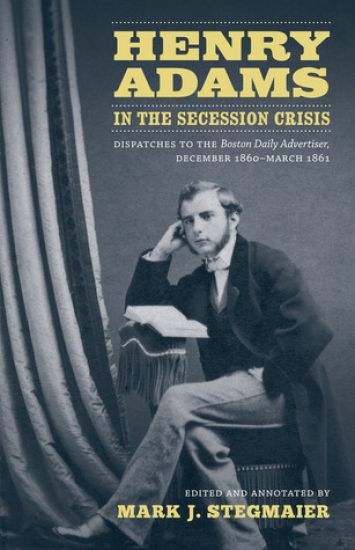
Henry Adams in the Secession Crisis

Henry Adams in the Secession Crisis

Louisiana State University Press
2012
sidottu
During the Secession Winter session of Congress, twenty-two-year-old Henry Adams worked as private secretary to his father, Representative Charles Francis Adams. Henry wrote four accounts of these crucial months in Washington -- an essay, letters to his brother, a segment in his famous autobiography, and twenty-one unsigned letters that Adams composed as a novice correspondent for the Boston Daily Advertiser. Henry Adams in the Secession Crisis presents the Advertiser letters for the first time since their original publication between 1860 and 1861.During the months prior to the Civil War, Adams provided unusual insights into the development of the secession crisis and the attempts of Congress to resolve it peacefully. Since his father and Senator William H. Seward of New York led the efforts of more moderate Republicans to reach a compromise that would at least hold the border slave states in the Union, Adams's letters emphasize and illuminate their efforts and those of their Unionist allies in the upper South. While praising their endeavors -- and particularly the statesmanship of Seward -- Adams attacked southern secessionists and, in several letters, critically analyzed and condemned the famous Crittenden Compromise as a measure impossible for any Republican to support. Fully annotated by historian Mark J. Stegmaier, the Advertiser letters illuminate the politics of the secession crisis while showcasing the youthful work of a man who would become one of the most famous American writers of the late nineteenth century.
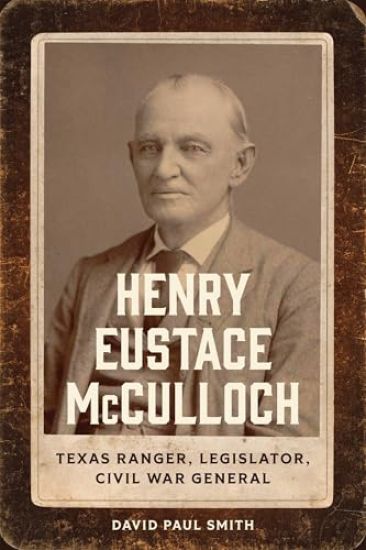
Henry Eustace McCulloch

Henry Eustace McCulloch

David Paul Smith

LOUISIANA STATE UNIVERSITY PRESS
2026
sidottu
Henry Eustace McCulloch provides the first comprehensive account of a pivotal nineteenth-century military leader and politician from Texas. In his military career, Henry McCulloch served with his brother Ben in one of the first Texas Ranger companies after the Texas Revolution of 1836, defended settlers during the Great Comanche Raid of 1840, and helped to defeat Mexican forces that reoccupied San Antonio in 1842. He also served as a captain in the United States Army during the Mexican-American War. In the 1850s, voters in Texas elected McCulloch to the state legislature, where he advocated for creating additional Ranger units to defend settlers on the frontier. He was an enslaver who supported secession and commanded a regiment of Rangers that became the first unit sworn in by the Confederacy. McCullough later served as the temporary commander of the Department of Texas, directed regiments defending territory around San Antonio, briefly led the Texas Division, and participated in the attack at Milliken's Bend, Louisiana. After the Civil War, McCulloch remained active in politics, leading a group supporting Richard Coke during the Coke-Davis imbroglio in 1873 and running as the Populist Party's candidate for governor in 1892. David Paul Smith's biography reveals McCulloch's involvement in events that shaped nearly all of nineteenth-century Texas history, restoring his legacy as one of the state's most important military leaders and politicians.
Henry A. Wallace

Henry A. Wallace

The University of North Carolina Press
2011
nidottu
Henry A. Wallace (1888-1965) remains one of the most puzzling figures of twentieth-century American politics. Serving as secretary of agriculture during the Great Depression, as vice president from 1941 to 1945, and advocating accommodation with the Soviet Union as the Progressive Party's candidate for president in 1948, Wallace had embarked on a spiritual odyssey that shaped his quest for world peace. In this interpretive biography, Graham White and John Maze explore Wallace's political career, his enigmatic personality, and the origins and development of his social, political, and religious thought, including his mystical beliefs. According to White and Maze, an eclectic spiritualism and its attendant social attitudes were central to Wallace's political goals and the course of his public life. Wallace hoped that through free trade, shared technological development, and international economic cooperation, inequity and greed would be made obsolete. Drawing extensively on Wallace's personal papers, his political diary, and his 5,000-page memoir, this study sheds new light not only on Wallace himself, but also on the Roosevelt administration in which he served.
Henry James, Gertrude Stein, and the Biographical Act

Henry James, Gertrude Stein, and the Biographical Act

Caramello Charles

The University of North Carolina Press
2012
nidottu
Focusing on biographical portraiture, Charles Caramello argues that Henry James and Gertrude Stein performed biographical acts in two senses of the phrase: they wrote biography, but as a cover for autobiography. Constructing literary genealogies while creating original literary forms, they used their biographical portraits of precursors and contemporaries to portray themselves as exemplary modern artists. Caramello advances this argument through close readings of four works that explore themes of artistry and influence and that experiment with forms of biographical portraiture: James's early biography of Nathaniel Hawthorne and his much later group biography, William Wetmore Story and His Friends, and Stein's celebrated Autobiography of Alice B. Toklas and her largely forgotten Four in America, which comprises biographies of Ulysses S. Grant, Wilbur Wright, Henry James, and George Washington. The first comparative study of these two great expatriate writers, Henry James, Gertrude Stein, and the Biographical Act addresses questions of art, influence, and literary culture by analyzing important biographical portraits that themselves address the same questions.A UNC Press Enduring Edition -- UNC Press Enduring Editions use the latest in digital technology to make available again books from our distinguished backlist that were previously out of print. These editions are published unaltered from the original, and are presented in affordable paperback formats, bringing readers both historical and cultural value.
Henry Harrisse on Collegiate Education

Henry Harrisse on Collegiate Education

The University of North Carolina Press
2011
nidottu
Henry Harrisse was on the faculty of the University of North Carolina at Chapel Hill in the 1850s. A man of keen intelligence, thirst for knowledge, and thorough-going scholarship, he was author of ninety-one separate titles. This is another of them, hitherto unpublished, which was found in the Manuscripts Division of the New York Public Library. It is a revealing essay on the organization, regulation, and management of a literary institution.A UNC Press Enduring Edition -- UNC Press Enduring Editions use the latest in digital technology to make available again books from our distinguished backlist that were previously out of print. These editions are published unaltered from the original, and are presented in affordable paperback formats, bringing readers both historical and cultural value.
Henry James and Pragmatistic Thought

Henry James and Pragmatistic Thought

Hocks Richard A.

The University of North Carolina Press
2011
nidottu
This brilliant new study is the first comprehensive and penetrating exploration of the complex and important aesthetic and intellectual relationship between the Jameses. Hocks relates organically what William thought to how Henry thought, and his convincing argument becomes a profound examination of Henry's mind and the way in which his work dramatized a particular philosophical attitude through its unique and felicitous style.A UNC Press Enduring Edition -- UNC Press Enduring Editions use the latest in digital technology to make available again books from our distinguished backlist that were previously out of print. These editions are published unaltered from the original, and are presented in affordable paperback formats, bringing readers both historical and cultural value.