Kirjojen hintavertailu. Mukana 11 699 587 kirjaa ja 12 kauppaa.

Kirjahaku

Etsi kirjoja tekijän nimen, kirjan nimen tai ISBN:n perusteella.

1000 tulosta hakusanalla Henry Green

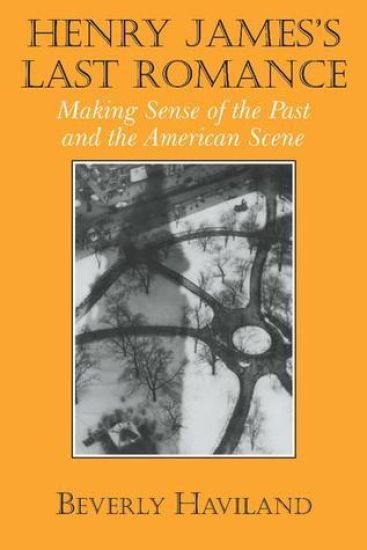
Henry James' Last Romance

Henry James' Last Romance

Beverly Haviland

Cambridge University Press
1997
sidottu
In this major new study of Henry James’s classic text of cultural criticism, The American Scene, Beverly Haviland shows how James confronted the vexing problem of making sense of the past so that he could make culture work. In this record of James’s 1904–5 return to America and in his unfinished novels, The Sense of the Past and The Ivory Tower, he interpreted the social conflicts that seemed to be paralysing relations between men and women, between black and white Americans, between ‘natives’ and ‘aliens’, between defenders of taste and censors of waste. Although James has been represented as conservative by liberal critics, it is just such simplifying oppositions that his method of interpretation works to transform. Haviland’s own metonymical method follows James’s interpretative practice by bringing historical and theoretical readings of these texts into conversation with each other.
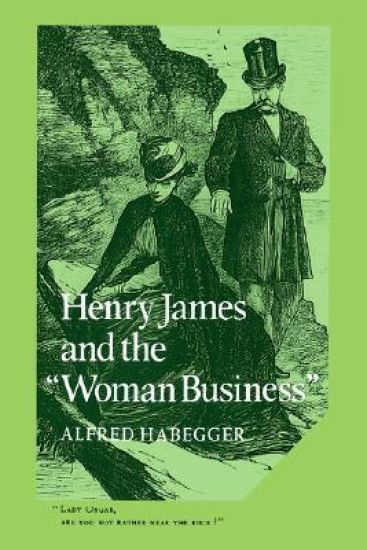
Henry James and the 'Woman Business'

Henry James and the 'Woman Business'

Alfred Habegger

Cambridge University Press
2004
pokkari
This is a historical critique of Henry James in relation to nineteenth-century feminism and women's fiction. Habegger has brought to light extensive new documentation on James's tangled connections with what was thought and written about women in his time. The emphasis is equally on his life and on his fictions. This is the first book to investigate his father's bizarre lifelong struggle with free love and feminism, a struggle that played a major role in shaping James. The book also shows how seriously he distorted the truth about the cousin, Minnie Temple, whose self-assertive image inspired him; and how indebted he was to certain American women writers whom he attacked in reviews but whose plots and heroines he appropriated in his own fiction.
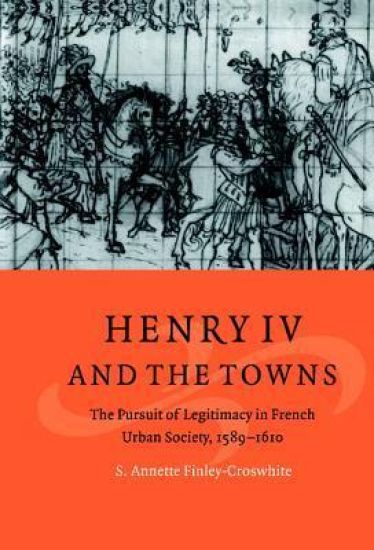
Henry IV and the Towns

Henry IV and the Towns

S. Annette Finley-Croswhite

Cambridge University Press
1999
sidottu
This book is the first serious study of Henry IV’s relationship with the towns of France, and offers an in-depth analysis of a crucial aspect of his craft of kingship. Set in the context of the later Wars of Religion, it examines Henry’s achievement in reforging an alliance with the towns by comparing his relationship with Catholic League, royal and Protestant towns. Annette Finley-Croswhite focuses on the symbiosis of three key issues: legitimacy, clientage, and absolutism. Henry’s pursuit of political legitimacy and his success at winning the support of his urban subjects is traced over the course of his reign. Clientage is examined to show how Henry used patron-client relations to win over the towns and promote acceptance of his rule. By restoring legitimacy to the monarchy, Henry not only ended the religious wars but also strengthened the authority of the crown and laid the foundations of absolutism.
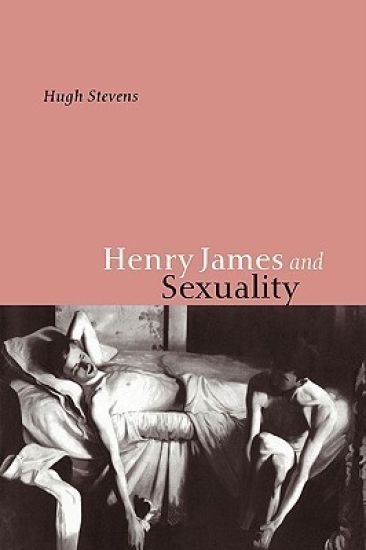
Henry James and Sexuality

Henry James and Sexuality

Stevens Hugh

Cambridge University Press
1998
sidottu
In Henry James and Sexuality, Hugh Stevens argues for a new interpretation of James’s fiction. Stevens argues that James’s writing contains daring and radical representations of transgressive desires and marginalized sexual identities. He demonstrates the importance of incestuous desire, masochistic fantasy, and same-sex passions in a body of fiction which ostensibly conforms to, while ironically mocking, the contemporary moral and publishing codes James faced. James critiques the very notion of sexual identity, and depicts the radical play of desires which exceed and disrupt any stable construction of identity. In a number of his major novels and tales, Stevens argues, James anticipates the main features of modern ‘gay’ or ‘queer’ fiction through plots and narrative strategies, which opposes heterosexual marriage and homoerotic friendship. This original and exciting work will transform our understanding of this most enigmatic of writers.
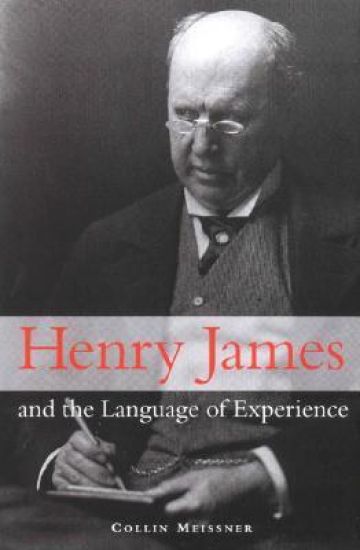
Henry James and the Language of Experience

Henry James and the Language of Experience

Collin Meissner

Cambridge University Press
1999
sidottu
In Henry James and the Language of Experience, Collin Meissner examines the political dimension to the representation of experience as it unfolds throughout James's work. Meissner argues that, for James, experience was a private and public event, a dialectical process that registered and expressed his consciousness of the external world. Adapting recent work in hermeneutics and phenomenology, Meissner shows how James's understanding of the process of consciousness is not simply an aspect of literary form; it is in fact inherently political, as it requires an active engagement with the full complexity of social reality. For James, the civic value of art resided in this interactive process, one in which the reader becomes aware of the aesthetic experience as immediate and engaged. This wide-ranging study combines literary theory and close readings of James's work to argue for a redefinition of the aesthetic as it operates in James's work.
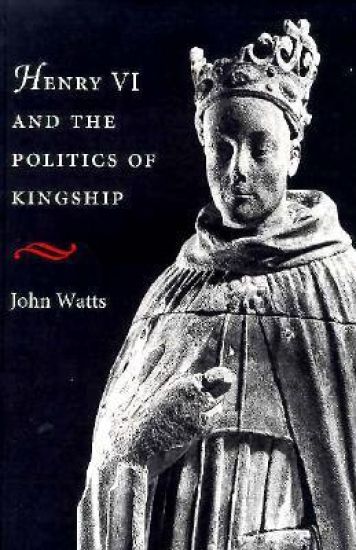
Henry VI and the Politics of Kingship

Henry VI and the Politics of Kingship

John Watts

Cambridge University Press
1999
pokkari
Henry VI (1422–61) was one of the most spectacularly inadequate kings of England, and his reign dissolved into the conflict known as the Wars of the Roses. Yet he held on to his throne for thirty-nine years and, for almost thirty of them, without much difficulty. What was the nature of Henry’s inadequacy, and why did it have such ambivalent and complicated results? Since the 1970s most histories of fifteenth-century England have focused on the individual interests and private connections of politicians as a means of making sense of politics. By contrast, this work argues that we can understand what happened in Henry VI’s reign only if we look at common interests and public connections as well. Ultimately it is the problem of establishing royal authority which emerges as paramount, with the supposedly factious and ‘overmighty’ nobility appearing as doomed but devoted servants of the state.
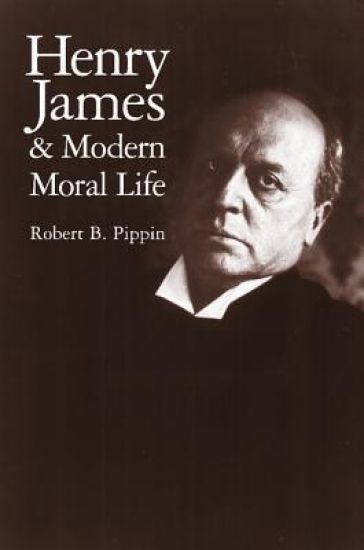
Henry James and Modern Moral Life

Henry James and Modern Moral Life

Robert B. Pippin

Cambridge University Press
2001
pokkari
This important new book argues that Henry James reveals in his fiction a sophisticated theory of moral understanding and moral motivation. The claim is that in his novels and short stories James is engaged in a distinctive kind of original thinking and reflecting on modern moral life. Sensitive to the precarious and extremely confusing situation of moral understanding in modern societies, James avoids skepticism and presents powerfully the full nature of moral claims and moral dependence. The book is written by one of the pre-eminent interpreters of the modern European philosophical tradition and will interest both philosophers and literary critics. However, the style is completely non-technical with no reliance on terms from contemporary literary or philosophical theory and will therefore be accessible to students and general readers of James.
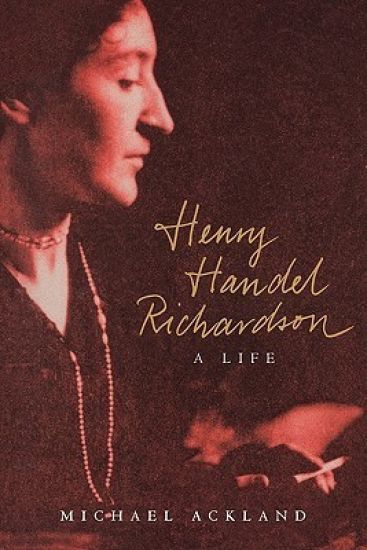
Henry Handel Richardson

Henry Handel Richardson

Michael Ackland

Cambridge University Press
2005
pokkari
Henry Handel Richardson is celebrated for her classic Australian novels The Getting of Wisdom and The Fortunes of Richard Mahony, yet her own life-story is still to be fully told. This enthralling 2004 book is a complete biography of this enigmatic Australian literary icon. Drawing on previously unavailable records, the book sheds light on Richardson's unconventional life. Beginning with her traumatic childhood, then tracing in detail the largely unknown story of the eleven formative years Richardson spent on the Continent, the book goes on to explore the personal and social forces that moved her during her long years as a London intellectual, concluding with her last ordeal as a frail spectator in the front-line of the Battle of Britain.
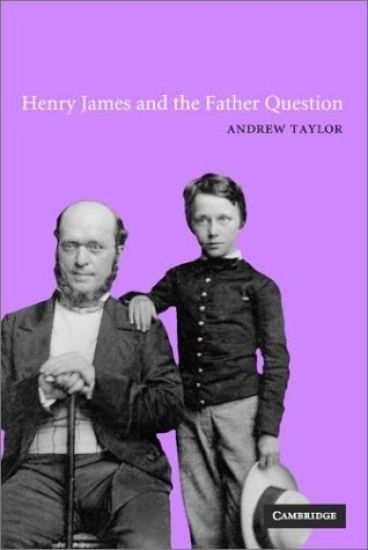
Henry James and the Father Question

Henry James and the Father Question

Andrew Taylor

Cambridge University Press
2002
sidottu
The intellectual relationship between Henry James and his father, who was a philosopher and theologian, proved to be an influential resource for the novelist. Andrew Taylor explores how James's writing responds to James Senior's epistemological, thematic and narrative concerns, and relocates these concerns in a more secularised and cosmopolitan cultural milieu. Taylor examines the nature of both men's engagement with autobiographical strategies, issues of gender reform, and the language of religion. He argues for a reading of Henry James that is informed by an awareness of paternal inheritance. Taylor's study reveals the complex and at times antagonistic dialogue between the elder James and his peers, particularly Emerson and Whitman, in the vanguard of mid nineteenth-century American Romanticism. Through close readings of a wide range of novels and texts, he demonstrates how this dialogue anticipates James's own theories of fiction and selfhood.
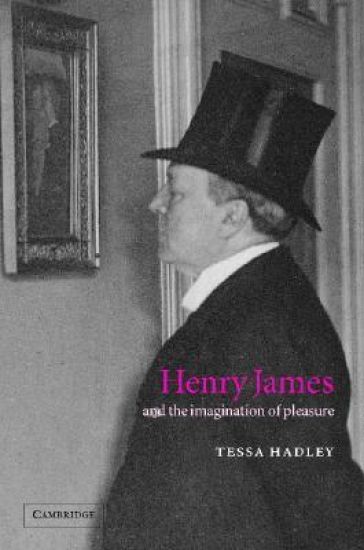
Henry James and the Imagination of Pleasure

Henry James and the Imagination of Pleasure

Tessa Hadley

Cambridge University Press
2002
sidottu
Tessa Hadley examines how Henry James progressively disentangled himself from the moralizing frame through which English-language novels in the nineteenth century had imagined sexual passion. Hadley argues that his relationship with the European novel tradition was crucial, helping to leave behind a way of seeing in which only 'bad' women could be sexual. She reads James's transitional fictions of the 1890s as explorations of how disabling and distorting ideals of women's goodness and purity were learned and perpetuated within English and American cultural processes. These explorations, Hadley argues, liberate James to write the great heterosexual love affairs of the late novels, with their emphasis on the power of pleasure and play: themes which are central to James's ambitious enterprise to represent the privileges and the pains of turn-of-the-century leisure class society.
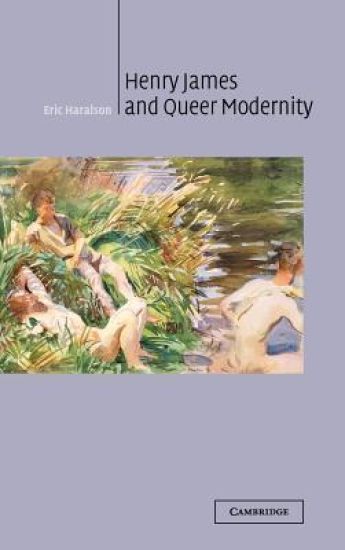
Henry James and Queer Modernity

Henry James and Queer Modernity

Eric Haralson

Cambridge University Press
2003
sidottu
In Henry James and Queer Modernity, first published in 2003, Eric Haralson examines far-reaching changes in gender politics and the emergence of modern male homosexuality as depicted in the writings of Henry James and three authors who were greatly influenced by him: Willa Cather, Gertrude Stein and Ernest Hemingway. Haralson places emphasis on American masculinity as portrayed in fiction between 1875 and 1935, but the book also treats events in England, such as the Oscar Wilde trials, that had a major effect on American literature. He traces James's engagement with sexual politics from his first novels of the 1870s to his 'major phase' at the turn of the century. The second section of this study measures James's extraordinary impact on Cather's representation of 'queer' characters, Stein's theories of writing and authorship as a mode of resistance to modern sexual regulation, and Hemingway's very self-constitution as a manly American author.
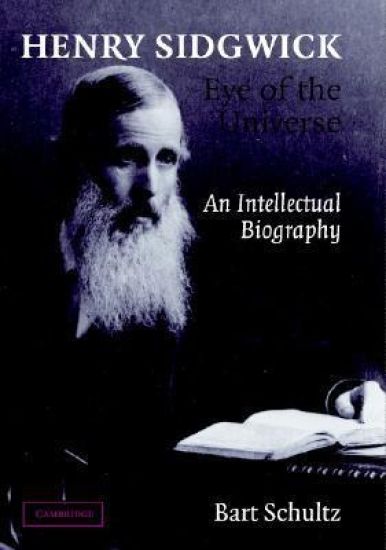
Henry Sidgwick - Eye of the Universe

Henry Sidgwick - Eye of the Universe

Bart Schultz

Cambridge University Press
2004
sidottu
Henry Sidgwick was one of the great intellectual figures of nineteenth-century Britain. He was first and foremost a great moral philosopher, whose masterwork The Methods of Ethics is still widely studied today. He also wrote on economics, politics, education and literature. He was deeply involved in the founding of the first college for women at the University of Cambridge. He was also much concerned with the sexual politics of his close friend John Addington Symonds, a pioneer of gay studies. Through his famous student, G. E. Moore, a direct line can be traced from Sidgwick and his circle to the Bloomsbury group. Bart Schultz has written a magisterial overview of this great Victorian sage. This biography will be eagerly sought out by readers interested in philosophy, Victorian literary studies, the history of ideas, the history of psychology and gender and gay studies.
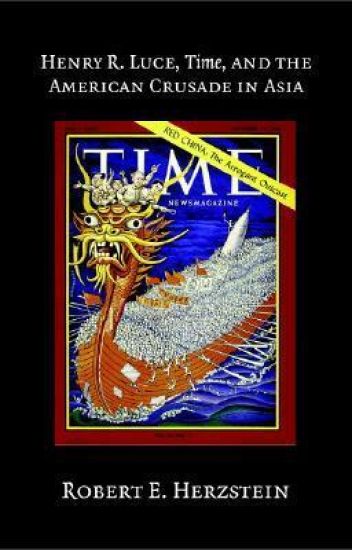
Henry R. Luce, Time, and the American Crusade in Asia

Henry R. Luce, Time, and the American Crusade in Asia

Robert E. Herzstein

Cambridge University Press
2005
sidottu
Henry Robinson Luce (1898–1967) founded Time, Life, Fortune, and Sports Illustrated. Born in China to missionary parents, Luce was a kind of lay preacher, anxious to mold the American mind and advance his ideological program: intervention, capitalism, democracy (when appropriate) and Christian activism. The most celebrated and influential editor of his day, Luce was also obsessed with the American mission in the world, and with China and East Asia, the place of his birth. Luce tried to 'sell' this mission to a sometimes reluctant public. A passionate anti-Communist interventionist, he also convinced Americans that the US had perversely 'lost' China to the Communists. A fervent advocate of the Vietnam intervention, Luce, author of the American Century edited incoming cables so that magazines might conform to his ideas.
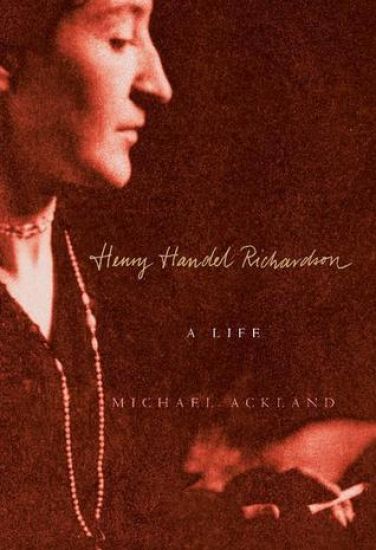
Henry Handel Richardson

Henry Handel Richardson

Michael Ackland

Cambridge University Press
2004
sidottu
Henry Handel Richardson is celebrated for her classic Australian novels The Getting of Wisdom and The Fortunes of Richard Mahony, yet her own life-story is still to be fully told. This enthralling 2004 book is a complete biography of this enigmatic Australian literary icon. Drawing on previously unavailable records, the book sheds light on Richardson's unconventional life. Beginning with her traumatic childhood, then tracing in detail the largely unknown story of the eleven formative years Richardson spent on the Continent, the book goes on to explore the personal and social forces that moved her during her long years as a London intellectual, concluding with her last ordeal as a frail spectator in the front-line of the Battle of Britain.
Henry James, Women and Realism

Henry James, Women and Realism

Victoria Coulson

Cambridge University Press
2007
sidottu
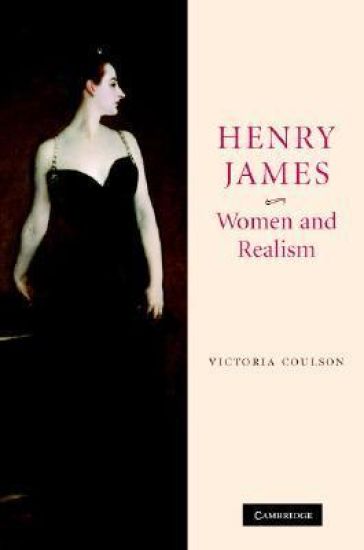
Women were hugely important to Henry James, both in his vividly drawn female characters and in his relationships with female relatives and friends. Combining biography with literary criticism and theoretical inquiry, Victoria Coulson explores James's relationships with three of the most important women in his life: his friends, the novelists Constance Fenimore Woolson and Edith Wharton, and his sister Alice James, who composed a significant diary in the last years of her life. These writers shared not only their attitudes to gender and sexuality, but also their affinity for a certain form of literary representation, which Coulson defines as 'ambivalent realism'. The book draws on a diverse range of sources from fiction, autobiography, theatre reviews, travel writing, private journals, and correspondence. Coulson argues, compellingly, that the personal lives and literary works of these four writers manifest a widespread cultural ambivalence about gender identity at the end of the nineteenth century.
Henry James and the Visual

Henry James and the Visual

Kendall Johnson

Cambridge University Press
2007
sidottu
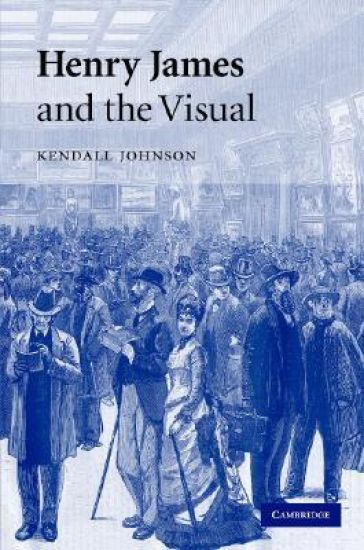
In the decades after the Civil War, how did Americans see the world and their place in it? In this text, Kendall Johnson argues that Henry James appealed to his readers' sense of vision to dramatise the ambiguity of American citizenship in scenes of tense encounter with Europeans. By reviving the eighteenth-century debates over beauty, sublimity, and the picturesque, James weaves into his narratives the national politics of emancipation, immigration, and Indian Removal. For James, visual experience is crucial to the American communal identity, a position that challenged prominent anthropologists as they defined concepts of race and culture in ways that continue to shape how we see the world today. To demonstrate the cultural stereotypes that James reworked, the book includes twenty illustrations from periodicals of the nineteenth century. This study reaches startling conclusions not just about James, but about the way America defined itself through the arts in the nineteenth century.
Henry More

Henry More

A. Rupert Hall

Cambridge University Press
2002
pokkari
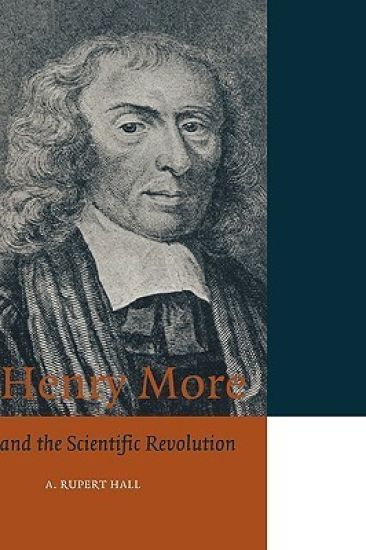
Henry More (1614–87) was the greatest English metaphysical theologian and the most perplexing; he was also perhaps the most distinguished member of the group of divines known as the Cambridge Platonists. An admirer of Galileo, Descartes, and Boyle, he rejected their detailed applications of mechanical philosophy to the explanation of natural phenomena. He was an experimenter, yet also a cabbalist and one of the few writers whom Newton acknowledged as having influenced his ideas. This thorough and accessible biography is the first book-length treatment of this remarkable character. More’s important contributions to science are illuminated, particularly his work on space and time which influenced Newton, and the book gives fascinating insights into his spiritual philosophy and his preoccupation with witchcraft. The depth of Professor Hall’s scholarship makes the book an exceptional account of the turbulent world of the Scientific Revolution.
Henry Lawson

Henry Lawson

Manning Clark

MELBOURNE UNIVERSITY PRESS
1991
pokkari
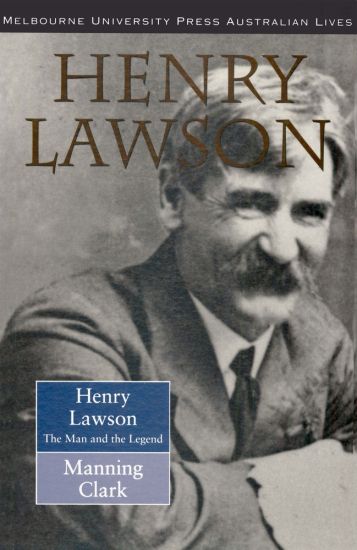
Manning Clark intimately reconstructs Lawson's agonising, and ultimately unsuccessful search for fulfilment of genius and happiness. Henry Lawson was a deeply divided man. He was a soul burdened with an insatiable craving for love, a combative spirit with impossible hopes that mankind might sort itself our. Yet, he openly loathed huge sections of humanity and sang the blessings of war. Manning Clark intimately reconstructs Lawson's agonising, and ultimately unsuccessful search for fulfilment of genius and happiness. The great irony is that Lawson's poetry inspired the feeling that life was worth living.
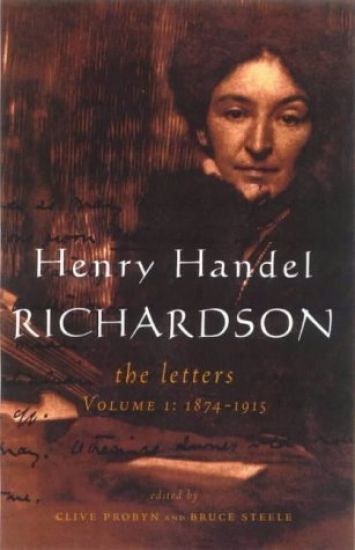
Henry Handel Richardson Vol 1

Henry Handel Richardson Vol 1

Probyn Clive; Steele Bruce

MELBOURNE UNIVERSITY PRESS
1996
pokkari
This three volume set marks the first time any Australian literary writer has had his/her correspondence published in its entirety. The letters of Henry Handel Richardson were opened in March 1996 to unrestricted access, but none of the letters may be published until this edition of the complete correspondence has been released.
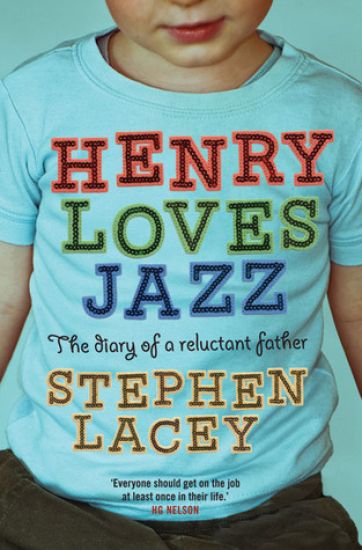
Henry Loves Jazz

Henry Loves Jazz

Stephen Lacey

Melbourne University Press
2009
pokkari
Henry Loves Jazz is a humorous account of what happens in a family when a first-born child comes home. Told from a father's perspective, this is a fly-on-the-wall look at sleepless nights, exploding eco-nappies, celebrity chef cookbooks, black jellybeans and giant Mexican tarantulas. ""Henry Loves Jazz"" is the author's journey from a childless existence to the dagdom of parenthood. Along the way, he questions everything he knows about his own upbringing and his relationship with his parents and his long-suffering wife. Throughout the journey, Lacey discovers a flair for cooking and the joys of supermarket shopping. He also discovers a love so deep he can't see the bottom.