Kirjojen hintavertailu. Mukana 11 699 587 kirjaa ja 12 kauppaa.

Kirjahaku

Etsi kirjoja tekijän nimen, kirjan nimen tai ISBN:n perusteella.

1000 tulosta hakusanalla Henry Kitchell Webster

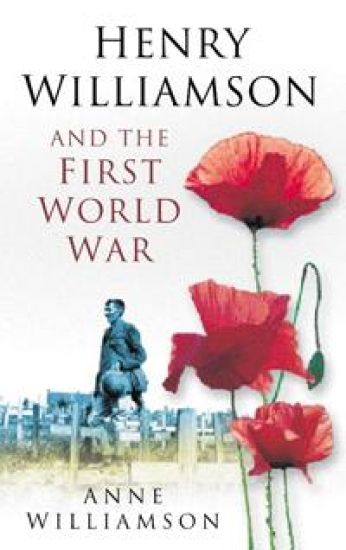
Henry Williamson and the First World War

Henry Williamson and the First World War

Anne Williamson

The History Press Ltd
2004
nidottu
Henry Williamson is known for his book 'Tarka the Otter', yet his time in World War I trenches affected him profoundly. This book draws on his letters, diaries, photographs and notebooks written at the time to give us a detailed account of life in the trenches of the First World War. It also offers us a rare insight into the making of a novelist.
Henry Ford: pocket GIANTS

Henry Ford: pocket GIANTS

David Long

The History Press Ltd
2014
nidottu
Why is Henry Ford a giant? Because he put the world on wheels. Henry Ford did not invent the motor car, nor for all the claims did he invent the assembly line or mass production. But more than anyone before or since he is remembered as the man who almost singlehandedly took an expensive contraption of doubtful utility and recast it as a machine which in a real and profound sense changed the world forever. In an industry with many giants –André Citroen, Louis Renault and Giovanni Agnelli of Fiat – Henry Ford stands tallest as the greatest ever motor mogul. A Michigan farmer’s son who became a dollar billionaire, a ruthlessly single-minded autocrat who became a folk hero, a pacifist who went on to inspire Adolf Hitler - he was a boss who paid his workers twice as much as his competitors yet waged an unrelenting war on unions and badly abused the power he had worked so hard to attain. David Long has been an author and journalist for thirty years, and has regularly appeared in The Times, Sunday Times and many magazines, here and abroad. He is a celebrated author of over twenty titles and has ghostwritten many more.
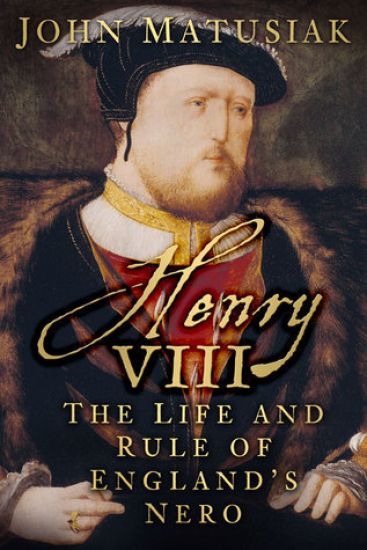
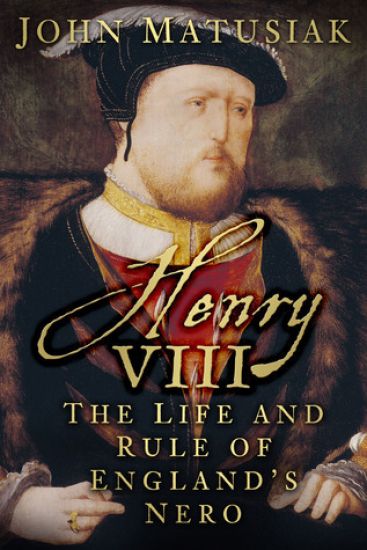
Henry VIII

Henry VIII

John Matusiak

The History Press Ltd
2014
nidottu
This compelling account of Henry VIII is by no means yet another history of the ‘old monster’ and his reign. The ‘monster’ displayed here is, at the very least, a newer type, more beset by anxieties and insecurities, and more tightly surrounded by those who equated loyalty with fear, self-interest and blind obedience. This ground-breaking book also demonstrates that Henry VIII’s priorities were always primarily martial rather than marital, and accepts neither the necessity of his all-consuming quest for a male heir nor his need ultimately to sever ties with Rome. As the story unfolds, Henry’s predicaments prove largely of his own making, the paths he chooses neither the only nor the best available. For Henry VIII was not only a bad man, but also a bad ruler who failed to achieve his aims and blighted the reigns of his two immediate successors. Five hundred years after he ascended the throne, the reputation of England’s best known king is being rehabilitated and subtly sanitized. Yet Tudor historian John Matusiak paints a colourful and absorbingly intimate portrait of a man wholly unfit for power.
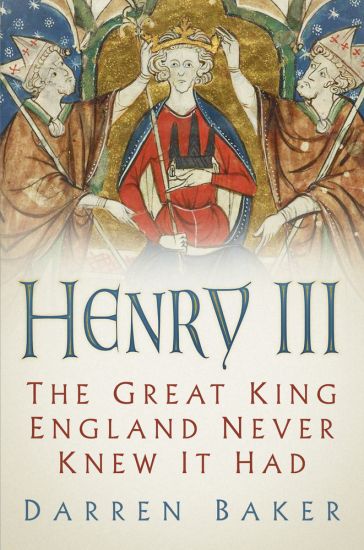
Henry III

Henry III

Darren Baker

The History Press Ltd
2019
nidottu
‘Henry III is generally classed among the weakest and most incompetent of England’s medieval kings. Darren Baker tells a different story.’ - Michael Clanchy, author of England and Its Rulers, 1066–1307‘A personal and detailed narrative…bring[s] alive the glamour and personalities of thirteenth-century England.’- Huw Ridgeway, author of ‘Henry III’, Oxford Dictionary of National Biography‘Enterprising, original and engaging.’ - David Carpenter, author of The Reign of King Henry III**Henry III (1207–72) reigned for 56 years, the longest-serving English monarch until the modern era.** Although knighted by William Marshal, he was no warrior king like his uncle Richard the Lionheart. He preferred to feed the poor to making war and would rather spend time with his wife and children than dally with mistresses and lord over roundtables. He sought to replace the dull projection of power imported by his Norman predecessors with a more humane and open-hearted monarchy. But his ambition led him to embark on bold foreign policy initiatives to win back the lands and prestige lost by his father King John. This set him at odds with his increasingly insular barons and clergy, now emboldened by the protections of Magna Carta. In one of the great political duels of history, Henry struggled to retain the power and authority of the crown against radical reformers like Simon de Montfort. He emerged victorious, but at a cost both to the kingdom and his reputation among historians. Yet his long rule also saw extraordinary advancements in politics and the arts, from the rise of the parliamentary state and universities to the great cathedrals of the land, including Henry’s own enduring achievement, Westminster Abbey.
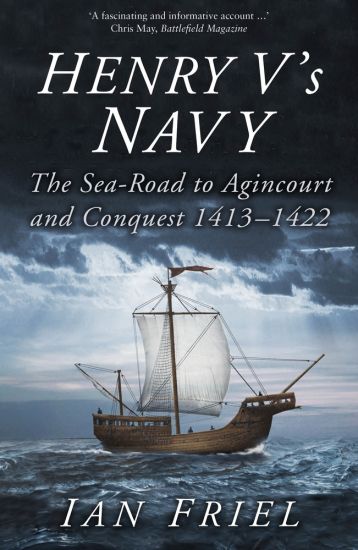
Henry V's Navy

Henry V's Navy

Ian Friel

The History Press Ltd
2020
nidottu
Without Henry V’s Navy, the Battle of Agincourt would never have happened. Henry’s fleet played a major – if often unrecognised – part in enabling the king to come within reach of final victory in the Hundred Years War against France. Henry’s navy was multinational, and comprised his own royal fleet, English merchantmen and many foreign vessels from the Netherlands, the Baltic and Venice. It was one of the most successful fleets deployed by England before the time of Elizabeth I. The royal fleet was transformed in Henry’s short reign from a few dilapidated craft into a powerful weapon of war, with over thirty fighting vessels, up-to-date technology and four of the biggest ships in Europe. With new insights derived from extensive research into documentary, pictorial and archaeological sources, Henry V’s Navy is about the men, ships and operations of Henry’s sea war. Ian Friel explores everything from shipboard food to how crews and their ships sailed and fought, and takes an in-depth look at the royal ships. He also tells the dramatic and bloody story of the naval conflict, which at times came close to humiliating defeat for the English.
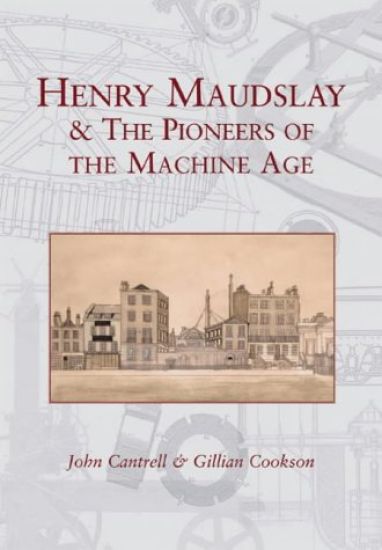
Henry Maudslay and the Pioneers of the Machine Age
In Georgian London, Henry Maudslay started an engineering works that was to become world famous, and not just for the engines it made, but also for the engineers who received their training there and went on to bigger and better things. At a time when engineering and machines were in their infancy, the designers and engineers at Maudslay's soon became famous. From Maudslay himself to Joseph Whitworth (who founded Armstrong Whitworth), David Napier (designer and builder of the first Cunard steamships), Richard Roberts (designer of power looms) and James Nasmyth (inventor of the steam hammer), the list of engineers of world repute is amazing. A fascinating study of what was the hotbed of British engineering in the early 1800s. Without these men the Industrial Revolution would not have been possible.
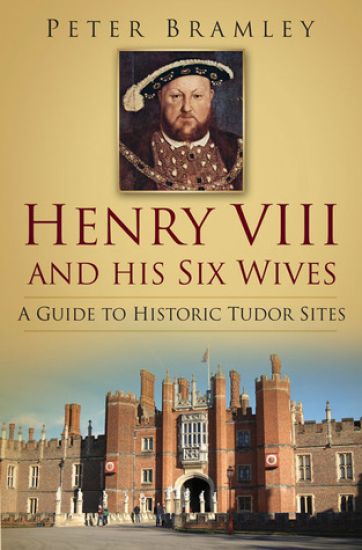
Henry VIII and his Six Wives

Henry VIII and his Six Wives

Peter Bramley

The History Press Ltd
2014
nidottu
A greatly romanticised era of history, the Tudor period kick-started one of the most significant shifts in British culture ever to occur. When the notorious Henry VIII began his hunt for a male heir it led to momentous changes: the British Crown breaking with Rome, the Reformation and the Dissolution of the Monasteries. Of the six wives Henry wed successively, two were executed – a chilling first in English history. From these tumultuous events an incredible number of historic sites linked to the Tudors survive, accessible now through this beautifully illustrated book. Here Peter Bramley has arranged the surviving sites by region, covering England and some of Europe. With directions to each site, along with full details of the Tudor events and personalities linked to them, this guidebook will bring life and colour to the study of history.
Henry VIII

Henry VIII

John Matusiak

The History Press Ltd
2013
sidottu
This compelling new account of Henry VIII is by no means yet another history of the ‘old monster’ and his reign. The ‘monster’ displayed here is, at the very least, a newer type, more beset by anxieties and insecurities, and more tightly surrounded by those who equated loyalty with fear, self-interest and blind obedience. This ground-breaking book also demonstrates that Henry VIII’s priorities were always primarily martial rather than marital, and accepts neither the necessity of his all-consuming quest for a male heir nor his need ultimately to sever ties with Rome. As the story unfolds, Henry’s predicaments prove largely of his own making, the paths he chooses neither the only nor the best available. For Henry VIII was not only a bad man, but also a bad ruler who failed to achieve his aims and blighted the reigns of his two immediate successors. Five hundred years after he ascended the throne, the reputation of England’s best known king is being rehabilitated and subtly sanitized. Yet Tudor historian John Matusiak paints a colourful and absorbingly intimate portrait of a man wholly unfit for power.
Henry V: pocket GIANTS

Henry V: pocket GIANTS

A.J. Pollard

The History Press Ltd
2014
nidottu
Henry V is the best-known military hero in English history: better known than Marlborough or Wellington, or his grandfather, Edward III. He enjoyed more success against the French than any of them, coming tantalisingly close to conquering that vast country and imposing an English dynasty; this in a reign of just nine years, in only seven of which he was at war. Even before he died the heroic myth, later enshrined by Shakespeare, was being created. His victories have become the touchstone of English nationalism, English militarism and English imperialism. For good or ill, Henry V now signifies the one-time ‘Greatness of England’. He was a military genius, yet his megalomania was not always in the best interests of his own kingdom, let alone the people of France who suffered at his hands. Behind the carefully constructed nationalist myth was a cold, calculating, ruthless ruler who, before his early death, revealed ominous tyrannical tendencies.
Henry James

Henry James

Denis Flannery

Ashgate Publishing Limited
2000
sidottu
The success of a work of art, to my mind, may be measured by the degree to which it produces a certain illusion; that makes it appear to us that we have lived another life, that we have had a miraculous enlargement of experience. Henry James A concept of 'illusion' was fundamental to the theory and practice of literary representation in Henry James. This book offers readings of James' fictional and critical texts that are informed by the certainty of illusion, and links James' mode of illusion with a number of concerns that have marked novel criticism in both the recent and not-so-recent past: gender, publicity, realism, aesthetics and passion, cults of authorial personality, the narrative construction of the future, and absorption. Flannery addresses each of these concerns through close engagement with particular texts: The Portrait of a Lady, The Tragic Muse, The Wings of the Dove, and some other less familiar texts. Although cognizant of debates that have raged around James as he is read both by 'radical' and 'traditional' critics, this book's primary focus is on the specific nuances of James’ texts and the interpretive challenges and pleasures they offer.
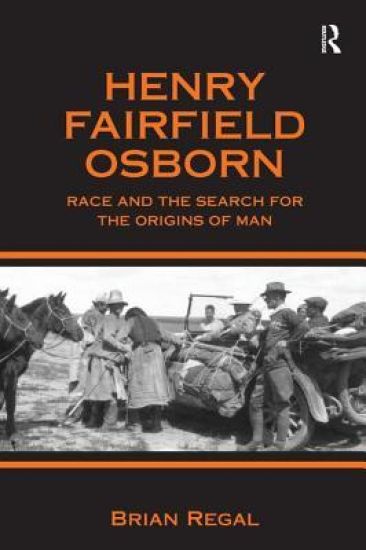
Henry Fairfield Osborn

Henry Fairfield Osborn

Brian Regal

Ashgate Publishing Limited
2002
sidottu
The discovery in the 1920s of a huge cache of fossils in the Gobi Desert fuelled a mania for dinosaurs that continues to the present. But the original goal of the expedition was to search for the origins of man. Henry Fairfield Osborn (1857-1935), director of the American Museum of Natural History, stood at the forefront of the debate over human evolution and the expedition aimed to prove his theory of human origins. Osborn rejected the idea of primate ancestry and constructed a non-Darwinian theory that the evolution of man was the long adventurous story of individuals and groups exerting personal will-power and inborn characteristics to achieve both biological and spiritual success. It is an idea that still echoes today. Study of Osborn’s thinking, however, has been obscured by the perception that racism influenced his theories. Brian Regal paints a different and more textured picture in this book - he shows that Osborn's views on race, like his political ideas, were motivated by his science, itself grounded in religious doctrine. His belief in the Central Asian origins of man, his role as an activist for eugenic reform and immigration controls, his support for Nordicism, his place in the 'New' versus 'Old' biology debate, his role in the Christian Fundamentalist controversy, the Scopes Monkey trial, and finally his construction of the 'Dawn Man' hypothesis - all stemmed from his desire to support his human evolution theory, and point the way to salvation. This biography charts Osborn's intellectual development, from its roots in the eclectic Christianity of his mother, through his student days with Arnold Guyot, James McCosh, and T.H. Huxley, to his mature work at the American Museum. It examines his trials and tribulations, friendships and conflicts, and the world in which he lived: all contributed to the construction of his theory. It is the dramatic story of a man holding onto ideas that for him represented the very meaning of life itself.
Henry Wilson and the Coming of the Civil War

Henry Wilson and the Coming of the Civil War

John L. Myers

University Press of America
2005
nidottu
This biography deals with the life of Henry Wilson, one of the most important figures of the middle third of the Nineteenth Century, up to the time of the Civil War. Among its concerns are the political antislavery movement, economic development, the rise of a working class politician in an aristocratic-controlled state, prohibition, and Massachusetts state history.
Henry Wilson and the Era of Reconstruction

Henry Wilson and the Era of Reconstruction

John L. Myers

University Press of America
2009
nidottu
Already a leader of the Republican party when the Civil War began, Henry Wilson had distinguished himself as the most important Congressional figure on military and antislavery and pro-black legislation during the war. During the Era of Reconstruction, Wilson fought to protect the rights of the newly-freed slaves, but he was opposed to the severe punishment of Confederate leaders and initially tried to be conciliatory toward President Johnson's lenient policies. Soon Wilson joined others in promoting Congress's own Reconstruction program, including the 14th and 15th Amendments, the Military Reconstruction Acts, and the impeachment of the President. He became the Republican Party's most frequently-used campaign speaker. Long recognized as a spokesman for labor, he was also the foremost national politician promoting the cause of prohibition. He wrote the most authoritative three-volume work on the causes of the Civil War from the northern viewpoint. He was also a frequent contributor to the era's most influential religious periodical. In 1872, Wilson was rewarded for his political activities when he was nominated and elected as the country's vice-president.
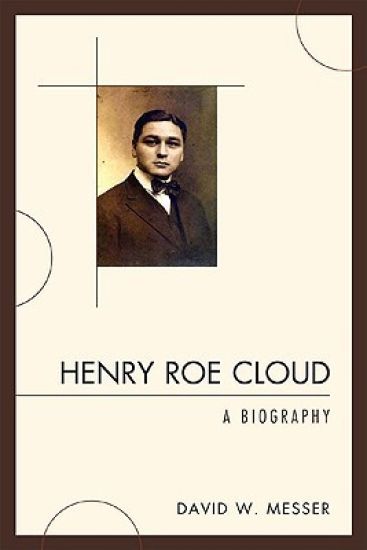
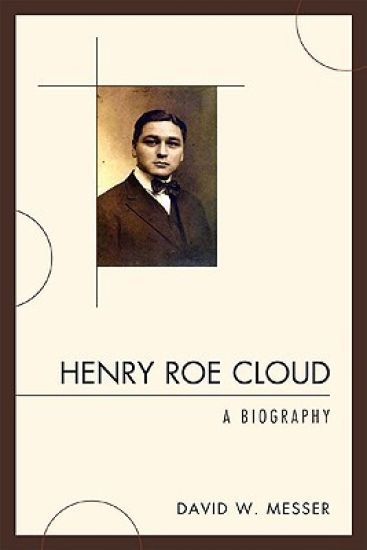
Henry Roe Cloud

Henry Roe Cloud

David W. Messer

Hamilton Books
2009
sidottu
Henry Roe Cloud was the first Native American to graduate from Yale. His education, his religion, his personal life, and his public life were a mosaic made up of traditional Native American beliefs and practices, the white man's educational system, reform theology, progressive education and progressive politics. Cloud was ordained as a Presbyterian minister in 1913. His widely read autobiographical essay, 'From Wigwam to Pulpit,' was subtitled as 'A Red Man's Story of His Progress from Darkness to Light.' His contributions to theological inquiry, the education of Native Americans, and the formulation of government policies contribute to his inclusion in any list of the most prominent Native Americans in history.
Henry Roe Cloud

Henry Roe Cloud

David W. Messer

Hamilton Books
2009
nidottu
Henry Roe Cloud was the first Native American to graduate from Yale. His education, his religion, his personal life, and his public life were a mosaic made up of traditional Native American beliefs and practices, the white man's educational system, reform theology, progressive education and progressive politics. Cloud was ordained as a Presbyterian minister in 1913. His widely read autobiographical essay, 'From Wigwam to Pulpit,' was subtitled as 'A Red Man's Story of His Progress from Darkness to Light.' His contributions to theological inquiry, the education of Native Americans, and the formulation of government policies contribute to his inclusion in any list of the most prominent Native Americans in history.
Henry VIII and the Anabaptists

Henry VIII and the Anabaptists

Albert Pleysier

University Press of America
2014
nidottu
Henry VIII and the Anabaptists describes a bloody chapter in the reign of the infamous Tudor king. The book begins with the birth of Anabaptism in the city of Zurich and follows the Anabaptists as they search for religious freedom across the European Continent. Intolerant of religious diversity and sensitive to potential threats to his political authority, Henry’s suppression ultimately leaves the Anabaptists with two choices: recant or burn.
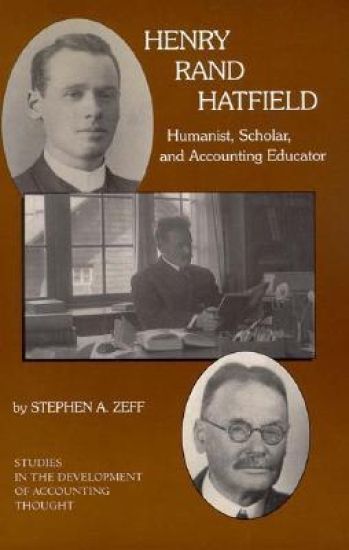
Henry Rand Hatfield

Henry Rand Hatfield

Stephen A. Zeff

JAI Press Inc.
2000
sidottu
This book is a biographical study of the first full-time accounting professor in a US university. Henry Rand Hatfield (1866-1945) was the first dean of the Chicago business school and the second dean of the Berkeley business school, and he was long regarded as the "dean of accounting teachers everywhere". His two textbooks, "Modern Accounting" (1909) and "Accounting" (1927), were among the most respected reference works in the first half century, and they and his articles continue to be cited today. His textbooks and carefully crafted articles were veritable annotations on the accounting literature and drew extensively on accounting and legal authorities in the US and overseas. He exemplified a principled approach to accounting debate and discussion, and he skewered sloppy and imprecise terminology and shoddy thinking. He did not propound any grand theories but was instead an astute critic of the literature, a delectable writer, and, above all, a consummate scholar. Hatfield was an authority on early bookkeeping history, and his essay, "An Historical Defense of Bookkeeping", has long been one of the most celebrated articles in the US literature. Professor Basil Yamey has written a commentary expressly for the book on Hatfield as a historian of accounting and bookkeeping. Stephen Zeff began his research in the 1960s, when he was granted access to Hatfield's extensive files of correspondence, notes and papers, and he proceeded to interview, or correspond with, many of Hatfield's former colleagues and students. The author also drew on the archives at the Northwestern University, the University of Chicago and the University of California, as well as the records of the American Accounting Association, of which Hatfield was a founder and President. The book is rich in references to primary sources. Many of Hatfield's unpublished and previously published papers are reproduced in the book, which also contains a complete list of Hatfield's publications, including his more than 50 penetrating book reviews.
Henry George's Writings on the United Kingdom
Henry George's political economy has been hailed as one of the great contributions of American social criticism. His writings have, however, invited interpretation in contradictory fashion. Commentaries have used him to uphold laissez-faire social Darwinism allowing for the aggrandizement of money. Some on the left have regarded his ideology as calling for a co-operative commonwealth well beyond the intentions of the single-tax mechanism. And there are those who see him as having, in effect, written a new Declaration of Independence as powerful as that of 1776. Bringing to light his previously unavailable British writings would clear up some misunderstandings and also present the man and his ideas in a fresher historical context.
Henry James

Henry James

Elizabeth Stevenson

Transaction Publishers
2000
nidottu
Certain readers and critics have faulted Henry James for two contradictory reasons. He has been thought a writer limited in scope and depth in his treatment of a particular class of people. On the other hand, he has been thought to be too complex, too extreme in putting into difficult language his view of relationships between his chosen characters.Elizabeth Stevenson depicts Henry James as a stout and strong presence in the literature of the English language. From the relatively youthful, straightforward, and simple writing of his early years, to the involved complexities of his later stories, his significance cannot be denied. The barrier seems to have been a misunderstanding on the part of some. It is true nearly all of his characters are well clothed, well fed, and roofed comfortably. They are usually fairly well educated and talk literately and wittily. James rarely treats raw or wild nature, but he is sensitive to landscape as a background. He also does children well, and they are often outside the norms of society. Who is not touched by the uncanny in the tainted children of The Turn of the Screw, whether the taint is actually in the children or in the mind of the governess?In James, one may not travel physically a great deal, except to the resorts of those well-off financially and socially. One does travel extensively through the minds and hearts of his characters. The journey rewards the traveler. The delicacy of James' "melodramatic" insights causes tremor or appreciation from a reader. He describes the way life is, both horrible and wonderful. No one else has expressed this understanding in quite his way. Henry James: The Crooked Corridor will be of interest to students of American literature and general readers interested in biographies.