Kirjahaku
Etsi kirjoja tekijän nimen, kirjan nimen tai ISBN:n perusteella.
1000 tulosta hakusanalla Isabel Vincent

NATIONAL BESTSELLER - In this "stunning" (People), "riveting" (Entertainment Weekly) historical novel, a young writer journeys to South America to uncover the truth about her father--and herself. "All of Allende's books, My Name Is Emilia del Valle included, have the epic feel of a major Hollywood film."--Associated Press In San Francisco in 1866, an Irish nun, abandoned following a torrid relationship with a Chilean aristocrat, gives birth to a daughter named Emilia del Valle. Raised by a loving stepfather, Emilia grows into an independent thinker and a self-sufficient young woman. To pursue her passion for writing, she is willing to defy societal norms. At the age of seventeen, she begins to publish pulp fiction using a man's pen name. When these fictional worlds can no longer satisfy her sense of adventure, she turns to journalism, convincing an editor at The Daily Examiner to hire her. There she is paired with another talented reporter, Eric Whelan. As she proves herself, her restlessness returns, until an opportunity arises to cover a brewing civil war in Chile. She seizes it, as does Eric, and while there, she meets her estranged father and delves into the violent confrontation in the country where her roots lie. As she and Eric discover love, the war escalates and Emilia finds herself in extreme danger, fearing for her life and questioning her identity and her destiny. A riveting tale of self-discovery and love from one of the most masterful storytellers of our time, My Name Is Emilia del Valle introduces a character who will never let hold of your heart.








This book of poetry was created by a Portugese Woman whose father and mother moved to Canada when she was very young. She describes the good and bad times in their journey from Portugal to Canada, the events that took place during the adjustment time to a brand new country and culture. The heart-aches she endured in school and dating men as well as her feelings in the deliverance of her son and the blessings of Jesus in their life.

And what you ask, is a Tuxedo Cat?Well, it's obvious It's a cat who seems to wear a tuxedo dinner suit black with a white shirt and a sometimes even a black bow tie. A James Bond sort of cat: intelligent, smart, strong, agile and with abilities beyond those usually found in your average cat.

And what you ask, is a Tuxedo Cat?Well, it's obvious It's a cat who seems to wear a tuxedo dinner suit black with a white shirt and a sometimes even a black bow tie. A James Bond sort of cat: intelligent, smart, strong, agile and with abilities beyond those usually found in your average cat.

Rejected by his family, Hairy the lonely caterpillar searches for a true friend, meeting a variety of creatures in the garden along the way. The Hairy Caterpillar is a tale of transformation, perseverance and hope, reminding us that all is not always as it appears and our lives can become better after all.
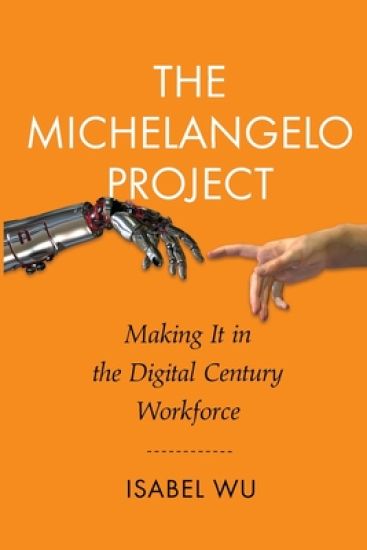
The Michelangelo Project: Making it in the digital century workforce
Isabel Wu
Meta Management Press
2019
nidottu
Has your career stalled?Are you struggling to get your abilities recognised?Do you feel under-valued and unfulfilled at work?Are you concerned about job stability in a rapidly transforming digital century? For over a century, workers were set up for their employer's success, not their own. The Michelangelo Project provides a frank assessment of our faulty employer/employee relationship dynamic and empowers workers to unchain themselves from the broken system. Using Michelangelo's story as a narrative framework, work expert and organisation management specialist, Isabel Wu shows you how to adapt to unanticipated workplace revolutions and thrive in the economy of the future. In the Michelangelo Project, you'll uncover: -The dark secrets of work no one tells you that keep you in jobs even when you hate them-Your personal definition of success to help you feel confident about pursuing a career that fulfills your whole person-How to identify your own opportunities and overcome the fear of dwindling jobs-Why social capital has emerged as the greatest source of economic value in today's economy and how you can use it to get ahead-Tips for becoming a self-learner and embracing internal motivation...and much, much more The Michelangelo Project is a unique handbook to help you take control of your career in a digitally amplified age. If you like cutting-edge insights, tactics from an expert and strategies to improve your value and confidence, then you'll love Isabel Wu's transformative manual. Let The Michelangelo Project open your mind to new possibilities today ISABEL WU has spent nearly three decades helping people build the skills they need for their professional success. She runs a future of work consultancy showing clients how to adapt to unanticipated workplace revolutions and thrive in a technology-driven world.



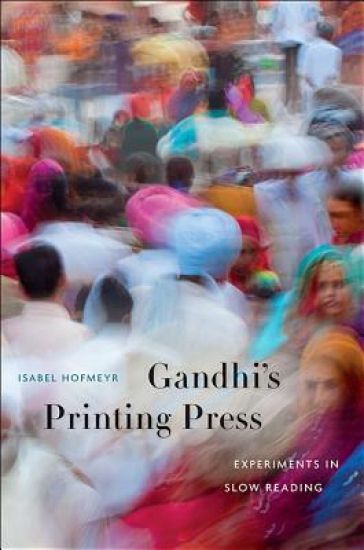
At the same time that Gandhi, as a young lawyer in South Africa, began fashioning the tenets of his political philosophy, he was absorbed by a seemingly unrelated enterprise: creating a newspaper. Gandhi’s Printing Press is an account of how this project, an apparent footnote to a titanic career, shaped the man who would become the world-changing Mahatma. Pioneering publisher, experimental editor, ethical anthologist—these roles reveal a Gandhi developing the qualities and talents that would later define him.Isabel Hofmeyr presents a detailed study of Gandhi’s work in South Africa (1893–1914), when he was the some-time proprietor of a printing press and launched the periodical Indian Opinion. The skills Gandhi honed as a newspaperman—distilling stories from numerous sources, circumventing shortages of type—influenced his spare prose style. Operating out of the colonized Indian Ocean world, Gandhi saw firsthand how a global empire depended on the rapid transmission of information over vast distances. He sensed that communication in an industrialized age was becoming calibrated to technological tempos.But he responded by slowing the pace, experimenting with modes of reading and writing focused on bodily, not mechanical, rhythms. Favoring the use of hand-operated presses, he produced a newspaper to contemplate rather than scan, one more likely to excerpt Thoreau than feature easily glossed headlines. Gandhi’s Printing Press illuminates how the concentration and self-discipline inculcated by slow reading, imbuing the self with knowledge and ethical values, evolved into satyagraha, truth-force, the cornerstone of Gandhi’s revolutionary idea of nonviolent resistance.