Kirjojen hintavertailu. Mukana 11 699 587 kirjaa ja 12 kauppaa.

Kirjahaku

Etsi kirjoja tekijän nimen, kirjan nimen tai ISBN:n perusteella.

1000 tulosta hakusanalla J. Stephanini

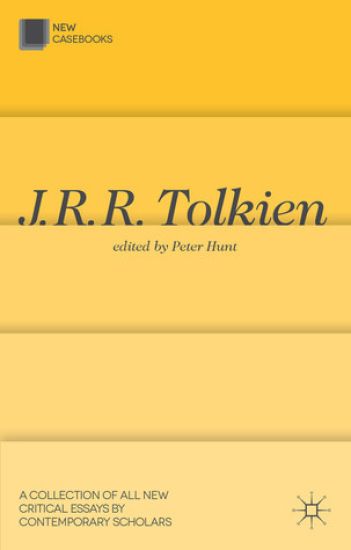
J.R.R. Tolkien

J.R.R. Tolkien

Peter Hunt

Red Globe Press
2013
nidottu
This edited collection of brand new essays examines The Hobbit and The Lord of the Rings in the light of children's literature theory and approaches. Exploring issues such as gender, language, narrative, and ecocriticism, the volume also places Tolkien's most popular works in the context of a range of visual media including the film adaptations.
J.R.R. Tolkien

J.R.R. Tolkien

Peter Hunt

Red Globe Press
2013
sidottu
This edited collection of brand new essays examines The Hobbit and The Lord of the Rings in the light of children's literature theory and approaches. Exploring issues such as gender, language, narrative, and ecocriticism, the volume also places Tolkien's most popular works in the context of a range of visual media including the film adaptations.
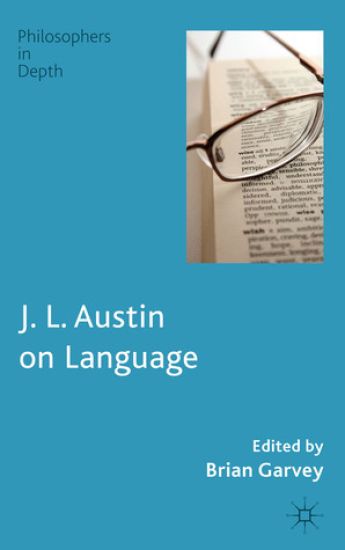
J. L. Austin on Language

J. L. Austin on Language

Palgrave Macmillan
2014
sidottu
Looking at the work of J.L. Austin, who subjected language to a close and intense analysis, this book deals with his examination of the various things we do with words, and with the philosophical insights he believed could be gained by closely examining the uses of words by non-philosophers.
J.M. Coetzee and the Limits of Cosmopolitanism

J.M. Coetzee and the Limits of Cosmopolitanism

K. Hallemeier

Palgrave Macmillan
2013
sidottu
Drawing on postcolonial and gender studies, as well as affect theory, the book interrogates cosmopolitan philosophies. Through analysis of J.M. Coetzee's later fiction, Hallemeier invites the re-imagining of cosmopolitanism, particularly as it is performed through the reading of literature.
J. M. Coetzee: Countervoices

J. M. Coetzee: Countervoices

Carrol Clarkson

Palgrave Macmillan
2009
nidottu
Clarkson pays sustained attention to the dynamic interaction between Coetzee's fiction and his critical writing, exploring the Nobel prize-winner's participation in, and contribution to, contemporary literary-philosophical debates. The book engages with the most recent literary and philosophical responses to Coetzee's work.
J. S. Mill’s Journal and Notebook of a Year in France, May 1820-July 1821
The Kwansei Gakuin University obtained a notebook of John S. Mill’s sojourn in France (1820-21) in February 2001. This notebook consists of diary entries dated from July 20 to September 15, 1820 and miscellaneous notes. One remarkable feature of this notebook is its inclusion of the entries dated from August 3 to 9, that are missing from both the Journal in the British Library collection and the notebook in the St. Andrews University Library collection. The book reproduces the entries of this week-long blank, and in doing so, presents a picture of John S. Mill’s life in this week. According to these entries, his French language, French literature, chemistry, zoology, metaphysics, logic, mathematics and other lessons continued right up until August 9, the day before his departure on a trip to the Pyrenees. He not only read books and studied French as before but also wrote an essay about "dialogue on government." Finally, the book presents a complete version of John S. Mill’ sojourn in France (1820-21), providing scholars for the first time with the information of Mill’s life and the education he received during those years.
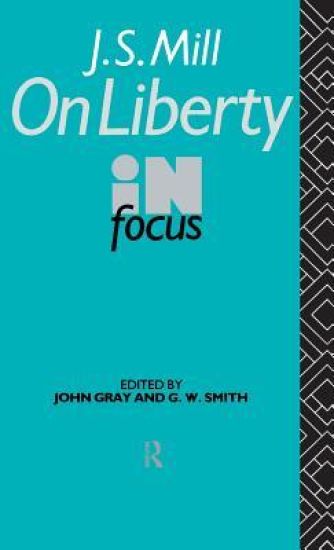
J.S. Mill's On Liberty in Focus
This volume brings together J.S. Mills On Liberty and a selection of important essays by such eminent scholars as Isaiah Berlin, Alan Ryan, John Rees, C.L. Ten and Richard Wollheim. As well as providing authoritative commentary upon On Liberty, the essays reflect a broader debate about the philosophical foundations of Mill's liberalism, particularly the question of the connection betweenMill's professed utilitarianism and his commitment to individual liberty. Introduced and edited by John Gray and G.W. Smith, the book will be of interest to students of Mill, to ethical and political philosophers and to anyone interested in the contemporary status of liberalism.
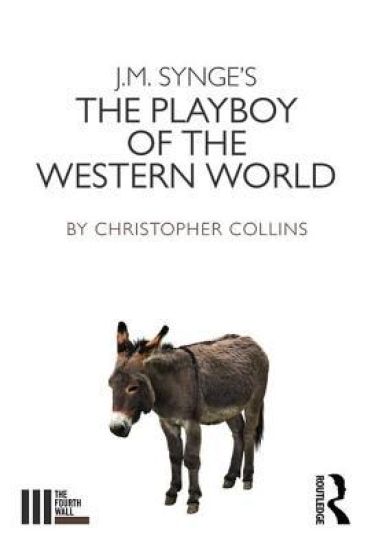
J. M. Synge's The Playboy of the Western World
‘I’m thinking this night wasn’t I a foolish fellow not to kill my father in years gone by.’ – Christy MahonOn the first night of J. M. Synge’s The Playboy of the Western World (1907) the audience began protesting in the theatre; by the third night the protests had spilled onto the streets of Dublin. How did one play provoke this? Christopher Collins addresses The Playboy ’s satirical treatment of illusion and realism in light of Ireland’s struggle for independence, as well as Synge’s struggle for artistic expression. By exploring Synge’s unpublished diaries, drafts and notebooks, he seeks to understand how and why the play came to be.This volume invites the reader behind the scenes of this inflammatory play and its first performances, to understand how and why Synge risked everything in the name of art.
J.M.W. Turner and the Subject of History
J.M.W. Turner and the Subject of History is an in-depth consideration of the artist's complex response to the challenge of creating history paintings in the early nineteenth century. Structured around the linked themes of making and unmaking, of creation and destruction, this book examines how Turner's history paintings reveal changing notions of individual and collective identity at a time when the British Empire was simultaneously developing and fragmenting. Turner similarly emerges as a conflicted subject, one whose artistic modernism emerged out of a desire to both continue and exceed his eighteenth-century aesthetic background by responding to the altered political and historical circumstances of the nineteenth century.
J.M. Robertson

J.M. Robertson

Odin Dekkers

Routledge
2018
sidottu
Published in 1998, J. M. Robertson: Rationalist and Literary Critic is a study of the life of one of the most erudite and prolific critics of the late nineteenth and early twentieth centuries. The Scotsman John MacKinnon Robertson (1856-1933), rationalist and enemy of religion to the core, published over one hundred books and thousands of articles in fields as diverse as sociology, economics, history, anthropology, biblical criticism and literary criticism. This once widely known (and feared!) author was all too quickly forgotten after his death and his work is now seldom read. The aim of this book is to demonstrate that Robertson’s writings and in particular his acute and powerful literary criticism – much respected by T. S. Eliot – have not lost their relevance for late twentieth century readers.Moreover, through the examinations of Robertson’s work in its contextual framework, this study provides a wide-ranging perspective on the late-Victorian literary scene, which perhaps present-day literary historians have not given the detailed attention it deserves.