
Kirjahaku
Etsi kirjoja tekijän nimen, kirjan nimen tai ISBN:n perusteella.
1000 tulosta hakusanalla J.B. Kay

As leader of the Irish Republican Brotherhood and then the Irish Republican Army (IRA), Michael Collins developed a bold, new strategy to use against the British administration of Ireland in the early twentieth century. His goal was to attack its well-established system of spies and informers, wear down British forces with a sustained guerrilla campaign, and force a political settlement that would lead to a free Irish Republic.Michael Collins and the Anglo-Irish War reveals that the success of the Irish insurgency was not just a measure of Collins's revolutionary genius, as has often been claimed. British miscalculations, overconfidence, and a failure to mount a sustained professional intelligence effort to neutralize the IRA contributed to Britain's defeat.Although Britain possessed the world's most professional secret service, the British intelligence community underwent a politically driven and ill-advised reorganization in early 1919, at the very moment that Collins and the IRA were going on the offensive. Once Collins neutralized the local colonial spy service, the British had no choice but to import professional secret service agents. But Britain's wholesale reorganization of its domestic counterintelligence capability sidelined its most effective countersubversive agency, MI5, leaving the job of intelligence management in Ireland to Special Branch civilians and a contingent of quickly trained army case officers, neither group being equipped—or inclined—to mount a coordinated intelligence effort against the insurgents. Britain's appointment of a national intelligence director for home affairs in 1919—just as the Irish revolutionary parliament published its Declaration of Independence—was the decisive factor leading to Britain's disarray against the IRA. By the time the War Office reorganized its intelligence effort against Collins in mid-1920, it was too late to reverse the ascendancy of the IRA.Michael Collins and the Anglo-Irish War takes a fresh approach to the subject, presenting it as a case study in intelligence management under conditions of a broader counterinsurgency campaign. The lessons learned from this disastrous episode have stark relevance for contemporary national security managers and warfighters currently engaged in the war on terrorism.

The premise of this book is based upon fundamental presuppositions that are not the result of internal philosophical musings, personal opinions, or speculative conjecture. Rather, they flow from an external standard that serves as the only basis for beliefs, attitudes, and practices: the Bible. There is a hell. There is a heaven. Not everyone goes to heaven. Some people go to hell. Place your faith in the One who paid your penalty and offers to you the forgiveness of sins and the free gift of eternal life.

In How to End the Autism Epidemic, Generation Rescue’s co-founder J.B. Handley offers a compelling, science-based explanation of what’s causing the autism epidemic, the lies that enable its perpetuation, and the steps we must take as parents and as a society in order to end it. While many parents have heard the rhetoric that vaccines are safe and effective and that the science is settled about the relationship between vaccines and autism, few realize that in the 1960s, American children received three vaccines compared to the thirty-eight they receive today. Or that when parents are told that the odds of an adverse reaction are “one in a million,” the odds are actually one in fifty. Or that in the 1980s, the rate of autism was one in ten thousand children. Today it’s one in thirty-six. Parents, educators, and social service professionals around the country are sounding an alarm that we are in the midst of a devastating public health crisis—one that corresponds in lockstep with an ever-growing vaccine schedule. Why do our public health officials refuse to investigate this properly—or even acknowledge it? In How to End the Autism Epidemic, Handley confronts and dismantles the most common lies about vaccines and autism. He then lays out, in detail, what the truth actually is: new published science links the aluminium adjuvant used in vaccines to immune activation events in the brains of infants, triggering autism; and there is a clear legal basis for the statement that vaccines cause autism, including previously undisclosed depositions of prominent autism scientists under oath. While Handley’s argument is unsparing, his position is ultimately moderate and constructive: we must continue to investigate the safety of vaccines, we must adopt a position of informed consent, and every individual vaccine must be considered on its own merits. This issue is far from settled. By refusing to engage with parents and other stakeholders in a meaningful way, our public health officials destroy the public trust and enable the suffering of countless children and families.



History of the Later Roman Empire from Arcadius to Irene, Vol. I
J B Bury
Cosimo Classics
2008
pokkari
History of the Later Roman Empire from Arcadius to Irene, Vol. II
J B Bury
Cosimo Classics
2008
pokkari

History of the Eastern Empire from the Fall of Irene to the Accession of Basil
J B Bury
Cosimo Classics
2008
pokkari
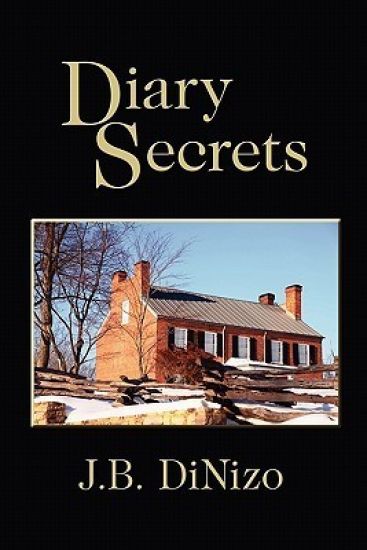
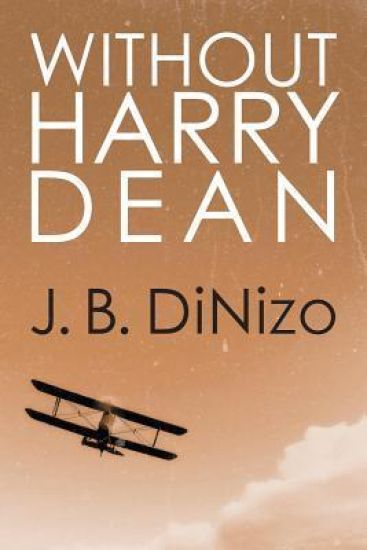
Kansas City born and bred Harry Dean Burke is a renowned pilot in the 1920s during those early years of flying. He has refurbished an old Curtiss aircraft from World War I and gives flying lessons in his time off from work as an auto mechanic. Born to an upper class family, Harry Dean's marriage to beautiful and biracial Vivian Fitzwarren is frowned upon by his family. But Harry Dean and Vivian bond deeply and romantically, realizing that a person's color is only skin deep. When her beloved husband is killed in a plane accident, Vivian wonders how she can go on Without Harry Dean, the man she loves so much. This heart-warming novel based on true events reaches across generations and cultures, as Vivian must live on without her great love. J.B. DiNizo is a retired librarian who grew up in Vermont. "This is basically a story about my father's older brother who was a pilot in those early days of aviation. He married someone of whom the family disapproved, and no one kept in touch with her after my uncle's death in an air crash in Baxter Springs, Kansas. So this is my 'made-up' version of my uncle and aunt's story." Publisher's website: http://sbpra.com/JBDiNizo
A Dictionary of the Proper Names of the Old and New Testament Scriptures
J B Jackson
Martino Fine Books
2016
pokkari
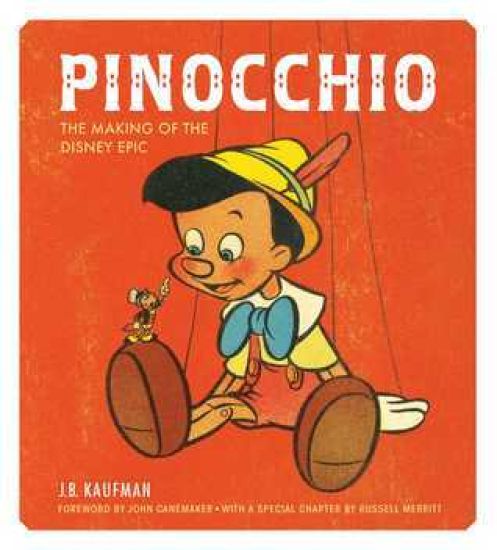
In 1940, Walt Disney released his second feature film: Pinocchio, based on Carlo Collodi’s 1883 Italian children’s novel. The film was groundbreaking: it pioneered the latest animation and sound technology of the era, and established a blueprint for Disney filmmaking that remains intact today. It became the first animated feature to win a competitive Academy Award® (in fact, it won two), and earned a place on the roster of the National Film Registry. Pinocchio’s crucial role has endured decades, given its rare 100% rating on the film Website Rotten Tomatoes and the lively discourse that continues to surround the film today. To celebrate the film’s 75th anniversary, author J.B. Kaufman presents a complete history of the making of Pinocchio, from source material to rerelease. Pinocchio, published in partnership with the Walt Disney Family Foundation and the Walt Disney Family Museum, is an in-depth exploration of the making of the film. Academy Award-winning animator and film historian John Canemaker says of Pinocchio: “In great detail, J. B. Kaufman reveals the struggles, triumphs and disappointments encountered by Disney and his staff during the creation of this sacred monster of a film. Woven here is a once-upon-a-time story sure to fascinate and inform readers, an exciting adventure into the inner workings of a one-of-a kind studio and team at its creative peak.” Go behind to the scenes with stories of the inner workings of the Golden Age of Animation, the animators’ personalities and story changes like why Jiminy Cricket’s character almost got left on the cutting room floor. Over 300 photographs, Illustrations and concept sketches – many of which are available for the very first time – accompany the story behind the story. Become a part of the wild, legendary ride that was the making of Pinocchio.