Kirjojen hintavertailu. Mukana 11 448 071 kirjaa ja 12 kauppaa.

Kirjahaku

Etsi kirjoja tekijän nimen, kirjan nimen tai ISBN:n perusteella.

1000 tulosta hakusanalla James Carson

James Joyce’s Judaic Other

James Joyce’s Judaic Other

Marilyn Reizbaum

Stanford University Press
1999
pokkari
How does recent scholarship on ethnicity and race speak to the Jewish dimension of James Joyce’s writing? What light has Joyce himself already cast on the complex question of their relationship? This book poses these questions in terms of models of the other drawn from psychoanalytic and cultural studies and from Jewish cultural studies, arguing that in Joyce the emblematic figure of otherness is “the Jew.” The work of Emmanuel Levinas, Sander Gilman, Gillian Rose, Homi Bhabha, among others, is brought to bear on the literature, by Jews and non-Jews alike, that has forged the representation of Jews and Judaism in this century. Joyce was familiar with this literature, like that of Theodor Herzl. Joyce sholarship has largely neglected even these sources, however, including Max Nordau, who contributed significantly to the philosophy of Zionism, and the literature on the “psychobiology” of race—so prominent in the fin de siècle—all of which circulates around and through Joyce’s depictions of Jews and Jewishness. Several Joyce scholars have shown the significance of the concept of the other for Joyce’s work and, more recently, have employed a variety of approaches from within contemporary deliberations of the ideology of race, gender, and nationality to illuminate its impact. The author combines these approaches to demonstrate how any modern characterization of otherness must be informed by historical representations of “the Jew” and, consequently, by the history of anti-Semitism. She does so through a thematics and poetics of Jewishness that together form a discourse and method for Joyce’s novel.
James Madison

James Madison

Stanford University Press
2003
sidottu
In recent years, the study of James Madison and his contributions to early American politics has enjoyed a growing audience among scholars and students of modern American politics. Not only did Madison establish the fundamental American concept of pluralism, his appreciation of the logic of institutional design as a key to successful democratic reform still influences modern theory and research. This book evaluates the legacy of James Madison as the product of a scholarly politician—a politician who thought carefully about institutions in the context of action. It brings together thoughtful responses to Madison and his theory from a broad cross-section of modern political science, and views Madison not as an icon or mouthpiece of an era, but as a "modern" political scientist who was able to implement many of his theoretical ideas in a practical forum.
James Madison

James Madison

Stanford University Press
2005
pokkari
In recent years, the study of James Madison and his contributions to early American politics has enjoyed a growing audience among scholars and students of modern American politics. Not only did Madison establish the fundamental American concept of pluralism, his appreciation of the logic of institutional design as a key to successful democratic reform still influences modern theory and research. This book evaluates the legacy of James Madison as the product of a scholarly politician—a politician who thought carefully about institutions in the context of action. It brings together thoughtful responses to Madison and his theory from a broad cross-section of modern political science, and views Madison not as an icon or mouthpiece of an era, but as a "modern" political scientist who was able to implement many of his theoretical ideas in a practical forum.
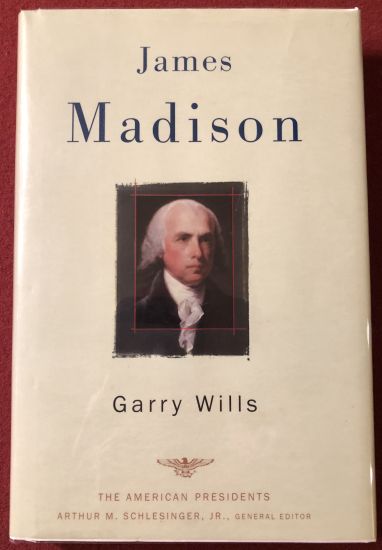
James Madison

James Madison

Garry Wills; Arthur M. Schlesinger

Henry Holt Company Inc
2003
sidottu
A bestselling historian examines the life of a Founding Father.Renowned historian and social commentator Garry Wills takes a fresh look at the life of James Madison, from his rise to prominence in the colonies through his role in the creation of the Articles of Confederation and the first Constitutional Congress. Madison oversaw the first foreign war under the constitution, and was forced to adjust some expectations he had formed while drafting that document. Not temperamentally suited to be a wartime President, Madison nonetheless confronted issues such as public morale, internal security, relations with Congress, and the independence of the military. Wills traces Madison's later life during which, like many recent Presidents, he enjoyed greater popularity than while in office. Garry Willis is a Pulitzer Prize-winning historian and cultural critic, and a professor of history at Northwestern University. A recipient of the National Book Award, his many books include Lincoln at Gettysburg, Reagon's America, Witches and Jesuits, and a Biography of Saint Augustine. He lives in Evanston, Illinois. Arthur M. Schlesinger, Jr., is arguably the preeminent political historian of our time. For more than half a century, he has been a cornerstone figure in the intellectual life of the nation and a fixture on the political scene. He served as a special assistant to John F. Kennedy; won two Pulitzer Prizes for The Age of Jackson (1946) and A Thousand Days (1966); and in 1998 received the National Humanities Medal. He published the first volume of his autobiography, A Life in the Twentieth Century, in 2000.
James Monroe

James Monroe

Gary Hart

Times Books
2005
sidottu
A thorough analysis of America's fifth president looks at the military and political accomplishments of James Monroe, describing his service during the Revolutionary War; his diverse roles as senator, governor, ambassador, secretary of state, secretary of war, and president; and his creation of the Monroe Doctrine as a policy to establish American national security.
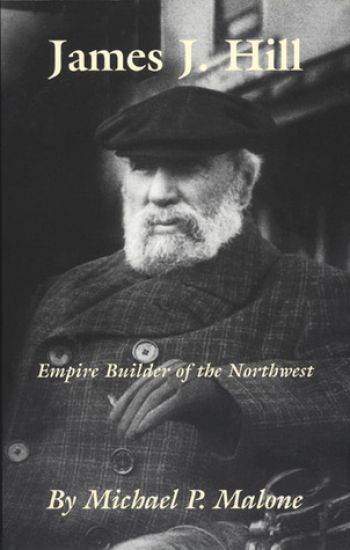
James J. Hill

James J. Hill

Michael P. Malone

University of Oklahoma Press
1997
nidottu
In this volume, Michael P. Malone provides a succinct interpretive biography of James J. Hill, the ""Empire Builder""-so called for his work in developing the region of the United States between the Great Lakes and the Pacific Northwest.Malone explores Hill's complex life and personality, his activities and interests, and recreates both the story of the railroad race to the Pacific and the complex interactions involved in the development of the region.""Michael Malone has written a model. . . .interpretative biography of James J. Hill. He has drawn on the research of others, published and unpublished, as he says, but also on his own knowledge of American economic development in Hill's time as a leading historian of mining and of a state in whose development Hill's railroads were major factors."" -Earl Pomeroy, Professor of History, Retired, University of Oregon and University of California, San Diego
James Henry Hammond and the Old South

James Henry Hammond and the Old South

Drew Gilpin Faust

Louisiana State University Press
1985
nidottu
From his birth in 1807 to his death in 1864 as Sherman's troops marched in triumph toward South Carolina, James Henry Hammond witnessed the rise and fall of the cotton kingdom of the Old South. Planter, politician, and partisan of slavery, Hammond built a career for himself that in its breadth and ambition provides a composite portrait of the civilisation in which he flourished.A long-awaited biography, Drew Gilpin Faust's James Henry Hammond and the Old South reveals the South Carolina planter who was at once characteristic of his age and unique among men of his time. Of humble origins, Hammond set out to conquer his society, to make himself a leader and a spokesman for the Old South. Through marriage he acquired a large plantation and many slaves, and then through shrewd management and progressive farming techniques he soon became one of the wealthiest men in South Carolina. He was elected to the United States House of Representatives and served as governor of his state. A scandal over his personal life forced him to retreat for many years to his plantation, but eventually he returned to public view, winning a seat in the United States Senate that he resigned when South Carolina seceded from the Union.James Henry Hammond's ambition was unquenchable. It consumed his life, directed almost his every move, and ultimately, in its titanic calculation and rigidity, destroyed the man confined within it. Like Faulkner's Thomas Sutpen, Faust suggests, Hammond had a ""design,"" a compulsion to direct every moment of his life toward self-aggrandizement and legitimation. Hammond envisioned himself as the benevolent, paternal, but absolute master of his family and his slaves. But in reality, neither his family, his slaves, nor even his own behavior was completely under his command. Hammond ardently wished to perfect and preserve the southern way of life. But these goals were also beyond his control. At the time of his death it had become clear to him that his world, the world of the Old South, had ended.
James Dickey and the Gentle Ecstasy of Earth

James Dickey and the Gentle Ecstasy of Earth

Robert Kirschten

Louisiana State University Press
1999
nidottu
Robert Kirschten maintains that most formal analyses of Jams Dickey's poetry have been unsatisfactory or at best only partially complete. Some critics have labeled Dickey an American romantic, while others have called him a mystic, a pantheist, a comic poet.In James Dickey and the Gentle Ecstasy of Earth, Kirschten provides a fuller understanding of Dickey's lyric vision by employing what Ronald Crane calls ""multiple working hypotheses."" The first three of these, mysticism, neoplatonism, and romanticism, serve primarily to align general traits in Dickey's poetry with familiar literary traditions. The fourth of Kirschten's hypotheses, primitivism, is drawn from the field of anthropology. Kirschten shows that such anthropological concepts as magic, rites of passage, and ritual violence are vital in describing Dickey's central methods.After synthesizing the four hypotheses to establish a critical base, Kirschten investigates three crucial elements in Dickey's poetry: his lyric speakers, central narrative devices, and poetic diction. The final chapter, in a culmination of the entire investigation, offers a reading of the long poem ""The Shark's Parlor.""Kirschten's study reveals a sure grasp of the philosophical principles of literary criticism as well as a wide range of reading, especially in the literature of romanticism. This lucid examination gives us genuine new insights into the work of one of the country's premier poets.
James Hamilton of South Carolina

James Hamilton of South Carolina

Robert Tinkler

Louisiana State University Press
2004
sidottu
An esteemed planter, politician, and military leader influential in the affairs of both South Carolina and Texas, James Hamilton (1786-1857) so declined in reputation during the last twenty years of his life that his home state refused to acknowledge him when he died. Robert Tinkler's superb, first-published biography of Hamilton conveys the enormous drama, dignity, and pathos that marked Hamilton's pursuit of the greatness achieved by his prominent Revolutionary-era forebears and his subsequent profound reversal brought on by debt.While a member of Congress during the 1820s, Hamilton came to champion states' interests over a strong central national government. As governor of South Carolina, 1830-1832, he reached the pinnacle of his political and social glory when he presided over the Nullification Crisis of 1832. Hamilton's undoing began with a series of ill-advised cotton speculations that left him deeply and very publicly in arrears by 1839. He desperately sought relief - even supporting the Compromise of 1850 in hopes of monetary benefit, while alienating his old allies in the process. To his fellow southerners, Hamilton became a scourge and embarrassment as one who compromised his political beliefs because of fiscal distress.Perhaps even more than his political apostasy, Hamilton's unforgivable offense may have been to remind planters of their own struggles with chronic debt. Tinkler's extraordinary research into both Hamilton's life and the dynamics of reputation and debt in the antebellum South suggests that many contemporaries simply wished to forget Hamilton's plight so as to avoid facing their own financial reality. Possessing the weight of tragedy, James Hamilton of South Carolina documents a powerful man's achievements and the events and personal flaws that led to his fall.
James Salter

James Salter

Jeffrey Meyers

LOUISIANA STATE UNIVERSITY PRESS
2024
sidottu
Biographer and critic Jeffrey Meyers knew the novelist James Salter (1925–2015) during the last decade of his life, visited him twice on Long Island, and received eighty letters from him. Meyers's knowledge of Salter's life provides many new insights about the personal, literary, and historical background of his work. This appreciative book, the first full-length study in twenty-six years, is intended to introduce Salter to new readers and show his achievement as a writer of novels, stories, screenplays, memoirs, and travel essays. Salter had an extraordinary range of experience as West Point graduate; fighter pilot in the Korean War; downhill skier, rock climber, and mountain climber; screenwriter and film director; connoisseur of food and wine; world traveler and sophisticated observer. In an elegant blend of literary criticism and intimate memoir, with crisp prose and an eye for telling detail, Meyers discusses Salter's family and friends; the significance of his book and chapter titles; characters' names and cultural allusions; literary influences, especially Ernest Hemingway and F. Scott Fitzgerald; development of his fictional style and techniques; awareness of weather and light; supreme delineation of sexual ecstasy; recurrent themes of war and love; strange career and late recognition. A detailed chronology tracks the key dates and events in Salter's life, and a chronological bibliography shows the development of his literary reputation. For Meyers, Salter's lyrical evocation of people and places, of luxurious decadence and the danger of death, are unsurpassed in contemporary literature. This book appears just before the centenary of Salter's birth.
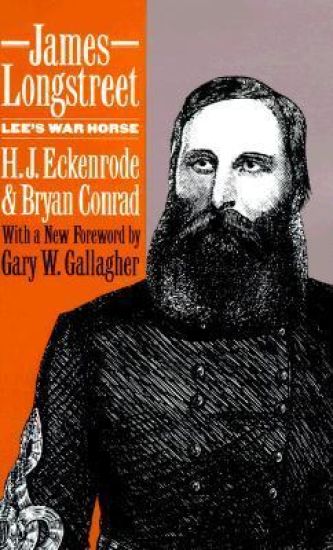
James Longstreet

James Longstreet

Conrad Bryan

The University of North Carolina Press
1999
nidottu
James Longstreet stood with Robert E. Lee and Stonewall Jackson in the great triumvirate of the Army of Northern Virginia. He fought from First Manassas through Appomattox and served as Lee's senior subordinate for most of that time. In this classic work, first published by UNC Press in 1936, H. J. Eckenrode and Bryan Conrad follow Longstreet from his leading role in the military history of the Confederacy through his controversial postwar career and eventual status as an outcast in Southern society. Though they acknowledge his considerable gifts as a corps commander and absolve him of guilt for the Gettysburg debacle, the authors also call attention to the consequences of Longstreet's unbridled ambition, extreme self-confidence, and stubbornness. |A biography of James Longstreet, from his leading role as commander of Lee's Army of Northern Virginia through his controversial postwar career. Although the authors absolve Longstreet of guilt for Gettysburg, they call attention to the consequences of his unbridled ambition and stubbornness.
James Wilson

James Wilson

Smith Charles Page

The University of North Carolina Press
2011
nidottu
James Wilson, signer of the federal constitution and one of the most influential leaders in the formative period of the republic, has been the only great figure of his age to be without a biography. As a consequence his name is virtually unknown to the general public. It was in the task of framing a sound government for the republic that Wilson, one of the principal theorists of federalism, made his greatest contribution to the future welfare and stability of his country.A UNC Press Enduring Edition -- UNC Press Enduring Editions use the latest in digital technology to make available again books from our distinguished backlist that were previously out of print. These editions are published unaltered from the original, and are presented in affordable paperback formats, bringing readers both historical and cultural value.
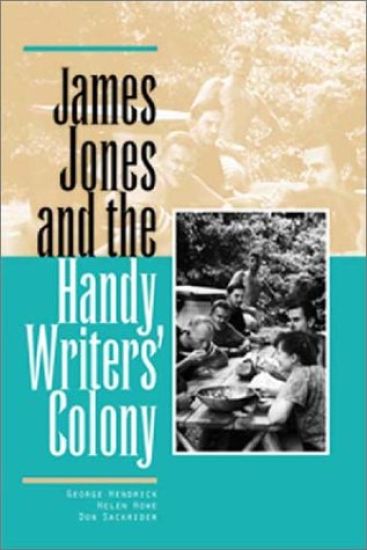
James Jones and the Handy Writers' Colony

James Jones and the Handy Writers' Colony

George Hendrick; Helen Howe; Don Sackrider

SOUTHERN ILLINOIS UNIVERSITY PRESS
2001
sidottu
This story of James Jones and the Handy Colony is a popular account of one of the most unusual writing colonies ever established in the United States.Between his Army enlistment in 1939 and the wound that sent him to a Memphis hospital in 1943, James Jones suffered the loss of both his mother and his father, a victim of suicide. Psychologically precarious, Jones drank heavily, often brawling in bars. Concerned about his erratic behavior, his aunt took Jones to meet Lowney Handy, who took virtual control of his life, securing his discharge from the army and, with her husband Harry, inviting him into their home. Lowney became Jones's writing teacher--and his lover. An aspiring but unpublished writer when she began the Handy Writers' Colony in Marshall, Illinois, Lowney Handy developed a reputation as an inspirational teacher of writing. Her husband, an oil refinery executive from nearby Robinson, supported her in this endeavor, which proved quite successful. The Handy colony achieved national attention through the success of Jones, its most celebrated member and the author of From Here to Eternity and Some Came Running.