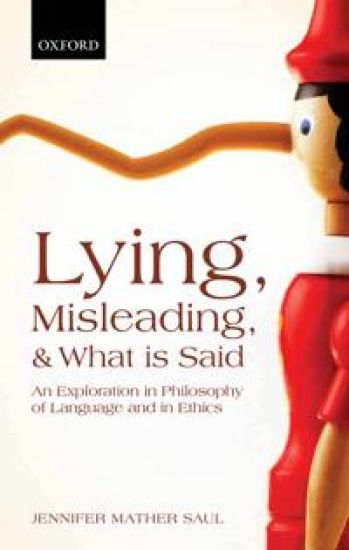
Many people (both philosophers and not) find it very natural to think that deceiving someone in a way that avoids lying--by merely misleading--is morally preferable to simply lying. Others think that this preference is deeply misguided. But all sides agree that there is a distinction. In Lying, Misleading, and What is Said, Jennifer Saul undertakes a close examination of the lying/misleading distinction. Saul begins by using this very intuitive distinction to shed new light on entrenched debates in philosophy of language over notions like what is said. Next, she tackles the puzzling but widespread moral preference for misleading over lying, and arrives at a new view regarding the moral significance of the distinction. Finally, Saul draws her conclusions together to examine a range of historically important and interesting cases, from a consideration of modern politicians to the early Jesuits.
Jennifer Anna Gosetti-Ferencei demonstrates that the exotic, as reflected in major works of German literature and in the philosophy and art that inspires it, provokes central questions about the modern self and the spaces it inhabits. Exotic spaces in the writings of such authors as Thomas Mann, Franz Kafka, Stefan Zweig, Robert Musil, Hugo von Hofmannsthal, Gottfried Benn, and Bertold Brecht, along with the thought of Nietzsche, Freud, Levi-Strauss, and Simmel and the art of German Expressionism, are shown to present alternatives to the landscape and experience of modernity. In an examination of the concept of the exotic and of spatial experience in their cultural, subjective, and philosophical contingencies, Gosetti-Ferencei shows that exotic spaces may contest and reconfigure the relationship between the familiar and the foreign, the self and the other. Exotic spaces may serve not only to affirm the subject in a symbolic conquering of territory, as emphasized in post-colonial interpretations, or project the fantasy of escapism to a lost paradise, as utopian readings suggest, but condition moral, aesthetic, or imaginative transformation. Such transformation, while risking disaster or dissolution of the self as well as endangerment of the other, may promote new possibilities of perceiving or being, and reconfigure the boundaries of a familiar world. As exotic spaces are conceived as mystical, liberating, erotic, infectious, frightening or mysterious, several possibilities for transformation emerge in their exposure: re-enchantment through epiphany; the collapse of the rational self; liberation of the imagination from the confines of the familiar world; and aesthetic transformation, revealing the paradoxically 'primitive' nature of modern experience. In strikingly original readings of canonical authors and compelling rediscoveries of forgotten ones, this study establishes that exotic experience can evidence the fragility of the European or Germanic self as depicted in modernist literature, revealing the usually unconsidered boundaries of the subject's own familiar world.
Health and Social Justice provides a theoretical framework for health ethics, public policy and law in which Dr Ruger introduces the health capability paradigm, an innovative and unique approach which considers the capability of health as a moral imperative. This book is the culmination of more than a decade and a half of work to develop the health capability paradigm, with a vision of a world where all have the capability to be healthy. This vision is grounded in the Aristotelian view of human flourishing and also Amartya Sen's capability approach. In this new paradigm, not just health care, or even just health alone, but the capability for health itself is a moral imperative, as is ensuring the conditions that allow all individuals the means to achieve central health capabilities. Key tenets of health capability include health agency, shared health governance, where individuals, providers and institutions work together to create a social system enabling all to be healthy, and the use of theorized agreements and shared reasoning to guide social choice and shape health policy and decision-making. This book provides philosophical justification for the direct moral importance of health and the capability for health and follows a norms-based approach to health promotion. It employs a joint scientific and deliberative approach to guide health system development and reform, and the allocation of scarce health resources. The health capability paradigm integrates both proceduralist and consequentialist approaches to justice, and both moral and political legitimacy are critical.
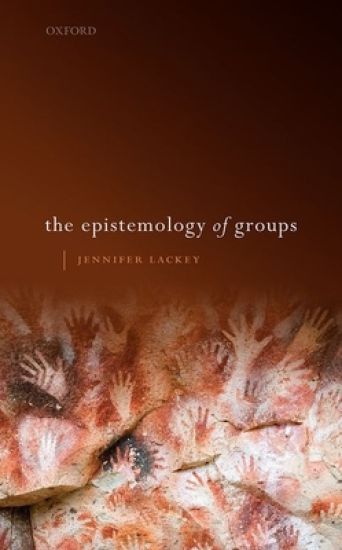
Groups are often said to bear responsibility for their actions, many of which have enormous moral, legal, and social significance. When children were separated from their parents or guardians at the U.S.-Mexico border as part of America's immigration policy, for example, the Trump Administration was said to be responsible for the harms these families suffered as a result. But are groups subject to normative assessment simply in virtue of their individual members being so, or are they somehow agents in their own right? Answering this question depends on understanding key concepts in the epistemology of groups, as we cannot hold the Trump Administration responsible without first determining what it believed, knew, and said. Deflationary theorists hold that group phenomena can be understood entirely in terms of individual members and their states. Inflationary theorists maintain that group phenomena are importantly over and above, or otherwise distinct from, individual members and their states. In The Epistemology of Groups Jennifer Lackey argues that neither approach is satisfactory. Groups are more than their members, but not because they have 'minds of their own,' as the inflationists hold. Instead, she shows how group phenomena--like belief, justification, and knowledge--depend on what the individual group members do or are capable of doing while being subject to group-level normative requirements. This framework allows for the correct distribution of responsibility across groups and their individual members.
What is knowledge? How does it differ from mere belief? Do you need to be able to justify a claim in order to count as knowing it? How can we know that the outer world is real and not a dream? Questions like these are ancient ones, and the branch of philosophy dedicated to answering them - epistemology - has been active for thousands of years. In this thought-provoking Very Short Introduction, Jennifer Nagel considers these classic questions alongside new puzzles arising from recent discoveries about humanity, language, and the mind. Nagel explains the formation of major historical theories of knowledge, and shows how contemporary philosophers have developed new ways of understanding knowledge, using ideas from logic, linguistics, and psychology. Covering topics ranging from relativism and the problem of scepticism to the trustworthiness of internet sources, Nagel examines how progress has been made in understanding knowledge, using everyday examples to explain the key issues and debates ABOUT THE SERIES: The Very Short Introductions series from Oxford University Press contains hundreds of titles in almost every subject area. These pocket-sized books are the perfect way to get ahead in a new subject quickly. Our expert authors combine facts, analysis, perspective, new ideas, and enthusiasm to make interesting and challenging topics highly readable.
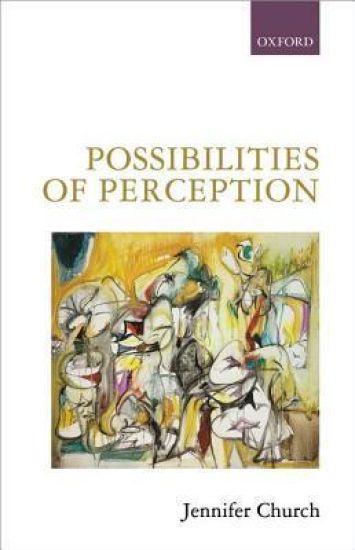
The epistemology and the phenomenology of perception are closely related insofar as both depend on experiences of self-evident objectivity--experiences in which the objectivity of a state of affairs is evident from within our experience of that state of affairs. Jennifer Church offers a distinctive account of perception, showing how imagining alternative perspectives and alternative possibilities plays a key role in creating and validating experiences of self-evident objectivity. Offered first as an account of what it takes to perceive ordinary objects such as birds and trees, the account is then extended to show how it is also possible to perceive such things as causes, reasons, mental states, distant galaxies, molecular arrangements, mathematical relations, and interpersonal obligations. A chapter is devoted to the phenomenology and epistemology of moral perception, including the perception of persons as such; and a chapter is devoted to the peculiarities of aesthetic perception, including the perception of artworks as such. In all of these cases, Church argues, perception can be literal (not merely figurative or metaphorical) and substantive (not merely formal or deflationary). Her account helps to explain the advantages of perceptual versus non-perceptual knowledge. It also helps to make sense of some historical discussions of the role of the imagination in acquiring and validating knowledge, in relation to Plato's cave, Descartes' explanation of rational intuition, and Kant's arguments concerning objectivity, causality, and the Categorical Imperative.
This book provides the first book-length, English-language account of the political ethics of large-scale, Western-based humanitarian INGOs, such as Oxfam, CARE, and Doctors Without Borders. These INGOs are often either celebrated as heroes or do-going machines or maligned as incompetents 'on the road to hell'. In contrast, this book suggests the picture is more complicated. Drawing on political theory, philosophy, and ethics, along with original fieldwork, this book shows that while humanitarian INGOs are often perceived as non-governmental and apolitical, they are in fact sometimes somewhat governmental, highly political, and often 'second-best' actors. As a result, they face four central ethical predicaments: the problem of spattered hands, the quandary of the second-best, the cost-effectiveness conundrum, and the moral motivation trade-off. This book considers what it would look like for INGOs to navigate these predicaments in ways that are as consistent as possible with democratic, egalitarian, humanitarian and justice-based norms. It argues that humanitarian INGOs must regularly make deep moral compromises. In choosing which compromises to make, they should focus primarily on their overall consequences, as opposed to their intentions or the intrinsic value of their activities. But they should interpret consequences expansively, and not limit themselves to those that are amenable to precise measurements of cost-effectiveness. The book concludes by explaining the implications of its 'map' of humanitarian INGO political ethics for individual donors to INGOs, and for how we all should conceive of INGOs' role in addressing pressing global problems.
As the plugged-in presidential campaign has arguably reached maturity, Presidential Campaigning in the Internet Age challenges popular claims about the democratizing effect of Digital Communication Technologies (DCTs). Analyzing campaign strategies, structures, and tactics from the past five presidential election cycles, Stromer-Galley reveals how, for all their vaunted inclusivity and tantalizing promise of increased two-way communication between candidates and the individuals who support them, DCTs have done little to change the fundamental dynamics of campaigns. The expansion of new technologies has presented candidates with greater opportunities to micro-target potential voters, cheaper and easier ways to raise money, and faster and more innovative ways to respond to opponents. The need for communication control and management, however, has made campaigns slow and loathe to experiment with truly interactive internet communication technologies. Citizen involvement in the campaign historically has been and, as this book shows, continues to be a means to an end: winning the election for the candidate. For all the proliferation of apps to download, polls to click, videos to watch, and messages to forward, the decidedly undemocratic view of controlled interactivity is how most campaigns continue to operate. Contributing to the field a much-needed historical understanding of the shifting communication practices of presidential campaigns, Presidential Campaigning in the Internet Age examines election cycles from 1996, when the World Wide Web was first used for presidential campaigning, through 2012, when practices were being tuned to perfection using data analytics for carefully targeting and mobilizing particular voter segments. As the book charts changes in internet communication technologies, it shows how, even as campaigns have moved responsively from a mass mediated to a networked paradigm, and from fundraising to organizing, the possibilities these shifts in interactivity seem to promise for citizen input and empowerment remain much farther than a click away.
Outlining the issues and techniques that are fundamental to journalism in today's multimedia world, The Multimedia Journalist: Storytelling for Today's Media Landscape teaches students how to become visual storytellers--a necessity in new media. Author Jennifer George-Palilonis expertly balances theoretical concepts and practical skills for becoming a journalist in our shifting multimedia landscape. With an interactive companion website and "Professional Perspective" boxes that include points of view from professionals in the field, The Multimedia Journalist is a versatile text for students pursuing storytelling in the multimedia age.
Worshipped by her fans, denounced by her enemies, and forever shadowed by controversy and scandal, the novelist and philosopher Ayn Rand was a powerful thinker whose views on government and markets shaped the conservative movement from its earliest days. Drawing on unprecedented access to Rand's private papers and the original, unedited versions of Rand's journals, Jennifer Burns offers a groundbreaking reassessment of this key cultural figure, examining her life, her ideas, and her impact on conservative political thought. Goddess of the Market follows Rand from her childhood in Russia through her meteoric rise from struggling Hollywood screenwriter to bestselling novelist, including the writing of her wildly successful The Fountainhead and Atlas Shrugged. Burns highlights the two facets of Rand's work that make her a perennial draw for those on the right: her promotion of capitalism, and her defense of limited government. Both sprang from her early, bitter experience of life under Communism, and became among the most deeply enduring of her messages, attracting a diverse audience of college students and intellectuals, business people and Republican Party activists, libertarians and conservatives. The book also traces the development of Rand's Objectivist philosophy and her relationship with Nathaniel Branden, her closest intellectual partner, with whom she had an explosive falling out in 1968. One of the Denver Post's Great Reads of 2009 One of Bloomberg News's Top Nonfiction Books of 2009 "Excellent." --Time magazine "A terrific book--a serious consideration of Rand's ideas, and her role in the conservative movement of the past three quarters of a century." --The American Thinker "A wonderful book: beautifully written, completely balanced, extensively researched. The match between author and subject is so perfect that one might believe that the author was chosen by the gods to write this book. She has sympathy and affection for her subject but treats her as a human being, with no attempt to cover up the foibles." --Mises Economics Blog
In Humanitarian Law in Action within Africa, Jennifer Moore studies the role and application of humanitarian law by focusing on African countries that are emerging from civil wars. Moore offers an overview of international law, including its essential vocabulary, and describes four particular subfields of international law: international humanitarian law, international human rights law, international criminal law, and international refugee law. After setting forth this overview, Moore considers practical mechanisms to implement international humanitarian law, focusing specifically on the experiences of Uganda, Sierra Leone, and Burundi. Through the case studies of these countries, Moore describes transitional justice's fundamental components: criminal, social, and historical. Although the African continent has gone through some of the world's greatest humanitarian emergencies, issues such as violence against women, child soldiers, and genocide are not unique to Africa, and as such, the study of humanitarian law by examining Africa's experience is important to conflict resolution and reconstruction throughout the world.
How do international norms evolve? This book examines the manner in which sovereignty, a bedrock norm of international relations since the seventeenth century, has evolved in response to changing conceptions of the responsibilities of government. Whereas most previous studies of international norms have examined how norms influence policy decisions, this book asks, instead, how state policies actively shape international norms. Changing Norms through Actions contends that the concept of sovereignty is moving towards one in which states that are unable or unwilling to fulfill their domestic and international obligations are forced to relinquish certain sovereign responsibilities to the international community. As issues such as genocide, weapons of mass destruction, and terrorism have forced states to reassess their understandings of sovereignty, Ramos is interested in how understandings of norms - particularly long-held norms such as absolute sovereignty - change. If action taken by states reinforces an existing norm or alters current understandings of the norm, states must consider how their actions may change the "rules of the game" for the future. Even when a major power acts primarily out of its own self-interest, without any concern to international norms, the action may have the unintended consequence of modifying the normative environment within which other minor powers act. Shifting understandings of sovereignty (and how states relate to one another) can also have profound implications for the workings of the international system. Ramos looks specifically at what happens to sovereignty when states choose to bypass traditional norms of non-intervention on behalf of other competing norms, such as those regarding counterterrorism, human rights, or weapons of mass destruction.
How do international norms evolve? This book examines the manner in which sovereignty, a bedrock norm of international relations since the seventeenth century, has evolved in response to changing conceptions of the responsibilities of government. Whereas most previous studies of international norms have examined how norms influence policy decisions, this book asks, instead, how state policies actively shape international norms. Changing Norms through Actions contends that the concept of sovereignty is moving towards one in which states that are unable or unwilling to fulfill their domestic and international obligations are forced to relinquish certain sovereign responsibilities to the international community. As issues such as genocide, weapons of mass destruction, and terrorism have forced states to reassess their understandings of sovereignty, Ramos is interested in how understandings of norms - particularly long-held norms such as absolute sovereignty - change. If action taken by states reinforces an existing norm or alters current understandings of the norm, states must consider how their actions may change the "rules of the game" for the future. Even when a major power acts primarily out of its own self-interest, without any concern to international norms, the action may have the unintended consequence of modifying the normative environment within which other minor powers act. Shifting understandings of sovereignty (and how states relate to one another) can also have profound implications for the workings of the international system. Ramos looks specifically at what happens to sovereignty when states choose to bypass traditional norms of non-intervention on behalf of other competing norms, such as those regarding counterterrorism, human rights, or weapons of mass destruction.
In her essay collection First, Second, and Other Selves: Essays on Friendship and Personal Identity, well-known scholar of ancient philosophy Jennifer Whiting gathers her previously published essays taking Aristotle's theories on friendship as a springboard to engage with contemporary philosophical work on personal identity and moral psychology. Whiting examines three themes throughout the collection, the first being psychic contingency, or the belief that the psychological structures characteristic of human beings may in fact vary, not just from one cultural (or socio-historical) context to another, but also from one individual to another. The second theme is the belief that friendship informs an understanding of the nature of the self, an idea that springs from Whiting's uncommon reading of Aristotle's writings on friendship. Specifically, Whiting explains a scenario in which a "virtuous agent" adopts a kind of impersonal attitude both towards herself and towards her "character" friends, loving both because they are virtuous; this scenario ties in with an examination of the Aristotelian concept of the ideal friend as an "other self," or a friendship that evolves from character rather than ego, as well as Whiting's meditation on whether or not a virtuous individual should have a "special" sort of concern for her own future self, distinct in kind from the concern that she has for others. The third theme is that of rational egoism, a concept that Whiting critiques, especially in the context of Aristotle's eudaimonism. The central tenet of the collection is the message that taking "ethocentric" (or character-based) attitudes both towards ourselves and towards our friends sheds light on the nature of personal identity and helps to combat ethnocentric and other objectionable forms of bias, a message that is becoming increasingly urgent in light of the recent deaths of Trayvon Martin and Michael Brown.
Living Together: Essays on Aristotle's Ethics is one of three volumes collecting previously published essays by Jennifer Whiting. This volume explores Aristotle's conception of eudaimonia, especially the roles played in it by the theoretical and practical activities central to human lives and by the quality of our relationships with one another. Whiting explores Aristotle's struggle to reconcile the desirability of living in accordance with justice and other distinctively human virtues with the ideal of pursuing the “divine” life of contemplation. She focuses on Aristotle's attempts to reconcile his conception of eudaimonia as the ultimate end of human action with the parallel requirements that virtuous agents choose to engage in virtuous action “for itself” and that friends love their friends “for themselves”. Drawing on her original reading of Aristotle's conception of the ideal friend as an “other self”, Whiting challenges common readings of Aristotle's eudaimonism as a form of rational egoism. She stresses appreciation of the friend's character “for itself”, and apart from any relationships in which it happens to stand to the agent's own needs and/or tastes, but calls attention to the important and often neglected role that Aristotle assigns to pleasure in this relationship. The ideal friend recognizes the value her friend's activity has for her friend and so takes pleasure in the friend's activity as such. This explains why the maximally self-sufficient (and so most godlike) agent, who needs nothing from a friend, will nevertheless choose to have at least one or two: she enjoys their company.
The life-and-death struggle between Athens and Sparta that embroiled all of the Greek world for an entire generation was a war that almost did not happen. Both sides entered it with hesitation, and the fortunes of war swung back and forth so wildly that at many junctures either side could have won. The plague that visited Athens in the war's early years was entirely unforeseen, as was the death in 429 of their leading statesman Pericles, who was expected to guide Athens through the war until the Spartans acquiesced. The war could have concluded many times before the conventional ending of open hostilities in 404 BCE, even as early as 425 when a team of crack Spartan troops, marooned on an island off the coast of the Peloponnesus, laid down their arms and surrendered, something that had never happened before. Sparta sought peace to regain its men, but the Athenians thought they could get better terms and kept fighting. After 27 years of butchery on land and at sea previously unparalleled in Greece, nothing had really been gained by either side, not even by the Spartan "victors," who seemed to be as capable of winning a war as of losing a peace. War without Victory provides a superlative narrative of this famous conflict, authoritatively examining its origins and its impact on the culture and social structure of the participants. Jennifer Roberts' history will be distinguished for placing the war in a wider historical context, continuing the story down to the outbreak of the so-called Corinthian War in 395, when gold from the Persian king made it possible for Sparta's former allies to join Athens in making war on them. It will therefore include one of the most infamous episodes in Greek history, which was partly a direct consequence of the war: the trial and execution of Socrates. Finally, it will treat the events leading up to the stunning defeat of Sparta by its former ally Thebes at the battle of Leuctra in 371, a defeat which effectively ended Sparta's martial dominance forever. Including a discussion of Greece's rich cultural life of the period, this book promises to be just as masterful an account as Donald Kagan's condensed one-volume history.
This work is a wide-ranging and sensitive examination of the lived experience of intimate stalking victimization. It explores how it feels and what it means to be stalked by a former intimate and how this situation creates dilemmas for victims and their advocates. What is it like to try to become a "victim" in the eyes of the law and then to remain one, when almost anything a woman does to manage the violent emotions of an ex-husband or ex-boyfriend can backfire and discredit her claims? The author draws upon a broad array of rich data, including a survey of college women, courtroom testimony, prosecutors' case files, interviews with victims and observations in a prosecutor's office and a stalking survivor's support group to illustrate the difficulties women face as they work to cope with danger - and to negotiate the hazardous terrain of legal systems - simultaneously. For some victims, Dunn shows, prosecution processes are more traumatic than the events that brought them to seek legal help and her analysis of the historical, cultural and gendered frameworks in which stalking victimization and prosecution takes place accounts for the additional trauma. Definitions of situations and identities are contested rather than given in these arenas where lives and self-concepts rest in the balance. The ways in which we socially construct and confer meaning upon intimate violence and its victims profoundly shape what happens to ordinary women facing extraordinary circumstances. "Courting Disaster" illuminates what we can learn from their experience, whether we are working in these arenas or theorizing about how they do, and sometimes do not, work.
This book is about women who are coerced, intimidated, and stalked by former intimates. It is about the things these women do to manage this situation, and what happens to them as a consequence. Stalking is a behavior that has relatively recently been defined as problematic, and as criminal when violence or the threat of violence occurs. This new category of crime has created a new type of victim. How such victims come into being, interact with their former partners, and seek help, is the subject of this book. It is also about living through what some women consider a form of secondary victimization by the criminal justice system.The definition of someone as a victim is not self-evident, but is contingent upon interpretation. Thus this book is also an account of how women come to decide they are victims of stalking and seek to convince others of this. It uses a variety of data and methods to examine this phenomenon from the perspectives of both victims and law enforcement agents, and adds to our understanding of responsibility and blame when violence occurs between intimates. By examining social constructions of this particular type of victimization and the choices stalking victims make, the readers learn more about the forces constraining human decisions. Stalking victimization is complicated because it is an ongoing process. It often does not stop once the criminal justice system is involved. Women who are being stalked by their former partners face a profound dilemma in their efforts to manage their pursuers and to pursue their cases through the criminal justice system. Dunn offers a wide-ranging, thought-provoking, and sensitive examination of the lived experience of intimate stalking victimization. In exploring the ways in which we socially construct and confer meaning upon intimate violence, the author draws upon interviews with stalkers and victims, courtroom testimony, analyses of case reports, and an independent survey instrument that reveals ambivalence of the prevailing culture to the problem. Courting Disaster will be valuable in women's studies and counseling courses and a useful text in sociology and criminology.
Explicit Instruction: Strategies for Meaningful Direct Teaching provides pre-service and in-service teachers with much needed answers to questions such as, “What do we do for students who need more? How do I actually stand up and teach a lesson? What happens to students who aren’t "getting it?” Explicit Instruction is a challenge to the view of explicit instruction as an outdated, mechanistic instructional strategy and presents it as timely, proven, and accessible. The explicit instruction framework is flexible and holds wide applicability for teachers across grade levels (elementary, middle, and secondary), settings (whole group, small group, general education, special education), and content areas. It provides a contemporary middle ground for teachers who may avoid traditional direct instruction approaches, but who acknowledge that many students — particularly in today’s inclusive classrooms — need instruction that is explicit, meaningful, and effective. Although the theoretical underpinnings of explicit instruction are presented, the primary focus is on the “how” of becoming an effective instructor. Readers will be able to gain expertise a by mastering small chunks of the explicit instruction framework at a time – mirroring the process of teaching young students how to master new skills and strategies. HIGHLIGHTS OF THIS FIRST EDITION: Graphic organizers for each element of the explicit instruction model provide readers easy to reference, at-a-glance information for lesson planning and implementation (Chapters 5, 6, 7) Examples of scripted explicit instruction lessons in each of the major content areas help readers visualize precisely what explicit instruction looks like in practice for different content areas and grade levels. (Chapter 8 & 9) Review questions and practice activities for each element of the explicit instruction model help readers gain competence at each discrete element of the explicit instruction model. (Chapters 5, 6, 7 )
If you were looking for a philosopher likely to appeal to Americans, Friedrich Nietzsche would be far from your first choice. After all, in his blazing career, Nietzsche took aim at nearly all the foundations of modern American life: Christian morality, the Enlightenment faith in reason, and the idea of human equality. Despite that, for more than a century Nietzsche has been a hugely popular - and influential - figure in American thought and culture. In "American Nietzsche", Jennifer Ratner-Rosenhagen delves deeply into Nietzsche's philosophy, and America's reception of it, to tell the story of his curious appeal. Beginning her account with Ralph Waldo Emerson, whom the seventeen-year-old Nietzsche read fervently, she shows how Nietzsche's ideas first burst on American shores at the turn of the twentieth century, and how they continued alternately to invigorate and to shock Americans for the century to come. She also delineates the broader intellectual and cultural contexts within which a wide array of commentators - academic and armchair philosophers, theologians and atheists, romantic poets and hard-nosed empiricists, and political ideologues and apostates from the Left and the Right - drew insight and inspiration from Nietzsche's claims for the death of God, his challenge to universal truth, and his insistence on the interpretive nature of all human thought and beliefs. At the same time, she explores how his image as an iconoclastic immoralist was put to work in American popular culture, making Nietzsche an unlikely posthumous celebrity capable of inspiring teenagers and scholars alike. A penetrating examination of a powerful but little-explored undercurrent of twentieth-century American thought and culture, "American Nietzsche" dramatically recasts our understanding of American intellectual life - and puts Nietzsche squarely at its heart.