Kirjojen hintavertailu. Mukana 11 342 296 kirjaa ja 12 kauppaa.

Kirjahaku

Etsi kirjoja tekijän nimen, kirjan nimen tai ISBN:n perusteella.

1000 tulosta hakusanalla Jeremy Dibble

Building Better Students

Building Better Students

Jeremy Burrus; Krista Mattern; Bobby D. Naemi; Richard D. Roberts

Oxford University Press Inc
2017
sidottu
Led by a team of experts, Building Better Students: Preparation for the Workforce discusses a variety of issues surrounding workforce readiness in the 21st century by presenting the latest research, practice, and policy on what is continually emerging as a febrile field. By featuring such topics as how to define and measure workforce readiness; how to prepare students for the workforce; and bridging the gap between college and workforce readiness, this volume is a necessary contribution to today's "skills gap" literature as society works to not only secure our own economic futures, but our children's futures, as well. In this volume, world-class contributors from a variety of backgrounds (including industrial/organizational psychology, personality psychology, and educational assessment) all come together to share their unique perspective on the larger issues at hand. In addition to showcasing cutting-edge research, Building Better Students offers insightful commentary and provides readers with the opportunity to not only reflect on these issues, but how to move the needle further for this generation and beyond.
Cities and Stability

Cities and Stability

Jeremy Wallace

Oxford University Press Inc
2014
sidottu
Cities bring together masses of people, allow them to communicate and hide, and to transform private grievances into political causes, often erupting in urban protests that can destroy regimes. The Chinese Communist Party (CCP) has shaped urbanization via migration restrictions and redistributive policy since 1949 in ways that help account for the regime's endurance, China's surprising comparative lack of slums, and its curious moves away from urban bias over the past decade. Cities and Stability details the threats that cities pose for authoritarian regimes, regime responses to those threats, and how those responses can backfire by exacerbating the growth of slums and cities. Cross-national analyses of nondemocratic regime survival link larger cities to shorter regimes. To compensate for the threat urban threat, many regimes, including the CCP, favor cities in their policy-making. Cities and Stability shows this urban bias to be a Faustian Bargain, stabilizing large cities today but encouraging their growth and concentration over time. While attempting to industrialize, the Chinese regime created a household registration (hukou) system to restrict internal movement, separating urban and rural areas. China's hukou system served as a loophole, allowing urbanites to be favored but keeping farmers in the countryside. As these barriers eroded with economic reforms, the regime began to replace repression-based restrictions with economic incentives to avoid slums by improving economic opportunities in the interior and the countryside. Yet during the global Great Recession of 2008-09, the political value of the hukou system emerged as migrant workers, by the tens of millions, left coastal cities and dispersed across China's interior villages, counties, and cities. The government's stimulus policies, a combination of urban loans for immediate relief and long-term infrastructure aimed at the interior, reduced discontent to manageable levels and locales.
Cities and Stability

Cities and Stability

Jeremy Wallace

Oxford University Press Inc
2014
nidottu
Cities bring together masses of people, allow them to communicate and hide, and to transform private grievances into political causes, often erupting in urban protests that can destroy regimes. The Chinese Communist Party (CCP) has shaped urbanization via migration restrictions and redistributive policy since 1949 in ways that help account for the regime's endurance, China's surprising comparative lack of slums, and its curious moves away from urban bias over the past decade. Cities and Stability details the threats that cities pose for authoritarian regimes, regime responses to those threats, and how those responses can backfire by exacerbating the growth of slums and cities. Cross-national analyses of nondemocratic regime survival link larger cities to shorter regimes. To compensate for the threat urban threat, many regimes, including the CCP, favor cities in their policy-making. Cities and Stability shows this urban bias to be a Faustian Bargain, stabilizing large cities today but encouraging their growth and concentration over time. While attempting to industrialize, the Chinese regime created a household registration (hukou) system to restrict internal movement, separating urban and rural areas. China's hukou system served as a loophole, allowing urbanites to be favored but keeping farmers in the countryside. As these barriers eroded with economic reforms, the regime began to replace repression-based restrictions with economic incentives to avoid slums by improving economic opportunities in the interior and the countryside. Yet during the global Great Recession of 2008-09, the political value of the hukou system emerged as migrant workers, by the tens of millions, left coastal cities and dispersed across China's interior villages, counties, and cities. The government's stimulus policies, a combination of urban loans for immediate relief and long-term infrastructure aimed at the interior, reduced discontent to manageable levels and locales.
The Priestly Blessing in Inscription and Scripture

The Priestly Blessing in Inscription and Scripture

Jeremy D. Smoak

Oxford University Press Inc
2015
sidottu
The biblical Priestly Blessing found in Numbers 6:24-26 left a deep imprint upon Jewish and Christian religious practice and tradition. The various ways in which the blessing was incorporated into the liturgical traditions, for example, are well documented in a variety of written sources from the past two thousand years. Rabbinic literature demonstrates that the blessing held a central place in early Jewish traditions, especially as part of the development of the Amidah and other liturgical prayers. Christian tradition also attests to a rich diversity of applications of the blessing in Byzantine and Medieval Christian practice. While the Priestly Blessing's development and significance in Judaism and early Christianity are well documented, considerably less known about its earliest history in the ancient world. The Priestly Blessing in Inscription and Scripture breaks new ground in the study of the origins and early history of the blessing by examining its appearance on two Iron Age amulets discovered at the site of Ketef Hinnom in Jerusalem. Jeremy Smoak provides a comprehensive description of the two amulets and compares the inscriptions on their surfaces with several Phoenician and Punic inscribed amulets. He argues that the blessing's language originated within a wider tradition of protective words, which were often inscribed on metal amulets as protection against evil. He contends that the Priestly writers of the biblical texts incorporated the specific words into the blessing's formulations precisely due to their wide popularity and appeal as protective words in the eastern Mediterranean world. This argument represents an important departure from earlier studies on the background of the blessing's language in the ancient Near East, and it sheds significant new light on the history of their use within early Judaism and Christianity.
F D Maurice and the Crisis of Christian Authority

F D Maurice and the Crisis of Christian Authority

Jeremy Morris

Oxford University Press
2008
nidottu
This book offers a reassessment of the theology of F. D. Maurice (1805-72), one of the most significant theologians of the modern Church of England. It seeks to place Maurice's theology in the context of nineteenth-century conflicts over the social role of the Church, and over the truth of the Christian revelation. Maurice is known today mostly for his seminal role in the formation of Christian Socialism, and for his dismissal from his chair at King's College, London, over his denial of the doctrine of eternal punishment. Drawing on the whole range of Maurice's extensive published work, this book argues that his theology, and his social and educational activity, were held together above all by his commitment to a renewal of Anglican ecclesiology. At a time when, following the social upheavals of the French Revolution and the Industrial Revolution, many of his contemporaries feared that the authority of the Christian Church - and particularly of the Church of England - was under threat, Maurice sought to reinvigorate his Church's sense of mission by emphasizing its national responsibility, and its theological inclusiveness. In the process, he pioneered a new appreciation of the diversity of Christian traditions that was to be of great importance for the Church of England's ecumenical commitment. He also sought to limit the damage of internal Church division, by promoting a view of the Church's comprehensiveness that acknowledged the complementary truth of convictions fiercely held by competing parties.
Knowledge in an Uncertain World

Knowledge in an Uncertain World

Jeremy Fantl; Matthew McGrath

Oxford University Press
2009
sidottu
Knowledge in an Uncertain World is an exploration of the relation between knowledge, reasons, and justification. According to the primary argument of the book, you can rely on what you know in action and belief, because what you know can be a reason you have and you can rely on the reasons you have. If knowledge doesn't allow for a chance of error, then this result is unsurprising. But if knowledge does allow for a chance of error - as seems required if we know much of anything at all - this result entails the denial of a received position in epistemology. Because any chance of error, if the stakes are high enough, can make a difference to what can be relied on, two subjects with the same evidence and generally the same strength of epistemic position for a proposition can differ with respect to whether they are in a position to know. In defending these points, Fantl and McGrath investigate the ramifications for debates about epistemological externalism and contextualism, the value and importance of knowledge, Wittgensteinian hinge propositions, Bayesianism, and the nature of belief. The book is essential reading for epistemologists, philosophers who work on reasons and rationality, philosophers of language and mind, and decision theorists.
Homicide and the Politics of Law Reform

Homicide and the Politics of Law Reform

Jeremy Horder

Oxford University Press
2012
sidottu
What makes murder, murder? How should we understand the difference between intentional and reckless killing? Should offenders be punished differently according to the perceived severity of their crime and when should they be excused? These questions are the topic of intense debate within legal circles and beyond in the UK, the US, and the rest of world. Jeremy Horder's role as the Law Commissioner for England and Wales on criminal law has given him unique insight into these questions and the debates surrounding them. Here he analyses the recent political and legal reform movements, offering a political history of homicide law reform from the 19th century to the modern era. Using homicide as a starting point, Horder raises deeper questions of who is and should be responsible for making and changing the law. What role should there be for expert bodies, judges, and politicians? What role should there be for the general public? These questions invoke strong emotional responses. Horder argues that comprehensive research into, and a degree of difference to, public opinion on the scope of homicide is essential to the reform process. It is essential principally as a means of conferring true legitimacy on homicide reform in a democracy. Elite or expert opinion alone will never authentically secure such legitimacy. Offering an insider's view into the processes of achieving law reform, Horder expresses criticism of a system that excludes the vast majority of people from consultation on reform of the laws that govern them.
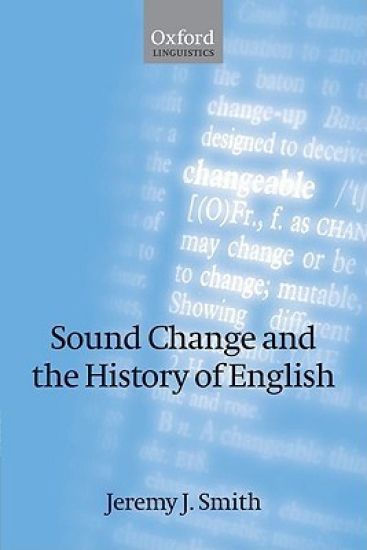
Sound Change and the History of English

Sound Change and the History of English

Jeremy Smith

Oxford University Press
2009
nidottu
This book addresses the question: why do sound changes happen, when and where they do? Jeremy Smith discusses the origins of a series of sound changes in English. He relates his arguments to larger questions about the nature of explanation in history and historical linguistics, and examines the interplay between sound change and social change. Drawing on the latest research in linguistics and history he shows how insights in one field illuminate the other. After the opening chapter describing the book's approach and a general theoretical framework for the study of sound-change, the author discusses problems of evidence and considers the nature of phonological processes. He then presents detailed investigations of major sound-changes from three transitional periods: first, when English emerged as a language distinct from the other West Germanic varieties; secondly, during the transition from Old to Middle English; and thirdly during the time when Middle English evolved into Early Modern English. The book is written with minimal use of jargon and offers clear definitions of complex notions. It will appeal to all serious students of English historical linguistics, from advanced undergraduate to researcher.
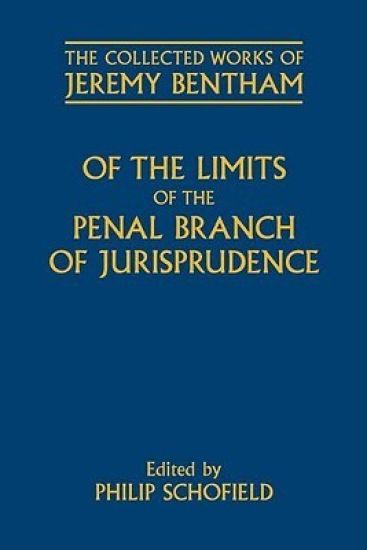
Of the Limits of the Penal Branch of Jurisprudence

Of the Limits of the Penal Branch of Jurisprudence

Jeremy Bentham

Oxford University Press
2010
sidottu
Of the Limits of the Penal Branch of Jurisprudence, written in 1780-2, is the continuation of An Introduction to the Principles of Morals and Legislation, and thus part of the introduction to the projected penal code on which Bentham worked in the late 1770s and early 1780s. The work emerged from Bentham's attempt to distinguish between civil and penal law, which led him into an exposition of the nature and scope of an individual law and an analysis of such key legal terms as power, duty, right, property, contract, and conveyance. Bentham addresses the relationship between different 'aspects' of the legislator's will, such as command, prohibition, and permission, and in so doing develops a 'logic of the will' which anticipates modern deontic logic. He explains that the disposition of the people to obey constitutes the basis of political and legal power, and distinguishes between law addressed to the sovereign and law addressed to the people. Dealing with some of the most fundamental problems in jurisprudence and the theory of human action, Of the Limits of the Penal Branch of Jurisprudence is a work of outstanding originality and seminal importance in the field of legal philosophy. The volume contains an Editorial Introduction which explains the provenance of the text, and the method of presentation. The text is fully annotated with textual and historical notes, and the volume is completed with detailed subject and name indices. This edition of Of the Limits of the Penal Branch of Jurisprudence supersedes Of Laws in General, edited by H.L.A. Hart and published by the Athlone Press in 1970, as a volume in The Collected Works of Jeremy Bentham.
Damp Squid

Damp Squid

Jeremy Butterfield

Oxford University Press
2009
nidottu
How many words are there in the English language and where were they born? Why does spelling 'wobble' and why do meanings change? How do words behave towards each other - and how do we behave towards words? And what does this all mean for dictionary-making in the 21st century? This entertaining book has the up-to-date and authoritative answers to all the key questions about our language. Using evidence provided by the world's largest language databank, the Oxford English Corpus, Butterfield exposes the English language's peculiarities and penchants, its development and difficulties, revealing exactly how it operates. Interpolating his expert knowledge of dictionary-making, Butterfield explains how dictionaries decide which words to include, how they find definitions, and how a Corpus influences the process. Whether you are happy to give the language free rein (free reign?), or whether you are more straight-laced (strait-laced?) when it comes to change, you will be amazed at what is revealed when the English language goes buck naked. (Or should that be butt naked?)
Torture, Terror, and Trade-Offs

Torture, Terror, and Trade-Offs

Jeremy Waldron

Oxford University Press
2010
sidottu
Jeremy Waldron has been a challenging and influential voice in the moral, political and legal debates surrounding the response to terrorism since 9/11. His contributions have spanned the major controversies of the War on Terror - including the morality and legality of torture, whether security can be 'balanced' with liberty, and the relationship between public safety and individual rights. He has also tackled underlying questions essential to understanding the practical debates - including what terrorism is, and what a right to security would entail. This volume collects all Waldron's work on these issues, including six published essays and two previously unpublished essays. It also includes a new introduction in which Waldron presents an overview of his contribution, and looks at the problems currently facing the Obama administration and the UK Government in dealing with the legacy of the Bush White House. The volume will be essential reading for all those engaged with contemporary politics, security law, and the continuing struggle for an ethical response to terrorism.
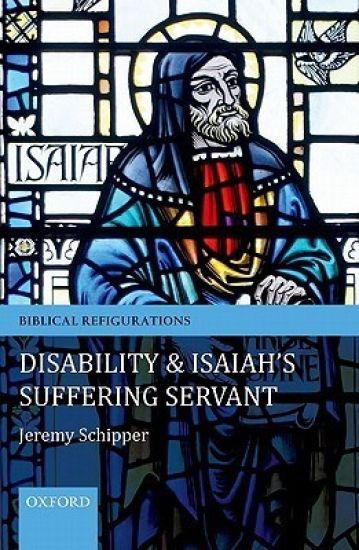
Disability and Isaiah's Suffering Servant

Disability and Isaiah's Suffering Servant

Jeremy Schipper

Oxford University Press
2011
sidottu
Although disability imagery is ubiquitous in the Hebrew Bible, characters with disabilities are not. The presence of the former does not guarantee the presence of the later. While interpreters explain away disabilities in specific characters, they celebrate the rhetorical contributions that disability imagery makes to the literary artistry of biblical prose and poetry, often as a trope to describe the suffering or struggles of a presumably nondisabled person or community. This situation contributes to the appearance (or illusion) of a Hebrew Bible that uses disability as a rich literary trope while disavowing the presence of figures or characters with disabilities. Isaiah 53 provides a wonderful example of this dynamic at work. The "Suffering Servant" figure in Isaiah 53 has captured the imagination of readers since very early in the history of biblical interpretation. Most interpreters understand the servant as an otherwise able bodied person who suffers. By contrast, Jeremy Schipper's study shows that Isaiah 53 describes the servant with language and imagery typically associated with disability in the Hebrew Bible and other ancient Near Eastern literature. Informed by recent work in disability studies from across the humanities, it traces both the disappearance of the servant's disability from the interpretative history of Isaiah 53 and the scholarly creation of the able bodied suffering servant.
Disability and Isaiah's Suffering Servant

Disability and Isaiah's Suffering Servant

Jeremy Schipper

Oxford University Press
2011
nidottu
Although disability imagery is ubiquitous in the Hebrew Bible, characters with disabilities are not. The presence of the former does not guarantee the presence of the later. While interpreters explain away disabilities in specific characters, they celebrate the rhetorical contributions that disability imagery makes to the literary artistry of biblical prose and poetry, often as a trope to describe the suffering or struggles of a presumably nondisabled person or community. This situation contributes to the appearance (or illusion) of a Hebrew Bible that uses disability as a rich literary trope while disavowing the presence of figures or characters with disabilities. Isaiah 53 provides a wonderful example of this dynamic at work. The "Suffering Servant" figure in Isaiah 53 has captured the imagination of readers since very early in the history of biblical interpretation. Most interpreters understand the servant as an otherwise able bodied person who suffers. By contrast, Jeremy Schipper's study shows that Isaiah 53 describes the servant with language and imagery typically associated with disability in the Hebrew Bible and other ancient Near Eastern literature. Informed by recent work in disability studies from across the humanities, it traces both the disappearance of the servant's disability from the interpretative history of Isaiah 53 and the scholarly creation of the able bodied suffering servant.
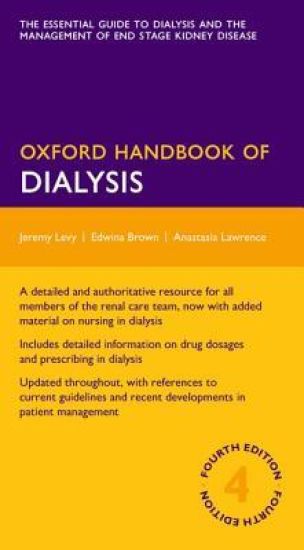
Oxford Handbook of Dialysis

Oxford Handbook of Dialysis

Jeremy Levy; Edwina Brown; Anastasia Lawrence

Oxford University Press
2016
muu
The Oxford Handbook of Dialysis is a comprehensive and practical guide to all aspects of dialysis, the management of patients with end stage kidney disease, and all its complications. The fourth edition has been completely updated, and covers all aspects of dialysis from haemodialysis techniques and haemodiafitration, to the medical, nursing and psychosocial aspects of managing patients with end stage kidney failure. Renal transplantation, plasma exchange, palliative care, and drug dosing are discussed, along with end of life care, and complications of chronic kdney disease. This handbook is packed with practical guidance and management, presented in a compact and easy to use format. The Oxford Handbook of Dialysis is aimed at all health care professionals dealing with dialysis patients from nephrologists to dieticians, as well as pharmacists, nurses, and surgeons. There are specific chapters on nursing patients on haemodialysis and peritoneal dialysis, and detailed nutrition and drug prescribing chapters. The fourth edition includes new sections on renal replacement therapies in acute kidney injury, home dialysis, new peritoneal dialysis fluids, new drugs including new epoietins and phosphate binders, updated sections on nocturnal dialysis, dialysis monitoring, encapsulating peritoneal sclerosis, and sleep disorders. Easy to read, practical, and focussed, this handbook should have a home in every renal unit, dialysis centre, renal ward, and be close to hand for every nephrologist, renal trainee, or renal nurse.
Torture, Terror, and Trade-Offs

Torture, Terror, and Trade-Offs

Jeremy Waldron

Oxford University Press
2012
nidottu
Jeremy Waldron has been a challenging and influential voice in the moral, political and legal debates surrounding the response to terrorism since 9/11. His contributions have spanned the major controversies of the War on Terror - including the morality and legality of torture, whether security can be 'balanced' with liberty, and the relationship between public safety and individual rights. He has also tackled underlying questions essential to understanding the practical debates - including what terrorism is, and what a right to security would entail. This volume collects all Waldron's work on these issues, including six published essays and two previously unpublished essays. It also includes a new introduction in which Waldron presents an overview of his contribution, and looks at the problems currently facing the Obama administration and the UK Government in dealing with the legacy of the Bush White House. The volume will be essential reading for all those engaged with contemporary politics, security law, and the continuing struggle for an ethical response to terrorism.
Corporate Social Responsibility

Corporate Social Responsibility

Jeremy Moon

Oxford University Press
2014
nidottu
Corporate social responsibility has been defined as 'the responsibility of enterprises for their impacts on society'. Is Corporate Social Responsibility (CSR) just window dressing or is it a contradiction in terms? In this Very Short Introduction, Jeremy Moon shows that CSR holds much more value than it first appears, and shows how it has come of age in recent years. Illustrating the sorts of CSR investments companies make, the ways in which they practice CSR, and the challenges this brings, Moon considers how the principles migrated from their US roots to become a global business phenomenon. Exploring the place of CSR in different economic, social, political, and managerial contexts, this short guide considers the many positives, but also challenges, that CSR can present for companies, societies, and governments worldwide. ABOUT THE SERIES: The Very Short Introductions series from Oxford University Press contains hundreds of titles in almost every subject area. These pocket-sized books are the perfect way to get ahead in a new subject quickly. Our expert authors combine facts, analysis, perspective, new ideas, and enthusiasm to make interesting and challenging topics highly readable.
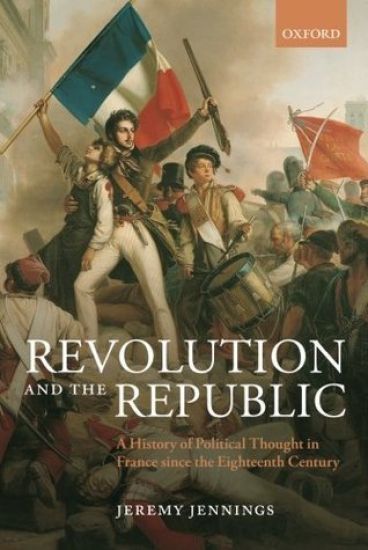
Revolution and the Republic

Revolution and the Republic

Jeremy Jennings

Oxford University Press
2013
nidottu
Revolution and the Republic provides a new and wide-ranging interpretation of political thought in France from the eighteenth century to the present day. At its heart are the dramatic and violent events associated with the French Revolution of 1789 and the birth of the First Republic in 1792. For the next two centuries, writers in France struggled to make sense of these and subsequent events in French revolutionary history, producing a rich and perceptive analysis of the nature of republican government. But, as Revolution and the Republic shows, these important debates were not limited to the narrow confines of politics and to the writing of constitutions. Such was their significance that they occupied a central place in discussions about religion, science, philosophy, commerce, and the writing of history. They also shaped arguments about the character of France and the French nation as well as polemics about the role of intellectuals in French society. Moreover, they continue to be of importance in France today as the country faces the challenges posed by globalisation, multiculturalism, and the reform of the welfare state. Integrating the perspectives of intellectual history, political theory, social and cultural history, and political economy, Jeremy Jennings has written a study of political ideas that appeals to all those interested in the history of modern France and Europe more generally.
Paediatric Respiratory Medicine

Paediatric Respiratory Medicine

Jeremy Hull; Julian Forton; Anne Thomson

Oxford University Press
2015
nidottu
Paediatric Respiratory Medicine Second edition remains the first point of reference for those faced with treating acute or chronic respiratory problems. The handbook discusses the approach to clinical problems, specific conditions, supportive care and practical procedures, and includes vital appendices covering specific tests and statistics. Designed as a practical guide, it serves general and specialist paediatricians at both consultant and trainee level. The book is divided into five parts. Part I provides a practical approach to acute and non-acute clinical problems. Part II provides detailed information about common and more rare clinical conditions. Part III provides useful information on supportive care, including for example, use of non-invasive ventilation and the care of a child with a tracheotomy. Part IV gives details on how to perform several practical procedures, such as ciliary brush biopsy, flexible bronchoscopy, and inserting a chest drain. The appendices provide information on lung function testing and tables of age-corrected normal values for several respiratory parameters. Written by three consultants in paediatric respiratory medicine, their expertise in the subject provides all levels of paediatricians with practical guide on a subject that is increasingly relevant in paediatrics.
Knowledge in an Uncertain World

Knowledge in an Uncertain World

Jeremy Fantl; Matthew McGrath

Oxford University Press
2011
nidottu
Knowledge in an Uncertain World is an exploration of the relation between knowledge, reasons, and justification. According to the primary argument of the book, you can rely on what you know in action and belief, because what you know can be a reason you have and you can rely on the reasons you have. If knowledge doesn't allow for a chance of error, then this result is unsurprising. But if knowledge does allow for a chance of error - as seems required if we know much of anything at all - this result entails the denial of a received position in epistemology. Because any chance of error, if the stakes are high enough, can make a difference to what can be relied on, two subjects with the same evidence and generally the same strength of epistemic position for a proposition can differ with respect to whether they are in a position to know. In defending these points, Fantl and McGrath investigate the ramifications for debates about epistemological externalism and contextualism, the value and importance of knowledge, Wittgensteinian hinge propositions, Bayesianism, and the nature of belief. The book is essential reading for epistemologists, philosophers who work on reasons and rationality, philosophers of language and mind, and decision theorists.
New Heavens and a New Earth

New Heavens and a New Earth

Jeremy Brown

Oxford University Press Inc
2013
sidottu
Jeremy Brown offers the first major study of the Jewish reception of the Copernican revolution, examining four hundred years of Jewish writings on the Copernican model. Brown shows the ways in which Jews ignored, rejected, or accepted the Copernican model, and the theological and societal underpinnings of their choices. Throughout New Heavens and a New Earth are deft historical studies of such colorful figures as Joseph Delmedigo, the first Jewish Copernican and a student of Galileo's; Tuviah Cohen, who called Copernicus the "Son of Satan; " Zelig Slonimski, author of a famed collection of essays on Halley's Comet and other astronomical phenomena; and the modern neo-goecentrists who use Einstein's Theory of Relativity to argue that the Earth does not actually revolve around the sun. Brown also provides insightful comparisons of concurrent Jewish and Christian writings on Copernicus, demonstrating that the Jewish reception of Copernicus was largely dependent on local factors and response. The book concludes by noting the important lessons that may be learned from the history of the Jewish reception of Copernican thought and showing how religions make room for new scientific descriptions of reality while upholding most cherished beliefs.