Kirjojen hintavertailu. Mukana 11 717 486 kirjaa ja 12 kauppaa.

Kirjahaku

Etsi kirjoja tekijän nimen, kirjan nimen tai ISBN:n perusteella.

1000 tulosta hakusanalla Jim Lefebvre

Gentleman Jim

Gentleman Jim

Raymond Briggs

Vintage Publishing
2008
sidottu
Encouraged by his wife, Hilda, also eager to incorporate more adventure into her life, Jim sets out to bring these dreams to fruition by accumulating various accoutrements, only to discover that the life of an executive, an artist or a cowboy is more complicated and costly than it appears.
Circulating Jim Crow

Circulating Jim Crow

Adam McKible

Columbia University Press
2024
sidottu
Winner, 2023-2024 RSAP Book Prize, Research Society for American PeriodicalsIn the early twentieth century, the Saturday Evening Post was perhaps the most popular and influential magazine in the United States, establishing literary reputations and shaping American culture. In the popular imagination, it is best remembered for Norman Rockwell’s covers, which nostalgically depicted a wholesome and idyllic American way of life. But beneath those covers lurked a more troubling reality. Under the direction of its longtime editor, George Horace Lorimer, the magazine helped justify racism and white supremacy. It published works by white authors that made heavy use of paternalistic tropes and demeaning humor, portraying Jim Crow segregation and violence as simple common sense.Circulating Jim Crow demonstrates how the Post used stereotypical dialect fiction to promulgate white supremacist ideology and dismiss Black achievements, citizenship, and humanity. Adam McKible tells the story of Lorimer’s rise to prominence and examines the white authors who provided the editor and his readers with the caricatures they craved. He also explores how Black writers of the Harlem Renaissance pushed back against the Post and its commodified racism. McKible places the erstwhile household names who wrote for the magazine in conversation with figures such as Paul Laurence Dunbar, F. Scott Fitzgerald, Ann Petry, W. E. B. Du Bois, and William Faulkner. Revealing the role of the Saturday Evening Post in normalizing racism for millions of readers, this book also offers a new understanding of how Black writers challenged Jim Crow ideology.
Circulating Jim Crow

Circulating Jim Crow

Adam McKible

Columbia University Press
2024
pokkari
Winner, 2023-2024 RSAP Book Prize, Research Society for American PeriodicalsIn the early twentieth century, the Saturday Evening Post was perhaps the most popular and influential magazine in the United States, establishing literary reputations and shaping American culture. In the popular imagination, it is best remembered for Norman Rockwell’s covers, which nostalgically depicted a wholesome and idyllic American way of life. But beneath those covers lurked a more troubling reality. Under the direction of its longtime editor, George Horace Lorimer, the magazine helped justify racism and white supremacy. It published works by white authors that made heavy use of paternalistic tropes and demeaning humor, portraying Jim Crow segregation and violence as simple common sense.Circulating Jim Crow demonstrates how the Post used stereotypical dialect fiction to promulgate white supremacist ideology and dismiss Black achievements, citizenship, and humanity. Adam McKible tells the story of Lorimer’s rise to prominence and examines the white authors who provided the editor and his readers with the caricatures they craved. He also explores how Black writers of the Harlem Renaissance pushed back against the Post and its commodified racism. McKible places the erstwhile household names who wrote for the magazine in conversation with figures such as Paul Laurence Dunbar, F. Scott Fitzgerald, Ann Petry, W. E. B. Du Bois, and William Faulkner. Revealing the role of the Saturday Evening Post in normalizing racism for millions of readers, this book also offers a new understanding of how Black writers challenged Jim Crow ideology.
Lucky Jim

Lucky Jim

Kingsley Amis

Penguin Books Ltd
2012
nidottu
'His mouth had been used as a latrine by some small creature of the night, and then as a mausoleum. During the night, too, he'd somehow been on a cross-country run and then been expertly beaten up by secret police. He felt bad.'Jix Dixon has a terrible job at a second-rate university. His life is full of things he could happily do without: the tedious and ridiculous Professor Welch, a neurotic and unstable girlfriend, Margaret, burnt sheets, medieval recorder music and over-enthusiastic students. If he can just deliver a lecture on 'Merrie England', a moderately successful career surely awaits him. But without luck, life is never simple . . .
Grim Jim's Satana Station

Grim Jim's Satana Station

James Desborough

Lulu.com
2020
nidottu
A runaway space station controlled by a rogue AI.A haven for scum, pirates, slavers and other ne'er-do-wells, squatting amidst the ruin of the fallen Urlanth Empire, right on the edge of a warzone.100 shops, services and interesting people for your players to interact with, and inspiration for hundreds of adventures and many ideas that can easily be ripped off for other space opera, heavy metal or OSR science fiction games.
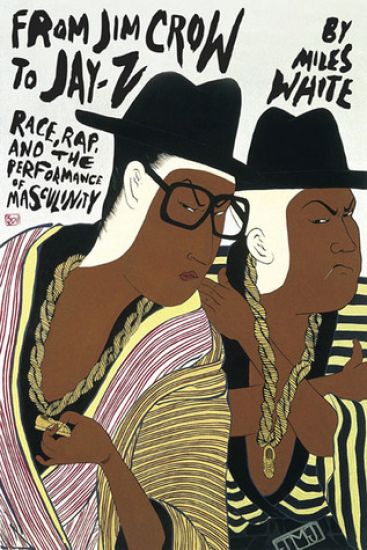
From Jim Crow to Jay-Z

From Jim Crow to Jay-Z

Miles White

University of Illinois Press
2011
sidottu
This multilayered study of the representation of black masculinity in musical and cultural performance takes aim at the reduction of African American male culture to stereotypes of deviance, misogyny, and excess. Broadening the significance of hip-hop culture by linking it to other expressive forms within popular culture, Miles White examines how these representations have both encouraged the demonization of young black males in the United States and abroad and contributed to the construction of their identities. From Jim Crow to Jay-Z traces black male representations to chattel slavery and American minstrelsy as early examples of fetishization and commodification of black male subjectivity. Continuing with diverse discussions including black action films, heavyweight prizefighting, Elvis Presley's performance of blackness, and white rappers such as Vanilla Ice and Eminem, White establishes a sophisticated framework for interpreting and critiquing black masculinity in hip-hop music and culture. Arguing that black music has undeniably shaped American popular culture and that hip-hop tropes have exerted a defining influence on young male aspirations and behavior, White draws a critical link between the body, musical sound, and the construction of identity.
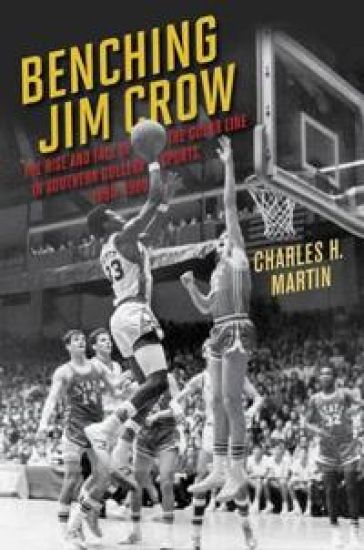
Benching Jim Crow

Benching Jim Crow

Charles Martin

University of Illinois Press
2010
nidottu
Chronicling the uneven rise and slow decline of segregation in American college athletics, Charles H. Martin shows how southern colleges imposed their policies of racial exclusion on surprisingly compliant northern teams and explains the social forces that eventually forced these southern schools to accept integrated competition. Martin emphasizes not just the racism prevalent in football and basketball in the South, but the effects of this discrimination for colleges and universities all over the country. Southern teams such as the University of Alabama, University of Mississippi, and the University of North Carolina were obsessed with national recognition, but their Jim Crow policies prevented them for many years from playing against racially mixed teams from other parts of the country. Devoting special attention to the Southeastern Conference, the Atlantic Coast Conference, and teams in Texas, Martin explores the changing social attitudes and culture of competition that turned the tide and allowed for the recruitment of black players and hiring of black coaches. He takes a close look at the case of Texas Western College (now the University of Texas at El Paso), the first major white university in an ex-Confederate state to recruit African American athletes extensively. Martin skillfully weaves existing arguments and documentation on the integration of college sports with wide-ranging, original research, including previously unpublished papers and correspondence of college administrators and athletic directors uncovered in university archives.
From Jim Crow to Jay-Z

From Jim Crow to Jay-Z

Miles White

University of Illinois Press
2011
nidottu
This multilayered study of the representation of black masculinity in musical and cultural performance takes aim at the reduction of African American male culture to stereotypes of deviance, misogyny, and excess. Broadening the significance of hip-hop culture by linking it to other expressive forms within popular culture, Miles White examines how these representations have both encouraged the demonization of young black males in the United States and abroad and contributed to the construction of their identities. From Jim Crow to Jay-Z traces black male representations to chattel slavery and American minstrelsy as early examples of fetishization and commodification of black male subjectivity. Continuing with diverse discussions including black action films, heavyweight prizefighting, Elvis Presley's performance of blackness, and white rappers such as Vanilla Ice and Eminem, White establishes a sophisticated framework for interpreting and critiquing black masculinity in hip-hop music and culture. Arguing that black music has undeniably shaped American popular culture and that hip-hop tropes have exerted a defining influence on young male aspirations and behavior, White draws a critical link between the body, musical sound, and the construction of identity.
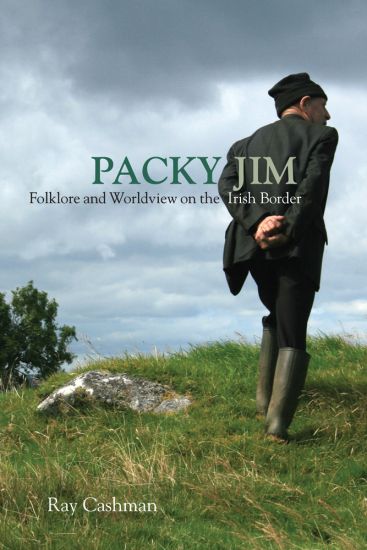
Packy Jim

Packy Jim

Ray Cashman

University of Wisconsin Press
2016
sidottu
Growing up on a secluded smuggling route along the border of Northern Ireland and the Republic, Packy Jim McGrath regularly heard the news, songs, and stories of men and women who stopped to pass the time until cover of darkness. In his early years, he says, he was all ears—but now it is his turn to talk.Ray Cashman, who has been interviewing McGrath for more than fifteen years, demonstrates how Packy Jim embellishes daily conversation with stories of ghosts and fairies, heroic outlaws and hateful landlords. Such folklore is a boundless resource that he uses to come to grips with the past and present, this world and the next. His stories reveal an intricate worldview that is both idiosyncratic and shared—a testament to individual intelligence and talent, and a window into Irish vernacular culture.
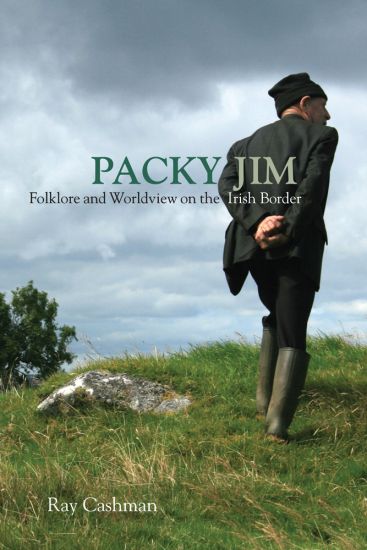
Packy Jim

Packy Jim

Ray Cashman

University of Wisconsin Press
2016
nidottu
Growing up on a secluded smuggling route along the border of Northern Ireland and the Republic, Packy Jim McGrath regularly heard the news, songs, and stories of men and women who stopped to pass the time until cover of darkness. In his early years, he says, he was all ears?but now it is his turn to talk.Ray Cashman, who has been interviewing McGrath for more than fifteen years, demonstrates how Packy Jim embellishes daily conversation with stories of ghosts and fairies, heroic outlaws and hateful landlords. Such folklore is a boundless resource that he uses to come to grips with the past and present, this world and the next. His stories reveal an intricate worldview that is both idiosyncratic and shared?a testament to individual intelligence and talent, and a window into Irish vernacular culture.
Lord Jim

Lord Jim

John Batchelor

Routledge
2019
sidottu
Published in 1900, Conrad’s Lord Jim can in many ways be seen as the first ‘modern’ novel. This important full study of the book, originally published in 1988, emphasizes the outstanding historical and artistic significance of Conrad’s masterpiece.John Batchelor pursues the ways in which Conrad dramatizes with unprecedented fidelity a relationship between friends and also explores what for Conrad is clearly a central truth about the human condition, namely the inalienable loneliness of man. The book provides a full discussion of the biographical and literary contexts of the novel, making use of the original manuscript and tracing the literary influences and sources of Conrad’s writing. It also considers the novel’s technical innovations, including Conrad’s ‘impressionism’ and its method of dramatization. Further chapters are devoted to a detailed commentary on the text and the book concludes with a study of the novel’s critical reception since its first publication.This volume will be essential reading for all students of literature and particularly for those with an interest in Conrad’s place in the development of modern fiction.
Lord Jim

Lord Jim

John Batchelor

Routledge
2021
nidottu
Published in 1900, Conrad’s Lord Jim can in many ways be seen as the first ‘modern’ novel. This important full study of the book, originally published in 1988, emphasizes the outstanding historical and artistic significance of Conrad’s masterpiece.John Batchelor pursues the ways in which Conrad dramatizes with unprecedented fidelity a relationship between friends and also explores what for Conrad is clearly a central truth about the human condition, namely the inalienable loneliness of man. The book provides a full discussion of the biographical and literary contexts of the novel, making use of the original manuscript and tracing the literary influences and sources of Conrad’s writing. It also considers the novel’s technical innovations, including Conrad’s ‘impressionism’ and its method of dramatization. Further chapters are devoted to a detailed commentary on the text and the book concludes with a study of the novel’s critical reception since its first publication.This volume will be essential reading for all students of literature and particularly for those with an interest in Conrad’s place in the development of modern fiction.
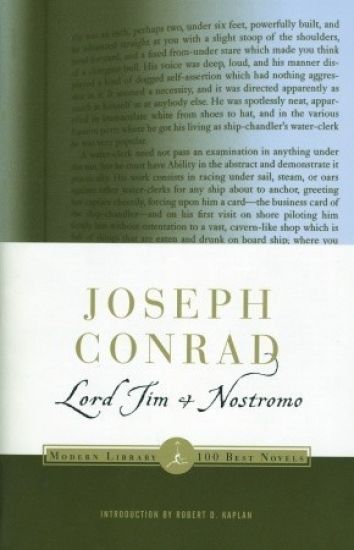
Lord Jim & Nostromo

Lord Jim & Nostromo

Joseph Conrad

Modern Library Inc
2000
pokkari
WITH A NEW INTRODUCTION BY ROBERT D. KAPLANCOMMENTARY BY VIRGINIA WOOLF, HAROLD BLOOM, EDWARD SAID,F. R. LEAVIS, AND ROBERT PENN WARREN" Never were Mr. Conrad's felicity of phrase and charm of atmosphere more obvious. . . . A book of the rare literary quality of Lord Jim is something to receive with gratitude and joy."--The New York TimesOriginally published in 1900, Lord Jim is one of Joseph Conrad's most complex literary masterpieces. The story of a young sailor whose moment of cowardice haunts him for the rest of his life, Lord Jim explores Conrad's lifelong obsessions with the nature of guilt and the possibility of redemption. Nostromo is considered by many to be Conrad's supreme achievement, and Conrad himself referred to Nostromo as his "widest canvas." Set in the fictitious South American republic of Costaguana, Nostromo reveals the effects that misguided idealism, unparalleled greed, and imperialist interests can have on a fledging nation. V. S. Pritchett wrote: "Nostromo is the most strikingly modern of Conrad's novels. It is pervaded by a profound, even morbid sense of insecurity which is the very spirit of our age." Robert D. Kaplan's Introduction explains why the two novels together form Conrad's darkest glimpse into the flawed nature of humankind.JOSEPH CONRAD (1857-1924) grew up amid political unrest in Russian-occupied Poland. After twenty years at sea in the French and British merchant navies, he settled in England in 1894. Over the next three decades, he revolutionized the English novel with works such as Youth (1902), Heart of Darkness (1902), Typhoon (1903), The Secret Agent (1907), Under Western Eyes (1911), Chance (1913), and Victory (1915).ROBERT D. KAPLAN is a correspondent for The Atlantic Monthly and the author of seven books of travel and foreign affairs that have been translated into a dozen languages, including Balkan Ghosts, The Ends of the Earth, and An Empire Wilderness, all bestsellers, and a collection of essays, The Coming Anarchy. He lectures frequently to the U.S. military.
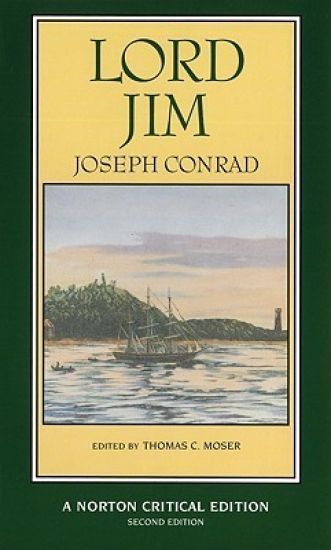
Lord Jim

Lord Jim

Joseph Conrad

WW Norton Co
1996
nidottu
All discrepancies have been checked against the second English edition and the second American edition; the resulting Textual Notes include over 500 substantive changes. The text is thoroughly annotated, and the editor has added a "Glossary of Eastern and Nautical Terms." "Backgrounds" includes the complete text of "Tuan Jim." "Sources" is a special section edited for this Norton Critical Edition by Dr. Norman Sherry of the University of Liverpool, presenting his discoveries about the real-life counterpart of Lord Jim, the incidents described in the novel, and life in the Dutch East Indies in the nineteenth century. Dr. Sherry is the author of Conrad's Eastern World. Among the perspectives presented in "Criticism" are those of Hugh Clifford, Albert J. Guerard, Ian Watt, Fredric Jameson, J. Hillis Miller, Edward Said, Philip M. Weinstein, Paul B. Armstrong, Marianne DeKoven, and Daphana Erdinast-Vulcan.
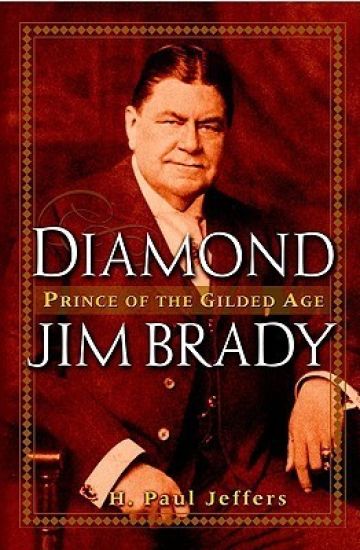
Diamond Jim Brady

Diamond Jim Brady

H. Paul Jeffers

John Wiley Sons Inc
2001
sidottu
Praise for H. Paul Jeffers An Honest President: The Life and Presidencies of Grover Cleveland "A well-written and timely book that reminds us of Grover Cleveland’s courage, commitment, and honesty at a time when these qualities seem so lacking in so much of American politics." —James MacGregor Burns, winner of the Pulitzer Prize and the National Book Award Colonel Roosevelt: Theodore Roosevelt Goes to War, 1879-1898 "A handsome narrative of a crucial period in the career of one of our country’s most colorful politicians." —Publishers Weekly Commissioner Roosevelt: The Story of Theodore Roosevelt and the New York City Police, 1895-1897 "A lively, entertaining, and well-researched portrait of a zealous reformer during the historic crusade that successfully launched his career in government." —Publishers Weekly
Lord Jim

Lord Jim

Joseph Conrad

Dover Publications Inc.
2003
nidottu
Lord Jim is a classic story of one man's tragic failure and eventual redemption, told under the circumstances of high adventure at the margins of the known world which made Conrad's work so immediately popular. But it is also the book in which its author, through a brilliant adaptation of his stylistic apparatus to his obsessive moral, psychological and political concerns, laid the groundwork for the modern novel as we know it.With An Introduction By Norman SherryAn expert on the works of Joseph Conrad, Professor Norman Sherry is the author of Conrad's Eastern World, Conrad's Western World and Conrad and His World. He is also the editor of Conrad: The Critical Heritage, and the official biographer of Graham Greene.