Kirjojen hintavertailu. Mukana 11 342 296 kirjaa ja 12 kauppaa.

Kirjahaku

Etsi kirjoja tekijän nimen, kirjan nimen tai ISBN:n perusteella.

1000 tulosta hakusanalla John Butler Johnson

John Williams's Film Music

John Williams's Film Music

Emilio Audissino

University of Wisconsin Press
2014
nidottu
John Williams is one of the most renowned film composers in history. He has penned unforgettable scores for Star Wars, the Indiana Jones series, E.T. the Extra-Terrestrial, Jaws, Superman, and countless other films. Fans flock to his many concerts, and with forty-nine Academy Award nominations as of 2014, he is the second-most Oscar-nominated person after Walt Disney. Yet despite such critical acclaim and prestige, this is the first book in English on Williams’s work and career.Combining accessible writing with thorough scholarship, and rigorous historical accounts with insightful readings, John Williams’s Film Music explores why Williams is so important to the history of film music. Beginning with an overview of music from Hollywood’s Golden Age (1933–58), Emilio Audissino traces the turning points of Williams’s career and articulates how he revived the classical Hollywood musical style. This book charts each landmark of this musical restoration, with special attention to the scores for Jaws and Star Wars, Williams’s work as conductor of the Boston Pops Orchestra, and a full film/music analysis of Raiders of the Lost Ark. The result is a precise, enlightening definition of Williams’s “neoclassicism” and a grounded demonstration of his lasting importance, for both his compositions and his historical role in restoring part of the Hollywood tradition.Best Special Interest Books, selected by the American Association of School Librarians, Best Books for General Audiences, selected by the Public Library Reviewers.
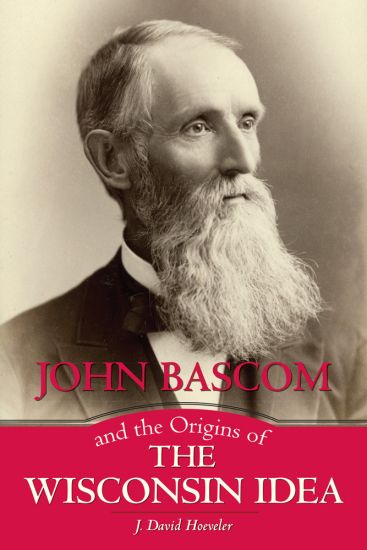
John Bascom and the Origins of the Wisconsin Idea

John Bascom and the Origins of the Wisconsin Idea

J. David Hoeveler

University of Wisconsin Press
2017
nidottu
In the Progressive Era of American history, the state of Wisconsin gained national attention for its innovative economic and political reforms. Amidst this ferment, the ""Wisconsin Idea"" was popularized?the idea that a public university should improve the lives of people beyond the borders of its campus.During his term as governor (1901?1906), Robert La Follette routinely consulted with University of Wisconsin researchers to devise groundbreaking programs and legislation. Although the Wisconsin Idea is often attributed to a 1904 speech by Charles Van Hise, then president of the University of Wisconsin, David Hoeveler argues that it originated decades earlier, in the creative and fertile mind of John Bascom.A philosopher, theologian, and sociologist, Bascom (1827?1922) deeply influenced a generation of students at the University of Wisconsin, including La Follette and Van Hise. Hoeveler documents how Bascom drew concepts from German idealism, liberal Protestantism, and evolutionary theory, transforming them into advocacy for social and political reform. He was a champion of temperance, women's rights, and labor, all of which brought him controversy as president of the university from 1874 to 1887. In a way unmatched by any of his peers at other institutions, Bascom outlined a social gospel that called for an expanded role for state governments and universities as agencies of moral improvement.Hoeveler traces the intellectual history of the Wisconsin Idea from the nineteenth century to such influential Progressive Era thinkers as Richard T. Ely and John R. Commons, who believed university researchers should be a vital source of expertise for government and citizens.
John Ruskin

John Ruskin

Tim Hilton

Yale University Press
1985
sidottu
This authoritative biography of John Ruskin, the most influential nineteenth-century critic of art and society, is the fruit of almost twenty years of research and the first to return to the original sources. It draws on the complete text of Ruskin’s diaries and many thousands of unpublished letters and other documents to provide fresh insight into the background and content of Ruskin’s numerous books. In this fascinating book, Hilton shows how the youthful art critic became a significant didactic writer, developing a unique voice that was to shape his future as the most eloquent and radical of all the great Victorian writers.
John Dewey and the Lessons of Art

John Dewey and the Lessons of Art

Philip W. Jackson

Yale University Press
2000
pokkari
What do the arts have to teach us about how to live our lives? How can teachers use art's "lessons" to improve their teaching? This provocative book examines John Dewey's thinking about the arts and explores the practical implications of that thinking for educators. Philip W. Jackson draws on Art as Experience, the philosopher's only book on the subject, and less well-known observations scattered throughout Dewey's writings to consider the nature and power of art and its relation to education. For those unacquainted with Dewey's thought as well as for Dewey specialists, this book provides rich insights into how the arts might inform educational practice.Jackson introduces the basics of Dewey's aesthetic theory and then looks at the ways in which single works of art can profoundly affect the individuals who either make them or come to them as readers, listeners, or spectators. He considers the experiences of many writers—music and art critics, authors of self-help books, poets, and philosophers—to explore the transformative power of the experience of art. In a concluding chapter on the educational relevance of Dewey's views, the author focuses on two instances of flawed educational practice, showing how a more conscientious application of Dewey's view of the arts could have improved the learning experience.
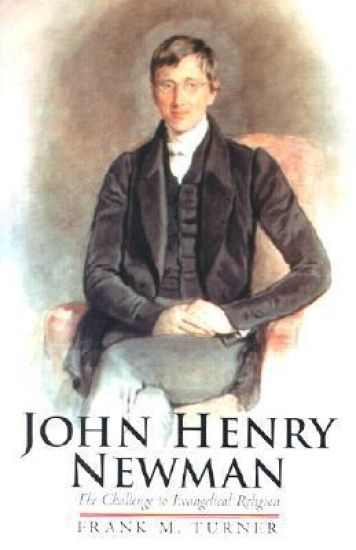
John Henry Newman

John Henry Newman

Frank M Turner

Yale University Press
2002
sidottu
One of the most controversial religious figures of the nineteenth century, John Henry Newman (1801-1890) began his career as a priest in the Church of England but converted to the Roman Catholic Church in 1845. He became a cardinal in 1879. Between 1833 and 1845 Newman, now best known for his autobiographical Apologia Pro Vita Sua and The Idea of a University, was the aggressive leader of the Tractarian Movement within Oxford University. Newman, along with John Keble, Richard Hurrell Froude, and E. B. Pusey, launched an uncompromising battle against the dominance of evangelicalism in early Victorian religious life. By 1845 Newman's radically outspoken views had earned him censure from Oxford authorities and sharp criticism from the English bishops. Departing from previous interpretations, Turner portrays Newman as a disruptive and confused schismatic conducting a radical religious experiment. Turner demonstrates that Newman's passage to Rome largely resulted from family quarrels, thwarted university ambitions, the inability to control his followers, and his desire to live in a community of celibate males.
John Payne Collier

John Payne Collier

Arthur Freeman; Janet Ing Freeman

Yale University Press
2004
sidottu
John Payne Collier (1789–1883), one of the most controversial figures in the history of literary scholarship, pursued a double career. A prolific and highly influential writer on the drama, poetry, and popular prose of Shakespeare’s age, Collier was at the same time the promulgator of a great body of forgeries and false evidence, seriously affecting the text and biography of Shakespeare and many others. This monumental two-volume work for the first time addresses the whole of Collier’s activity, systematically sorting out his genuine achievements from his impostures.Arthur and Janet Freeman reassess the scholar-forger’s long life, milieu, and relations with a large circle of associates and rivals while presenting a chronological bibliography of his extensive publications, all fully annotated with regard to their creditability. The authors also survey the broader history of literary forgery in Great Britain and consider why so talented a man not only yielded to its temptations but also persisted in it throughout his life.
John Talman

John Talman

Yale University Press
2009
sidottu
Contributions by Christopher Baker, Cristina Borgioli, Louisa M. Connor Bulman, Antonella Capitanio, Marco Collareta, Peter Davidson, Francisco Freddolini, Cristiano Giometti, John Harris, Elisabeth Kieven, and Cinzia Maria Sicca This handsome book is the only full-length study of John Talman (1677–1726), first director of the Society of Antiquaries and one of the most influential collectors of drawings in early 18th-century Britain. Prominent scholars discuss the history of Talman’s acquisitions, shedding light on the competitive nature, social practices, and aesthetic ideas of connoisseurship both in England and abroad. Talman’s collection, amassed in England, Florence, and Rome between the 1690s and 1719, focused on Italian medieval art, architecture, and textiles as well as Renaissance and Baroque architecture and sculpture. It reflected the tastes and preoccupations of artistic and intellectual élites in pre-enlightenment Europe. A vehicle for disseminating aesthetic and historical ideas, the collection became not only an extraordinary document of the state of ancient and modern Italian monuments but also a history of architecture and culture at large that provided visual evidence of buildings and rituals lost through time. Distributed for the Yale Center for British Art and the Paul Mellon Centre for Studies in British Art
John Wilkes

John Wilkes

Arthur Cash

Yale University Press
2007
pokkari
A highly entertaining biography of the incredible John Wilkes, champion of liberty and irrepressible libertine. "It is difficult to believe that John Wilkes, a notorious womanizer and scandal-monger, was a genuine hero of civil liberties and political democracy on both sides of the Atlantic in the late 18th century, but hero he was and in this engaging book Arthur Cash gives Wilkes the serious treatment he has long deserved."—Eric Foner, Columbia University “[A] superb biography. . . . After finishing the last page I turned back to the beginning in order to enjoy it all over again.”—Tom Hodgkinson, Independent on Sunday “Informative and enjoyable. . . . So well researched, so full of fascinating detail, . . . so delightfully buoyant.” - John Barrell, London Review of Books
John Brett

John Brett

Christiana Payne; Charles Brett

Yale University Press
2010
sidottu
Drawing on a wealth of unpublished sketchbooks, journals, and writings, this essential guide to John Brett (1831–1902) investigates the painter who was seen as the leader of the Pre-Raphaelite landscape school. In addition to exploring the familiar early works, including The Val d'Aosta and Stonebreaker, it provides rich information on his later, less-known coastal and marine paintings. Brett’s turbulent friendship with John Ruskin is discussed, as are his relations with his beloved sister, Rosa, and his partner Mary, with whom he had seven children. His fervent interest in astronomy, his love of the sea, and his lifelong pursuit of wealth and recognition are all examined in this reassessment, which concludes with a catalogue raisonné of his works, prepared by his descendent Charles Brett.Published for the Paul Mellon Centre for Studies in British Art
John Henry Newman

John Henry Newman

Frank M. Turner

Yale University Press
2011
pokkari
A provocative reappraisal of a pivotal figure, John Henry Newman also offers an important reconsideration of the religious and intellectual history of the nineteenth century. One of the most controversial religious figures of the nineteenth century, John Henry Newman (1801–1890) began his career as a priest in the Church of England but converted to the Roman Catholic Church in 1845. He became a cardinal in 1879.Between 1833 and 1845 Newman, now best known for his autobiographical Apologia Pro Vita Sua and The Idea of a University, was the aggressive leader of the Tractarian Movement within Oxford University. Newman, along with John Keble, Richard Hurrell Froude, and E. B. Pusey, launched an uncompromising battle against the dominance of evangelicalism in early Victorian religious life. By 1845 Newman’s radically outspoken views had earned him censure from Oxford authorities and sharp criticism from the English bishops.Departing from previous interpretations, Turner portrays Newman as a disruptive and confused schismatic conducting a radical religious experiment. Turner demonstrates that Newman’s passage to Rome largely resulted from family quarrels, thwarted university ambitions, the inability to control his followers, and his desire to live in a community of celibate males.
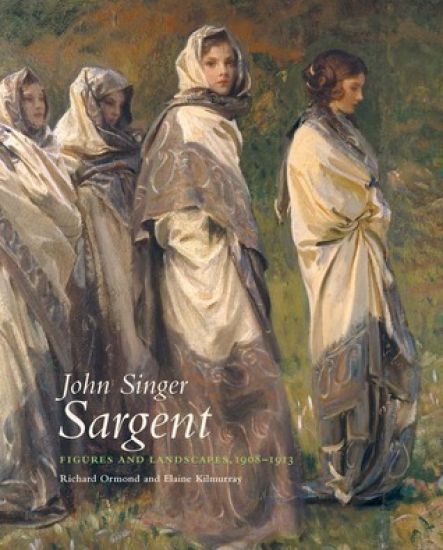
John Singer Sargent

John Singer Sargent

Richard Ormond; Elaine Kilmurray

Yale University Press
2014
sidottu
The penultimate volume of the acclaimed catalogue raisonné showcases paintings of some of Sargent’s favorite places and people After John Singer Sargent (1856–1925) determined to curtail his internationally successful portrait practice, he had more freedom to paint where and what he wanted. Volume VIII of the John Singer Sargent catalogue raisonné transports us to the artist’s most beloved locations, often with his friends and family. In the paintings featured here, Sargent returned to subjects that had always held deep personal connections and artistic challenges: mountains, streams, rocks and torrents, figures in repose, architecture and gardens, boats and shipping. He had known and painted the Alps since childhood, and his new Alpine studies make up the greatest number of works in this book. Beautifully designed, this volume represents a continuation in organization and presentation of the high standards that mark the series, and documents 299 works in oil and watercolor. Each painting is catalogued with full provenance, exhibition history, and bibliography. Wherever possible, works are illustrated in color; some are accompanied by related drawings and comparative studies by Sargent’s fellow artists. Contemporary photographs pinpoint the places and views that Sargent painted.Published in association with the Paul Mellon Centre for Studies in British Art
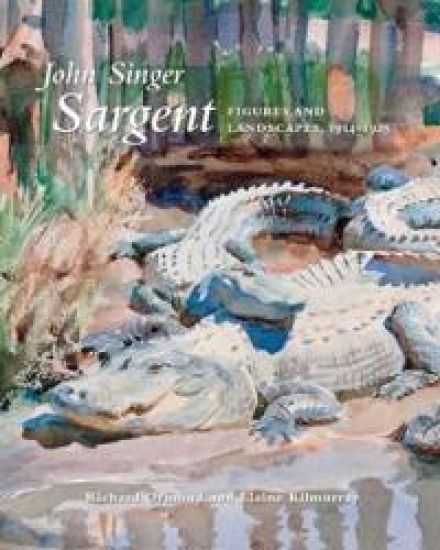
John Singer Sargent

John Singer Sargent

Richard Ormond; Elaine Kilmurray

Yale University Press
2016
sidottu
The final volume in a full survey of the work of John Singer Sargent, covering his late watercolors, designs for the Boston murals, and work as an official War Artist The last in a series of books devoted to the work of John Singer Sargent (1856–1925), this volume covers the figure and landscape works that Sargent produced between 1914 and 1925. The story begins with the artist painting with friends on vacation in Austria in the summer of 1914, unaware that war was about to be declared. The following year, he began working in London on his ideas for the murals at the Boston Public Library and the Museum of Fine Arts, Boston, before spending two years in Boston and exploring other parts of America. While in Florida to paint a portrait of John D. Rockefeller, he produced a group of uniquely Floridian watercolors that are breathtaking arrangements of color, form, and light. In July 1918 he accepted an invitation from the British government to travel to the Somme battlefields as an official war artist. This experience led him to produce a remarkable group of works depicting troop movements, off-duty soldiers relaxing, and the studies for his epic canvas, Gassed. Sargent returned to Boston in 1921 and 1922 to complete his mural projects, and visits to Maine and New Hampshire yielded numerous watercolors. Chapters on Sargent’s materials and the framing of his pictures complete this remarkable project.Published for The Paul Mellon Centre for Studies in British Art
John Brown's Spy

John Brown's Spy

Steven Lubet

Yale University Press
2012
sidottu
The first full investigation of John Brown's trusted co-conspirator and his betrayal of the doomed Harper's Ferry raidersJohn Brown's Spy tells the nearly unknown story of John E. Cook, the person John Brown trusted most with the details of his plans to capture the Harper's Ferry armory in 1859. Cook was a poet, a marksman, a boaster, a dandy, a fighter, and a womanizer—as well as a spy. In a life of only thirty years, he studied law in Connecticut, fought border ruffians in Kansas, served as an abolitionist mole in Virginia, took white hostages during the Harper's Ferry raid, and almost escaped to freedom. For ten days after the infamous raid, he was the most hunted man in America with a staggering $1,000 bounty on his head.Tracking down the unexplored circumstances of John Cook's life and disastrous end, Steven Lubet is the first to uncover the full extent of Cook's contributions to Brown's scheme. Without Cook's participation, the author contends, Brown might never have been able to launch the insurrection that sparked the Civil War. Had Cook remained true to the cause, history would have remembered him as a hero. Instead, when Cook was captured and brought to trial, he betrayed John Brown and named fellow abolitionists in a full confession that earned him a place in history's tragic pantheon of disgraced turncoats.
John Ruskin

John Ruskin

Tim Hilton

Yale University Press
2012
pokkari
Selected by New York Times Book Review as a Best Book Since 2000 “The finest and fairest life of Ruskin that has yet been written. . . . To every phase of Ruskin’s highly variegated literary oeuvre Mr. Hilton brings a judicious and informed critical intelligence. It has taken 100 years, but in Tim Hilton, Ruskin has found the champion he deserves.”—Hilton Kramer, Wall Street Journal John Ruskin, one of the greatest writers and thinkers of the nineteenth century, was also one of the most prolific. Not only did he publish some 250 works, but he also wrote lectures, diaries, and thousands of letters that have not been published. This book—the second and final volume of Tim Hilton’s acclaimed biography of Ruskin, which is published on the centenary of Ruskin’s death—draws on the original source material to give a moving account of the life of this brilliant and creative man. The book begins in 1859, when Ruskin, a famous author with a disastrous marriage behind him, is living with his parents, writing and traveling, and tutoring—among other pupils—Rose La Touche, a girl of ten, with whom he slowly falls in love. Hilton recounts how this relationship developed into one of the saddest love affairs of literary history, ending in tragedy in 1875. Thereafter, says Hilton, Ruskin’s life was punctuated by bouts of insanity and despair that culminated in total breakdown for the last ten years of his life. During these years, however, his intellect and imagination reached new heights, as he produced Praeterita andmost of Fors Clavigera, the series of monthly letters to British workers. Hilton’s magisterial narrative follows Ruskin through this period and shows that he was the most eloquent and radical of all the great Victorian writers.
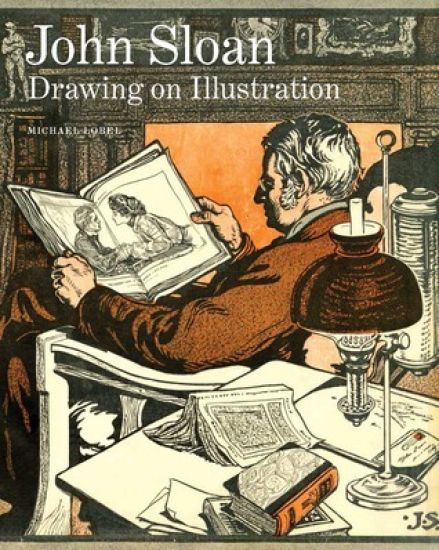
John Sloan

John Sloan

Michael Lobel

Yale University Press
2014
sidottu
The American realist artist John Sloan (1871–1951) is best known for his portrayals of daily life in early 20th-century New York and as a member of The Eight and the Ashcan School, alongside peers like Robert Henri, Everett Shinn, and George Luks. Sloan’s artistic approach was shaped by his experience as a commercial illustrator, a type of work that inaugurated his professional career—at newspapers like the Philadelphia Press and later for mass-market magazines—and which he pursued even after he turned his focus to painting. In John Sloan: Drawing on Illustration, Michael Lobel explores the impact of Sloan’s illustrating on his wider output, including his paintings, his drawings for the radical journal The Masses, and his response to the watershed 1913 Armory Show. Illuminating the interaction between art and popular culture, this book provides an important new framework for understanding the modern genre of illustration, and in so doing touches on major 20th-century currents, including the rise and expansion of the mass media and the visual legacy of European modernism.
John Keats

John Keats

Nicholas Roe

Yale University Press
2013
pokkari
An entirely new portrait of Keats, rich with insights into the torments of his life and the imaginative sources of his works This landmark biography of celebrated Romantic poet John Keats explodes entrenched conceptions of him as a delicate, overly sensitive, tragic figure. Instead, Nicholas Roe reveals the real flesh-and-blood poet: a passionate man driven by ambition but prey to doubt, suspicion, and jealousy; sure of his vocation while bitterly resentful of the obstacles that blighted his career; devoured by sexual desire and frustration; and in thrall to alcohol and opium. Through unparalleled original research, Roe arrives at a fascinating reassessment of Keats's entire life, from his early years at Keats's Livery Stables through his harrowing battle with tuberculosis and death at age 25. Zeroing in on crucial turning points, Roe finds in the locations of Keats's poems new keys to the nature of his imaginative quest.Roe is the first biographer to provide a full and fresh account of Keats's childhood in the City of London and how it shaped the would-be poet. The mysterious early death of Keats's father, his mother's too-swift remarriage, living in the shadow of the notorious madhouse Bedlam—all these affected Keats far more than has been previously understood. The author also sheds light on Keats's doomed passion for Fanny Brawne, his circle of brilliant friends, hitherto unknown City relatives, and much more. Filled with revelations and daring to ask new questions, this book now stands as the definitive volume on one of the most beloved poets of the English language.
John Baldessari Catalogue Raisonné
The second in a projected four-volume series of the complete catalogue of works by John Baldessari Compiling four-hundred-plus unique works of art, this volume traces the shifts and developments in conceptual artist John Baldessari’s work from 1975-86. It covers his photo-based works such as the “Strobe,” “Word Chain,” and “Pathetic Fallacy” series from 1975; the “Violent Space” and the seminal “Concerning Diachronic/Synchronic Time: Above, On, Under (With Mermaid),” from 1976; and the “Blasted Allegories” series from 1977-78, which drew heavily from the artist’s vast collection of photo stills taken from commercial television.In the 1980s, Baldessari’s art took a different direction, beginning with the expansive “Fugitive Essays” triptychs from 1980 and leading to 1982’s photographic interpretations of Grimm’s Fairy Tales. Building on these themes, Baldessari began producing a body of work that was inspired in part by dreams, psychology, film, and popular culture. Ensuing works were more formal, elaborate, and large-scale. From 1984 to 1986 Baldessari created a number of works that employed his soon-to-be-signature colored discs painted over people’s faces in the photos.An introductory essay will provide a close reading of selected works and a historical context for understanding Baldessari’s art from this period. A detailed chronology and exhibition history and bibliography are also included. This is the second of a projected four-volume catalogue raisonné.Published in association with Marian Goodman Gallery
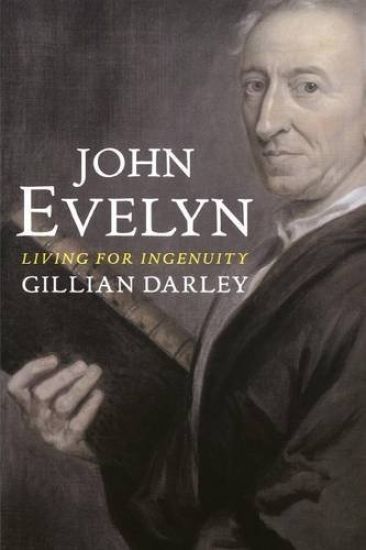
John Evelyn

John Evelyn

Gillian Darley

Yale University Press
2014
pokkari
This new biography of John Evelyn, diarist, scholar, and intellectual virtuoso (1620-1706), is the first account to make full use of his huge unpublished archive, deposited at the British Library in 1995. This crucial material permits a broader and richer picture of Evelyn, his life, and his friendships than permitted by his own celebrated diaries.Gillian Darley provides a rounded portrait of Evelyn’s eighty-five years--his family life, his exile in Paris, his interests, and his preoccupations. Evelyn lived through some of England’s most tumultuous history, through five reigns, the Civil War, the Restoration, and the Revolution of 1688. He was author or translator of countless publications, tackling an enormous variety of contemporary issues. Both a religious man and a key figure in the Royal Society, he viewed Christianity and the new science as wholly compatible. Evelyn remained endlessly curious and engaged into very old age, and this absorbing biography demonstrates the liveliness of his hugely busy mind.
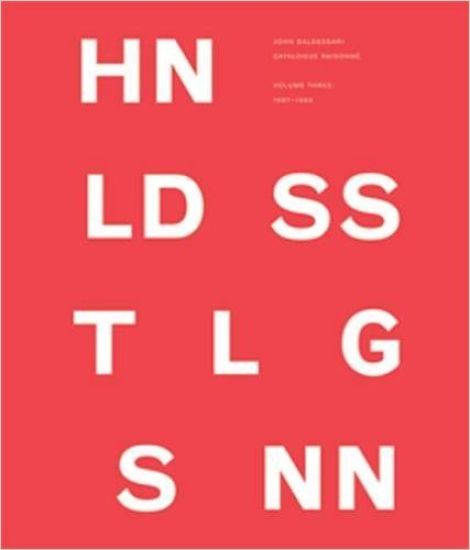
John Baldessari Catalogue Raisonné
A comprehensive look at works made by Baldessari between the years 1987 and 1993 This handsome volume, the third of the John Baldessari (b. 1931) catalogue raisonné project, compiles 400-plus unique works of art made by the influential conceptual artist from 1987 through 1993. Here we see the artist’s large-scale photo-based works, many of which employed his signature colored discs painted over the faces of people in the photos, accompanied by entries that trace the shifts and developments in Baldessari’s work as his collaged photo narratives achieved maturity and mastery. A critical essay by Briony Fer provides a close reading of selected works, giving historical context for Baldessari’s art from this period. In addition to a detailed chronology, complete exhibition history, and bibliography, this volume notably features a previously unpublished conversation between Baldessari and the artist Ed Ruscha, which was undertaken specifically for this publication. In the conversation, the artists discuss their early careers in Southern California and the shared thematic concerns in their work. The artworks in this volume demonstrate Baldessari’s ability to express—and, in many cases, combine—the narrative potential of images and the associative power of language within the boundaries of a single piece. Published in association with Marian Goodman Gallery