Kirjojen hintavertailu. Mukana 11 342 296 kirjaa ja 12 kauppaa.

Kirjahaku

Etsi kirjoja tekijän nimen, kirjan nimen tai ISBN:n perusteella.

1000 tulosta hakusanalla John Cheever

John Henry Muirhead (Routledge Revivals)
First published in 1942, Reflections documents the life of John Henry Muirhead and the philosophical age that he observed. The first part of the volume derives from Muirhead’s own autobiographical narrative, left unfinished when he died in May 1940. The second part features two final chapters written by John W. Harvey that comprehensively record the final stages of Muirhead’s life. Harvey’s chapters incorporate Muirhead’s unfinished final years of commentary and begin at the man’s retirement from Birmingham Chair in 1921.As a student and teacher of philosophy, Muirhead’s life ran almost precisely parallel to what he himself refers to as ‘one of the most vivid and important movements in British and American philosophy’. He came into contact with some of the age’s primary thinkers and as such, his own autobiography is important in providing an insight into his contemporary philosophical environment.
John Henry Muirhead (Routledge Revivals)
First published in 1942, Reflections documents the life of John Henry Muirhead and the philosophical age that he observed. The first part of the volume derives from Muirhead’s own autobiographical narrative, left unfinished when he died in May 1940. The second part features two final chapters written by John W. Harvey that comprehensively record the final stages of Muirhead’s life. Harvey’s chapters incorporate Muirhead’s unfinished final years of commentary and begin at the man’s retirement from Birmingham Chair in 1921.As a student and teacher of philosophy, Muirhead’s life ran almost precisely parallel to what he himself refers to as ‘one of the most vivid and important movements in British and American philosophy’. He came into contact with some of the age’s primary thinkers and as such, his own autobiography is important in providing an insight into his contemporary philosophical environment.
John Bowlby and Attachment Theory

John Bowlby and Attachment Theory

Jeremy Holmes

Routledge
2014
sidottu
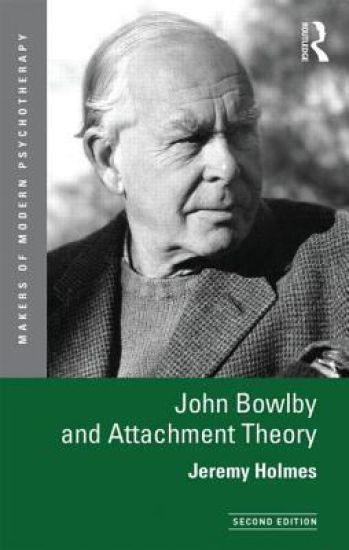
Second edition, completely revised and updatedJohn Bowlby is one of the outstanding psychological theorists of the twentieth century. This new edition of John Bowlby and Attachment Theory is both a biographical account of Bowlby and his ideas and an up-to-date introduction to contemporary attachment theory and research, now a dominant force in psychology, counselling, psychotherapy and child development.Jeremy Holmes traces the evolution of Bowlby’s work from a focus on delinquency, material deprivation and his dissatisfaction with psychoanalysis's imperviousness to empirical science to the emergence of attachment theory as a psychological model in its own right. This new edition traces the explosion of interest, research and new theories generated by Bowlby’s followers, including Mary Main’s discovery of Disorganised Attachment and development of the Adult Attachment Interview, Mikulincer and Shaver’s explorations of attachment in adults and the key contributions of Fonagy, Bateman and Target. The book also examines advances in the biology and neuroscience of attachment.Thoroughly accessible yet academically rigorous, and written by a leading figure in the field, John Bowlby and Attachment Theory is still the perfect introduction to attachment for students of psychology, psychiatry, counselling, social work and nursing.
John Bowlby and Attachment Theory

John Bowlby and Attachment Theory

Jeremy Holmes

Routledge
2014
nidottu
Second edition, completely revised and updatedJohn Bowlby is one of the outstanding psychological theorists of the twentieth century. This new edition of John Bowlby and Attachment Theory is both a biographical account of Bowlby and his ideas and an up-to-date introduction to contemporary attachment theory and research, now a dominant force in psychology, counselling, psychotherapy and child development.Jeremy Holmes traces the evolution of Bowlby’s work from a focus on delinquency, material deprivation and his dissatisfaction with psychoanalysis's imperviousness to empirical science to the emergence of attachment theory as a psychological model in its own right. This new edition traces the explosion of interest, research and new theories generated by Bowlby’s followers, including Mary Main’s discovery of Disorganised Attachment and development of the Adult Attachment Interview, Mikulincer and Shaver’s explorations of attachment in adults and the key contributions of Fonagy, Bateman and Target. The book also examines advances in the biology and neuroscience of attachment.Thoroughly accessible yet academically rigorous, and written by a leading figure in the field, John Bowlby and Attachment Theory is still the perfect introduction to attachment for students of psychology, psychiatry, counselling, social work and nursing.
John Dee's Natural Philosophy

John Dee's Natural Philosophy

Nicholas Clulee

Routledge
2012
sidottu
This is the definitive study of John Dee and his intellectual career. Originally published in 1988, this interpretation is far more detailed than any that came before and is an authoritative account for anyone interested in the history, literature and scientific developments of the Renaissance, or the occult.John Dee has fascinated successive generations. Mathematician, scientist, astrologer and magus at the court of Elizabeth I, he still provokes controversy. To some he is the genius whose contributions to navigation made possible the feats of Elizabethan explorers and colonists, to others an alchemist and charlatan.Thoroughly examining Dee’s natural philosophy, this book provides a balanced evaluation of his place, and the role of the occult, in sixteenth-century intellectual history. It brings together insights from a study of Dee’s writings, the available biographical material, and his sources as reflected in his extensive library and, more importantly, numerous surviving annotated volumes from it.
John Dee's Actions with Spirits (Volumes 1 and 2)
This was originally a two volume set which is now bound as one.Here is presented an investigation of the nature of the earliest extant records of the supposed communication with angels and spirits of John Dee (1527-1608) with the assistance of his two mediums or 'scryers', Barnabas Saul and Edward Kelly. Volume 2 of this work is a transcription of the records in Dee's hand contained in Sloane MS 3188, which has been transcribed only once before, by Elias Ashmole in 1672. Volume 1 is an introduction and thorough commentary to the text which is primarily explaining its many obscurities. The author describes the physical state of the manuscript and its history then continues with a biography of Dee and his scryers and some background to Renaissance occult philosophy. Further chapters address the arguments that the manuscript represents a conscious fraud or a cryptographical exercise and describe the magical system and instruments evolved during the communications or 'Actions'. The last, fascinating chapter examines Dee's motives for believing so strongly in the truth of the Actions and suggests that a principal motive was the conviction, not held by Dee alone, that a new age was about to dawn upon earth.
John Dewey reconsidered (International Library of the Philosophy of Education Volume 19)
John Dewey was one of the most influential American philosophers of his time and also one of the most prolific, with about forty books and 700 articles to his credit. When this book was originally published in 1977 Dewey's work, with the exception of his important contributions to the philosophy of education, had suffered an unwarranted scholarly neglect and remained little known outside the USA. This present volume helped redress this balance.
John Nolen and the Metropolitan Landscape
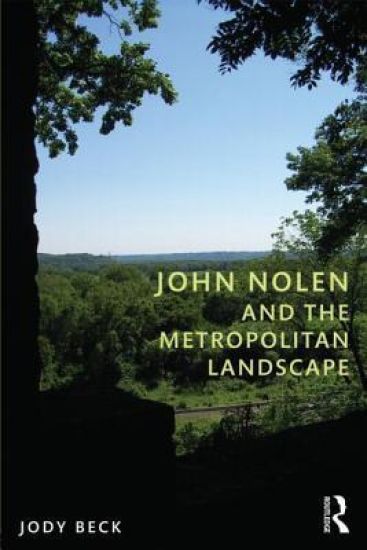
"A model city, the hope of democracy" – John Nolen on his suggested plans for Madison, WisconsinThis book connects John Nolen's political and social visions with his design proposals by analyzing his extensive writings, personal correspondence and some of his most significant works. While John Nolen is best known as a city planner, he trained as a landscape architect and used the titles 'landscape architect' and 'city planner' interchangeably throughout his career. A prolific practitioner, he was engaged in nearly 400 projects throughout the United States between 1905 and 1936, including town planning, industrial housing, state and city parks, new towns and regional planning.Focusing particularly on several projects central to Nolen’s career including Madison (WI), Mariemont (OH), Venice (FL) and Penderlea (NC), Beck investigates the ideologies that underpinned Nolen’s work. This is a rare look at a key figure in the development of 20th century American cities.
John Nolen and the Metropolitan Landscape
"A model city, the hope of democracy" – John Nolen on his suggested plans for Madison, WisconsinThis book connects John Nolen's political and social visions with his design proposals by analyzing his extensive writings, personal correspondence and some of his most significant works. While John Nolen is best known as a city planner, he trained as a landscape architect and used the titles 'landscape architect' and 'city planner' interchangeably throughout his career. A prolific practitioner, he was engaged in nearly 400 projects throughout the United States between 1905 and 1936, including town planning, industrial housing, state and city parks, new towns and regional planning.Focusing particularly on several projects central to Nolen’s career including Madison (WI), Mariemont (OH), Venice (FL) and Penderlea (NC), Beck investigates the ideologies that underpinned Nolen’s work. This is a rare look at a key figure in the development of 20th century American cities.
John Fogerty

John Fogerty

Thomas M. Kitts

Routledge
2015
sidottu
This is the first critical biography to explore John Fogerty's life and his music. When inducting Creedence Clearwater Revival into the Rock and Roll Hall of Fame in 1993, Bruce Springsteen referred to the "music’s power and its simplicity… [its] beauty and poetry and a sense of the darkness of events and of history, of an American tradition shot through with pride, fear, and paranoia." This book investigates those aspects and more of Fogerty’s songs and life: his Americanism, his determined individualism, and unyielding musical vision which led to conflicts with his band, isolation from his family, constant legal battles, and some of the greatest songs of the 20th century.
John Fogerty

John Fogerty

Thomas M. Kitts

Routledge
2015
nidottu
This is the first critical biography to explore John Fogerty's life and his music. When inducting Creedence Clearwater Revival into the Rock and Roll Hall of Fame in 1993, Bruce Springsteen referred to the "music’s power and its simplicity… [its] beauty and poetry and a sense of the darkness of events and of history, of an American tradition shot through with pride, fear, and paranoia." This book investigates those aspects and more of Fogerty’s songs and life: his Americanism, his determined individualism, and unyielding musical vision which led to conflicts with his band, isolation from his family, constant legal battles, and some of the greatest songs of the 20th century.
The John Fiske Collection
These revised editions of four classic texts each include a new introduction by Henry Jenkins, explaining ‘Why Fiske Still Matters’ for today’s students, followed by a discussion chapter between former Fiske students. This new material underlines the continuing relevance of these foundational texts in the study of communication, contemporary media and popular culture.The John Fiske Collection includes re-issues of the following four classic texts:Introduction to Communication StudiesTelevision CultureReading the PopularUnderstanding Popular CultureThis collection will be highly useful to undergraduate and postgraduate students on all communication, media and cultural studies courses.
John Rawls and the History of Political Thought
In this book, Jeffrey Bercuson presents the immense, and yet for the most part unrecognized, influences of Jean-Jacques Rousseau and Georg Wilhelm Friedrich Hegel on John Rawls, the most important political philosopher of the 20th century. While the well-documented influence of Immanuel Kant on Rawls is deep and profound, Kantian features and interpretation of justice as fairness do not tell the whole story about that doctrine. Drawing on Rawls’s Lectures on the History of Moral Philosophy and his Lectures on the History of Political Philosophy, Bercuson presents the reader with a more nuanced, accurate account of the moral and political philosophy of Rawls in light of these under-appreciated influences. This new, richer image of Rawls’s political philosophy shows that Rawls’s notion of reasonableness – his notion of the kind and extent of our obligations to those fellows with whom we are engaged in social cooperation – is conspicuously more demanding, and therefore more attractive, than most interpreters and critics assume. Rawls turns to Rousseau and to Hegel, both of whom provide attractive images of engaged citizenship worthy of emulation. Written accessibly, and contributing to key contemporary debates of global justice, this book will be read by scholars within the fields of social and political theory, ethics, and philosophy.
John Dee's Natural Philosophy

John Dee's Natural Philosophy

Nicholas Clulee

Routledge
2014
nidottu
This is the definitive study of John Dee and his intellectual career. Originally published in 1988, this interpretation is far more detailed than any that came before and is an authoritative account for anyone interested in the history, literature and scientific developments of the Renaissance, or the occult.John Dee has fascinated successive generations. Mathematician, scientist, astrologer and magus at the court of Elizabeth I, he still provokes controversy. To some he is the genius whose contributions to navigation made possible the feats of Elizabethan explorers and colonists, to others an alchemist and charlatan.Thoroughly examining Dee’s natural philosophy, this book provides a balanced evaluation of his place, and the role of the occult, in sixteenth-century intellectual history. It brings together insights from a study of Dee’s writings, the available biographical material, and his sources as reflected in his extensive library and, more importantly, numerous surviving annotated volumes from it.
John Donne: The Critical Heritage
Contains writings about John Donne from 1873 to 1923, including Henry Morley, Edmund Gosse, W.F. Collier, Rudyard Kipling, Charles Eliot Norton, Henry Augustin Beers, Thomas Hardy, W.B. Yeats, Ezra Pound, T.S. Eliot, and many others. Together these works present a record of how, from the nineteenth century onwards, critics viewed Donne, and how he became part of today's literary canon.
John Skelton

John Skelton

Routledge
2015
nidottu
The Critical Heritage gathers together a large body of critical sources on major figures in literature. Each volume presents contemporary responses to a writer's work, enabling student and researcher to read the material themselves.
John Stuart Mill on Economic Theory and Method
This book, the third in the series of Samuel Hollander's essays, covers twelve key studies on the economic theory and method of John Stuart Mill. This volume provides an accessible sourcebook on Mill's relationship with David Ricardo, and the 'Classical School', as well as confirming his relevance for modern economics and for the place of economics within the social sciences.
John Ruskin's Political Economy

John Ruskin's Political Economy

William Henderson

Routledge
2014
nidottu
This volume offers an exciting new reading of John Ruskin's economic and social criticism, based on recent research into rhetoric in economics. Willie Henderson uses notions derived from literary criticism, the rhetorical turn in economics and more conventional approaches to historical economic texts to reevaluate Ruskins economic and social criticism. By identifying Ruskin's rhetoric, and by reading his work through that of Plato, Xenophon, and John Stuart Mill, Willie Henderson reveals how Ruskin manipulated a knowledge base. Moreover in analysis of the writings of William Smart, John Bates Clark and Alfred Marshall, the author shows that John Ruskin's influence on the cultural significance of economics and on notions of economic well-being has been considerable.
John Winthrop

John Winthrop

Michael Parker

Routledge
2013
sidottu
Puritan politician, lawyer, and lay theologian John Winthrop fled England in 1630 when it looked like Charles I had successfully blocked all hopes of passing Puritan-inspired reforms in Parliament. Leading a migration, he came to New England in the hopes of creating an ideal Puritan community and eventually became the governor of Massachusetts. Winthrop is remembered for his role in the Puritan migration to the colonies and for delivering what is probably the most famous lay sermon in American history, "A Model of Christian Charity." In it he proclaimed that New England would be "a city upon a hill"--an example for future colonies. In John Winthrop: Founding the City upon a Hill, Michael Parker examines the political and religious history of this iconic figure. In this short biography, bolstered by letters, sermons, and maps, John Winthrop introduces students to the colonial world, the Pequot Wars, and the history of American Exceptionalism.
John Winthrop

John Winthrop

Michael Parker

Routledge
2013
nidottu
Puritan politician, lawyer, and lay theologian John Winthrop fled England in 1630 when it looked like Charles I had successfully blocked all hopes of passing Puritan-inspired reforms in Parliament. Leading a migration, he came to New England in the hopes of creating an ideal Puritan community and eventually became the governor of Massachusetts. Winthrop is remembered for his role in the Puritan migration to the colonies and for delivering what is probably the most famous lay sermon in American history, "A Model of Christian Charity." In it he proclaimed that New England would be "a city upon a hill"--an example for future colonies. In John Winthrop: Founding the City upon a Hill, Michael Parker examines the political and religious history of this iconic figure. In this short biography, bolstered by letters, sermons, and maps, John Winthrop introduces students to the colonial world, the Pequot Wars, and the history of American Exceptionalism.