Kirjojen hintavertailu. Mukana 11 717 486 kirjaa ja 12 kauppaa.

Kirjahaku

Etsi kirjoja tekijän nimen, kirjan nimen tai ISBN:n perusteella.

1000 tulosta hakusanalla John F. Ince

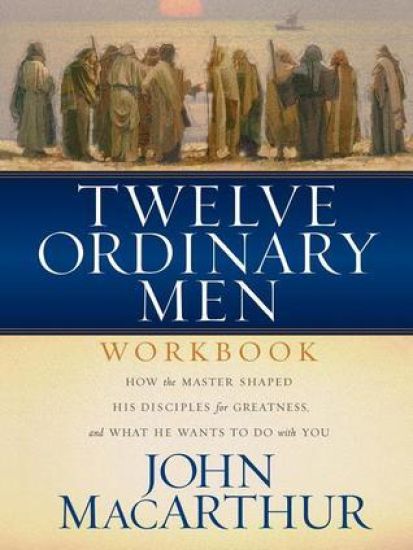
Twelve Ordinary Men Workbook: How the Master Shaped His Disciples for Greatness, and What He Wants to Do with You
The Twelve Ordinary Men Workbook brings you face-to-face with Jesus' disciples as you've never seen them. Who were these men?They weren't saints. They weren't scholars. They weren't even religious sages. What is most amazing about the disciples is that Jesus even selected them at all. Among them--a handful of common fishermen, a hated tax collector, and an impulsive political zealot.This this workbook, you'll put yourself in their shoes. You'll come to understand their doubts and hopes. And you'll hear the power of Jesus' words in a whole new way. The message is clear. If Christ can accomplish His purposes through the lives of common men like these, imagine what He has in store for you Based on John MacArthur's best-selling book Twelve Ordinary Men, this workbook is ideal for group or individual study, and includes: Suggestions for further readingThought-provoking call-out areasDaily life application assignmentsFocused, relevant prayersIntriguing study questionsAdditional notes for leading group study
Why Government Can't Save You

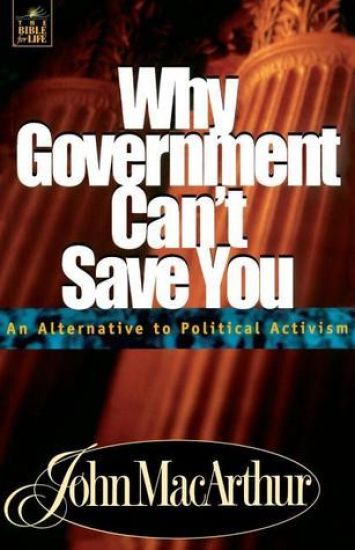
Why Government Can't Save You

John F. MacArthur

Thomas Nelson Publishers
2000
nidottu
The Lord did not come as a political deliverer or social reformer. He did not rally supporters in a grandiose attempt to "capture the culture" for morality or greater political and religious freedom. Rather, His divine calling was to rescue the lost souls of individual men and women from sin and hell.In Why Government Can't Save You: An Alternative to Political Activism, author John MacArthur illustrates through Scripture that, regardless of the numerous immoral, unjust, and ungodly failures of secular government, believers are to pray and seek to influence the world for Christ by godly, selfless, and peaceful living under that authority, not by protests against the government or by acts of civil disobedience. Dr. MacArthur will explore these areas:Christians' responsibility to authorityHow and why we should support our leadersHow to live righteously in a pagan cultureThe principle of paying taxesJesus' lessons on tax exemptionsThe biblical purpose of governmentThe principle and reasons for civil obedience."To devote all, or even most, of our time, energy, money, and strategy to putting a façade of morality on the world or the appearance of 'rightness' over our governmental and political institutions is to badly misunderstand our roles as Christians in a spiritually lost world." - John MacArthur
How to Survive in a World of Unbelievers

How to Survive in a World of Unbelievers

John F. MacArthur

Thomas Nelson Publishers
2001
nidottu
How should Christians conduct themselves in an increasingly secular society?Jesus answered this troubling question on the eve of His death with some of the most poignant, powerful teaching in His entire ministry. During those hours He taught His apostles and, consequently, all believers throughout history, How To Survive in a World of Unbelievers.Respected pastor, teacher, and author John MacArthur, plumbs the depths of Jesus' final words of encouragement to us, based on John 13-16. By studying this valuable book, you will find answers to these and other difficult questions:How can you remain pure-hearted and spiritually sound in a church seemingly full of hypocrites?How do you help your children stay morally pure when they want to "fit in" with school friends who prefer objectionable activites?How can you keep your family anchored to Christ in a society that is drifting far away from His teaching on family issues, such as divorce, homosexuality and abortion?How do you retain your Christian ethics when you boss asks you to lie or cheat?How can you keep your life focused on glorifying Christ in a society that proclaims self, pride, and personal achievement as marks of success?
God in the Manger

God in the Manger

John F. MacArthur

Thomas Nelson Publishers
2001
nidottu
Rediscover the saving truth hidden in Bethlehem's manger.Because of the warm fuzzy ambiance and economic impact of Christmas, Dr. John MacArthur is convinced that we are missing the enormous impact of the reality behind the season. In his usual easy-to-read style, he takes us beyond the tinsel and the seasonal hype to offer us an encounter with the miracle and mystery of the birth of Christ.He leads us line by line through the familiar Christmas scriptures.He exposes common misconceptions about Jesus' birth.He helps us to see Mary's baby through the eyes of those who saw Him first.He refutes attempts to dismiss the biblical account of the virgin birth as just another myth. "We dare not trivialize or sentimentalize the persons and events surrounding the birth of Christ," Dr. MacArthur warns. "An authentic celebration of Christmas recognizes that the eternal, sovereign God came to earth as a human being to live a righteous life among His people and then to die as a perfect sacrifice to deliver from the wrath of God all who repent and belive."Let God inject new life and meaning into your celebration of the coming of Christ as you use this simple volume to review what the Bible says about his birth.
Pharmaceutical Compounding and Dispensing

Pharmaceutical Compounding and Dispensing

John F. Marriott; Keith A. Wilson; Christopher A. Langley; Dawn Belcher

Pharmaceutical Press
2010
nidottu
Pharmacists have been responsible for compounding medicines for centuries. Although most modern medicines are not compounded in a local pharmacy environment, there are still occasions when it is imperative that pharmacists have this knowledge. Pharmaceutical Compounding and Dispensing provides a comprehensive guide to producing extemporaneous formulations safely and effectively. The book covers three core sections: the history of compounding; pharmaceutical forms and their preparation; product formulae. This is a modern, detailed and practical guide to the theory and practice of extemporaneous compounding and dispensing. Fully revised and updated, this new edition will be an indispensable reference for pharmacy students and practicing pharmacists. Supplementary videos demonstrating various dispensing procedures can be viewed online.
Quantitative Millimetre Wavelength Spectrometry

Quantitative Millimetre Wavelength Spectrometry

John F Alder; John G Baker

Royal Society of Chemistry
2002
sidottu
This unique book demonstrates the current status, and future potential, of millimetre wavelength (MMW) spectrometry as a means of quantitative analysis of gaseous mixtures. After outlining the spectroscopic theory required, the authors then go on to discuss the components of an MMW cavity spectrometer, concentrating on compact, automatic, low-cost instruments. Other topics covered include solid state MMW sources with both cryogenically cooled and room temperature detectors. Post-detector signal processing, smoothing, filtering and spectral profile fitting are also discussed. The book concludes with a look at the future of the technique, in areas such as millimetre wave-over-fibre technology. Quantitative Millimetre Wavelength Spectrometry will be welcomed by practitioners in both industry and academia.
Capitalism at War

Capitalism at War

John F. Godfrey

BLOOMSBURY PUBLISHING PLC
1987
sidottu
This book is concerned with the unprecedented involvement of the French state in the industrial sector of the country's economy during the First World War. That war was a great forcing-house for change, and one of the traditional relationshps of French society which was radically altered during this period was that of the state to private industry. Professor Godfey's study is unique as far as France is concerned: it is the only full study of the workings of the French war economy from 1914 to 1918 and on the politics of businessmen.
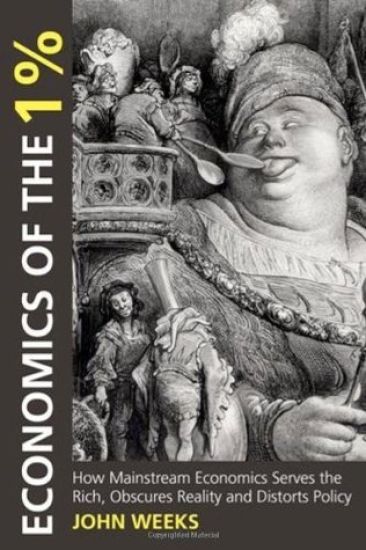
Economics of the 1%

Economics of the 1%

John F. Weeks

Anthem Press
2014
nidottu
How much do economists really know? In most cases, they claim to have profound knowledge but in fact understand little and obscure almost everything. Most people are convinced that economics should be left to the ‘experts’, when they themselves are perfectly capable of understanding it. This book explains that mainstream economics serves the interests of the rich through its logical inconsistency and unabashedly reactionary conclusions. John F. Weeks exposes the myths of mainstream economics and explains in straightforward language why current policies fail to serve the vast majority of people in the United States, Europe and elsewhere. Their failure to serve the interests of the many results from their devoted service to the few.
Power, Administration and Finance in Mughal India
From the mid-16th to the early 18th centuries the Mughal empire was the dominant power in the Indian subcontinent. Contrary to what is sometimes suggested, John Richards argues that this centralised state was dynamic and skillfully run. The studies here consider its links with the wider early modern world, and focus on three related aspects of its history. The first concerns the nature of imperial authority, in terms both of the dynastic ideology created by Akbar and his successors, and the extent to which this authority could be enforced in the countryside. The second aspect is that of fiscal and monetary policy and administration: how did the Mughals collect, track and expend their vast revenues, and what effects did this have? Finally, the author asks why the system could not cope with the changes it had helped engender, and what were the weaknesses and pressures that led to the breakup of the empire in the first decades of the 18th century. De la moitié du 16e siècle au début du 18e, l’empire moghol était le pouvoir dominant du sous-continent indien. Contrairement à ce qui peut parfois être suggéré, John Richards soutient que cet état centralisé était dynamique et adroitement mené. Les études examinent ses liens avec le reste du monde moderne et se concentrent sur trois aspects de son histoire. Le premier concerne la nature de l’autorité impériale, en termes d’idéologie dynastique, telle qu’elle avait été créée par Akbar et ses successeurs et du point jusqu’auquel cette autorité pouvait être imposée dans les milieux ruraux. Le second aspect est celui de l’administration et de la politique fiscale et monétaire: comment les Moghols faisaient-ils pour collecter, retrouver et dépenser leurs vastes revenus et quel était l’effet d’une telle politique? Enfin, l’auteur cherche à savoir pourquoi ce système n’arrivait pas à faire face aux changements qu’il avait contribué à engendrer et quelles avaient été
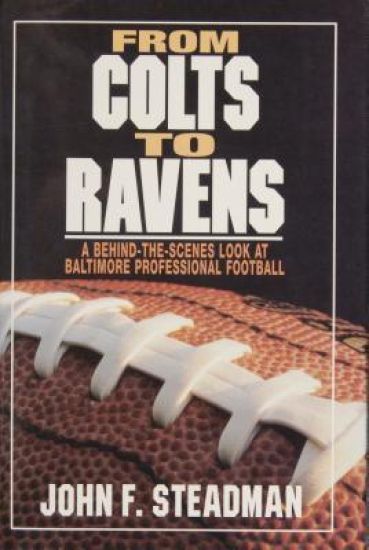
From Colts to Ravens

From Colts to Ravens

John F. Steadman

Schiffer Publishing Ltd
2009
sidottu
Step into the locker rooms, the playing fields, and the owners’ offices with sportswriter John F. Steadman as he relates the fascinating tale of football in Baltimore. In scores of animated first-person accounts, the author tells it like it was: from the organization of the Colts in 1947, through the sale of the team to Bob Irsay in 1972, to the infamous trip out of the town under the cover of darkness in 1984, and finally the acquisition of a new Baltimore team, the Ravens, in 1996. Included in the telling are the player heroes—Unitas, Donovan, Moore, Berry, and others—as well as the coaches, general managers, and owners. Among the cast of characters were con men, real scoundrels, and not a few bizarre figures. Some had good intentions; others were inept; still others were devious. The story is spiced with pungent comments from a man who was there—first as a fan watching the inaugural game in 1947 and later as a professional reporting the championship moments, the demise in 1984, and the ensuing struggle to return to the league.
Escaping into Nature

Escaping into Nature

John F. Reiger

Oregon State University
2013
nidottu
In Escaping into Nature, prominent wildlife conservationist and environmental historian John Reiger shares his story of an angler and hunter who found a cause and a calling and combined them for his life’s work. John Reiger’s outdoor adventures as a young man primed him for the teachings of the great sportsmen-conservationists of the past, particularly George Bird Grinnell, Theodore Roosevelt, and Aldo Leopold. Inspired by these conservation giants, Reiger left the security of a tenured professorship to serve as executive director of the Connecticut Audubon Society where he, sometimes controversially, put his ideals into practice. Later, he resumed his academic career to illuminate the lives of early wildlife conservationists, visionaries who continue to inspire us to care deeply about the future of the natural world. Abused psychologically within his family in his early years, Reiger found solace in nature. Though he first entered the outdoors as an escape from his unpleasant circumstances, he soon found the study and pursuit of insects, fishes, and birds to be exciting ends in themselves. He came to believe that it was only by participating in the life and death of other creatures that one could learn to truly value the natural world, be a part of it, and be inspired to work for its conservation. John Reiger’s autobiography is also the story of his own developing fascination with America’s past, especially as it relates to human interaction with the natural world; his desire to share that passion with others; and his experiences on the road to becoming a nationally recognised scholar. The twists and turns of that journey, and his accounts of the people—and of the wild creatures—who helped him along the way, will appeal to history enthusiasts and nature lovers alike.
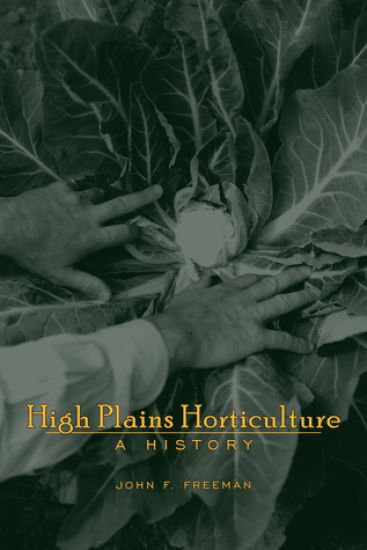
High Plains Horticulture

High Plains Horticulture

John F. Freeman

University Press of Colorado
2008
sidottu
This book explores the significant, civilizing role that horticulture has played in the development of farmsteads and rural and urban communities on the High Plains portions of Colorado, Kansas, Nebraska, South Dakota, and Wyoming, drawing on both the science and the application of science practiced since 1840. Freeman explores early efforts to supplement native and imported foodstuffs, state and local encouragement to plant trees, the practice of horticulture at the Union Colony of Greeley, the pioneering activities of economic botanists Charles Bessey (in Nebraska) and Aven Nelson (in Wyoming), and the shift from food production to community beautification as the High Plains were permanently settled and became more urbanized. In approaching the history of horticulture from the perspective of local and unofficial history, Freeman pays tribute to the tempered idealism, learned pragmatism, and perseverance of individuals from all walks of life seeking to create livable places out of the vast, seemingly inhospitable High Plains. He also suggests that, slowly but surely, those that inhabit them have been learning to adjust to the limits of that fragile land.The book will appeal to not only scientists and professionals but also gardening enthusiasts interested in the history of their hobby on the High Plains.
The Case Against the Constitution

The Case Against the Constitution

John F. Manley; Kenneth M. Dolbeare

M.E. Sharpe
1987
sidottu
This is a collection of 1500 quotes from more than 1000 Supreme Court decisions. These excerpts, dating from the beginning of the Republic, are arranged to include the legislative, judicial, and executive branches; states' rights; due process; free speech; equal rights; and freedom of religion.
The Case Against the Constitution

The Case Against the Constitution

John F. Manley; Kenneth M. Dolbeare

M.E. Sharpe
1987
nidottu
This is a collection of 1500 quotes from more than 1000 Supreme Court decisions. These excerpts, dating from the beginning of the Republic, are arranged to include the legislative, judicial, and executive branches; states' rights; due process; free speech; equal rights; and freedom of religion.
Complete Confined Spaces Handbook

Complete Confined Spaces Handbook

John F. Rekus

CRC Press Inc
1994
sidottu
This book provides plant managers, supervisors, safety professionals, and industrial hygienists with recommended procedures and guidance for safe entry into confined spaces. It reviews selected case histories of confined space accidents, including multiple fatalities, and discusses how a confined space entry program could have prevented them. It outlines the requirements of the OSHA permit-entry confined space standard and provides detailed explanations of requirements for lockout/tagout, air sampling, ventilation, emergency planning, and employee training. The book is filled with more than 100 line drawings and more than 150 photographs.
Who Count as Persons?

Who Count as Persons?

John F. Kavanaugh

Georgetown University Press
2001
pokkari
Just what is a human being? Who counts? The answers to these questions are crucial when one is faced with the ethical issue of taking human life. In this affirmation of the intrinsic personal dignity and inviolability of every human individual, John Kavanaugh, S.J., denies that it can ever be moral to intentionally kill another. Today in every corner of the world men and women are willing to kill others in the name of "realism" and under the guise of race, class, quality of life, sex, property, nationalism, security, or religion. We justify these killings by either excluding certain humans from our definition of personhood or by invoking a greater good or more pressing value. Kavanaugh contends that neither alternative is acceptable. He formulates an ethics that opposes the intentional killing not only of medically "marginal" humans but also of depersonalized or criminalized enemies. Offering a philosophy of the person that embraces the undeveloped, the wounded, and the dying, he proposes ways to recover a personal ethical stance in a global society that increasingly devalues the individual. Kavanaugh discusses the work of a range of philosophers, artists, and activists from Richard Rorty and Soren Kierkegaard to Albert Camus and Woody Allen, from Mother Teresa to Jack Kevorkian. His approach is in stark contrast to that of writer Peter Singer and others who believe that not all human life has intrinsic moral worth. It will challenge philosophers, students of ethics, and anyone concerned about the depersonalization of contemporary life.