Kirjahaku
Etsi kirjoja tekijän nimen, kirjan nimen tai ISBN:n perusteella.
1000 tulosta hakusanalla John L Cook


The Great Governing Families of England
John L. Sanford; Meredith Townsend
Kessinger Pub
2007
pokkari
How do teachers know the limits of their speech? Free speech means more than simply being free to agree, though the authoritarian managerial cultures of many schools increasingly ignore the need for a strong and empowered teaching profession. In response to this ongoing systemic contradiction, Learning What You Cannot Say provides a unique combination of teacher narratives, cultural theory and «black letter law» as part of a broader effort to create an active and effective critical legal literacy. The book explores the subtle ways in which cultural values inform shared perceptions of the black letter law and the detrimental impact of teacher apathy and confusion about rights. Since public schools educate our future citizens who learn not only from books but also by example, strong teacher speech is vital to the continued health of both our education system and our democracy. Any transformative form of political literacy, the author insists, must consider the cultural politics as well as the substantive law of rights.
How do teachers know the limits of their speech? Free speech means more than simply being free to agree, though the authoritarian managerial cultures of many schools increasingly ignore the need for a strong and empowered teaching profession. In response to this ongoing systemic contradiction, Learning What You Cannot Say provides a unique combination of teacher narratives, cultural theory and «black letter law» as part of a broader effort to create an active and effective critical legal literacy. The book explores the subtle ways in which cultural values inform shared perceptions of the black letter law and the detrimental impact of teacher apathy and confusion about rights. Since public schools educate our future citizens who learn not only from books but also by example, strong teacher speech is vital to the continued health of both our education system and our democracy. Any transformative form of political literacy, the author insists, must consider the cultural politics as well as the substantive law of rights.
Canadians are beginning to learn about the negative effects of residential schools on Aboriginal people in Canada. More hidden in the written record, but bearing a similar powerfully destructive role, are Indian Agents, who were with very few exceptions White men who ‘ruled the reserves’ in Canada from the 1870s to the 1960s. This book is the first to present a discussion of Indian Agents in general. It provides an introductory look at the control Indian Agents exercised over Aboriginal communities throughout the period in question. The primary intent is to spark discussion in Indigenous studies courses. This book is built upon a discussion of the lives and impact of five Indian Agents: Hayter Reed, William Morris Graham, John McIver, William Halliday, and Fred Hall. However, the practices and views of 39 other Indian Agents are interwoven throughout the text. Although there was a readily detectable sameness in the way that Indian Agent power was imposed on Aboriginal communities based on the institutional racism of the Indian Agent System, one of the points to be made is that not all Indian Agents were the same. Some were more oppressive than others. Also frequently pointed out is the fact that Aboriginal peoples were not merely helpless victims to Indian Agent control, but resisted that control, sometimes successfully. The book concludes with a chapter comparing the Indian Agent System in Canada, with similar systems in the United States, Australia, and New Zealand.
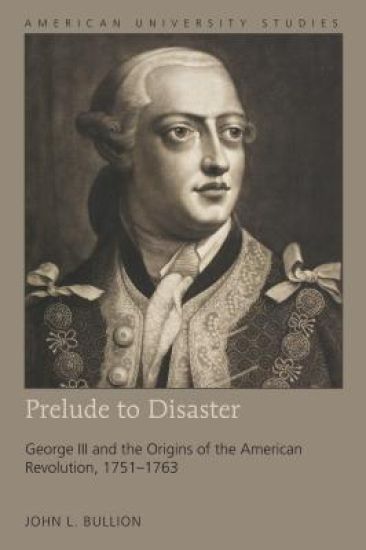
Prelude to Disaster is the most comprehensive account of the fateful decision to tax American colonists. Unlike other studies, it emphasizes the central role of the young George III in the process. Central to this examination are George’s principles of statecraft and government, his thoughts on pre- and post-war empires, his assessments of future relations with Britain’s great antagonist France, his personality and its development before and after his accession to the throne, his friendship with the earl of Bute, and his attitudes toward domestic policies and politicians, especially George Grenville.
Psychologists are increasingly engaged with and consulted by public agencies, school districts, and businesses to assist in the prevention of major problems (e.g., school violence, drug addiction, and employee stress). This book provides a broad overview of the science and practice of prevention, including practical guidance for developing, implementing, and evaluating prevention programs. The author reviewsthe history of preventionbehavior change theories that guide prevention programsrisk and protective factors to targetissues of social justice and prevention and professional issues related to ethics, education, and funding. Model programs from diverse settings are described, including those in education, health care, and community settings. This book offers a multidisciplinary perspective and an array of resources for prevention practitioners, scholars, and students from disciplines such as psychology, social work, education, the health sciences, and public policy.