Kirjojen hintavertailu. Mukana 11 627 220 kirjaa ja 12 kauppaa.

Kirjahaku

Etsi kirjoja tekijän nimen, kirjan nimen tai ISBN:n perusteella.

1000 tulosta hakusanalla Joseph Addison; Joseph Spectator

Joseph Smith and the Origins of The Book of Mormon, 2d ed.
Just as a growing interest in millennialism at the turn of this century has rejuvenated religious debate and questions concerning the fate of the world, so did Mormonism develop from millennial enthusiasm early in the nineteenth century. Joseph Smith, the founder of Mormonism, and a provocative, even controversial figure in history, declared that he had been given the authority to restore the true church in the latter days. The primary source of Smith's latter-day revelation is The Book of Mormon, and to fully understand his role as the founder of the Mormon faith, one must also understand The Book of Mormon and how it came to be. Unfortunately, the literature about Joseph Smith and The Book of Mormon is permeated with contradiction and controversy. In the first edition of this impressive work, David Persuitte provided a significant amount of revealing biographical information about Smith that resolved many of the controversies concerning his character. He also presented an extensive comparative analysis positing that the probable conceptual source for The Book of Mormon was a book entitled View of the Hebrews; or the Tribes of Israel in America, which was written by an early New England minister named Ethan Smith. Now in an expanded and revised second edition incorporating many new findings relating to the origin of The Book of Mormon, Mr. Persuitte's book continues to shed much new light on the path Joseph Smith took toward founding the Church of Jesus Christ of Latter-day Saints.
Joseph F. Lamb

Joseph F. Lamb

Carol J. Binkowski

McFarland Co Inc
2012
pokkari
Joseph F. Lamb (1887-1960) composed with enthusiasm and was influenced by a variety of sources, all kinds of music, cultures, traditions and the everyday. Although he is considered one of classic ragtime's "big three"--along with Scott Joplin and James Scott--he did not fit the usual profile. He was musically self-taught, held a corporate job, and composed in his spare time, yet wrote piano rags Joplin enthusiastically championed and returned to composing and well-deserved recognition long after the end of the ragtime era. This biography focuses on his music and his world, and is drawn from family and research sources. It includes a foreword by two of Lamb's children.
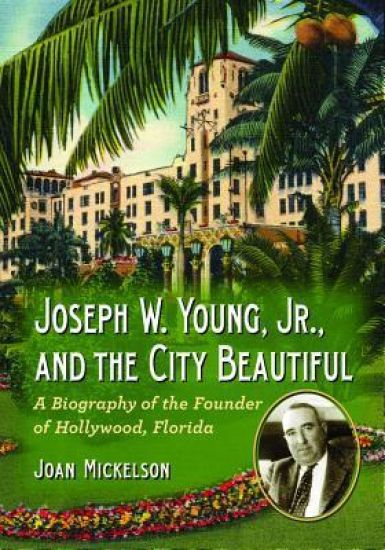
Joseph W. Young, Jr., and the City Beautiful

Joseph W. Young, Jr., and the City Beautiful

Joan Mickelson

McFarland Co Inc
2013
pokkari
Joseph W. Young, Jr., was acknowledged as one of the five or six major city builders in boomtime Florida. From practically nothing in 1920 he created Hollywood By-the-Sea with an elegant Beaux Arts plan of circles and lakes, calling it a "City Beautiful," an ideal first propounded by Daniel Burnham of Chicago. Young had a rare talent for publicity and a knack for making and spending millions--supported by an immense personal charm that is still remembered decades after his death. This first full biography of Young covers his start as city builder in turn-of-the-century California where new cities blossomed and were ballyhooed, his move to Indianapolis, home of Carl Fisher who developed Miami Beach, his creation of Hollywood and Port Everglades, and his move to his Adirondack resort, ending with his dreams to expand Hollywood, fulfilled after his early death.
Joseph Henry Blackburne

Joseph Henry Blackburne

Tim Harding

McFarland Co Inc
2015
sidottu
During a career spanning more than 50 years, J.H. Blackburne (1841-1924) won the British Chess Championship and several international tournaments, at his peak becoming one of the world's top three chess masters. A professional player who derived his livelihood from annual tours of chess clubs in England and other countries, entertaining and teaching amateur players, he astonished his contemporaries by the ease with which he played the game without sight of the chessboard. At 21, he set a world record for such exhibitions, competing against 12 club players simultaneously, and he continued to perform "blindfold" into his sixties. This first comprehensive biography of Britain's greatest chess player of the 19th and early 20th centuries presents more than 1,000 of Blackburne's games chronologically, including all his surviving games from serious competition, annotated in varying detail. Many are masterpieces containing beautiful combinations and instructive endgame play. Blackburne's unusual family and social background are fully explored.
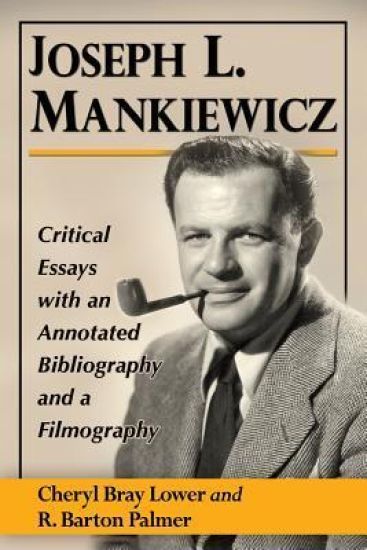
Joseph L. Mankiewicz

Joseph L. Mankiewicz

Cheryl Bray Lower; R. Barton Palmer

McFarland Co Inc
2014
pokkari
The Ghost and Mrs. Muir, The Barefoot Contessa, and All About Eve--just three of the most well-known films of writer, director, and producer Joseph L. Mankiewicz. This work contains critical essays about the man and his work, as well as a guide to resources, an annotated bibliography, and a filmography. The essays on each of his films are categorized under Mankiewicz's Dark Cinema, The Mankiewicz Woman, Filmed Theatre, and Literary Adaptations. The annotated bibliography includes writings by and about Mankiewicz; the filmography includes full cast and credit information and other data. Information on Mankiewicz's awards, miscellaneous and unrealized projects, and film festivals honoring him is also provided.
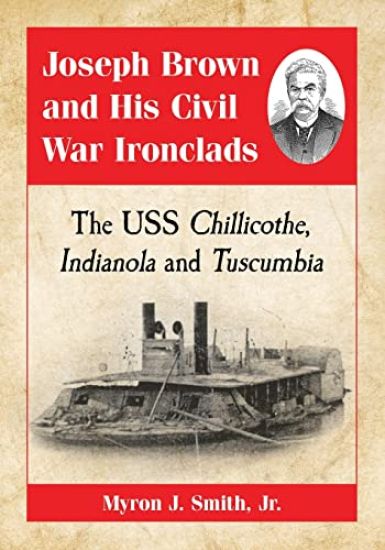
Joseph Brown and His Civil War Ironclads

Joseph Brown and His Civil War Ironclads

Myron J. Smith

McFarland Co Inc
2017
pokkari
A Scottish immigrant to Illinois, Joseph Brown made his pre-Civil War fortune as a miller and steamboat captain who dabbled in riverboat design and the politics of small towns. When war erupted, he used his connections (including a friendship with Abraham Lincoln) to obtain contracts to build three ironclad gunboats for the U.S. War Department--the Chillicothe, Indianola and Tuscumbia. Often described as failures, these vessels were active in some of the most fer"documents the life and career of Joseph Brown, a miller and steamboat captain who built three ironclad gunboats for the US War Department"ocious river fighting of the 1863 Vicksburg campaign. After the war, "Captain Joe" became a railroad executive and was elected mayor of St. Louis. This book covers his life and career, as well as the construction and operational histories of his controversial trio of warships.
Joseph Ari Aloi AKA JK5

Joseph Ari Aloi AKA JK5

Joseph Ari Aloi

Universe Publishing
2014
pokkari
The first monograph to collect the diverse and eclectic work of one of the true visionaries of the contemporary art world. Joseph Ari Aloi - aka JK5 - is a compulsive artist, for whom every free moment is an opportunity to create. Bringing together the formal practices of his work as a graphic designer and fine artist with the instincts and references that colour his twin passions of tattoo and graffiti art, JK5's is an expansive, textured, and above all highly individual visual vernacular. Whether as a painter, illustrator, calligrapher, or designer, JK5 is preoccupied with the collision of deeply personal and revelatory themes with profound pop-cultural iconography - a combination that has resulted in a powerful and readily identifiable style, which informs everything from charcoal sketches to oil paintings, poetry, tattoos, and collaborative commercial products. This creatively designed monograph draws on an eclectic body of work that extends from paintings on canvas to plastic vinyl toys, from storyboards for animation films to collages and scratchcards, and from outlines for tattoo work to a vast collection of sketchbooks - each filled from cover to cover and completed with such regularity that they serve as a kind of library of artists' diaries, recording his changing preoccupations and reflecting his varying visual interests over the years. Edited by the artist, and designed to reflect the varying and tactile nature of the work, this is an artist's book that will exist as a unique and collectible object in its own right, as much as a record of the remarkable output of one of the most prolific voices in contemporary art.
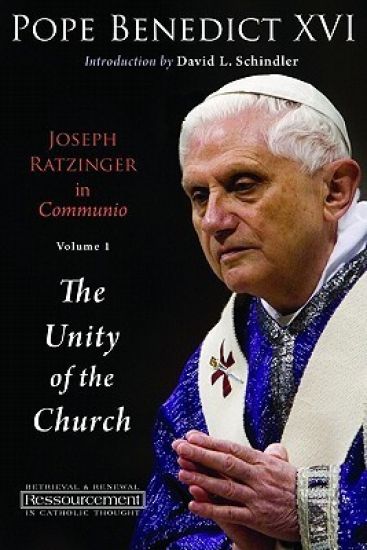
Joseph Ratzinger in Communio

Joseph Ratzinger in Communio

Pope Benedict

William B Eerdmans Publishing Co
2010
nidottu
These captivating essays by Pope Benedict XVI deal with various issues facing the Church in the world today, including what unites and divides denominations, liturgy and sacred music, peace and justice in crisis, and interreligious dialogue and Jewish-Christian relations. As David Schindler notes in his introduction, -Cardinal Ratzinger -- Pope Benedict XVI -- rarely writes on any churchly matter that does not manifest its implications for man and culture, and vice versa. Indeed, this indissoluble linking is one of the main distinguishing features of his theology.- This volume on the Church is to be followed by two others from Pope Benedict on, respectively, the themes of anthropology and theological renewal.
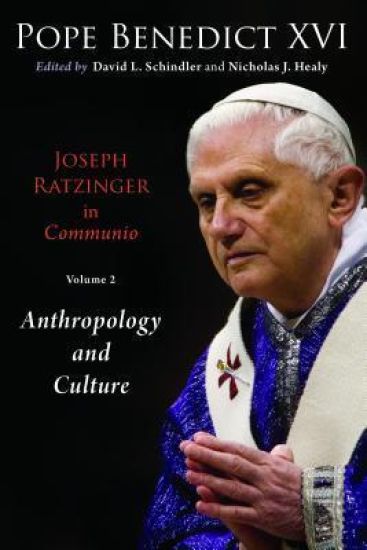
Joseph Ratzinger in Communio

Joseph Ratzinger in Communio

Joseph Ratzinger

William B Eerdmans Publishing Co
2013
nidottu
Timely theological insights on culture and humanity from the pen of the Pontiff In this second volume of Joseph Ratzinger in Communio, Pope Benedict XVI speaks to various issues relating to humanity today -- conscience, technological security, the origin of human life, the meaning of Sunday, Christian hope, and more. As editor David L. Schindler notes, -Cardinal Ratzinger (Pope Benedict XVI) rarely writes on any churchly matter that does not manifest its implications for man and culture, and vice versa. Indeed, this indissoluble linking is one of the main distinguishing features of his theology.- This is the second of three volumes; the first deals with themes relating to the Church, and the third volume is to focus on theological renewal.
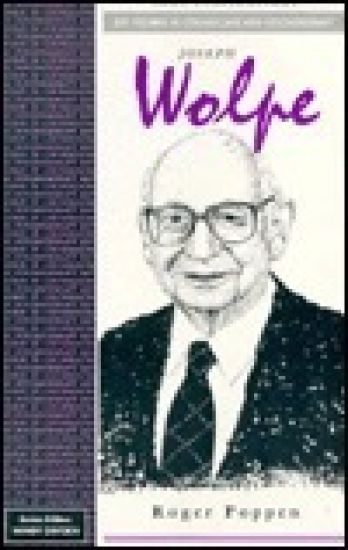
Joseph Wolpe

Joseph Wolpe

Roger Poppen

SAGE Publications Ltd
1995
nidottu
Joseph Wolpe brought about a revolution in psychotherapy. He provided the first clear alternative to therapy as an esoteric exploration of mental forces and presented, instead, clearly specified procedures and documented outcomes - a practical technology based on a fundamental science of learning. Roger Poppen, who witnessed some of this revolution first hand as a doctoral student, describes the major impact Wolpe's theories had on psychotherapy, compelling it to address issues of effectiveness and accountability. He assesses the criticisms that Wolpe's work has attracted both from outside and within the behavioural school, and describes the development of Wolpe's ideas and his continuing role in the theory, practice and evaluation of psychotherapy.
Joseph Conrad and the Fictions of Skepticism

Joseph Conrad and the Fictions of Skepticism

Wollaeger Mark A.

Stanford University Press
1990
sidottu
"You want more scepticism at the very foundation of your work. Scepticism, the tonic of minds, the tonic of life, the agent of truth - the way of art and salvation." Joseph Conrad wrote these words to John Galsworthy in 1901, and this study argues that Conrad's skepticism forms the basis of his most important works, participating in a tradition of philosophical skepticism that extends from Descartes to the present. Conrad's epistemological and moral skepticism - expressed, forestalled, mitigated, and suppressed - provides the terms for the author's rethinking of the peculiar relation between philosophy and literary form in Conrad's writing and, more broadly, for reconsidering what it means to call any novel 'philosophical'. Among the issues freshly argued are Conrad's thematics of coercion, isolation, and betrayal; the complicated relations among author, narrator, and character; and the logic of Conradian romance, comedy, and tragedy. The author also offers a new way of conceptualizing the shape of Conrad's career, especially the 'decline' evidenced in the later fiction. The uniqueness of Conrad's multifarious literary and cultural inheritance makes it difficult to locate him securely in the dominant tradition of the British novel. A philosophical approach to Conrad, however, reveals links to other novelists - notably Hardy, Forster, and Woolf - all of whom share in the increasing philosophical burden of the modern novel by enacting the very philosophical issues that are discussed within their pages. Conrad's interest as a skeptic is heightened by the degree to which he resists the insights proffered by his own skepticism. The first chapter introduces the idea of the Conradian 'shelter', and the next two use Schopenhauer to show how the language of metaphysical speculation in Tales of Unrest and 'Heart of Darkness' spills over into a religious impulse that resists the disintegrating effect of Conrad's skepticism. The author then turns to Hume to model the authorial skepticism that in Lord Jim contests the continuing visionary strain of the earlier fiction and Descartes to analyze the ways in which Romantic vision is more stringently chastened by irony in Nostromo and The Secret Agent. The concluding chapter touches on several late novels before examining how competing models of political agency in Conrad's last great fiction of skepticism, Under Western Eyes, situate it somewhere between ideology critique and a mystified account of the exigencies of individual consciousness.
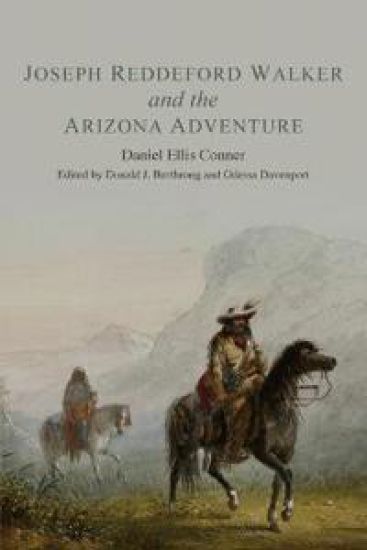
Joseph Reddeford Walker and the Arizona Adventure

Joseph Reddeford Walker and the Arizona Adventure

Daniel Ellis Conner

University of Oklahoma Press
2016
nidottu
Joseph Reddeford Walker looms large in the lore of the early West. From the Missouri to the San Joaquin, from the Gila to the Yellowstone, Walker spent more than thirty years - from the 1830s to the Civil War - trapping beaver in the Rockies, bartering with the Crow, Ute, Cheyenne, Arapahoe, and Shoshone Indians, droving cattle and horses, and guiding emigrants and explorers. Walker was associated with Captain Bonneville in the fur trade from 1832 to 1835, but we have only an incomplete account these years in Washington Irving's, The Adventures of Captain Bonneville and Zenas Leonards, Narrative. But the twist of fate that threw Daniel Ellis Conner into Walker's party, en route from Colorado to explore Arizona in 1861, affords us several hundred manuscript pages, Conner's four-year travel diary, relating his hair-raising adventures with this great mountain man.Joseph Reddeford Walker and the Arizona Adventure offers a superb chapter in the history of the West. Included are tales of the early Apache wars in New Mexico and Arizona; ""The Betrayal of Mangas Coloradas,"" with Conner's eyewitness account of the Apache chief's death; the emigrant trains to California; early settlement; mining operations, in ""The Perils of Prospecting,"" and countless episodes of action and violence that make fictional accounts pale in comparison.
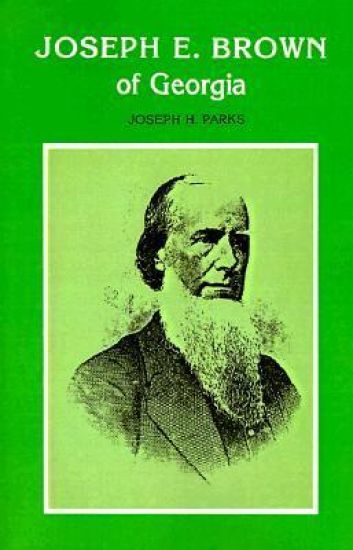
Joseph E. Brown of Georgia

Joseph E. Brown of Georgia

Joseph Howard Parks

Louisiana State University Press
1999
nidottu
Joseph Brown was a pivotal figure in southern history and a prototype of a new breed of southern politician in the mid-nineteenth century-the hill country newcomer who was considered to represent the ""common man.""As governor of Georgia from 1857 to 1865, Brown enthusiastically supported the Confederacy in the early years of the war, though he refused to sacrifice what he considered states' rights to the interest of a Confederate victory. Brown was constantly at odds with Jefferson Davis concerning Georgia's supply of Confederate troops and was openly hostile, to the .point of urging Davis' removal over the matters of conscription and the suspension of habeas corpus. When defeat came for the South, Brown accepted the collapse of the old economic order as quickly as he did the loss of slavery and states' rights. He advocated a new South and amassed a fortune in the development of real estate, mining, and railroads. He turned Republican and promoted congressional Reconstruction measures, temporarily losing his influence in Georgia. But in 1871 he rejoined the Democratic party and served in the United States Senate from 1880 to 1891.Here is the first full-scale biography of a man of meager education and limited political experience who worked his way from the North Georgia mountains to the positions of governor and United States senator. Drawing on previously unavailable documents, Parks captures the mood of Georgia as well as the personality of this astute and controversial politician.
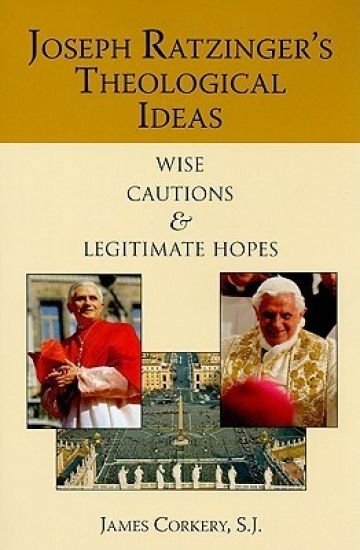
Joseph Ratzinger's Theological Ideas

Joseph Ratzinger's Theological Ideas

James Corkery

Paulist Press International,U.S.
2005
nidottu
Many contexts have shaped Benedict XVI during his life, but how did Joseph Ratzinger come to be such a great theologian "with his polemical bent and his keen eye for where the Gospel and the world diverge?" Joseph Ratzinger's Theological Ideas attempts to answer this question, tracing his development from the small Bavarian boy born on Easter Saturday 1927 to the priest, professor, pastor, Prefect, and finally Pope. The book explores tensions experienced by Joseph Ratzinger in his earlier life that have been important in shaping his chosen theological direction, as well as tensions that proceed from the ecumenical context of German theologizing to the relationship between academic freedom and Church authority. While providing great insight into how this particular theologian, now Pope Benedict XVI, emerged, Joseph Ratzinger's Theological Ideas also sheds light on this man's theological work as a whole.
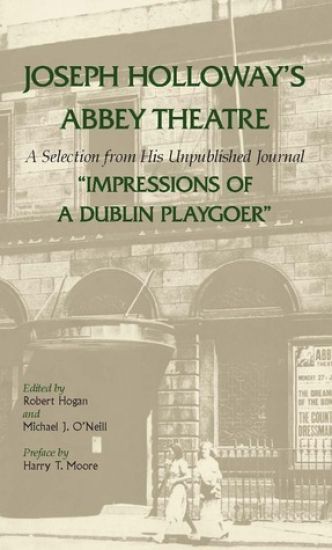
Joseph Holloway's Abbey Theatre

Joseph Holloway's Abbey Theatre

Southern Illinois University Press
2009
nidottu
Until his death in 1944, Holloway attended almost every performance of the Abbey Theatre and daily recorded in his journal his reactions to plays and players and his comments about and conversations with literary and theatrical people. From the journal's 221 bulky volumes, housed in the National Library of Ireland, Mr. Hogan and Mr. O'Neill have compiled this book of extracts from the approximately 25,000,000 words written by the Irishman. The years from 1899 to 1926 were chosen because they are generally considered to be the significant ones for the Abbey Theatre: the year of its founding to the production of Sean O'Casey's The Plough and the Stars, which caused a riot in the theatre. Mr. Holloway attended every play during these years, as well as many rehearsals, and talked with nearly everybody who had anything to do with the theatre. This journal reflects the tensions, feuds, and anguish that produced one of the great theatres of modern times. The meticulous display of minute detail makes Joseph Holloway's Abbey Theatre imperative reading for the student of modern theatre, particularly since its character as a daily account permits ready checking of dates listed in previous works about the Irish National Theatre.
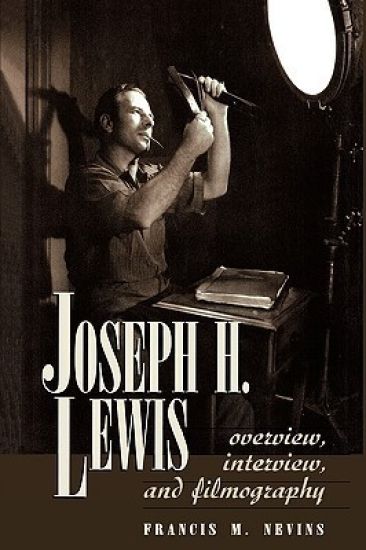
Joseph H. Lewis

Joseph H. Lewis

Francis M. Nevins

Scarecrow Press
1998
sidottu
The first full-length account of the life and work of Joseph H. Lewis, the noted director of films such as My Name is Julia Ross (1945) and The Halliday Brand (1957). Because most commentators and interviewers have focused on Lewis' contributions to film noir and particularly Gun Crazy and The Big Combo, Nevins tries to give equal time to Lewis' early B westerns and television series episodes, including episodes of The Rifleman and Gunsmoke that he directed at the end of his career. Nevins's narrative is interspersed with Lewis's own reflections on his life and career, adding a personal element that enlivens the text. A detailed filmography includes Lewis's editorial work, feature films, and episodes of TV series.
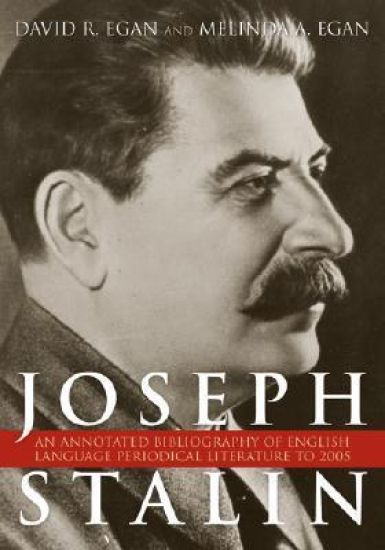
Joseph Stalin

Joseph Stalin

David R. Egan; Melinda A. Egan

Scarecrow Press
2007
sidottu
With the opening of Russian and communist-bloc archives dating from the Soviet-era, there has been a significant increase of scholarly writings pertaining to Joseph Stalin. Widely considered to be among the most influential historical figures of the twentieth century, Stalin continues to be a source of intense study. In the absence of a comprehensive compilation of periodical literature, the need for Joseph Stalin: An Annotated Bibliography of English Language Periodical Literature to 2005 is conspicuous. Ranging from editorials and news reports to academic articles, the more than 1,700 sources cited collectively cover the full range of his life, the various aspects of his leadership, and virtually all facets of the system and practices traditionally associated with his name. The coverage in this bibliography extends beyond the person of Stalin to include the subjects of Stalinism, the Stalinist system, the Stalin phenomenon, and those policies and practices of the Communist Party and Soviet state associated with him. This volume also provides a record of scholarly opinion on Stalin and sheds light on the evolution and current state of Stalinology. An effort has been made to list only those articles in which Stalin figures prominently, but, in some instances, articles have been included which do not center on Stalin but are worthy of listing for other reasons. The book is divided into fourteen main sections: General Studies and Overviews; Biographical Information and Psychological Assessments; The Revolutionary Movement, October Revolution and Civil War; Rise to Power; Politics; Economics; Society and Social Policy; Nationalism and Nationality Policy; Culture; Religion; Philosophy and Theory; Foreign Relations and International Communism; Military Affairs; and De-Stalinization. Including a subject index of several hundred headings and even greater number of subheadings, this comprehensive annotated bibliography should be of benefit to those individuals who, for the purpose of research or classroom
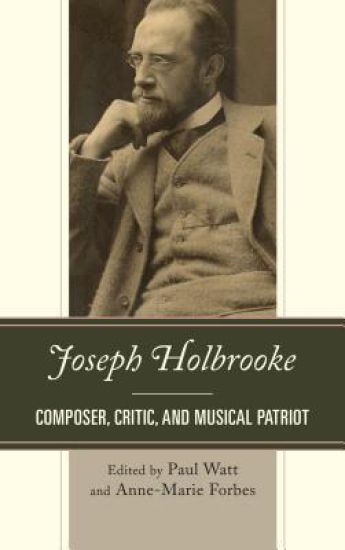
Joseph Holbrooke

Joseph Holbrooke

Rowman Littlefield Publishers
2014
sidottu
This is the first scholarly work to document the musical life of Joseph Holbrooke, one of Britain’s most prolific and controversial composers during the first half of the twentieth century. Holbrooke was outspoken on many issues, including the maligned fortunes of British composers, which he believed were brought about by apathy and indifference on the part of critics and the public. Despite doubts in various quarters over Holbrooke’s ability to forge a unique compositional idiom, many of his works were performed to critical acclaim in Britain, Europe, and the United States. Today, Holbrooke’s music is increasingly enjoyed and recorded. Joseph Holbrooke: Composer, Critic, and Musical Patriot opens with a biographical overview of Holbrooke that concentrates on his relationship with Granville Bantock and Wales and the role that Lord Howard de Walden played in Holbrooke’s work and development. Contributors offer studies of a selection of repertory by Holbrooke, including his chamber music, the operas Pierrot and Pierrette and The Enchanted Garden, and his tone poem “The Raven.” The final chapter describes Holbrooke’s patriotism by examining his book Contemporary British Composers, which was published in 1925. Included is an appendix that provides the first comprehensive and corrected list of Holbrooke’s compositions. This book will interest not only musicologists, musicians and listeners interested in the repertory of the British classical music tradition but also scholars and general readers interested in the ways Celticism, poetic inspiration, and nationalist ideology were expressed in the work of classical composers in the early twentieth century.
Joseph Anton: A Memoir

Joseph Anton: A Memoir

Salman Rushdie

Random House Trade
2013
nidottu
NAMED ONE OF THE BEST BOOKS OF THE YEAR BY San Francisco Chronicle - Newsweek/The Daily Beast - The Seattle Times - The Economist - Kansas City Star - BookPage On February 14, 1989, Valentine's Day, Salman Rushdie was telephoned by a BBC journalist and told that he had been "sentenced to death" by the Ayatollah Khomeini. For the first time he heard the word fatwa. His crime? To have written a novel called The Satanic Verses, which was accused of being "against Islam, the Prophet and the Quran." So begins the extraordinary story of how a writer was forced underground, moving from house to house, with the constant presence of an armed police protection team. He was asked to choose an alias that the police could call him by. He thought of writers he loved and combinations of their names; then it came to him: Conrad and Chekhov--Joseph Anton. How do a writer and his family live with the threat of murder for more than nine years? How does he go on working? How does he fall in and out of love? How does despair shape his thoughts and actions, how and why does he stumble, how does he learn to fight back? In this remarkable memoir Rushdie tells that story for the first time; the story of one of the crucial battles, in our time, for freedom of speech. He talks about the sometimes grim, sometimes comic realities of living with armed policemen, and of the close bonds he formed with his protectors; of his struggle for support and understanding from governments, intelligence chiefs, publishers, journalists, and fellow writers; and of how he regained his freedom. It is a book of exceptional frankness and honesty, compelling, provocative, moving, and of vital importance. Because what happened to Salman Rushdie was the first act of a drama that is still unfolding somewhere in the world every day. Praise for Joseph Anton "A harrowing, deeply felt and revealing document: an autobiographical mirror of the big, philosophical preoccupations that have animated Mr. Rushdie's work throughout his career."--Michiko Kakutani, The New York Times "A splendid book, the finest . . . memoir to cross my desk in many a year."--Jonathan Yardley, The Washington Post "Thoughtful and astute . . . an important book."--USA Today "Compelling, affecting . . . demonstrates Mr. Rushdie's ability as a stylist and storytelle. . . . He] reacted with great bravery and even heroism."--The Wall Street Journal "Gripping, moving and entertaining . . . nothing like it has ever been written."--The Independent (UK) "A thriller, an epic, a political essay, a love story, an ode to liberty."--Le Point (France) "Action-packed . . . in a literary class by itself . . . Like Isherwood, Rushdie's eye is a camera lens --firmly placed in one perspective and never out of focus."--Los Angeles Review of Books "Unflinchingly honest . . . an engrossing, exciting, revealing and often shocking book."--de Volkskrant (The Netherlands) "One of the best memoirs you may ever read."--DNA (India) "Extraordinary . . . Joseph Anton beautifully modulates between . . . moments of accidental hilarity, and the higher purpose Rushdie saw in opposing--at all costs--any curtailment on a writer's freedom."--The Boston Globe