

Kirjahaku
Etsi kirjoja tekijän nimen, kirjan nimen tai ISBN:n perusteella.
1000 tulosta hakusanalla Josh Edwards

When Cherie Alvarez was a child, a moment of shocking violence shattered her world into a thousand bloody pieces. Plagued by nightmares and taunted by schoolyard bullies, the young girl spent years recovering from what law enforcement described as a "sickening and gruesome act of evil."Now a college student, Cherie has found solace in film, theater, and all the beloved traditions of the Halloween season. But when she and her friends participate in an immersive, "extreme" haunted attraction, Cherie must once again break the chains of victimhood and face the open wounds of her past. After enduring one man's twisted vision of horror and perversion, Cherie finds herself challenged by a cult-like force determined to destroy her. What follows is a singular night of grueling terror, calculated revenge, and backwoods slaughter.An epistolary thriller, DEATH RITUALS gathers the ephemera of a young woman's life--short stories, articles, scripts, photographs, televised reports, and more--to tell a story of chilling depravity and undaunted courage.
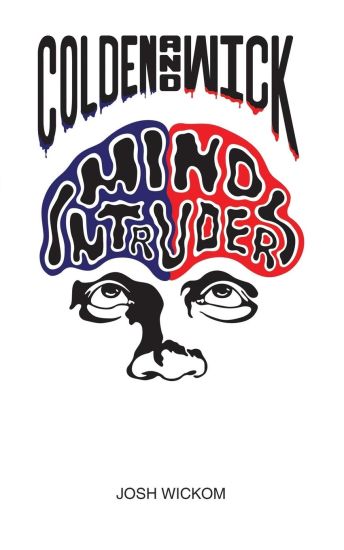
In the tradition of Willian Styron's Darkness Visible and Marya Hornbacher's Madness: A Bipolar Life, and Ken Kesey's One Flew Over the Cuckoo's Nest, Josh Wickom's Colden and Wick: Mind Intruders documents the extraordinary experience of an individual powerlessly witnessing the theft of his life by deviant alter egos. When mild-mannered Josh Wickom retired from a successful engineering career, he and his beloved wife Ruth anticipated a life of renewed romance and enriching vacations. Instead, they and their two adult children were plunged into a three-year nightmare when Josh was submerged into the quagmire of severe depression. Then two powerful "mind intruders" proceeded to hijack Josh's existence. First came Colden, a deeply-depressed paranoid intent on ending his own life. Then came Wick, a flamboyant concert promoter fueled by electroshock therapy-induced mania and grandiose illusions. Unable to regain control of his own life, Josh watched helplessly as Colden and Wick steered him on a bizarre ride from bucolic Central New York State, to the steamy Mississippi Delta and New York City - with stops along the way in the county jail, a psychiatric hospital for the criminally insane, and divorce court. Josh's ability to fall back on his scientific training and objectively observe and document what was happening makes his memoir a compelling read. It may also in part explain his eventual recovery.

Young readers will love to laugh out loud as they're instructed to tap, swipe, shake and otherwise interact with Gus, a chubby fluffy house cat. As they turn each page, they will discover Gus' hilarious reactions.The beautiful pages are full of color and comfort. You will become a little happier with each page turn. This new favorite probably won't spend much time on the bookshelf.Be sure to download free activities from avrenbooks.com for extra fun and learning to go along with the book.

Planning With Young People presents educators, urban planners, and designers with an alternative vision of how to build cities for young people, challenging readers to imagine cities that truly serve their youngest inhabitants. This book argues that great cities can only emerge when they are good for all members, especially young people under 25, who are often marginalized in urban design. The first half of the book explores the competing, sometimes conflicting, and often incomplete visions and agendas of the city that have historically failed to include or prioritize young people. The final chapters highlight structures, systems, policy frameworks, and practices from the fields of education and planning that can be employed to plan for and with young people. Written in an accessible style, Planning With Young People is a valuable interdisciplinary resource for planning students, urban planners, or educators seeking a vision for inclusive planning practices, and civic leaders committed to building more equitable urban spaces.

Planning With Young People presents educators, urban planners, and designers with an alternative vision of how to build cities for young people, challenging readers to imagine cities that truly serve their youngest inhabitants. This book argues that great cities can only emerge when they are good for all members, especially young people under 25, who are often marginalized in urban design. The first half of the book explores the competing, sometimes conflicting, and often incomplete visions and agendas of the city that have historically failed to include or prioritize young people. The final chapters highlight structures, systems, policy frameworks, and practices from the fields of education and planning that can be employed to plan for and with young people. Written in an accessible style, Planning With Young People is a valuable interdisciplinary resource for planning students, urban planners, or educators seeking a vision for inclusive planning practices, and civic leaders committed to building more equitable urban spaces.
Explanatory Optimism about the Hard Problem of Consciousness
Josh Weisberg
TAYLOR FRANCIS LTD
2023
sidottu
Explanatory Optimism about the Hard Problem of Consciousness argues that despite the worries of explanatory pessimists, consciousness can be fully explained in “easy” scientific terms. The widespread intuition that consciousness poses a hard problem is plausibly based on how consciousness appears to us in first-person access. The book offers a debunking argument to undercut the justificatory link between the first-person appearances and our hard problem intuitions.The key step in the debunking argument involves the development and defense of an empirical model of first-person access: Automated Compression Theory (ACT). ACT holds that first-person access to consciousness is accomplished by automated accessing of compressed sensory information. Because of the distorting nature of this compressed access, it seems to subjects that consciousness possesses “exceptional” properties—properties leading to the hard problem—even though no such properties are present. If there are no exceptional properties to explain, then an explanation in easy terms can fully account for conscious experience. The book presents a range of empirical evidence for ACT and concludes that the burden of proof is now on the pessimists to show why we shouldn’t be optimistic about explaining consciousness.
Explanatory Optimism about the Hard Problem of Consciousness
Josh Weisberg
TAYLOR FRANCIS LTD
2025
nidottu
Explanatory Optimism about the Hard Problem of Consciousness argues that despite the worries of explanatory pessimists, consciousness can be fully explained in “easy” scientific terms. The widespread intuition that consciousness poses a hard problem is plausibly based on how consciousness appears to us in first-person access. The book offers a debunking argument to undercut the justificatory link between the first-person appearances and our hard problem intuitions.The key step in the debunking argument involves the development and defense of an empirical model of first-person access: Automated Compression Theory (ACT). ACT holds that first-person access to consciousness is accomplished by automated accessing of compressed sensory information. Because of the distorting nature of this compressed access, it seems to subjects that consciousness possesses “exceptional” properties—properties leading to the hard problem—even though no such properties are present. If there are no exceptional properties to explain, then an explanation in easy terms can fully account for conscious experience. The book presents a range of empirical evidence for ACT and concludes that the burden of proof is now on the pessimists to show why we shouldn’t be optimistic about explaining consciousness.

Data Analysis
Josh Correll; Abigail M. Folberg; Charles M. Judd; Gary H. McClelland; Carey S. Ryan
TAYLOR FRANCIS LTD
2025
nidottu
This essential textbook provides an integrated treatment of data analysis for the social and behavioral sciences. It covers all the key statistical models in an integrated manner that relies on the comparison of models of data estimated under the rubric of the general linear model.The text describes the foundational logic of the unified model comparison framework. It then shows how this framework can be applied to increasingly complex models including multiple continuous and categorical predictors, as well as product predictors (i.e., interactions and nonlinear effects). The text also describes analyses of data that violate assumptions of independence, homogeneity, and normality. The analysis of nonindependent data is treated in some detail, covering standard repeated measures analysis of variance and providing an integrated introduction to multilevel or hierarchical linear models and logistic regression.Highlights of the fourth edition include:Expanded coverage of generalized linear models and logistic regression in particularA discussion of power and ethical statistical practice as it relates to the replication crisisAn expanded collection of online resources such as PowerPoint slides and test bank for instructors, additional exercises and problem sets with answers, new data sets, practice questions, and R codeClear and accessible, this text is intended for advanced undergraduate and graduate level courses in data analysis.

Data Analysis
Josh Correll; Abigail M. Folberg; Charles M. Judd; Gary H. McClelland; Carey S. Ryan
TAYLOR FRANCIS LTD
2025
sidottu
This essential textbook provides an integrated treatment of data analysis for the social and behavioral sciences. It covers all the key statistical models in an integrated manner that relies on the comparison of models of data estimated under the rubric of the general linear model.The text describes the foundational logic of the unified model comparison framework. It then shows how this framework can be applied to increasingly complex models including multiple continuous and categorical predictors, as well as product predictors (i.e., interactions and nonlinear effects). The text also describes analyses of data that violate assumptions of independence, homogeneity, and normality. The analysis of nonindependent data is treated in some detail, covering standard repeated measures analysis of variance and providing an integrated introduction to multilevel or hierarchical linear models and logistic regression.Highlights of the fourth edition include:Expanded coverage of generalized linear models and logistic regression in particularA discussion of power and ethical statistical practice as it relates to the replication crisisAn expanded collection of online resources such as PowerPoint slides and test bank for instructors, additional exercises and problem sets with answers, new data sets, practice questions, and R codeClear and accessible, this text is intended for advanced undergraduate and graduate level courses in data analysis.
Narratives of Qualitative Research uses a novel form of writing about how to do qualitative research called a praxis narrative. Each narrative is told from the author’s perspective in carrying out one of his past research studies in the social sciences.Told chronologically and in a first-person voice, the narratives position the reader alongside the narrator so as to vicariously experience how research happens in its situated particulars. Rather than a set of idealizations and universalized pronouncements, the author reveals what really goes on when one is in the thick of complex and challenging research studies, the points of trouble along with the successes. This will be relevant to researchers who have already undertaken one or more empirical research studies (though not necessarily using qualitative approaches) and now find themselves facing something new: a new analytic method, a new theoretical lens, a new form of data collection, a new domain of research questions, a new rhetorical approach. This requires letting go of the secure handholds of prescribed methods and responding to the contingencies that arise in the midst of the research. The reader is invited to follow along as the author makes visible his praxis of qualitative research.Unlike more conventional texts, in this unique alternative, the reader can follow the author's journey through his research studies as a way to reorient their conception of qualitative research and their own praxis of it. This is fascinating reading for qualitative researchers and students taking qualitative research courses, across the social sciences, education, and behavioural sciences.
Narratives of Qualitative Research uses a novel form of writing about how to do qualitative research called a praxis narrative. Each narrative is told from the author’s perspective in carrying out one of his past research studies in the social sciences.Told chronologically and in a first-person voice, the narratives position the reader alongside the narrator so as to vicariously experience how research happens in its situated particulars. Rather than a set of idealizations and universalized pronouncements, the author reveals what really goes on when one is in the thick of complex and challenging research studies, the points of trouble along with the successes. This will be relevant to researchers who have already undertaken one or more empirical research studies (though not necessarily using qualitative approaches) and now find themselves facing something new: a new analytic method, a new theoretical lens, a new form of data collection, a new domain of research questions, a new rhetorical approach. This requires letting go of the secure handholds of prescribed methods and responding to the contingencies that arise in the midst of the research. The reader is invited to follow along as the author makes visible his praxis of qualitative research.Unlike more conventional texts, in this unique alternative, the reader can follow the author's journey through his research studies as a way to reorient their conception of qualitative research and their own praxis of it. This is fascinating reading for qualitative researchers and students taking qualitative research courses, across the social sciences, education, and behavioural sciences.

This thought-provoking book addresses the persistent anxieties surrounding the purpose and direction of higher education, offering a nuanced historical perspective on its transformation. Using Cold War Britain as a lens, this book challenges the prevailing narrative that marketisation was an external imposition, revealing instead how the dynamic priorities of social democratic higher education inadvertently paved the way for their own supersession. Drawing on novel archival insights, it explores experimental initiatives by university leaders and employers and reveals how post-war public investment in universities was justified through a dual logic: empowering young people to pursue their individual self-interest while cultivating the ethical application of specialist knowledge in service of liberal capitalism. It goes on to show how the novel accountability frameworks they constructed, intended to maximise freedom, contained unstable tensions – tensions that remain in today’s neoliberal system. Packed full of research, case studies, and policy implications, this book interrogates the successes and failures of innovative teaching and learning practices, as well as the evolving relationship between universities and industry. Throughout, the author offers critical insights into how liberal education might be reimagined to sustain universities in their service to the common good. This is essential reading for students, academics, policymakers, and anyone seeking to understand the moral principles underpinning higher education and their influence on its future.

This thought-provoking book addresses the persistent anxieties surrounding the purpose and direction of higher education, offering a nuanced historical perspective on its transformation. Using Cold War Britain as a lens, this book challenges the prevailing narrative that marketisation was an external imposition, revealing instead how the dynamic priorities of social democratic higher education inadvertently paved the way for their own supersession. Drawing on novel archival insights, it explores experimental initiatives by university leaders and employers and reveals how post-war public investment in universities was justified through a dual logic: empowering young people to pursue their individual self-interest while cultivating the ethical application of specialist knowledge in service of liberal capitalism. It goes on to show how the novel accountability frameworks they constructed, intended to maximise freedom, contained unstable tensions – tensions that remain in today’s neoliberal system. Packed full of research, case studies, and policy implications, this book interrogates the successes and failures of innovative teaching and learning practices, as well as the evolving relationship between universities and industry. Throughout, the author offers critical insights into how liberal education might be reimagined to sustain universities in their service to the common good. This is essential reading for students, academics, policymakers, and anyone seeking to understand the moral principles underpinning higher education and their influence on its future.

Incidents Around the House by Josh Malerman is a chilling horror novel about a young girl whose troubled family is targeted by an entity she calls â??Other Mommy,â?? from the New York Times bestselling author of Bird Box.
There is one brand that is immediately recognized as the last word in luxury Swiss watchmaking - Patek Philippe.For over 180 years, the watchmaker has been creating some of the most sought-after, finely crafted and innovative models in the luxury watch market. From its origins in Geneva as an artisan business to its position today as a brand of global renown, Little Book of Patek Philippe tells the story of these masterpieces of design. One hundred images showcase every iconic model - Nautilus, Calatrava, Aquanaut, Golden Ellipse and more - and celebrity fans from Albert Einstein to Drake. Expert text reveals the brand's history, key moments and future.

Responsive Coaching: Evidence-informed instructional coaching that works for every teacher in your school
Josh Goodrich
Hachette Learning
2024
nidottu
Great teachers can make a huge difference to students' lives, but helping them to improve throughout their careers is vital. How can we best do this?Multiple studies suggest that instructional coaching - a school-centred approach to developing teachers - is one of the best options we have. However, to make the most of instructional coaching, we must be clear about what it means.In Responsive Coaching, Josh Goodrich examines contrasting models, combining research and practical experience to build an approach that adapts to meet the needs of individual teachers. This enables coaches to flex their style depending on where a teacher is on their journey towards expertise.Josh distils his approach into five areas, unpacking essential research and providing concrete examples of great coaching in action to provide a toolkit of practical responsive coaching strategies that support teachers to make continuous improvements.Combining robust research evidence from a wide range of fields with the practical wisdom of experienced teachers, leaders and coaches, the book is a toolkit for building an instructional coaching approach that works, for every teacher.
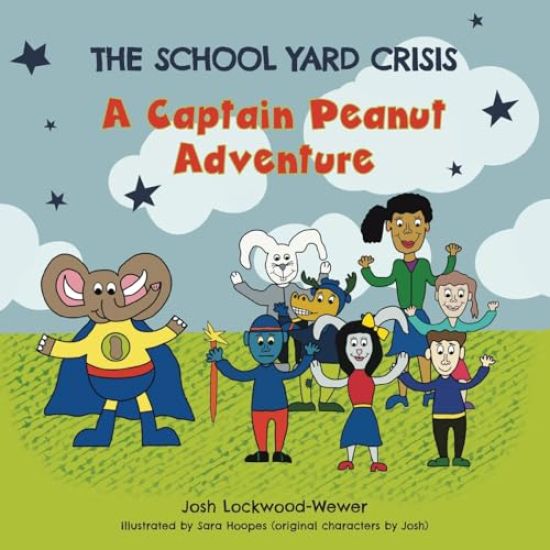
Captain Peanut is a superhero elephant who gains his mighty strength from eating peanuts He flies all around the world in his peanut-shaped spaceship, helping those in need. One day, Captain Peanut receives a distress call from a nearby school. Parker Paris, a student upset about his assigned role in a bake sale, has started a fire with his lightning bolt rod. Captain Peanut and the students will have to use teamwork to understand just what has gotten Parker in a twist, figure out how to put out the fire, and save the bake sale.The School Yard Crisis: A Captain Peanut Adventure is a delightful, imaginative story that emphasizes the importance of working together, expressing feelings and problems openly, and taking responsibility for our own actions. With unique and whimsical characters and an exciting adventure, kids will love its message of inclusivity and understanding.