Kirjojen hintavertailu. Mukana 11 358 423 kirjaa ja 12 kauppaa.

Kirjahaku

Etsi kirjoja tekijän nimen, kirjan nimen tai ISBN:n perusteella.

1000 tulosta hakusanalla Judith Adamson

Marine Pollution

Marine Pollution

Judith S. Weis

Oxford University Press Inc
2015
sidottu
Marine pollution occurs today in varied forms--chemical, industrial, and agricultural-and the sources of pollution are endless. In recent history, we've seen oil spills, untreated sewage, eutrophication, invasive species, heavy metals, acidification, radioactive substances, marine litter, and overfishing, among other significant problems. Though marine pollution has long been a topic of concern, it has very recently exploded in environmental, economic, and political debate circles; scientists and non-scientists alike continue to be shocked and dismayed at the sheer diversity of water pollutants and the many ways they can come to harm our environment and our bodies. In Marine Pollution: What Everyone Needs to Know, Judith Weis covers marine pollution from numerous angles, each fascinating in its own right. Beginning with its sources and history, she discusses common pollutants, why they are harmful, why they cause controversy, and how we can prevent them from destroying our aquatic ecosystems. Questions ask what actually happened with the Exxon Valdez, and why harmful algal blooms are a serious concern. Covering pollutants that are only now surfacing as major threats, such as pharmaceuticals, personal care products, and metal nanoparticles, she explains how these can begin in the water and progress up the food chain to emerge in human bodies. Looking at the effects of climate change and acidification on marine pollution levels, we learn how we can begin to reduce pollution at the local and global levels.
Technical Editing

Technical Editing

Judith Tarutz

Perseus Books
1992
pokkari
At last, direct from the trenches, here's the book technical editors have been waiting for. Unlike other guides which review grammar and spelling,but don't address the special challenges of technical editing,this lively, practical book deals with the real-world problems, issues, and decisions that face technical editors and writers.In this book you'll get tips for preparing a style guide technical writers will want to use. You'll find checklists of what to look for during different types of editorial reviews, learn how to make the transition from traditional to desktop publishing, and see how you can build true usability into printed and online documentation. Enhanced by real examples, case studies, and practical techniques, these flexible and pragmatic solutions go far beyond the mechanics of marking up manuscripts. You get guidance that will help you decide how heavily to edit, how to manage and track large projects, and even how to position yourself for the future when software will handle the copy editing.Whether you edit technical documentation for a living, write technical material, or review the work of others, this book helps you improve your skills and your understanding of the technical editing function.
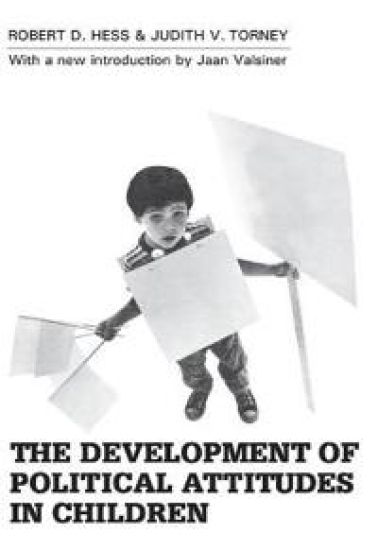
The Development of Political Attitudes in Children

The Development of Political Attitudes in Children

Judith V. Torney-Purta

AldineTransaction
2005
nidottu
Based on a study of 12,000 elementary school children in eight large and medium-sized American cities, this book presents the first large-scale study of political attitude formation in children. The authors view political development from the perspective of a general theory of socialization, and compare the influences of social class, intelligence, teacher attitude, and religious membership on the growth of political attitudes.The book outlines the way in which the child's political awareness evolvesfrom identification with authority figures such as father, policeman, the president, to a grasp of more abstract political concepts and the rudiments of political participation. Illuminating a topic of great theoretical concern and practical educational importance, the book is a significant contribution to the fields of political sociology, child development and educational psychology, and an important reference work for all concerned with the processes of socialization and of attitude formation in general.The Development of Political Attitudes in Children was based on a major survey, the first of its kind, begun at the University of Chicago in 1960 to as certain information about the induction of children into the political life of the United States, to describe the nature of socialization into citizenship roles, and to examine pre-adult political learning and behavior in terms of other implications for the stability of the political system.
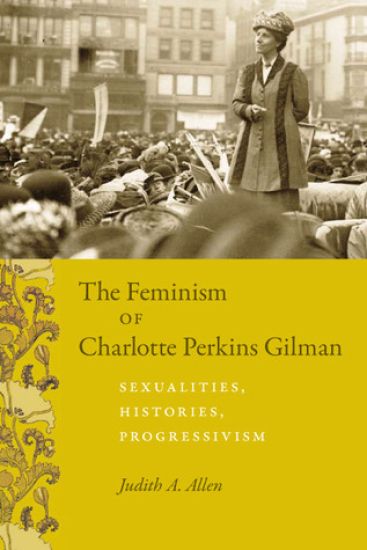
The Feminism of Charlotte Perkins Gilman

The Feminism of Charlotte Perkins Gilman

Judith A. Allen

University of Chicago Press
2009
sidottu
Famous for her short fiction - most notably "The Yellow Wallpaper" - Charlotte Perkins Gilman also produced a vast body of nonfiction in tandem with her work as a Progressive-era feminist reformer. Rooted in groundbreaking research on Gilman's extensive correspondence, publications, and speeches, this keenly argued intellectual biography reconstructs her controversial output and the heady context in which she produced it. Judith Allen provides the first comprehensive assessment of Gilman's complicated feminism by exploring the renowned writer's theories of sexuality and evolutionary analyses of androcentric, or male-dominated, culture. These ideas, Allen shows, informed Gilman's many contributions to the suffrage movement, the fight to abolish regulated prostitution, and efforts to legalize birth control. Restoring a previously overlooked public intellectual to her preeminent place in Progressive-era politics and the history of feminism at home and abroad, Allen's landmark study provides the fullest account available of Gilman's consequential life and profoundly influential work.
The Feminism of Charlotte Perkins Gilman

The Feminism of Charlotte Perkins Gilman

Judith A. Allen

University of Chicago Press
2009
nidottu
Famous for her short fiction - most notably "The Yellow Wallpaper" - Charlotte Perkins Gilman also produced a vast body of nonfiction in tandem with her work as a Progressive-era feminist reformer. Rooted in groundbreaking research on Gilman's extensive correspondence, publications, and speeches, this keenly argued intellectual biography reconstructs her controversial output and the heady context in which she produced it. Judith Allen provides the first comprehensive assessment of Gilman's complicated feminism by exploring the renowned writer's theories of sexuality and evolutionary analyses of androcentric, or male-dominated, culture. These ideas, Allen shows, informed Gilman's many contributions to the suffrage movement, the fight to abolish regulated prostitution, and efforts to legalize birth control. Restoring a previously overlooked public intellectual to her preeminent place in Progressive-era politics and the history of feminism at home and abroad, Allen's landmark study provides the fullest account available of Gilman's consequential life and profoundly influential work.
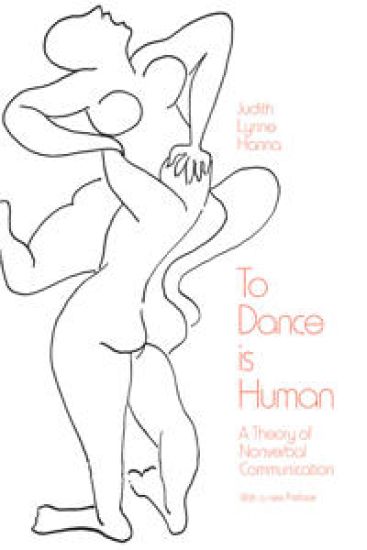
To Dance is Human

To Dance is Human

Judith Lynne Hanna

University of Chicago Press
1987
nidottu
Exploring dance from the rural villages of Africa to the stages of Lincoln Center, Judith Lynne Hanna shows that it is as human to dance as it is to learn, to build, or to fight. Dance is human thought and feeling expressed through the body: it is at once organized physical movement, language, and a system of rules appropriate in different social situations. Hanna offers a theory of dance, drawing on work in anthropology, semiotics, sociology, communications, folklore, political science, religion, and psychology as well as the visual and performing arts. A new preface provides commentary on recent developments in dance research and an updated bibliography.
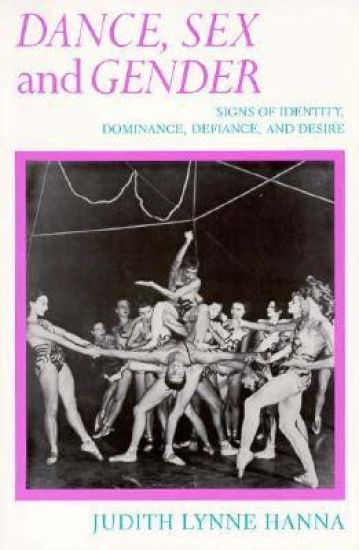
Dance, Sex, and Gender

Dance, Sex, and Gender

Judith Lynne Hanna

University of Chicago Press
1988
nidottu
"Ambitious in its scope and interdisciplinary in its purview. . . . Without doubt future researchers will want to refer to Hanna's study, not simply for its rich bibliographical sources but also for suggestions as to how to proceed with their own work. Dance, Sex, and Gender will initiate a discussion that should propel a more methodologically informed study of dance and gender."—Randy Martin, Journal of the History of Sexuality
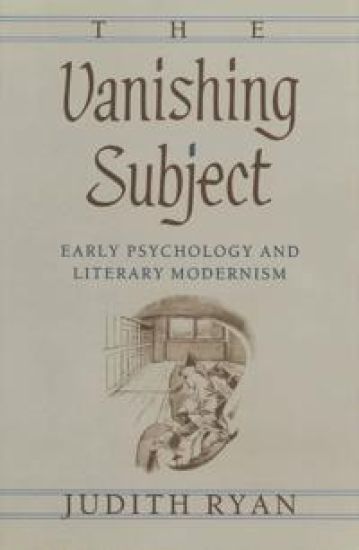
The Vanishing Subject

The Vanishing Subject

Judith Ryan

University of Chicago Press
1991
sidottu
Is thinking personal? Or should we not rather say, "it thinks," just as we say, "it rains"? In the late nineteenth century a number of psychologies emerged that began to divorce consciousness from the notion of a personal self. They asked whether subject and object are truly distinct, whether consciousness is unified or composed of disparate elements, what grounds exist for regarding today's "self" as continuous with yesterday's. If the American pragmatist William James declared himself, on balance, in favor of a "real and verifiable personal identity which we feel," his Austrian counterpart, the empiricist Ernst Mach, propounded the view that "the self is unsalvageable." The Vanishing Subject is the first comprehensive study of the impact of these pre-Freudian debates on modernist literature. In lucid and engaging prose, Ryan traces a complex set of filiations between writers and thinkers over a sixty-year period and restores a lost element in the genesis and development of modernism. From writers who see the "self" as nothing more or less than a bundle of sensory impressions, Ryan moves to others who hesitate between empiricist and Freudian views of subjectivity and consciousness, and to those who wish to salvage the self from its apparent disintegration. Finally, she looks at a group of writers who abandon not only the dualisms of subject and object, but dualistic thinking altogether. Literary impressionism, stream-of-consciousness and point-of-view narration, and the question of epiphany in literature acquire a new aspect when seen in the context of the "psychologies without the self." Rilke's development of a position akin to phenomenology, Henry and Alice James's relation to their psychologist brother, Kafka's place in the modernist movements, Joyce's rewriting of Pater, Proust's engagement with contemporary thought, Woolf's presentation of consciousness, and Musil's projection of a utopian counter-reality are problems familiar to readers and critics: The Vanishing Subject radically revises the way we see them.
Political Thought and Political Thinkers

Political Thought and Political Thinkers

Judith N. Shklar; Stanley Hoffmann

University of Chicago Press
1998
nidottu
This is the second volume of Judith Shklar's work and brings together essays on a number of themes, including the place of the intellect in the modern political world and the dangers of identity politics. Editor Stanley Hoffman provides a guide to Shklar's thought, complemented by George Kateb's comprehensive introduction to her work.
Redeeming American Political Thought

Redeeming American Political Thought

Judith N. Shklar

University of Chicago Press
1998
nidottu
In these 13 essays, Judith Shklar explores two themes crucial to discussions of American democracy: first, what she terms the "fundamental social condition" of American life - the tension between expansive political equality and persistent social inequality; and second, "redeeming" American political thought for those who believe it lacks the complexity and depth of the European tradition. She covers issues ranging from the use of history in political discourse to the effect of scepticism on politics and thinkers from Hamilton and Jefferson to Melville.
Impermissible Punishments

Impermissible Punishments

Judith Resnik

THE UNIVERSITY OF CHICAGO PRESS
2025
sidottu
An original transatlantic history of the invention of the corrections profession and of ensuing debates about punishment’s purposes and prisoners’ rights.Impermissible Punishments explores the history of punishment inside prisons and how governments grappled with obligations to justify the punishments they impose. Legal scholar Judith Resnik charts the creation of the corrections profession and weaves together the stories of people who made rules for prisons and the stories of those living under the resulting regimes. Resnik maps three centuries of shifting ideas, norms, and legal standards aiming to draw lines between permissible and impermissible punishments. Her account documents the impact of World War II, the United Nations, the US Civil Rights movement, and the pioneering prisoners who insisted that law should protect their individual dignity. Taking us to the present, Resnik analyzes the expansion of imprisonment, the inability of public and private prisons to provide safe housing, and the impact of abolition politics. Exploring the interdependency of people in and out of prisons, Impermissible Punishments examines what governments committed to equality owe to the people they detain and argues that many contemporary forms of punishment need to end.
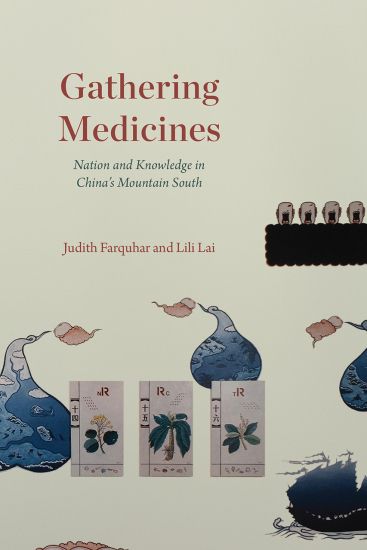
Gathering Medicines

Gathering Medicines

Judith Farquhar; Lili Lai

University of Chicago Press
2021
sidottu
In the early 2000s, the central government of China encouraged all of the nation’s registered minorities to “salvage, sort, synthesize, and elevate” folk medical knowledges in an effort to create local health care systems comparable to the nationally supported institutions of traditional Chinese medicine. Gathering Medicines bears witness to this remarkable moment of knowledge development while sympathetically introducing the myriad therapeutic traditions of southern China. Over a period of six years, Judith Farquhar and Lili Lai worked with seven minority nationality groups in China’s southern mountains, observing how medicines were gathered and local healing systems codified. Gathering Medicines shares their intimate view of how people understand ethnicity, locality, the body, and nature. This ethnography of knowledge diversities in multiethnic China is a testament to the rural wisdom of mountain healers, one that theorizes, from the ground up, the dynamic encounters between formal statist knowledge and the popular authority of the wild.
Gathering Medicines

Gathering Medicines

Judith Farquhar; Lili Lai

University of Chicago Press
2021
nidottu
In the early 2000s, the central government of China encouraged all of the nation’s registered minorities to “salvage, sort, synthesize, and elevate” folk medical knowledges in an effort to create local health care systems comparable to the nationally supported institutions of traditional Chinese medicine. Gathering Medicines bears witness to this remarkable moment of knowledge development while sympathetically introducing the myriad therapeutic traditions of southern China. Over a period of six years, Judith Farquhar and Lili Lai worked with seven minority nationality groups in China’s southern mountains, observing how medicines were gathered and local healing systems codified. Gathering Medicines shares their intimate view of how people understand ethnicity, locality, the body, and nature. This ethnography of knowledge diversities in multiethnic China is a testament to the rural wisdom of mountain healers, one that theorizes, from the ground up, the dynamic encounters between formal statist knowledge and the popular authority of the wild.
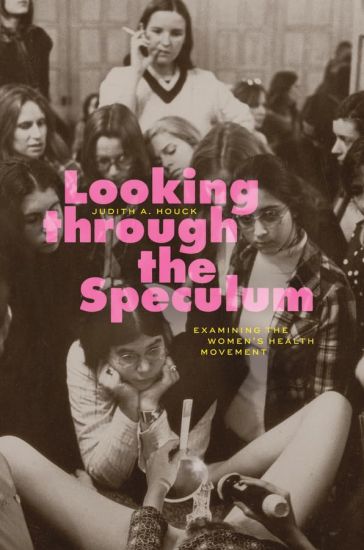
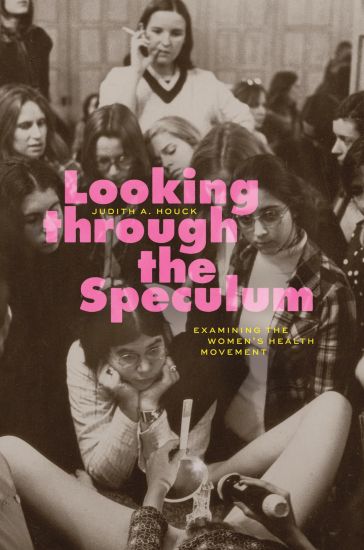
Looking through the Speculum

Looking through the Speculum

Judith A. Houck

THE UNIVERSITY OF CHICAGO PRESS
2024
sidottu
Highlights local history to tell a national story about the evolution of the women’s health movement, illuminating the struggles and successes of bringing feminist dreams into clinical spaces. The women’s health movement in the United States, beginning in 1969 and taking hold in the 1970s, was a broad-based movement seeking to increase women’s bodily knowledge, reproductive control, and well-being. It was a political movement that insisted that bodily autonomy provided the key to women’s liberation. It was also an institution-building movement that sought to transform women’s relationships with medicine; it was dedicated to increasing women’s access to affordable health care without the barriers of homophobia, racism, and sexism. But the movement did not only focus on women’s bodies. It also encouraged activists to reimagine their relationships with one another, to develop their relationships in the name of personal and political change, and, eventually, to discover and confront the limitations of the bonds of womanhood. This book examines historically the emergence, development, travails, and triumphs of the women’s health movement in the United States. By bringing medical history and the history of women’s bodies into our emerging understandings of second-wave feminism, the author sheds light on the understudied efforts to shape health care and reproductive control beyond the hospital and the doctor’s office—in the home, the women’s center, the church basement, the bookshop, and the clinic. Lesbians, straight women, and women of color all play crucial roles in this history. At its center are the politics, institutions, and relationships created by and within the women’s health movement, depicted primarily from the perspective of the activists who shaped its priorities, fought its battles, and grappled with its shortcomings.
Looking through the Speculum

Looking through the Speculum

Judith A. Houck

THE UNIVERSITY OF CHICAGO PRESS
2024
nidottu
Highlights local history to tell a national story about the evolution of the women’s health movement, illuminating the struggles and successes of bringing feminist dreams into clinical spaces. The women’s health movement in the United States, beginning in 1969 and taking hold in the 1970s, was a broad-based movement seeking to increase women’s bodily knowledge, reproductive control, and well-being. It was a political movement that insisted that bodily autonomy provided the key to women’s liberation. It was also an institution-building movement that sought to transform women’s relationships with medicine; it was dedicated to increasing women’s access to affordable health care without the barriers of homophobia, racism, and sexism. But the movement did not only focus on women’s bodies. It also encouraged activists to reimagine their relationships with one another, to develop their relationships in the name of personal and political change, and, eventually, to discover and confront the limitations of the bonds of womanhood. This book examines historically the emergence, development, travails, and triumphs of the women’s health movement in the United States. By bringing medical history and the history of women’s bodies into our emerging understandings of second-wave feminism, the author sheds light on the understudied efforts to shape health care and reproductive control beyond the hospital and the doctor’s office—in the home, the women’s center, the church basement, the bookshop, and the clinic. Lesbians, straight women, and women of color all play crucial roles in this history. At its center are the politics, institutions, and relationships created by and within the women’s health movement, depicted primarily from the perspective of the activists who shaped its priorities, fought its battles, and grappled with its shortcomings.
City of Dreadful Delight

City of Dreadful Delight

Judith R. Walkowitz

University of Chicago Press
1992
nidottu
From tabloid exposes of child prostitution to the grisly tales of Jack the Ripper, narratives of sexual danger pulsated through Victorian London. Expertly blending social history and cultural criticism, Judith Walkowitz shows how these narratives reveal the complex dramas of power, politics, and sexuality that were being played out in late nineteenth-century Britain, and how they influenced the language of politics, journalism, and fiction. Victorian London was a world where long-standing traditions of class and gender were challenged by a range of public spectacles, mass media scandals, new commercial spaces, and a proliferation of new sexual categories and identities. In the midst of this changing culture, women of many classes challenged the traditional privileges of elite males and asserted their presence in the public domain. An important catalyst in this conflict, argues Walkowitz, was W. T. Stead's widely read 1885 article about child prostitution. Capitalizing on the uproar caused by the piece and the volatile political climate of the time, women spoke of sexual danger, articulating their own grievances against men, inserting themselves into the public discussion of sex to an unprecedented extent, and gaining new entree to public spaces and journalistic practices. The ultimate manifestation of class anxiety and gender antagonism came in 1888 with the tabloid tales of Jack the Ripper. In between, there were quotidian stories of sexual possibility and urban adventure, and Walkowitz examines them all, showing how women were not simply figures in the imaginary landscape of male spectators, but also central actors in the stories of metropolotian life that reverberated in courtrooms, learned journals, drawing rooms, street corners, and in the letters columns of the daily press. A model of cultural history, this ambitious book will stimulate and enlighten readers across a broad range of interests.
Abortion, Choice, and Contemporary Fiction

Abortion, Choice, and Contemporary Fiction

Judith Wilt

University of Chicago Press
1990
sidottu
In recent years, public debate has raged over the issue of maternal choice. While personal testimony and political argument have received widespread attention, artistic representations of birth and abortion have been submerged. Judith Wilt offers the first look at how contemporary writers tell and retell the stories that shape our perceptions about abortion. She reveals that the struggle to plot these painful, complex narratives of choice, control, guilt, loss, and liberation has preoccupied an astonishing number of our most distinguished novelists, male and female alike. Readers of twentieth-century novels are more likely to encounter plots centered on maternal choice than those dealing with the more traditional problems of courtship and marriage. In the opening of the book, Wilt discusses real case histories of several women. After studying the ambiguities of their decisions, she turns to their counterpoints depicted in contemporary fiction. Working from a feminist perspective, Wilt traces the theme of maternal choice in works by Margaret Atwood, Margaret Drabble, Joan Didion, Mary Gordon, Alice Walker, Toni Morrison, Gloria Naylor, Marge Piercy, Thomas Keneally, Graham Swift, Ernest Hemingway, William Faulkner, John Barth, John Irving, and others. Behind the political, medical, and moral debates on abortion, Wilt argues, is a profound psychocultural shock at the recognition that maternity is passing from the domain of instinct to that of conscious choice. Although never wholly instinctual, maternity's potential capture by consciousness raises complex questions. The novels Wilt discusses portray worlds in which principles are endangered by sexual inequality, male power and hidden male fear of abandonment, impotence, female submission, and covert rage, and, in the case of black maternity, the hideous aftermath of slavery. Wilt provides a resonant new context for debates—whether political or personal—on the issue of abortion and maternal choice. Ultimately she enables us to rethink how we shape our own identities and lives.
The Making of a Museum

The Making of a Museum

Judith Nasby

McGill-Queen's University Press
2021
sidottu
Judith Nasby, founding director and curator of the Macdonald Stewart Art Centre, animates the story of the gallery from its humble beginnings in the hallways of a university campus in 1916 to its latest incarnation as the internationally recognized Art Gallery of Guelph.The book is beautifully illustrated with eighty images of artworks in the permanent collection, beginning with the gallery's first acquisition, Tom Thomson's 1917 masterpiece The Drive, the last large canvas he painted before his tragic death. As curator, Nasby oversaw the creation of one of the most comprehensive sculpture parks in Canada and the amassing of a permanent collection of some nine thousand artworks. In The Making of a Museum Nasby reveals how the museum developed its internationally recognized collection of contemporary Inuit drawings and wall hangings that toured four continents. She discusses the development of the collection's specializations in contemporary works by Canadian silversmiths; historical European etchings; Woodland and Northeastern Indigenous beadwork; and others that arose from curatorial collaborations, such as molas by Kuna women artists from Panama and contemporary paintings and indigenous woodcuts from Chongqing, China.Nasby recounts her long career as founding director and curator, peppering the hundred-year history of cultural development on the University of Guelph campus and in the city with humorous anecdotes and personal insights to reveal how arts institutions can be created through dedication, serendipity, and perseverance.