Kirjojen hintavertailu. Mukana 11 238 995 kirjaa ja 12 kauppaa.

Kirjahaku

Etsi kirjoja tekijän nimen, kirjan nimen tai ISBN:n perusteella.

1000 tulosta hakusanalla Judith Cook

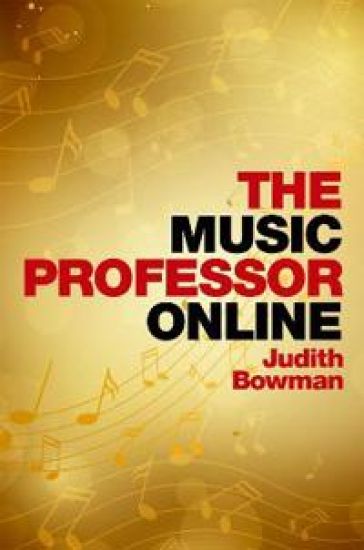
The Music Professor Online

The Music Professor Online

Judith Bowman

OXFORD UNIVERSITY PRESS INC
2022
nidottu
The Music Professor Online is a practical volume that provides a window into online music instruction in higher education. Author Judith Bowman highlights commonalities between online and face-to-face teaching, presents a theoretical framework for online learning, and provides practical models and techniques based on interviews with professors teaching online in various music disciplines. This book offers keys for thinking about music education in a post-COVID world, when the importance and interest of online education is of central concern. Part I reviews the growth and significance of online learning and online learning in music, identifies similarities and differences between face-to-face and online teaching, and presents standards and principles for online instruction. It explores development of an online teaching persona, explains teaching presence, and emphasizes the central role of the instructor as director of learning, always in relation to specific disciplines and their signature pedagogies. Part II focuses on the lived online curriculum, featuring online teaching experiences in key fields by professors teaching them online. Bowman explores specific disciplines and their signature pedagogies together with practitioner profiles that provide insights into the thinking and techniques of excellent online music instructors, together with recommendations for prospective online instructors and lessons drawn from the field. Part III summarizes recommendations and lessons from online practitioners, presents an action plan for moving forward with online music instruction, and looks to the future of online instruction in music. Educators will find great use in this comprehensive, thoughtful compendium of reflections from a leading, longtime online music educator.
The Language of Canon Law

The Language of Canon Law

Judith Hahn

OXFORD UNIVERSITY PRESS INC
2023
sidottu
The Roman Catholic Church has been criticized for many reasons, including its legalism. The growing aversion of church members to the law and the church hierarchy's juridified interpretation of Christianity is fueled by the language of ecclesiastical law (medieval legal Latin), which excludes most of the faithful from understanding and participating in debates on reforming the church's legal structure. In The Language of Canon Law, Judith Hahn explores the legal order of the Roman Catholic Church to better understand how the Roman Catholic Church communicates as a legal institution. She argues that the language of canon law reveals the political ideology of the church hierarchy, and she takes up the tools of language and law scholarship to examine and challenge that language. Examining the function of canon law language in ecclesiastical communications, she studies the character of canonical language, the grammar and terminology of canon law, and how canon law language makes use of linguistic tricks and techniques to create its typical sound. Further, Hahn discusses the comprehension difficulties that arise out of ambiguities in the law, out of transfer problems between legal and common language, and out of canon law's confusing mix of legal, doctrinal, and moral norms. An important contribution to law, language, theology, and sociology alike, this book proposes a rethinking of whether Latin is the appropriate language of a global and cross-cultural legal order like canon law, suggesting that the global church instead seek to develop a multi-language practice.
Marine Pollution

Marine Pollution

Judith S. Weis

OXFORD UNIVERSITY PRESS INC
2024
nidottu
For millennia, human societies have viewed the ocean as a dumping ground for waste products of all kinds. The sources of marine pollution are extensive, including oil spills, sewage, fertilizers, pesticides, industrial wastes, heavy metals, ocean acidification, plastics, and even invasive species, considered biological pollution. Yet, the solutions are not as clear. Updated to reflect recent research, this book discusses the sources of marine pollutants, their effects on marine organisms and humans, and how to reduce or eliminate them. Weis covers the aftermath of oil spills in addition to "emerging" topics like flame retardants, pharmaceuticals, noise pollution, and PFAS. A new chapter examines the prevalence of microplastics and how they rise through the food chain into human beings, along with their associated toxic chemicals. Additional chapters address the deadly effects of climate change in the ocean but also focus on actions that all people can take, citing recent environmental improvements as a cause for hope.
Law and Family in Late Antiquity

Law and Family in Late Antiquity

Judith Evans Grubbs

Clarendon Press
1995
sidottu
A new and thought-provoking study of marriage and the law in late antiquity, looking particularly at the new legislation enacted by the emperor Constantine (reigned AD 307-337). Constantine was famously the first Christian emperor - did his laws reflect Christian ideals, or pagan practice?
Venantius Fortunatus

Venantius Fortunatus

Judith W. George

Clarendon Press
1992
sidottu
Venantius Fortunatus, writing in the latter half of the sixth century, was not only a major Latin poet, but also an important historical figure. Educated in Ravenna, he travelled to Gaul and wrote substantially in a range of genres for Merovingian patrons, who were among the central political and ecclesiastical figures of his generation. In a period of cultural transition, he adapted and developed literary traditions, and influenced not only his contemporaries, but also succeeding generations. He also played a personal role in events of national and international significance, and his verse allows us vivid glimpses of the individual lives and characters of his patrons. In this first major modern study of the poet, Judith George illuminates all aspects of Fortunatus' work and the society in which he lived. She also provides the full text and a new translation of a selection of his poetry.
Land Reform in Russia, 1906-1917

Land Reform in Russia, 1906-1917

Judith Pallot

Clarendon Press
1999
sidottu
Since the collapse of the USSR there has been a growing interest in the Stolypin Land Reform as a possible model for post-Communist agrarian development. Using recent theoretical and empirical advances in Anglo-American research, Dr Pallot examines how peasants throughout Russia received, interpreted, and acted upon the government's attempts to persuade them to quit the commune and set up independent farms. She shows how a majority of peasants failed to interpret the Reform in the way its authors had expected, with outcomes that varied both temporally and geographically. The result challenges existing texts which either concentrate on the policy side of the Reform or, if they engage with its results, use aggregated, official statistics which, this text argues, are unreliable indicators of the pre-revolutionary peasants reception of the Reform.
Law and Family in Late Antiquity

Law and Family in Late Antiquity

Judith Evans Grubbs

Oxford University Press
2000
nidottu
This is a new and thought-provoking study of marriage and the law in late antiquity, dealing particularly with the legislation on marriage enacted by the Roman emperor Constantine (AD 307-337). As the first emperor to accept Christianity, Constantine is often credited with having introduced Christian ideals and practices into Roman law, but in this book the author argues that the extent of Christian influence on Constantine's marriage legislation was limited. Rather, in many cases, it merely granted legal recognition to practices that had long been followed by many people in the Roman Empire. Whilst Constantine did not always endorse such practices, and in some cases even tried to repress them, a careful examination of his laws against the dual background of classical Roman law and early Christian attitudes towards marriage reveals much about contemporary behaviour and belief in late antiquity.
A Critical Geography of Britain's State Forests

A Critical Geography of Britain's State Forests

Judith Tsouvalis

Oxford University Press
2001
sidottu
Attitudes in Britain to forests and trees are changing. Plantation forests - the product of the 'strategic reserve of timber' vision that held sway in the early twentieth century, and was turned into a physical reality by the Forestry Commission - are no longer fashionable. Today's forests are required to be sustainable, multi-purpose, and biologically diverse. They are expected to possess a 'spirit of place', be aesthetically pleasing, and help alleviate poverty and social exclusion in cities and remote rural areas. This book traces the changing fortune of forests and trees in Britain and people's changing relations with them. It investigates traditional woodland management practices, and considers how they came to be supplanted by scientific forestry knowledge and methods. It examines the development of the Forestry Commission and its body of foresters, looks at the symbolic function of forests and trees, and assesses the claim that present day forestry has become a postmodern phenomenon. A Critical Geography of Britain's State Forests will prove useful not only to foresters and nature conservationists, but to all those who are interested in how human beings socially and biophysically construct the environment, driven by a constant urge to find their place and meaning within it.
Care or Custody?

Care or Custody?

Judith Laing

Oxford University Press
1999
sidottu
In recent years there has been growing concern and controversy surrounding the care and treatment of mentally disordered offenders. Consequently, there have been a series of legislative and policy developments during the last decade, which have led to changes in attitude and the way that such offender-patients are treated. Such changes have focused primarily upon timely therapeutic intervention and diversion from the criminal justice system. Care or Custody?: Mentally Disordered Offenders in the Criminal Justice System considers these issues in depth. It is a comprehensive and scholarly text which identifies some of the practical difficulties that occur when mentally disordered offenders come into contact with the criminal justice system. The law in this area is complex and this book will enable professionals involved in the subject to gain a better understanding of the law and policy with regard to mentally disordered offenders. Judith Laing also analyses and addresses some of the theoretical issues and concerns surrounding the treatment and detention of mentally disordered offenders. The book will therefore assist and inform legal, mental health, and related practitioners working in this field, and will also provide a theoretical overview of the law for academics and students.
Euripides

Euripides

Judith Mossman

Oxford University Press
2003
nidottu
This volume aims to bring together some classic essays illustrating the main strands of Euripidean criticism over the last 40 years in a form convenient for students. Two of the essays are translated here for the first time, and many others have been revised by their authors. All Greek has been translated.
Euripides

Euripides

Judith Mossman

Oxford University Press
2003
sidottu
Few ancient authors are as challenging as Euripides, and few have provoked so many diverse critical opinions through the ages: Aristotle described him as 'most tragic', and yet many of his plays have been condemned by critics as barely qualifying as 'proper' tragedies at all. In general he has enjoyed a revival in reputation over the last few decades: his manipulation of convention and the skill of his dramaturgy are perhaps more widely admired now than at any time since the Renaissance. Moreover, his exploration of the emotions of the marginalized sections of Athenian society - women, slaves, foreigners - has given his work strong contemporary resonances. This volume aims to bring together for students some classic essays illustrating the main strands of Euripidean criticism over the last forty years. Two of the essays are translated here for the first time, and many others have been revised by their authors. All Greek has been translated.
Heidegger's Eschatology

Heidegger's Eschatology

Judith Wolfe

Oxford University Press
2015
nidottu
Heidegger's Eschatology is a ground-breaking account of Heidegger's early engagement with theology, from his beginnings as an anti-Modernist Catholic to his turn towards an undogmatic Protestantism and finally to a resolutely a-theistic philosophical method. The book centres on Heidegger's developing commitment to an eschatological vision, derived from theological sources but reshaped into a central resource for the development of an atheistic phenomenological account of human existence. This vision originated in Heidegger's attempt, in the late 1910s, to formulate a phenomenology of religious life that would take seriously the inherent temporality of human existence. In this endeavour, Heidegger turned to two trends in Protestant scholarship: the discovery of eschatology as a central preoccupation of the Early Church by A. Schweitzer and the 'History of Doctrine' School, and the 'existential' eschatology of Karl Barth and Eduard Thurneysen, indebted to Kierkegaard, Dostoevsky, and Franz Overbeck. His synthesis of such trends within a phenomenological framework (elaborated primarily via readings of Paul and Augustine in his lecture courses of 1921-2) led Heidegger to postulate an existential sense of eschatological unrest as the central characteristic of authentic Christian existence. His description of this expectant restlessness, however, was now inescapably at odds with its Christian sources, since Heidegger's commitment to a phenomenological description of the human situation led him to abstract the 'existential' experience of expectation from its traditional object: the 'blessed hope' for the Kingdom of God. Christian hope thus for Heidegger no longer constitutes, but rather negates 'eschatological' unrest, because such hope projects an end to that unrest, and thus to authentic existence itself. Against the Christian vision, Heidegger therefore develops a systematic 'eschatology without eschaton', paradigmatically expressed as 'being-unto-death'. Judith Wolfe tells the story of his re-conception of eschatology, using a wealth of primary and newly available original-language sources, and offering in-depth analysis of Heidegger's relationship to theological tradition and the theology of his time.
Myths of the Underworld in Contemporary Culture

Myths of the Underworld in Contemporary Culture

Judith Fletcher

Oxford University Press
2019
sidottu
Myths of the Underworld in Contemporary Culture: The Backward Gaze examines a series of twentieth and twenty-first century fictional works that adapt Greco-Roman myths of the catabasis, the heroic journey to the underworld. Covering a range of genres - including novels, comics, and children's culture, by authors such as Elena Ferrante, Salman Rushdie, Neil Gaiman, A. S. Byatt, Toni Morrison, and Anne Patchett - it reveals how an enduring fascination with life after death, and fantasies of accessing the world of the dead while we are still alive, manifest themselves in myriad and varied re-imaginings of the ancient descent myth. The volume begins with a detailed overview of the use of the myth by ancient authors such as Homer, Aristophanes, Vergil, and Ovid, before exploring the ways in which the narrative of a return trip to Hades by Odysseus, Aeneas, Orpheus, and Persephone can be manipulated by contemporary storytellers to fit themes of social marginality and alterity, postmodern rebellion, the position of female authors in the literary canon, and the dislocation endured by refugees, exiles, and diasporic populations. It also argues that citations of classical underworld stories can disrupt and challenge the literary canon by using media - such as comic books, children's culture, or rock music - not conventionally associated with high culture.
Memory in Early Modern Europe, 1500-1800

Memory in Early Modern Europe, 1500-1800

Judith Pollmann

Oxford University Press
2017
sidottu
For early modern Europeans, the past was a measure of most things, good and bad. For that reason it was also hotly contested, manipulated, and far too important to be left to historians alone. Memory in Early Modern Europe offers a lively and accessible introduction to the many ways in which Europeans engaged with the past and 'practised' memory in the three centuries between 1500 and 1800. From childhood memories and local customs to war traumas and peacekeeping , it analyses how Europeans tried to control, mobilize and reconfigure memories of the past. Challenging the long-standing view that memory cultures transformed around 1800, it argues for the continued relevance of early modern memory practices in modern societies.
Textbook on Land Law

Textbook on Land Law

Judith-Anne MacKenzie; Aruna Nair

Oxford University Press
2020
nidottu
Practical and contextual in its approach, lucid and engaging in style, Textbook on Land Law enlivens the subject for students. The innovative running case study used throughout illustrates the law in action, helping students to visualize the real life applications of the law and demystify abstract concepts. Academic details on key topics are explained straightforwardly for an accessible learning experience. This is enhanced by additional examples, extracts, diagrams, and sample documents which contribute to the building blocks of a clear framework, enabling students to gain a pragmatic understanding of the essential principles. A glossary of key terms is included at the end of the book for ease of reference, while end-of-chapter reading suggestions support further research and exam preparation. Digital formats and resources The eighteenth edition is available for students and institutions to purchase in a variety of formats, and is supported by online resources. - The e-book offers a mobile experience and convenient access along with functionality tools, navigation features, and links that offer extra learning support: www.oxfordtextbooks.co.uk/ebooks - This textbook is also accompanied by online resources including self-test questions with instant feedback, guidance on approaching land law problems, as well as additional examination of topics such as leasehold covenants, perpetuities and accumulations, and undue influence and mortgages. There will also be updates on the legal developments of land law.
Catholic Identity and the Revolt of the Netherlands, 1520-1635
The Revolt that ripped apart the sixteenth-century Netherlands began as a rebellion against Habsburg authority but it eventually became a war of religion that resulted in the formation of two new states. Although the Southern Netherlands ultimately witnessed the triumph of the militant Catholicism of the Baroque, Catholics throughout the Low Countries found that the Revolt had changed their lives forever. Mining the unusually rich diaries, memoirs, and poems written by Netherlandish Catholics, Judith Pollmann explores how Catholic believers experienced religious and political turmoil in the generations between Erasmus and Rubens. She investigates the initial passivity of Catholics in the face of Calvinist aggression, and asks why they actively supported a Catholic revival after 1585. By listening to the voices of individual Catholics, lay and clerical, Judith Pollmann offers a new perspective both on the Revolt of the Netherlands and on the formation of early modern Catholic identity. Exploring what it took to turn traditional Christians into the agents of their own Counter-Reformation, she sees the dynamic relationship between priests and people as a catalyst for religious change in the sixteenth and seventeenth centuries.
Governing Animals, Governing Humans

Governing Animals, Governing Humans

Judith Renner

Oxford University Press
2025
sidottu
Governing Animals, Governing Humans explores how the global politics of animal protection works as the government of human-animal relations. Responding to recent calls by scholars coming from post-humanist, new materialist, or post-anthropocentric backgrounds who criticize the discipline's human-centred outlook it suggests a way how animals can be analyzed as targets of government by bringing into conversation Foucauldian scholarship within IR, political science and Critical Animal Studies (CAS). Empirically, the book is driven by an interest to understand and theorize two contradicting global tendencies in regard to how humans relate to animals: on the one hand, a growing global concern for animals which has led to animal protection and animal welfare turning into issues of international relevance. On the other hand, the growing use and exploitation of animals as means of human convenience which manifests in the increase of the global trade in animal products, in the numbers of animals used worldwide and in the conditions under which these animals are kept. The book argues that whereas these tendencies seem to be conflicting on the first view, they are in fact closely intertwined as animal welfare, which has emerged as the dominant strategy of global animal protection, establishes the intensive production and use of animals along animal welfare standards as the primary practice of animal protection, coopts animals and humans into this strategy as subjects of animal welfare and animal consumption and thus governs human-animal relations along the seemingly contradicting but intertwined tendencies of animal protection and animal use. ABOUT THE SERIES: Voices in International Relations, published under the auspices of the European International Studies Association (EISA), furthers the development of research at the frontiers of International Relations (IR). It expands the remit of the field by including innovative scholarship that broadens key debates in the discipline, but it is more interested in reconfiguring such debates by approaching them from inside and outside the conventional core. Thematically, we aim to publish research that pushes the limits of IR conventionally defined from within and connects it to debates developing outside the discipline. We are committed to furthering diversity and inclusion in terms of authorship, location, topics and approaches from both inside and outside Europe. We have an inclusive approach to neighbouring disciplines, be it sociology, history, anthropology, geography, economics, political theory or law. Series editors: Debbie Lisle, Tanja Aalberts, Anna Leander, and Laura Sjoberg.
Russia's Unknown Agriculture

Russia's Unknown Agriculture

Judith Pallot; Tat'yana Nefedova

Oxford University Press
2007
sidottu
Basing their findings on four years of research during which they studied rural districts drawn from a variety of contrasting regions of European Russia, the authors discuss the place of rural households in Russia's agri-food production system. They show that far from being solely concerned with 'survival' household plots in contemporary Russia are increasingly used to produce crops and livestock products for the market. In the book they describe the rich variety of forms that small and independent farming takes today from highly localised clusters of cucumber or tomato producers to specialization in crop or animal husbandry at a higher spatial scale or associated with particular ethnic groups. The authors systematically examine the influence on past and present practices of distance and the environment, the state of the large farm sector, local customs, and ethnicity on what households produce and how they produce it often using case studies of people they have met (plot holders, farmers, local officials) to illustrate their point. They criticise the tendency of the household production to be treated as the agricultural 'Other' in post-Soviet Russia and argue with the right incentives it has the potential for further development.
The Law of Habeas Corpus

The Law of Habeas Corpus

Judith Farbey QC; R.J. Sharpe; Simon Atrill

Oxford University Press
2011
sidottu
Habeas corpus is the principal means under the common law for the protection of personal liberty. By this ancient writ, the court assumes control over the body of a prisoner so it can discharge him or her to freedom if no proper legal cause can be shown for detention. Habeas corpus secures release from any form of unlawful custody, whether decreed by the highest powers of the state or imposed by the lowest slave-trader. Its reach is as diverse as the forms of confinement. Throughout its history, it has proved adept at adapting to new challenges. It extends beyond the prison wall and has been invoked to determine the proper parental custody of a child and to free patients wrongly detained for compulsory medical treatment, indentured workers, conscripted soldiers, as well as individuals wrongly held in the war on terrorism. Looking first at the historical development of the writ, the book traces its growth in significance until its emergence as a cornerstone of the rule of law. Having established habeas corpus as a central constitutional principle, the volume goes on to examine the role and limits of the remedy today. It describes the modern workings of habeas corpus and assesses its contemporary scope and function. The authors explore the relationship between habeas corpus and fundamental rights. Critically surveying the nature of judicial review on habeas corpus, the book investigates past, present, and potential future uses of the writ, providing a comprehensive statement of current English law and a discussion of the position in other Commonwealth countries.