Kirjojen hintavertailu. Mukana 12 083 983 kirjaa ja 12 kauppaa.

Kirjahaku

Etsi kirjoja tekijän nimen, kirjan nimen tai ISBN:n perusteella.

1000 tulosta hakusanalla Justin

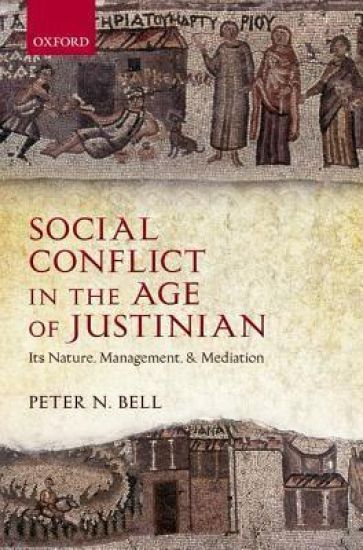
Social Conflict in the Age of Justinian

Social Conflict in the Age of Justinian

Peter N. Bell

Oxford University Press
2013
sidottu
Our understanding of Late Antiquity can be transformed by the non-dogmatic application of social theory to more traditional evidence when studying major social conflicts in the Eastern Roman Empire, not least under the Emperor Justinian (527-565). Social Conflict in the Age of Justinian explores a range of often violent conflicts across the whole empire - on the land, in religion, and in sport - during this pivotal period in European history. Drawing on both sociology and social psychology, and on his experience as a senior British Civil Servant dealing with violent political conflicts in Northern Ireland and elsewhere, Bell shows that such conflicts were a basic feature of the overwhelmingly agricultural political economy of the empire. These conflicts were reflected at the ideological level and lead to intense persecution of intellectuals and Pagans as an ever more robust Christian ideological hegemony was established. In challenging the loyalties of all social classes, they also increased the vulnerability of an emperor and his allies. The need to legitimise the emperor, through an increasingly sacralised monarchy, and to build a loyal constituency, consequently remained a top priority for Justinian, even if his repeated efforts to unite the churches failed.
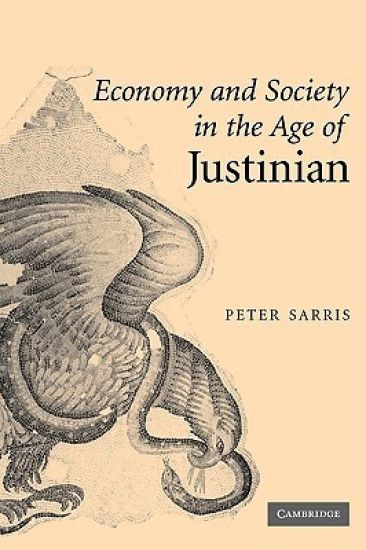
Economy and Society in the Age of Justinian

Economy and Society in the Age of Justinian

Peter Sarris

Cambridge University Press
2009
pokkari
The reign of the Byzantine Emperor Justinian (527–65) stands out in late Roman and medieval history. Justinian re-conquered far-flung territories from the barbarians, overhauled the Empire's administrative framework and codified for posterity the inherited tradition of Roman law. This work represents a modern study in English of the social and economic history of the Eastern Roman Empire in the reign of the Emperor Justinian. Drawing upon papyrological, numismatic, legal, literary and archaeological evidence, the study seeks to reconstruct the emergent nature of relations between landowners and peasants, and aristocrats and emperors in the late antique Eastern Empire. It provides a social and economic context in which to situate the Emperor Justinian's mid-sixth-century reform programme, and questions the implications of the Eastern Empire's pattern of social and economic development under Justinian for its subsequent, post-Justinianic history.
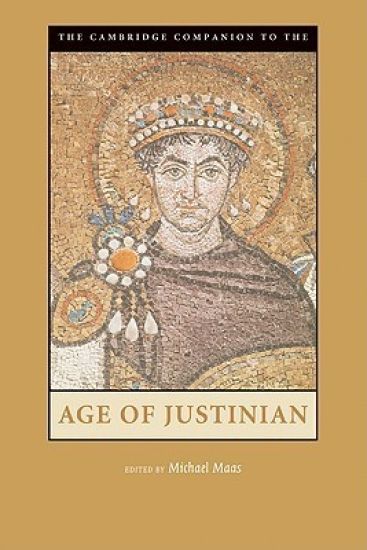
The Cambridge Companion to the Age of Justinian
This book introduces the Age of Justinian, the last Roman century and the first flowering of Byzantine culture. Dominated by the policies and personality of emperor Justinian I (527–565), this period of grand achievements and far-reaching failures witnessed the transformation of the Mediterranean world. In this volume, twenty specialists explore the most important aspects of the age including the mechanics and theory of empire, warfare, urbanism, and economy. It also discusses the impact of the great plague, the codification of Roman law, and the many religious upheavals taking place at the time. Consideration is given to imperial relations with the papacy, northern barbarians, the Persians, and other eastern peoples, shedding new light on a dramatic and highly significant historical period.
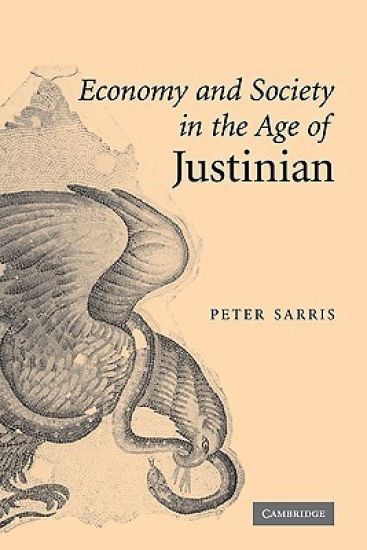
Economy and Society in the Age of Justinian

Economy and Society in the Age of Justinian

Peter Sarris

Cambridge University Press
2006
sidottu
The reign of the Byzantine Emperor Justinian (527–65) stands out in late Roman and medieval history. Justinian re-conquered far-flung territories from the barbarians, overhauled the Empire's administrative framework and codified for posterity the inherited tradition of Roman law. This work represents a modern study in English of the social and economic history of the Eastern Roman Empire in the reign of the Emperor Justinian. Drawing upon papyrological, numismatic, legal, literary and archaeological evidence, the study seeks to reconstruct the emergent nature of relations between landowners and peasants, and aristocrats and emperors in the late antique Eastern Empire. It provides a social and economic context in which to situate the Emperor Justinian's mid-sixth-century reform programme, and questions the implications of the Eastern Empire's pattern of social and economic development under Justinian for its subsequent, post-Justinianic history.