Kirjojen hintavertailu. Mukana 11 717 486 kirjaa ja 12 kauppaa.

Kirjahaku

Etsi kirjoja tekijän nimen, kirjan nimen tai ISBN:n perusteella.

1000 tulosta hakusanalla Kevin Messerschmidt

Essential Study and Employment Skills for Business and Management Students
Essential Study and Employment Skills for Business and Management Students is a comprehensive, one-stop guide to the skills needed to bring you success, both throughout university and in your future career. Covering all the core areas associated with business and management degrees, this text offers a unique focus on employability to guide your development into a future employee who can lead but who is also a team player, who is flexible and creative, well-versed in problem-solving skills, and who is self-aware and resilient under pressure - all skills that employers are looking for in today's business world. Now in its fourth edition, a new chapter on wellbeing makes this text more relevant than ever. This chapter guides your development of healthy mental and physical resilience, which are needed both at university and in the world of work. The importance of critical reflection is also emphasized by a new 'Stop and Reflect' feature, which acts as a checkpoint to help you absorb the content on a more personal and practical level. Packed with individual and group activities and 'skills examples', as well as the real insights into the professional world offered by the 'practitioner viewpoints', the focus of this text is firmly on active experimentation and thoughtful, guided reflection. Essential Study and Employment Skills for Business and Management Students remains unparalleled as a resource to support, encourage, and develop business and management students throughout their time at university and beyond. An exciting development for this new edition, the enhanced e-book offers an even more flexible and engaging way to learn: www.oxfordtextbooks.co.uk/ebooks This book is accompanied by the following online resources: For students Self-test multiple choice questions with formative feedback Selected activities from the text (including templates to complete online) Answer guidance for selected activities and exercises in the book Additional resources including practical worksheets, a critical incidents log, and an Excel workbook to provide additional support in areas such as constructing pie charts, bar charts, and line charts. Guidance for using Excel in data analysis Web links Flashcard glossary For lecturers PowerPoint presentations
Prosodic Weight

Prosodic Weight

Kevin M. Ryan

Oxford University Press
2019
sidottu
This volume provides the most comprehensive treatment of phonological weight to date, bringing together traditional notions of categorical, rime-based weight and new developments in statistical prosodic phonology. The book demonstrates that while some systems treat weight as a simple (heavy vs. light) distinction, others treat it as a rich continuum of heaviness. Following an introduction to weight-sensitive systems in phonology, Kevin Ryan explores the range of phenomena that interact with prosodic weight. Chapters examine the analysis of scales in terms of prominence rather than moraic coercion; prosodic minimality in the context of larger prosodic constituents; syllable weight in metrics; and the relationship between prosodic end-weight and stress. Throughout, the analysis is based on a survey of weight systems both within and across the world's languages, which yields a number of valuable generalizations and points towards a universal theory of weight in human language.
Art, History, and Postwar Fiction

Art, History, and Postwar Fiction

Kevin Brazil

Oxford University Press
2018
sidottu
Art, History, and Postwar Fiction explores the ways in which novelists responded to the visual arts from the aftermath of the Second World War to the present day. If art had long served as a foil to enable novelists to reflect on their craft, this book argues that in the postwar period, novelists turned to the visual arts to develop new ways of conceptualizing the relationship between literature and history. The sense that the novel was becalmed in the end of history was pervasive in the postwar decades. In seeming to bring modernism to a climax whilst repeating its foundational gestures, visual art also raised questions about the relationship between continuity and change in the development of art. In chapters on Samuel Beckett, William Gaddis, John Berger, and W. G. Sebald, and shorter discussions of writers like Doris Lessing, Kathy Acker, and Teju Cole, this book shows that writing about art was often a means of commenting on historical developments of the period: the Cold War, the New Left, the legacy of the Holocaust. Furthermore, it argues that forms of postwar visual art, from abstraction to the readymade, offered novelists ways of thinking about the relationship between form and history that went beyond models of reflection or determination. By doing so, this book also argues that attention to interactions between literature and art can provide critics with new ways to think about the relationship between literature and history beyond reductive oppositions between formalism and historicism, autonomy and context.
Leadership

Leadership

Kevin Roe

Oxford University Press
2020
nidottu
Designed specifically to develop students' understanding of leadership in a variety of contexts, and assuming no prior experience of leadership in the business world, this book is a must-read for students embarking on their study of leadership, while thinking ahead to their own future employment. The book is divided into two clear parts to logically guide the reader through the key theoretical models of leadership, as well as the issues and themes that surround the subject. Part 1 examines the main theories in the field, including situational and contingency theories, behavioural models, and trait theory, while Part 2 draws on a number of different themes to add depth to the theoretical ideas discussed, such as diversity, power, and ethics. To help to interpret the key theories, the book also illustrates leadership in action using a wealth of diverse case studies, 50% of which are new for this third edition. Examples have been carefully selected to highlight the practical application of leadership theory, both in a formal business context and in everyday life, and to dispel the common misconception for students new to leadership that it is only for the 'great and good'. A broad variety of case studies are included from the world of politics, entertainment, food and sport; these include Boris Johnson, the Spice Girls, Cadbury, and Lance Armstrong. These case studies explore leadership across a variety of contexts and cultures, giving students the broad perspective they need to consider the subject critically. Pause for thought boxes and self-test questionnaires encourage students to reflect on the theories and practices they've learned about and how such concepts and issues might apply in their own approach to leadership. Together with the lively writing style, stimulating case studies, and further learning features, this allows students to fully engage with the subject and use the book as an essential tool in their leadership studies. This book is accompanied by a range of online resources including: For students: Multiple choice questions Glossary Web links For lecturers: PowerPoint slides Lecturer guide Team-based learning guide Video links Test bank
Greek Prime Ministers in the Eye of the Storm

Greek Prime Ministers in the Eye of the Storm

Kevin Featherstone; Dimitris Papadimitriou

Oxford University Press
2025
sidottu
When, and how, might crises force institutions to change? Crisis management prompts expectations of exceptional behaviour, leaders raising their 'game', and of being empowered. The Greek crisis of 2009-18 was severe: threatening bankruptcy and Greece's exit from the euro. Yet, in a previous study of 2015, Featherstone and Papadimitriou identified key institutional weaknesses embedded within Greek governments: of poor central control and coordination, the very qualities needed in a crisis. So, how far did the crisis in Greece enable actors to overcome these critical weaknesses? What lessons were drawn, and when? Exploring change in a crisis requires careful case study. Drawing on interviews with an extensive range of personnel, including each crisis Greek prime minister, the authors meticulously explore how the four prime ministers of the period handled the challenges of crisis management. In doing so, they apply an original analytical frame. They then place the Greek case in a wider, comparative perspective, contributing to studies of crisis leadership, crisis management, core executives, and the utility of external loan conditionality. There are implications for the capacity to reform in particular domestic settings and the ability of external actors like the European Union to leverage such reform. In a heterogeneous Europe, these are issues of likely continuing importance.
World Order in Late Antiquity

World Order in Late Antiquity

Kevin Blachford

Oxford University Press
2024
sidottu
The East Romans of Byzantium and the Sasanian Persians competed as geopolitical rivals for over four centuries between 224 to 628 AD. Through a series of intractable conflicts these two great empires would develop a dual hierarchy that sought to divide the known world between them. Despite competing claims to universal rule, mutual spheres of interest arose as both empires sought to create rules, norms, and standard practices of diplomatic behaviour to regulate their inter-imperial rivalry. Defined by contemporaries as the 'Two Eyes' of the Earth, this suzerain order aimed to hierarchically organize those considered as 'barbarians'. This period of late antiquity is rarely considered within the discipline of International Relations (IR) but, through an English School approach, Blachford examines the diverse suzerain order of late antiquity as 'barbarous' nomadic tribes challenged the hierarchical ambitions of two rival empires who both claimed a unique role in the maintenance of world order.
The Evolution of Sex

The Evolution of Sex

Kevin Lee Teather

Oxford University Press
2024
sidottu
The evolutionary objective of both sexes is to optimize the number of genes they contribute to following generations. Invariably the most efficient way to achieve this is to have many high quality offspring. However, males and females can be influenced by very different biological forces that subsequently shape their reproductive strategies. This readable account of the evolution of sexual reproduction highlights these differences between the sexes, specifically the potential for both conflict and co-operation at the level of the individual. Males and females are often very different when it comes to carrying out their reproductive strategies and may be at odds as to how best to maximize their success. This book discusses those differences, how they arose, what they are, and provides a wealth of examples to better understand how the two biological sexes approach sexual reproduction. The Evolution of Sex is an accessible primer suitable for both undergraduate and graduate students of anthropology, psychology, and biology. It will also appeal to a more general audience seeking a better understanding of human sexual behaviour from an evolutionary viewpoint.
The Evolution of Sex

The Evolution of Sex

Kevin Lee Teather

Oxford University Press
2024
nidottu
The evolutionary objective of both sexes is to optimize the number of genes they contribute to following generations. Invariably the most efficient way to achieve this is to have many high quality offspring. However, males and females can be influenced by very different biological forces that subsequently shape their reproductive strategies. This readable account of the evolution of sexual reproduction highlights these differences between the sexes, specifically the potential for both conflict and co-operation at the level of the individual. Males and females are often very different when it comes to carrying out their reproductive strategies and may be at odds as to how best to maximize their success. This book discusses those differences, how they arose, what they are, and provides a wealth of examples to better understand how the two biological sexes approach sexual reproduction. The Evolution of Sex is an accessible primer suitable for both undergraduate and graduate students of anthropology, psychology, and biology. It will also appeal to a more general audience seeking a better understanding of human sexual behaviour from an evolutionary viewpoint.
Explanatory Solutions to Skeptical Problems

Explanatory Solutions to Skeptical Problems

Kevin McCain

Oxford University Press
2025
sidottu
Phenomenal Explanationism is a powerful new theory of epistemic justification that combines an explanationist conception of evidential support with an appearance-based or phenomenal conception of evidence. According to PE, epistemic justification is a matter of what best explains our evidence, which ultimately consists of appearances. It is a complete internalist theory of epistemic justification that delivers on the promises of other appearance-based theories while avoiding their pitfalls. In Explanatory Solutions to Skeptical Problems, Kevin McCain expands his previous work on the internalist dimension of the theory to cover external world skepticism. He also demonstrates how PE offers solutions to a host of other perennial skeptical problems including the problem of the criterion, the regress of justification, memory skepticism, and inductive skepticism. The promise that PE displays in responding to these problems makes it plain that it is a viable conception of epistemic justification worthy of careful consideration, and also that accepting internalism more generally doesn't leave one without reasonable responses to skeptical problems.
Leadership

Leadership

Kevin Roe

Oxford University Press
2025
nidottu
The definitive introduction to the study of leadership, Roe's Leadership presents key theories and issues whilst examining leadership practice through a range of distinctive case study examples. This accessible and comprehensive textbook is designed specifically to develop students' understanding of leadership in a variety of contexts. Assuming no prior executive experience, the book combines a wealth of diverse case studies with an engaging writing style to illustrate the practical application of leadership theory in the real-world. Key Features – Written in a conversational and engaging style, this textbook communicates sometimes complex theories in easy to understand terms, making it ideal for students with limited first-hand experience of leadership. – A clear two-part structure helps students navigate this topic, by starting with the basic leadership frameworks before moving on to explore the issues and themes that surround the subject. – A broad variety of learning features including case studies, Pause for Thought boxes, and questions encourage students to apply theory to practice, to think more critically, and to test their own understanding. – A comprehensive set of online resources are available for both students and instructors to help enhance teaching and learning. New to This Edition – New case studies representing diverse contemporary events and figures, including Taylor Swift, Volodymyr Zelenskyy, Siya Kolisi, and Elon Musk. – Updated coverage of leadership development routes like Modern Apprenticeships. – Additional perspectives explored in discussions of leadership and diversity. – Enhanced content reflecting key cultural, political, and technological advancements. The 4th edition is available for students and institutions to purchase in a variety of formats: the e-book and Business Trove offer a mobile experience and convenient access along with functionality tools, navigation features and links that offer extra learning support.
Indian Prisoners of War in Japanese Captivity during World War Two
During World War Two some 67,000 Indian personnel of the British Indian Army were captured by Imperial Japanese forces, including a large number at the surrender of Singapore in February 1942. This book, the first of its kind, critically examines why these colonial Prisoners of War (POW) were largely forgotten in the post-war period, and therefore represents a case study in the formation of British wartime historical memory. It addresses three questions, relating to the impact of evidence that some Indian prisoners were disloyal, the role of British colonial propaganda in shaping later memory of Indian prisoners, and the unavailability of important documentary sources. It argues that the process of forgetting can be understood in terms of three active memory practices, namely: suppression; obscuration; and selection. Examples of how each of these have impacted British memory of Indian prisoners are provided. These practices acted in a colonial context within which a pertinent element was a “myth of loyalty”, namely the idea that whatever may have occurred in captivity most Indian prisoners stayed fundamentally loyal to the British. Newly available sources, including records from British military intelligence, allow a reassessment of such narratives. It examines the impact of the creation of the Indian National Army (INA) from volunteers among the Indian prisoners, the way that the experiences of Indian prisoners were remembered, explores how the INA was denigrated in later British accounts, and reviews post-war war-crimes trials of Japanese military personnel where the victims were Indian prisoners, including highlighting cases involving miscarriages of justice. The book provides vivid portrayals of Indian prisoner experiences in areas such as Singapore, Borneo, and the Southwest Pacific, as well as offering new perspectives on the INA's contribution to campaigns such as Imphal and Kohima in 1944, arguing that their impact was greater than previously admitted in British accounts. Throughout, the emphasis is on the role of forgetting in the management of unpalatable truths by the British.
Narrative Personae and Desire in Modernist Fiction
Examining modernist fiction in the context of a longer tradition of narrative impersonality, Narrative Personae and Desire in Modernist Fiction explores how narrative language renders subjective states of interiority and desire. Inspired by linguistic analyses of the “speakerless sentences” of narrative language and their unoccupied centers of perception, Kevin Ohi argues that modernist texts are populated by quasi-persons: narrative “voices” that are impersonal while trailing effects of personality, and characters whose personhood is suspended, the incisive rendering of psychology and desire produced by externalizations of consciousness. Certain first-person texts highlight the constitutive tension between the functions of narrator and character joined in that first person, while in third-person texts, a charismatic or impervious central voice can be shown nevertheless to “hold” the psychologies it empties from the characters it describes. At stake is the particular way that modernist narrative responds to the question of literature's capacities for addressing psychic life. In Virginia Woolf's Jacob's Room, William Faulkner's As I Lay Dying, Ford Madox Ford's The Good Soldier, Eudora Welty's The Golden Apples, Ronald Firbank's Concerning the Eccentricities of Cardinal Pirelli, and James Purdy's Mourners Below, this volume finds a paradoxical merger, a humanizing effect achieved by narrative depersonalization and its evocations of psychology and desire.
Motor Neuron Disease

Motor Neuron Disease

Kevin Talbot; Rachael Marsden

Oxford University Press
2008
nidottu
Motor neuron disease (MND) is a common but devastating disability that has a profound impact on people's lives. This book provides an easily-accessible guide to the disease for patients with motor neuron disease and their carers. The authors have organised it around a series of the commonest questions asked in their clinic, emphasising the variation in the course of MND and the individual nature of the patient journey through the disease. After an initial description of the symptoms for MND and how neurologists make the diagnosis the authors describe what is known about the causes and how scientists are trying to understand the disease. The book also looks at how a team of specialists can provide support and symptom control for the patient.
Vulnerable Adult and Child Witnesses

Vulnerable Adult and Child Witnesses

Kevin Smith; Steve Tilney

Oxford University Press
2007
nidottu
The treatment of vulnerable witnesses is an area which has seen great change over the past 20 years. The 1989 Pigot report made a variety of recommendations and suggestions for improvement and this marked the early stages of this process of change. This book is designed to be an invaluable, practical source of help to all those working in the complex area of vulnerable witnesses. It is structured to follow the chronology of an investigation from the first steps of identifying a vulnerable witness through to trial and includes helpful case studies with examples outlining potential pitfalls during the investigation and possible solutions. The book covers key topics such as identifying vulnerable witnesses, protection of vulnerable witnesses throughout the criminal justice process, pre-interview contact, assessing competence, multi-agency working, interviewing and pre-trial preparation. The treatment of vulnerable witnesses by police investigators and others involved in the criminal justice system is likely to come under increased scrutiny in the future with the Victims' Code of Practice and the Witness Charter. This book considers the many changes and new documentation in the area including the Victims and Witnesses' Commission, the revised edition of 'Achieving Best Evidence' and the Mental Capacity Act 2005, Code of Practice. This book is an essential guide and reference. The Blackstone's Practical Policing Series is a collection of highly practical, up-to-date titles covering a range of essential subjects in today's policing arena. Developed from a detailed understanding of police information needs, this series seeks to explain the relevant law, practice and procedure from a police officer's perspective. The first practical guide in this area, with all relevant systems and methods explained in one accessible volume.
Elements of Land Law

Elements of Land Law

Kevin Gray; Susan Francis Gray

Oxford University Press
2008
nidottu
'Here is a book whose breadth of purpose and depth of learning are breathtaking.' Peter Butt, [2005] 69 Conv 363 Gray & Gray's Elements of Land Law is the definitive textbook on the subject. The book offers comprehensive coverage of the law in this area. The authors provide an insightful and thought-provoking commentary on the modern development of the subject and go on to explore how land law functions in today's society. The book includes an analysis of recent legislation and case law in England and Wales. There are also references to significant cases from Australia, New Zealand, the United States and Canada, coupled with a detailed account of reforms currently proposed by the English Law Commission. The book demonstrates a thorough understanding of the social and political context of land law and guides the reader through the sometimes difficult terminology of the subject. This fifth edition continues to balance up-to-date coverage of the key issues in land law with a critical survey of cutting-edge research. Building on the strengths of previous editions, the book ensures that excellent scholarship is accessible to an even wider readership: more chapters of shorter length offer the possibility of readers 'dipping' into topics in a non-linear way. A fresh, new format and text design support the re-structuring of content and aid navigability. Readers wanting to explore areas of interest in more depth are encouraged to do so by the exemplary footnoting and referencing.
Music Theory Remixed: A Blended Approach for the Practicing Musician
Designed for today's undergraduate music students, Music Theory Remixed: A Blended Approach for the Practicing Musician presents tonal music theory through a dual lens of works from the Western canon and examples from popular music, including rock, jazz, techno, film soundtracks, and world music. With exceptional clarity, it balances the study of traditional part-writing with the development of essential skills like score analysis and identification of historical style. Each chapter contains guided activities involving analysis, composition, and improvisation, offering a perfect blend of learned material and practical application. Visit the book's free, open-access Companion Website at www.oup.com/us/holm-hudson for additional student resources, including an online workbook and complete Spotify playlists for all examples.
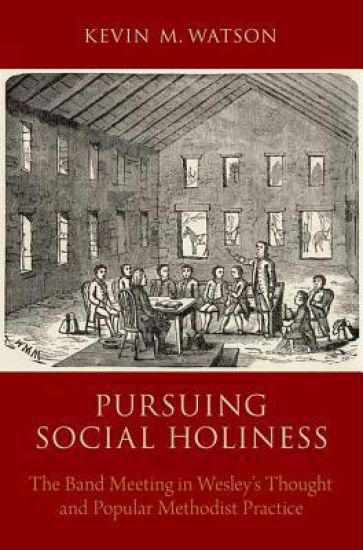
Pursuing Social Holiness

Pursuing Social Holiness

Kevin M. Watson

Oxford University Press Inc
2014
sidottu
Kevin M. Watson offers the first in-depth examination of the early Methodist band meeting: a small group of five to seven people focusing on the confession of sin in order to grow in holiness. The ''social holiness'' of the band meeting figures significantly both in the development of eighteenth-century British Methodism and in understanding shifting forms of community in the context of rapidly changing British society. Arguing that neither John Wesley's theology nor popular Methodism can be understood independent of each other, Watson shows how Wesley synthesized important aspects of Anglican (an emphasis on a disciplined practice of the means of grace) and Moravian (an emphasis on an experience of justification by faith and the witness of the Spirit) piety in his own version of the band meeting. The small groups were of particular significance in John Wesley's theology of discipleship because the bands united his emphasis on the importance of holiness with his conviction that Christians are most likely to make progress in the Christian life together, rather than in isolation.
Big Deal

Big Deal

Kevin Winkler

Oxford University Press Inc
2018
sidottu
Bob Fosse (1927-87) is recognized as one of the most significant figures in the post-World War II American musical theater. With his first Broadway musical, The Pajama Game in 1954, the "Fosse style" was already fully developed, with the hunched shoulders, turned in stance, and stuttering, staccato jazz movements. Fosse moved decisively into the role of director with Redhead in 1959 and was a key figure in the rise of the director-choreographer in the Broadway musical. He also became the only star director of musicals of his era-a group that included Jerome Robbins, Gower Champion, Michael Kidd, and Harold Prince- to equal his Broadway success in films. Following his unprecedented triple crown of show business awards in 1973 (an Oscar for Cabaret, Emmy for Liza With a Z, and Tony for Pippin), Fosse assumed complete control of virtually every element of his projects. But when at last he had achieved complete autonomy, his final projects, the film Star 80 and the musical Big Deal, both written and directed by Fosse, were rejected by audiences and critics. A fascinating look at the evolution of Fosse as choreographer and director, Big Deal: Bob Fosse and Dance in the American Musical considers Fosse's career in the context of changes in the Broadway musical theater over four decades. It traces his early dance years and the importance of early mentors George Abbott and Jerome Robbins on his work. It examines how each of the important women in his adult life-all dancers-impacted his career and influenced his dance aesthetic. Finally, the book investigates how his evolution as both artist and individual mirrored the social and political climate of his era and allowed him to comfortably ride a wave of cultural changes.
Is a Little Pollution Good for You?

Is a Little Pollution Good for You?

Kevin C. Elliott

Oxford University Press Inc
2014
nidottu
Could low-level exposure to polluting chemicals be analogous to exercise -- a beneficial source of stress that strengthens the body? Some scientists studying the phenomenon of hormesis (beneficial or stimulatory effects caused by low-dose exposure to toxic substances) claim that that this may be the case. Is A Little Pollution Good For You? critically examines the current evidence for hormesis. In the process, it highlights the range of methodological and interpretive judgments involved in environmental research: choices about what questions to ask and how to study them, decisions about how to categorize and describe new information, judgments about how to interpret and evaluate ambiguous evidence, and questions about how to formulate public policy in response to debated scientific findings. The book also uncovers the ways that interest groups with deep pockets attempt to influence these scientific judgments for their benefit. Several chapters suggest ways to counter these influences and incorporate a broader array of societal values in environmental research: (1) moving beyond conflict-of-interest policies to develop new ways of safeguarding academic research from potential biases; (2) creating deliberative forums in which multiple stakeholders can discuss the judgments involved in policy-relevant research; and (3) developing ethical guidelines that can assist scientific experts in disseminating debated and controversial phenomena to the public. Kevin C. Elliott illustrates these strategies in the hormesis case, as well as in two additional case studies involving contemporary environmental research: endocrine disruption and multiple chemical sensitivity. This book should be of interest to a wide variety of readers, including scientists, philosophers, policy makers, environmental ethicists and activists, research ethicists, industry leaders, and concerned citizens.
Worlds of Food

Worlds of Food

Kevin Morgan; Terry Marsden; Jonathan Murdoch

Oxford University Press
2008
nidottu
From farm to fork, the conventional food chain is under enormous pressure to respond to a whole series of new challenges - food scares in rich countries, food security concerns in poor countries, and a burgeoning problem of obesity in all countries. As more and more people demand to know where their food comes from, and how it is produced, issues of place, power, and provenance assume increasing significance for producers, consumers, and regulators, challenging the corporate forces that shape the 'placeless foodscape'. Far from being confined to niche products, questions about the origins of food are also surfacing in the conventional sector, where labelling has become a major political issue. Drawing on theories of multi-level governance, three leading scholars in the field explore the geo-politics of the food chain in different spatial arenas: the World Trade Organization, where free trade principles clash with fair trade concerns in the debate about agricultural reform; the European Union, where producers are under pressure from environmentalists for a more traceable and sustainable food system; and the US, where there is a striking contradiction between the rhetoric of free markets and the reality of a heavily subsidised farming sector. To understand the local impact of these global trends, the authors explore three different regional worlds of food: the traditional world of localised quality in Tuscany, the peripheral world of commodity production in Wales, and the frontier world of agri-business in California.