Here are more stories about the dynamic investigation duo of Jillian Bradley and her Yorkie companion Teddy."Lawrence Buys a Gift""Final Performance""Teddy Saves Christmas""Sweets, Treats and Murder""Birthday Bash""Raven House"
The imperial road to Italy goes from Munich across the Tyrol, through Innsbruck and Bozen to Verona, over the mountains. Here the great processions passed as the emperors went South, or came home again from rosy Italy to their own Germany. And how much has that old imperial vanity clung to the German soul? Did not the German kings inherit the empire of bygone Rome? It was not a very real empire, perhaps, but the sound was high and splendid.
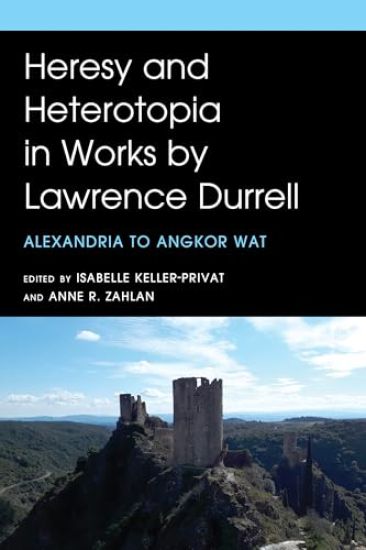
Heresy and Heterotopia in Works by Lawrence Durrell gathers new essays by international scholars who examine heretical concepts and heterotopian counter-spaces in Durrell's thought and writing. The volume includes studies of texts set in locations from the Mediterranean to Cambodia, with spatial focus ranging from the Egypt of The Alexandria Quartet (and of Anatole France's Thaïs) to the scattered locations of The Avignon Quintet, with stops along the way for the island books and other treatments of wandering and exile in poetry as well as prose. The contributors approach Durrell's texts from a variety of perspectives, philosophical and intertextual, architectural and historical, mystical and digital. In so doing, they expose the deeper echoes set off by his wide-ranging literary production and map out the metaphysical, literary, and aesthetic connections that account for Durrell's impact on our understanding of those twentieth-century social and cultural paradigms that foreshadow the disruptions of today's world.
A mysterious woman in black, appears at night.Arriving in horse and carriage.Stays at Kyrme Cottage, then at night - disappears.She always wears black lace.Abbey Combe's new Vicar vanishes overnight.A corpse found buried in the garden.Murder in Richmond Park.And the link with Jane Austen These mysteries confront amateur sleuths, Belinda Lawrence and Hazel Whitby in the Somerset village of Milford.Among the eccentrics is the shadowy Madam Malefic."She's nuttier than any fruit cake Escoffier ever baked."CALAMITY AT KRYME COTTAGEGreat characters, great mystery
'Author Brian Kavanagh doesn't dwell on the relationship issues of the two women. The issues are there, but the emphasis is on solving the mystery.' - S. Roddom Reviewers Choice
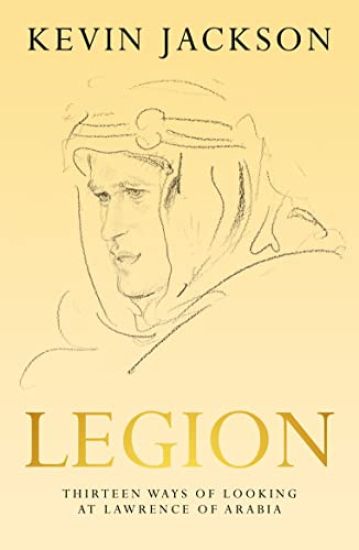
There have been literally hundreds of books about T. E. Lawrence, best known as Lawrence of Arabia, but never a work quite like Legion.Legion tells the astonishing life story of an man who was far more than a war hero; for Lawrence was also an archaeologist, a linguist and translator, a historian and classicist, a marine engineer, an airman and one of the great English writers of the 20th century.He was also an enigma, even at times to himself, tormented by guilt and shame, by his masochism, self-loathing and his fear of his own sexuality.Legion unearths not only a trove of little-known facts and stories about Lawrence's life, but also the fascinating details of what he has meant to many people, both in his lifetime and ever since. He has been hailed as the last romantic hero, despised as an agent of imperialism, blamed for the disasters of Middle Eastern politics and admired as a genius by countless eminent people - from statesmen such as Winston Churchill and Andre Malraux, to writers such as E. M. Forster and George Bernard Shaw. And, of course, he found a new form of immortality in David Lean's masterpiece Lawrence of Arabia.Legion argues that Lawrence's true genius lies not in any one of his remarkable astonishments, but in their totality. Its novel approach to the hero will delight his many fans and surprise and enlighten those who know nothing of him save the popular myth.
At fourteen years of age, Lawrence Gilbert Merritt leaves his family farm in Iowa, and sets out to find his uncle in the territory of Montana. The year is 1875, and Lawrence must cross the country on foot, relying on his determination and his rifle skills to stay alive. Join Lawrence on his journey west, as he encounters several historical figures along the way, and is even the subject of a vision of a Native American medicine man.
"I've been & am absurdly over-estimated. There are no supermen & I'm quite ordinary, & will say so whatever the artistic results. In that point I'm one of the few people who tell the truth about myself." - Lawrence of Arabia He was recognized by many as a curious scholar and archaeologist, brilliant linguist, British soldier, extraordinary adventurer, and avid writer, though he called himself an "ordinary man." He was a gifted translator, a shrewd diplomat, a brilliant tactician, and an instinctive leader. T.E. Lawrence, more popularly known as Lawrence of Arabia, was a seminal figure in the shaping and reshaping of the politics of Arabia in the early 20th century, serving as an expert in Arab affairs in the British military and playing a key role in the Great Arab Revolt of 1916-1918. World War I, also known as the Great War of 1914-1918, was one of the deadliest conflicts in human history, leading to the deaths of millions of soldiers and civilians, and it was a war that produced too many casualties and too few heroes. However, after the war was over, the world was told of the blonde-haired, blue-eyed British officer named Thomas Edward Lawrence, and his experiences in Arabia during the fighting. Pictures of Lawrence in a flowing white robe of Arabia's Bedouin tribes were distributed, and Lawrence's autobiography, Seven Pillars of Wisdom, further catapulted his fame and sensationalized his public image. Lawrence's story served to boost the spirits of many who were struggling to recover after the tragedy of the war. It is telling of just how remarkable the tale is that the world's fascination with Lawrence of Arabia has endured today. Articles, books, films, and documentaries about Lawrence and his exploits are continuously released on an annual basis. Historian Phillip Knightley once commented, "Along with Winston Churchill, T.E. Lawrence] remains perhaps the best-known Englishman in the world." Decades since the end of the war, and with a completely changed Middle Eastern geopolitical landscape, Lawrence of Arabia and his legacy are still remembered and referenced as politically, militarily, and socially pertinent. As one of his biographers, Michael Korda, wrote in Hero; The Life and Legend of Lawrence of Arabia, "Today, when the Middle East is the main focus of our attention, and when insurgency, his Lawrence's] specialty, is the main weapon of our adversaries, the story of Lawrence's life is more important than ever." However, Lawrence was by no means everything he claimed to be. Like many great men touched by fame and celebrity, he exaggerated some details, underplayed others, and strove to maintain an image of himself that he had created in his own mind. Thus, Lawrence was and still is a very controversial figure. He was the first in the 900 year history of the British monarchy to refuse a knighthood, and the film Lawrence of Arabia, starting Peter O'Toole as Lawrence and widely lauded as a masterpiece, was banned in many Arab and Middle Eastern countries, including Jordan and Turkey. Turkey especially has long vilified Lawrence, questioning the veracity of many of his accounts. Just recently, in October 2014, Turkish President Recep Tayyip Erdogan went so far as to declare T.E. Lawrence a greater enemy than the radical terrorist organization that is operating in Iraq and Syria, the Islamic State (IS) . In a furious anti-Western diatribe, Erdogan described Lawrence as an "English spy disguised as an Arab," and he warned of the threat posed by modern-day Lawrences in Turkey "disguised as journalists, religious men, writers, and terrorists" who are allegedly aiming to destabilize the country and region.
"I've been & am absurdly over-estimated. There are no supermen & I'm quite ordinary, & will say so whatever the artistic results. In that point I'm one of the few people who tell the truth about myself." - Lawrence of Arabia He was recognized by many as a curious scholar and archaeologist, brilliant linguist, British soldier, extraordinary adventurer, and avid writer, though he called himself an "ordinary man." He was a gifted translator, a shrewd diplomat, a brilliant tactician, and an instinctive leader. T.E. Lawrence, more popularly known as Lawrence of Arabia, was a seminal figure in the shaping and reshaping of the politics of Arabia in the early 20th century, serving as an expert in Arab affairs in the British military and playing a key role in the Great Arab Revolt of 1916-1918. World War I, also known as the Great War of 1914-1918, was one of the deadliest conflicts in human history, leading to the deaths of millions of soldiers and civilians, and it was a war that produced too many casualties and too few heroes. However, after the war was over, the world was told of the blonde-haired, blue-eyed British officer named Thomas Edward Lawrence, and his experiences in Arabia during the fighting. Pictures of Lawrence in a flowing white robe of Arabia's Bedouin tribes were distributed, and Lawrence's autobiography, Seven Pillars of Wisdom, further catapulted his fame and sensationalized his public image. Lawrence's story served to boost the spirits of many who were struggling to recover after the tragedy of the war. It is telling of just how remarkable the tale is that the world's fascination with Lawrence of Arabia has endured today. Articles, books, films, and documentaries about Lawrence and his exploits are continuously released on an annual basis. Historian Phillip Knightley once commented, "Along with Winston Churchill, T.E. Lawrence] remains perhaps the best-known Englishman in the world." Decades since the end of the war, and with a completely changed Middle Eastern geopolitical landscape, Lawrence of Arabia and his legacy are still remembered and referenced as politically, militarily, and socially pertinent. As one of his biographers, Michael Korda, wrote in Hero; The Life and Legend of Lawrence of Arabia, "Today, when the Middle East is the main focus of our attention, and when insurgency, his Lawrence's] specialty, is the main weapon of our adversaries, the story of Lawrence's life is more important than ever." However, Lawrence was by no means everything he claimed to be. Like many great men touched by fame and celebrity, he exaggerated some details, underplayed others, and strove to maintain an image of himself that he had created in his own mind. Thus, Lawrence was and still is a very controversial figure. He was the first in the 900 year history of the British monarchy to refuse a knighthood, and the film Lawrence of Arabia, starting Peter O'Toole as Lawrence and widely lauded as a masterpiece, was banned in many Arab and Middle Eastern countries, including Jordan and Turkey. Turkey especially has long vilified Lawrence, questioning the veracity of many of his accounts. Just recently, in October 2014, Turkish President Recep Tayyip Erdogan went so far as to declare T.E. Lawrence a greater enemy than the radical terrorist organization that is operating in Iraq and Syria, the Islamic State (IS) . In a furious anti-Western diatribe, Erdogan described Lawrence as an "English spy disguised as an Arab," and he warned of the threat posed by modern-day Lawrences in Turkey "disguised as journalists, religious men, writers, and terrorists" who are allegedly aiming to destabilize the country and region.
Im Mittelpunkt dieser textnahen Untersuchung steht die Frage nach der Struktur, d.h. nach dem thematischen Zentrum (-thematischen Code-) der Tetralogie und den asthetischen Mitteln (-Strukturelementen-), die zu dessen fiktionaler Konkretisierung und Differenzierung eingesetzt werden. Der -relativistischen- Anlage dieses Werkes wird durch ausfuhrliche Erorterungen erkenntnistheoretischer und poetologischer Probleme Rechnung getragen. Im Schlussteil wird untersucht, ob und inwieweit der in der Tetralogie zentrale Themenkomplex auch fur Durells Dramen und -The Black Book- konstitutiv ist."