Kirjojen hintavertailu. Mukana 11 342 296 kirjaa ja 12 kauppaa.

Kirjahaku

Etsi kirjoja tekijän nimen, kirjan nimen tai ISBN:n perusteella.

1000 tulosta hakusanalla Louis Phillips

Louis XIV's Assault on Privilege

Louis XIV's Assault on Privilege

Gary B. McCollim

University of Rochester Press
2012
sidottu
The government of Louis XIV developed two taxes during the last thirty years of the king's reign that forced the privileged to pay. This book is a study of how those taxes developed and what caused them to be adopted. Louis XIV's Assault on Privilege examines Nicolas Desmaretz, one of the most important finance ministers of the Bourbon monarchy. McCollim brings to life the man who was arguably the central figure in the final transformative years of Louis XIV's reign. Controller General Desmaretz was the nephew of famed finance minister Jean-Baptiste Colbert and had extensive experience in the administration prior to 1683 when he suffered disgrace. His expertisewas so renowned in his day that other chief financial officials sought his advice in secret. Desmaretz has been called the ablest man ever to head French finances, and the war financing problems he faced from 1708-14 the greatestchallenge faced by the Bourbon monarchy until the French Revolution. Desmaretz became one of the chief financial officials early in the War of the Spanish Succession and took full charge of French finances from 1708-15.In that time, he introduced one of the two most radical financial measures ever taken by the Bourbon monarchy: the dixième, a tax on income. This tax revolutionized the relationship of French elites to the Crown because iteliminated the issue of status that affected all other forms of taxation: the dixième fell on all income, no matter the recipient. The tax lasted until 1717, appeared again during the Wars of the Polish (1733-35) and Austrian (1743-48) Successions, and became permanent, in a reduced form, as the vingtième, in 1749. The story of the dixième has been oddly ignored by fiscal historians. In his rich analysis, McCollim lays outfor historians precisely how the royal financial council actually made policy. His book establishes once and for all that from the perspective of state finance, and state taxation, the post-1710 French monarchy had left far behindthe institutional framework of the seventeenth century. Gary B. McCollim received his doctoral degree in history from The Ohio State University and is a retired federal employee.
Louis Kahn

Louis Kahn

John Lobell

Monacelli Press
2020
sidottu
For everyone interested in the enduring appeal of Louis Kahn, this book demonstrates that a close look at how Kahn put his buildings together will reveal a deeply felt philosophy. Louis I. Kahn is one of the most influential and poetic architects of the twentieth century, a figure whose appeal extends beyond the realm of specialists. In this book, noted Kahn expert John Lobell explores how Kahn's focus on structure, respect for materials, clarity of program, and reverence for details come together to manifest an overall philosophy. Kahn's work clearly conveys a kind of "transcendent rootedness" - a rootedness in the fundamentals of architecture that also asks soaring questions about our experience of light and space, and even how we fit into the world. In Louis Kahn: Architecture as Philosophy, John Lobell seeks to reveal how Kahn's buildings speak to grand humanistic concerns. Through examinations of five of Kahn's great buildings - the Richards Medical Research Building in Philadelphia; the Salk Institute for Biological Studies in La Jolla; the Phillips Exeter Academy Library in New Hampshire; the Kimbell Art Museum in Fort Worth; and the Yale Center for British Art in New Haven - Lobell presents a clear but detailed look at how the way these buildings are put together presents Kahn's philosophy, including how Kahn wishes us to experience them. An architecture book that touches on topics that addresses the universal human interests of consciousness and creativity, Louis Kahn: Architecture as Philosophy helps us understand our place and the nature of well-being in the built environment.
Louis Evans' Creole Cookbook

Louis Evans' Creole Cookbook

Louis Evans; Edward Rhinehart; Mel Leavitt

Pelican Publishing Co
2006
nidottu
Executive chef at the Caribbean Room, as well as chef at the popular Kabbys restaurant, the late Chef Louis Evans established a reputation as one of the most creative and skilled Creole chefs in the nation. The first black chef in history to be admitted to the exclusive Order of the Golden Toque, Evans utilized his unique talent and distinct blending of flavors to create some of New Orleans finest Creole dishes.
Louis Hayward: Beyond the Iron Mask A Collective Memoir Illustrated
Louis Hayward, Marine Corps Captain, Academy Award-winning director, and star on Broadway and in motion pictures, is best-known today for The Man in the Iron Mask (1939), but he appeared in dozens of films and stage roles, and he won other major awards for his brave wartime service. Discover the man behind the mask in Mary Ann Anderson's extraordinary memoir. From his Bronze Star Medal and Presidential Citation for his World War Two gallantry to winning the 1944 Academy Award for Best Documentary Short Subject for directing With the Marines at Tarawa, Louis' life and career reached heights that few have achieved. His early role on stage in London as the title character in Dracula led to a film, stage, and television career that spanned 1932-1974. His major appearances included No l Coward's Point Valaine (1935) on Broadway with Alfred Lunt and Lynn Fontanne; Mervyn Leroy's film, Anthony Adverse (1936); The Saint in New York (1938); James Whale's The Man in the Iron Mask (1939); The Son of Monte Cristo (1940); television series, The Lone Wolf (1954), The Pursuers (1961), Alfred Hitchcock Presents (1962), Rawhide (1964), and Night Gallery (1970). Through this richly researched work, learn the full story of how the man in the iron mask flourished as a gentleman with steely strength during World War Two and Broadway and Hollywood's Golden Years. 110 pages. Illustrated.
Louis in the Land of Tetra

Louis in the Land of Tetra

Frank J. Ling

Elm Hill Books
2018
nidottu
In this story, Louis in the Land of Tetra, young Louis and Crystal find themselves in the midst of terrifying danger.They have to face the horrible Zombos, struggle to protect themselves from the rampaging Zeros and stand against the cunning Shadow Warriors. Discovering their own potentials and learning to work together helps them to survive.They soon realize that their ability to succeed depends on faith, love, and hope. This journey will take them to new place where all things are possible
Louis in the Land of Tetra

Louis in the Land of Tetra

Frank J. Ling

Elm Hill Books
2018
sidottu
In this story, Louis in the Land of Tetra, young Louis and Crystal find themselves in the midst of terrifying danger.They have to face the horrible Zombos, struggle to protect themselves from the rampaging Zeros and stand against the cunning Shadow Warriors. Discovering their own potentials and learning to work together helps them to survive.They soon realize that their ability to succeed depends on faith, love, and hope. This journey will take them to new place where all things are possible
Louis Carlos Bernal: Monografa

Louis Carlos Bernal: Monografa

Elizabeth Ferrer

APERTURE
2024
sidottu
A landmark survey of one of the most significant American photographers of the twentieth century Best known for his intimate portrayals of barrio communities of the Southwest United States, Louis Carlos Bernal made photographs in the late 1970s and 1980s that draw upon the resonance of Catholicism, Indigenous beliefs, and popular practices tied to the land. For Bernal, photography was a potent tool in affirming the value of individuals and communities who lacked visibility and agency. Working in both black and white and in color, he photographed the interiors of homes and their inhabitants, often presenting his subjects surrounded by the objects they lived with—framed portraits of family members, religious pictures and statuaries, small shrines festooned with flowers, and elements of contemporary popular culture. Bernal viewed these spaces as rich with personal, cultural, and spiritual meaning, and his unforgettable photographs express a vision of la vida cotidiana—everyday life—as a state of grace. The first major scholarly account of Bernal’s life and work by the esteemed historian Elizabeth Ferrer, Louis Carlos Bernal: Monografía is the definitive book about an essential photographic artist. Copublished by Aperture and the Center for Creative Photography, Tucson
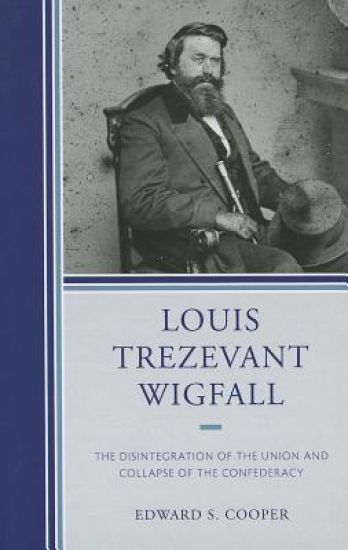
Louis Trezevant Wigfall

Louis Trezevant Wigfall

Edward S. Cooper

Fairleigh Dickinson University Press
2012
sidottu
Louis Trezevant Wigfall was a violent, mercurial man. He participated in multiple duels, wounding one opponent and killing another. In an outburst on the floor of the U.S. Senate, Wigfall called upon a Brutus to assassinate Texas governor Sam Houston. During the bombardment of Fort Sumter in 1861, Wigfall rowed out to the fort and arranged its surrender. While still in the U.S. Senate, Wigfall committed treason by operating a station to recruit soldiers for the Confederacy by supplying arms to seceded states and by forwarding information on Union decisions and movements. Wigfall’s oratorical skills convinced Southern ruling classes there was nothing to fear by seceding. He assured them that the North would not fight, that they could not blockade southern ports, that Europe needed Southern cotton, and that England would aid the Confederacy. Wigfall was able to convince Southern states to secede. In this succinct biography of Wigfall, Edward S. Cooper discusses how this violent and mercurial man contributed to the disintegration of the Union and why he was a primary factor in the collapse of the Confederacy.
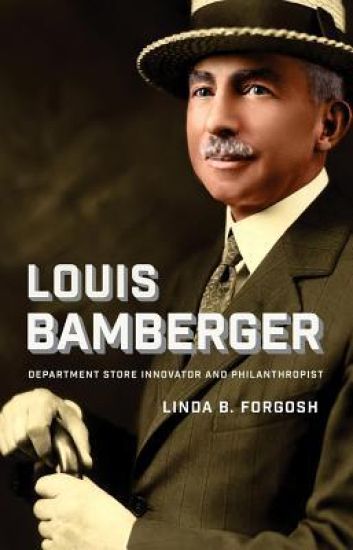
Louis Bamberger

Louis Bamberger

Linda B. Forgosh

Brandeis University Press
2016
sidottu
Louis Bamberger (1855–1944) was the epitome of the merchant prince as public benefactor. Born in Baltimore, this son of German immigrants built his business—the great, glamorous L. Bamberger & Co. department store in Newark, N.J.—into the sixth-largest department store in the country. A multimillionaire by middle age, he joined the elite circle of German Jews who owned Macy’s, Bloomingdale’s, and Filene’s. Despite his vast wealth and local prominence, Bamberger was a reclusive figure who shunned the limelight, left no business records, and kept no diaries. He remained a bachelor and kept his private life and the rationale for his business decisions to himself. Yet his achievements are manifold. He was a merchandising genius whose innovations, including newspaper and radio ads and brilliant use of window and in-store displays, established the culture of consumption in twentieth-century America. His generous giving, both within the Jewish community and beyond it, created institutions that still stand today: the Newark YM-YWHA, Beth Israel Hospital, and the Newark Museum. Toward the end of his career, he financed and directed the creation of the Institute for Advanced Study at Princeton, which led to a friendship with Albert Einstein. Despite his significance as business innovator and philanthropist, historians of the great department stores have paid scant attention to Bamberger. This full-length biography will interest historians as well as general readers of Jewish history nationally, New Jerseyans fascinated by local history, and the Newarkers for whom Bamberger’s was a beloved local institution.
Louis and Zélie: The Holy Parents of Saint Thérèse
Louis and Z lie Martin, the parents of Saint Th r se of Lisieux, were the first married couple ever canonized together by the Catholic Church. This inspiring story begins in their childhoods and follows them through their joys as well as their sorrows.Louis, the son of a French army officer, had desired to be a priest. Instead he became a watchmaker, happy to remain single in service of God and neighbor. Z lie had thought about becoming a religious sister, but she became an expert lace maker and started her own company, doubtful she would ever marry. Then one day they passed each other on a bridge . . .The Martins married and welcomed nine children, five of whom lived to adulthood and became religious sisters. Their household was full of love, which extended, sometimes heroically, to many others outside their family, including the needy and the enemy soldiers quartered in their home during the Franco-Prussian War. The secret to their unfailing love was their boundless faith in God. All the challenges the Martins faced, great and small, were met with a profound trust in Divine Providence.