Kirjojen hintavertailu. Mukana 11 627 220 kirjaa ja 12 kauppaa.

Kirjahaku

Etsi kirjoja tekijän nimen, kirjan nimen tai ISBN:n perusteella.

1000 tulosta hakusanalla MARTIN GERALD

Martin Szabados and Josephine Szerna

Martin Szabados and Josephine Szerna

Stephen Szabados

Createspace Independent Publishing Platform
2013
pokkari
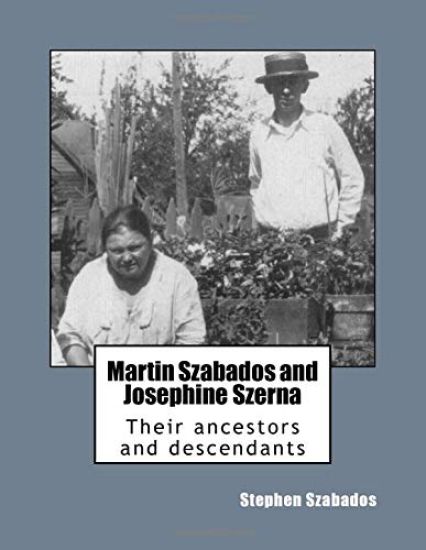
The European roots of the Szabados and Szerna Families can be found in many areas Hungary due to the numerous travels of the Szerna family. The Szabados family story begins with the birth of Lajos Frank in 1838 in Ker, Hungary which is about 100 miles northwest of Budapest and near the city of Miskolc. Another important part of our story is the fact that his son Mozes changed his name about 1900 to Martin Szabados. This was about the time Martin married Josephine Szerna. Lajos was Jewish and he was upset that Martin married Josephine Szerna who was catholic. Lazar made Martin/Mozes choose between his Jewish family and Josephine. The Szerna family story begins with Joannes Szerna's birth about 1830 in Nytra County, Hungary (or possibly in Pisek, Bohemia). Around 1860, Joannes moved south to B cs-Bodrog County area where most of his children were born. We next find the family east of Budapest in J sz-Nagy-Kun-Szolnok County where granddaughter Ilona was born in TorokSzentmiklos. The last place I found the Szerna family was 200 miles south in Pankota in Arad County where Martin Szabados and Josephine Szerna were married in 1900. Martin and Josephine immigrated to Bloomington, Illinois in 1907 where they brought up their children.The Szerna family may have been gypsies and this may have caused their frequent moves. The lack of economic opportunities for gypsies in Hungary may have been the main reason for Martin and Josephine's decision to immigrate to America. Once in Bloomington, their gypsy past was hidden. Martin worked hard at the C & A Railroad shops in the boiler making department; they owned their homes; Josephine was a very active member of Saint Mary's Catholic Church and they seemed to have achieved a better life for their family.
"Martin Of Nitendi" And The River Of Dreams

"Martin Of Nitendi" And The River Of Dreams

Louis Becke

Createspace Independent Publishing Platform
2013
nidottu
George Lewis Becke (or Louis Becke; 18 June 1855 - 18 February 1913) was an Australian short-story writer and novelist.Becke was born at Port Macquarie, New South Wales, son of Frederick Becke, Clerk of Petty Sessions and his wife Caroline Matilda, n e Beilby. Both parents were born in England. Becke was the youngest of six children and had a tendency to wander; he has stated that before he was 10 he had twice run away from home. The family moved to Hunters Hill, Sydney in 1867 and Becke was educated at Fort Street High School.-Wikipedia
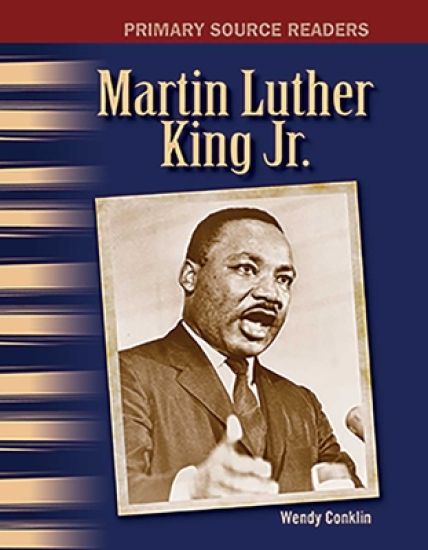
Martin Luther King Jr.

Martin Luther King Jr.

Wendy Conklin

Teacher Created Materials
2015
nidottu
Introduce students to Martin Luther King, Jr. with this Spanish-translated biography featuring dynamic primary source documents. Readers will learn about Civil Rights Movement leader and his inspirational life as he fought for equality and desegregation for African Americans through nonviolence. Students will also discover topics such as discrimination, sit-ins, the Nobel Peace Prize, and the March on Washington. Informational text features help students navigate the text.
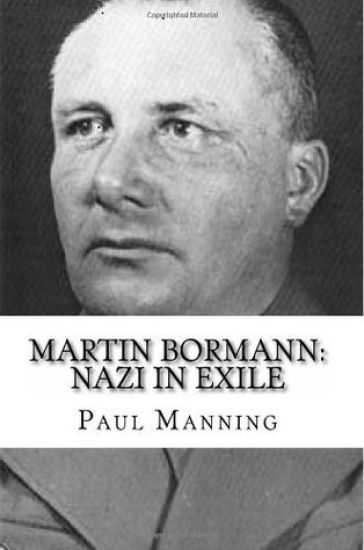
Martin Bormann: Nazi in Exile

Martin Bormann: Nazi in Exile

Paul Manning

Createspace Independent Publishing Platform
1981
nidottu
Anticipating the defeat of the Third Reich, Reichsleiter Martin Bormann set up 750 corporations in neutral countries, primed as vehicles to receive the liquid wealth of Germany in addition to patents and other proprietary industrial information. An organizational genius and the real power behind Hitler, Bormann, known as the "Brown Eminence", successfully fled Europe for South America and administered a "Reich in Exile" in the years following the war. With remnants of the SS as an enforcement arm, former Gestapo chief General Heinrich Mueller as security director, the 750 corporations as a base of economic power and the willing silence and cooperation of the Western Allies, Bormann guided his organization to a position of consummate power. One banker quoted by Manning termed the Bormann Organization, the "world's most important accumulation of money power under one control in history". Controlling Germany's major corporations, the Federal Republic itself and much of Latin America, the Bormann Organization also maintained a formidable circle of influence in the United States. Paul Manning has written the definitive text on the Bormann Organization.Manning worked with CBS radio during World War II in London as a member of the elite Edward R. Murrow/Walter Cronkite team. As part of his coverage duties, he was the only member actually allowed to fly on U.S. Air Force missions as a fully functional crew member. Having qualified as a gunner, his flights included B-17 missions with the 8th Air Force over Germany and several B-29 missions to Japan. On behalf of CBS, he broadcasted the surrenders of Japan and Germany. In 1948, along with fifteen other distinguished war correspondents, he was awarded a medal for his reporting of the unconditional surrender of the Germans at Rheims. After the war Manning continued his journalistic profession and also served as a speechwriter for Nelson Rockefeller.
Martin Paz

Martin Paz

Jules Vern

Createspace Independent Publishing Platform
2014
nidottu
In Peru besteht zu der Zeit, zu der die Geschichte spielt, die Gesellschaft aus drei Hauptgruppen. Es handelt sich um die Nachfahren der spanischen Konquistadoren, den Mischlingen zwischen Europ ern und den Eingeborenen (Mestizen) und den Indianern. Der Marquis Don Vergal, dessen Verm gen stetig abnimmt, ist ein Spanier, der aufstrebende Neureiche Andreas Certa ein Mestize und Martin Paz ein Indianer.
Martin l'enfant retrouvé

Martin l'enfant retrouvé

Eugene Sue

Createspace Independent Publishing Platform
2014
nidottu
Martin, abandonn d s son plus jeune ge par son p re, un comte autoritaire, d prav , sans coeur, conna tra la vie des enfants trouv s de cette poque. Mais gr ce son bon fond, il surmontera sa vie cauchemardesque, et retrouvera son p re. pilogue tr s moral... Eug ne Sue nous expose dans ces quatre volumes sa th se socialiste, d nonce l'affreuse mis re des travailleurs et nous d crit de mani re peu flatteuse la classe des nantis.
Martin Scorsese

Martin Scorsese

University Press of Mississippi
2017
sidottu
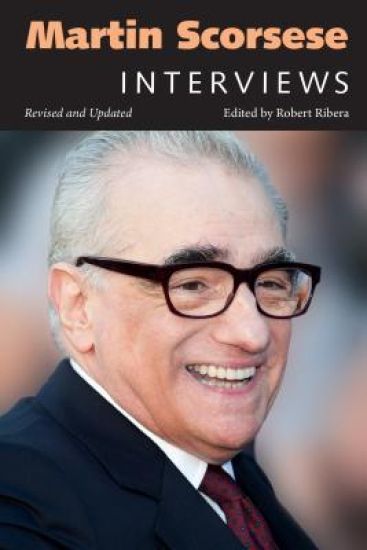
Martin Scorsese (b. 1942) has long been considered one of America’s greatest cinematic storytellers. Over the last fifty years he has created some of the most iconic moments in American film, never afraid to confront controversial issues with passion. While few of his films are directly autobiographical, his upbringing in New York’s Little Italy, the childhood asthma that kept him from playing sports, and his early desire to enter the priesthood all helped form his sensibilities and later shaped his distinct style. Community, religion, violence?these themes drive a Scorsese picture, and whether he examines the violence that bursts forth in the hand of Travis Bickle or the passion of Jesus Christ, Scorsese’s mastery of the history, art, and craft of filmmaking is undeniable.This collection was originally edited by the late Peter Brunette in 1999 and is now revised and extensively updated by Robert Ribera. It traces Scorsese’s evolution from the earliest days of the New American Cinema, his work with Roger Corman, and his days at New York University’s film program to his efforts to preserve the legacy of cinema, his documentary work, and his recent string of successes. Among new movies discussed are The Departed, Hugo, and The Wolf of Wall Street, and the documentaries No Direction Home and The Blues. Scorsese stands out as a director, producer, scholar, preservationist, and icon. His work both behind the camera and in the service of its history are a cornerstone of American and world cinemas. In these interviews, Scorsese takes us from Elizabeth Street to the heights of Hollywood and all the journeys in between.
Martin Scorsese

Martin Scorsese

University Press of Mississippi
2017
nidottu
Martin Scorsese (b. 1942) has long been considered one of America’s greatest cinematic storytellers. Over the last fifty years he has created some of the most iconic moments in American film, never afraid to confront controversial issues with passion. While few of his films are directly autobiographical, his upbringing in New York’s Little Italy, the childhood asthma that kept him from playing sports, and his early desire to enter the priesthood all helped form his sensibilities and later shaped his distinct style. Community, religion, violence?these themes drive a Scorsese picture, and whether he examines the violence that bursts forth in the hand of Travis Bickle or the passion of Jesus Christ, Scorsese’s mastery of the history, art, and craft of filmmaking is undeniable.This collection was originally edited by the late Peter Brunette in 1999 and is now revised and extensively updated by Robert Ribera. It traces Scorsese’s evolution from the earliest days of the New American Cinema, his work with Roger Corman, and his days at New York University’s film program to his efforts to preserve the legacy of cinema, his documentary work, and his recent string of successes. Among new movies discussed are The Departed, Hugo, and The Wolf of Wall Street, and the documentaries No Direction Home and The Blues. Scorsese stands out as a director, producer, scholar, preservationist, and icon. His work both behind the camera and in the service of its history are a cornerstone of American and world cinemas. In these interviews, Scorsese takes us from Elizabeth Street to the heights of Hollywood and all the journeys in between.
Martin R. Delany’s Civil War and Reconstruction
Militant? Uncompromising? Pragmatic? Utilitarian? Accommodating? Conservative? To engage Martin Robison Delany (1812–1885) is to wrestle with almost all the complexities and paradoxes of nineteenth-century black leadership in one public intellectual. After his previous book on Delany, senior historian Tunde Adeleke has compiled here letters, speeches, contemporary nineteenth-century newspaper articles, and reports written by and about Delany. These vital primary sources cover his Civil War and Reconstruction career in South Carolina and include key critical reactions to Delany’s ideas and writings from his contemporaries. There are over ninety documents, the vast majority not previously published. Delany remains the Subject of conflicting and confusing interpretations. Adeleke indicates that Delany actually manifested complex dispositions. He presaged manifestations of the strands of both protest and compromise that would define the early twentieth-century world of Booker T. Washington and W. E. B. Du Bois. An African American abolitionist and journalist, Delany advocated for black nationalism, one of the first to do so. After working alongside Frederick Douglass to publish the North Star in the 1840s, Delany looked into establishing a Settlement in West Africa. Yet during the Civil War, he served as the first African American field grade officer in the Union Army. Then he labored for the Freedmen’s Bureau in South Carolina. Delany even ran unsuccessfully for lieutenant governor as a Republican and later defected to the Democrats. These documents will prove an indispensable call and response to an unparalleled intellectual life.