Kirjojen hintavertailu. Mukana 12 371 959 kirjaa ja 12 kauppaa.

Kirjahaku

Etsi kirjoja tekijän nimen, kirjan nimen tai ISBN:n perusteella.

1000 tulosta hakusanalla Madison Meadows

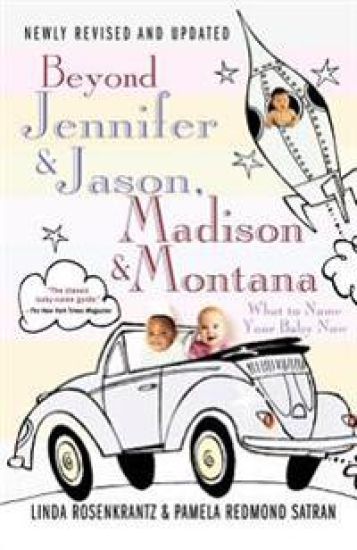
Beyond Jennifer & Jason, Madison & Montana: What to Name Your Baby Now

Beyond Jennifer & Jason, Madison & Montana: What to Name Your Baby Now

Linda Rosenkrantz; Pamela Redmond Satran

St. Martin's Griffin
2004
nidottu
Quoted everywhere from Parenting to The Wall Street Journal, with more than a million copies of their books in print, bestselling authors Linda Rosenkrantz and Pamela Redmond Satran are the baby-name experts. In this fresh and expanded new edition of "the best baby-naming book ever written" (The News Journal), they offer irresistible lists of names you won't find anywhere else, along with their trademark wit and insight on the most important questions---and answers---for expectant parents: Style: What's hot and what's cool---including Honest Names, Spiritual Names, Kreeatif Names, The Two-Syllable Solution, Word Names, The Exotics, and a Girl Named Boy Popularity: The most popular names in America and around the world, and whatcelebrities are naming their babies Image: What's really in a name, and why Briyana spells trouble Sex: What's it like for a girl to grow up with a traditionally feminine name like Abigail or Blossom; a no-frills name like Alice or Jane; or a unisex name like Dylan or Dakota? And are there any decidedly masculine names left for boys? Tradition: A concise history of American baby naming, plus inspired ways to reflect your own cultural heritage Family: Whose name is it, anyway? And other vital considerations
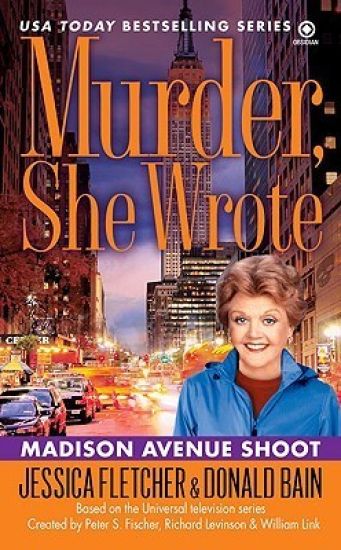
Murder, She Wrote: Madison Ave Shoot

Murder, She Wrote: Madison Ave Shoot

Fletcher Jessica; Bain Donald

Signet
2010
pokkari
It's lights... Camera... Murder The USA Today bestselling series-more than 4.5 million copies in print When Jessica Fletcher's nephew, Grady, asks her to visit him in New York City, she's happy to reunite. The production firm Grady works for is creating commercials featuring big-name celebrities, and he has proposed that Jessica star in one. She reluctantly agrees. But when one of the most creative-and despised-bigwigs is found murdered on the set, there's a long list of suspects. And Jessica soon finds herself not just a witness in a murder case-but the only one who can uncover the killer...
Founding Partisans: Hamilton, Madison, Jefferson, Adams and the Brawling Birth of American Politics
From bestselling historian and Pulitzer Prize finalist H.W. Brands, a revelatory history of the shocking emergence of vicious political division at the birth of the United States. Founding Partisans is a lively narrative of the early years of the republic as the Founding Fathers fought one another with competing visions of what our nation would be. To the framers of the Constitution, political parties were an existential threat to republican virtues. They had suffered the consequences of partisan politics in Britain before the American Revolution, and they wanted nothing similar for America. Yet parties emerged even before the Constitution was ratified, and they took even firmer root in the following decade. The first party, the Federalists, formed around Alexander Hamilton and his efforts to overthrow the Articles of Confederation. Thomas Jefferson and the opposition organized as the Antifederalists, the precursor to the Republicans. The two factions wrestled as George Washington tried to remain above the fray. John Adams, however, our second president, was an avowed Federalist, and very much in the scrum. The country's first years unfolded in a contentious spiral of ugly elections and blatant violations of the Constitution. Still, peaceful transfers of power continued, and the nascent country made its way towards global dominance, against all odds. Founding Partisans is a powerful reminder that fierce partisanship is a problem as old as the republic, one we've survived time and time again.
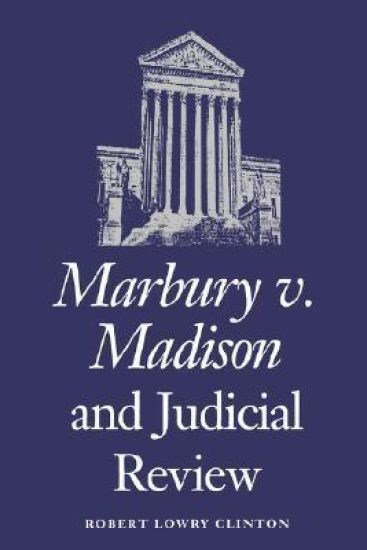
Marbury v. Madison and Judicial Review

Marbury v. Madison and Judicial Review

Robert Lowry Clinton

University Press of Kansas
1989
nidottu
Few Supreme Court decisions are as well known or loom as large in our nation's history as Marbury v. Madison. The 1803 decision is widely viewed as having established the doctrine of judicial review, which permits the Court to overturn acts of Congress that violate the Constitution; moreover, such judicial decisions are final, not subject to further appeal. Robert Clinton contends that few decisions have been more misunderstood, or misused, in the debates over judicial review. He argues that the accepted view of Marbury is ahistorical and emerges from nearly a century of misinterpretation both by historians and by legal scholars. This book is without doubt one of the half dozen recent works that will be central to the scholarly dispute about judicial review.--Political Science Quarterly. Clinton offers a resounding correction of the prevailing orthodoxy on the Marbury case that has dominated scholarship in law, history, and political science for roughly the last century. . . . If he contended only 'that Marbury was not a political decision but was based on sound constitutional doctrine and existing legal precedent', this book would still make a quite valuable contribution to the literature. . . . But there is more: the constitutional doctrine and legal precedents Clinton has rediscovered, in which the Marbury ruling is firmly grounded, reveal judicial review to be . . . of profoundly narrower scope than is admitted today by right or left, by originalists or nonoriginalists. . . . Clinton has done [much] to blow away a good deal of fog surrounding Marshall, Marbury, and the scope of judicial power.--Review of Politics. Every student of judicial review should read this book. Even those who disagree with its main thesis will find it very stimulating.--Christopher Wolfe, author of The Rise of Modern Judicial Review: From Constitutional Interpretation to Judge-Made Law. An important book. Clinton's new and unorthodox look at Marbury v. Madison is interesting, provocative, and controversial. He presents clearly, forcefully, and persuasively a great amount of evidence to support his thesis.--Social Science Quarterly. Clinton's reconstruction of the legal academicians' wrangling over Marbury makes delightful reading. . . . He is witty, subtle, and makes points with great deftness.--William and Mary Quarterly. A coherent, provocative, and welcome challenge to the liberal-Progressive interpretation of judicial review.--Journal of American History.
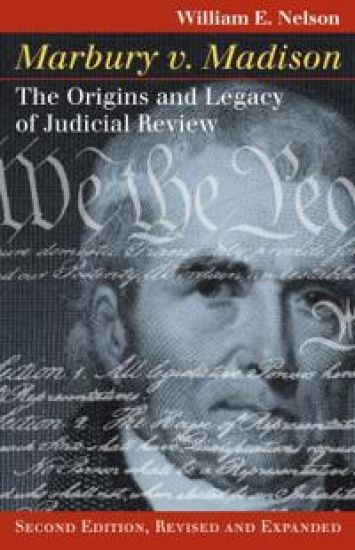
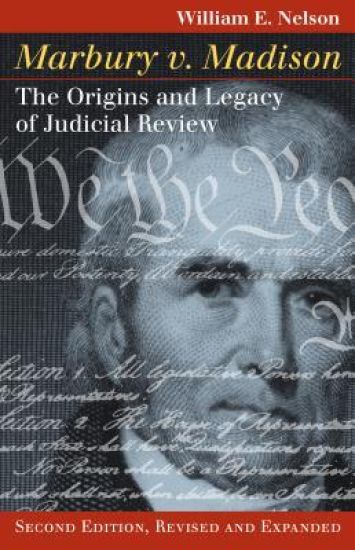
Marbury v. Madison

Marbury v. Madison

William E. Nelson

University Press of Kansas
2018
nidottu
On the surface, the case itself seems a minor one at best. William Marbury, a last-minute judicial appointee of outgoing Federalist president John Adams, demanded redress from the Supreme Court when his commission was not delivered. But Chief Justice John Marshall could clearly see the danger his demand posed for a weak court filled with Federalist judges. Wary of the Court’s standing with the new Republican administration of Thomas Jefferson, Marshall hit upon a solution that was both principled and pragmatic. He determined that while Marbury was justified in his suit, the law on which his claim was based was in conflict with the Constitution. It was the first time that the Court struck down an act of Congress as unconstitutional, thus establishing the doctrine of judicial review that designates the Court as chief interpreter of the Constitution.Nelson relates the story behind Marbury and explains why it is a foundational case for understanding the Supreme Court. He reveals how Marshall deftly avoided a dangerous political confrontation between the executive and judicial branches by upholding the rule of law. Nelson also shows how Marshall managed to shore up the Court’s prestige and power rather than have it serve partisan political agendas.
Marbury v. Madison

Marbury v. Madison

William E. Nelson

University Press of Kansas
2018
sidottu
On the surface, the case itself seems a minor one at best. William Marbury, a last-minute judicial appointee of outgoing Federalist president John Adams, demanded redress from the Supreme Court when his commission was not delivered. But Chief Justice John Marshall could clearly see the danger his demand posed for a weak court filled with Federalist judges. Wary of the Court’s standing with the new Republican administration of Thomas Jefferson, Marshall hit upon a solution that was both principled and pragmatic. He determined that while Marbury was justified in his suit, the law on which his claim was based was in conflict with the Constitution. It was the first time that the Court struck down an act of Congress as unconstitutional, thus establishing the doctrine of judicial review that designates the Court as chief interpreter of the Constitution.Nelson relates the story behind Marbury and explains why it is a foundational case for understanding the Supreme Court. He reveals how Marshall deftly avoided a dangerous political confrontation between the executive and judicial branches by upholding the rule of law. Nelson also shows how Marshall managed to shore up the Court’s prestige and power rather than have it serve partisan political agendas.
Arguing Marbury V. Madison

Arguing Marbury V. Madison

Stanford University Press
2005
sidottu
Marbury v. Madison, decided in 1803, is the foundation stone of the American doctrine of judicial review. Remarkably, the case was decided without the parties having presented an oral argument to the Supreme Court. This book begins with a unique transcript of an oral argument in the case, conducted before a bench of four distinguished federal judges. The transcript is followed by essays on Marburys intellectual background, its significance in U.S. constitutional history, and the way in which we might think of constitutional theory and judicial review in terms sensitive to the historical and political contexts in which the practice persists. Distinguished commentators question some of the claims made in the essays, and offer their own perspectives on Marburys importance.
Arguing Marbury V. Madison

Arguing Marbury V. Madison

Stanford University Press
2005
pokkari
Marbury v. Madison, decided in 1803, is the foundation stone of the American doctrine of judicial review. Remarkably, the case was decided without the parties having presented an oral argument to the Supreme Court. This book begins with a unique transcript of an oral argument in the case, conducted before a bench of four distinguished federal judges. The transcript is followed by essays on Marburys intellectual background, its significance in U.S. constitutional history, and the way in which we might think of constitutional theory and judicial review in terms sensitive to the historical and political contexts in which the practice persists. Distinguished commentators question some of the claims made in the essays, and offer their own perspectives on Marburys importance.
Water Resources Survey, Madison County, Montana; 1954

Water Resources Survey, Madison County, Montana; 1954

Montana State Engineer; Montana State Water Conservation Board; Montana Agricultural Experiment Station

Hassell Street Press
2021
sidottu
This work has been selected by scholars as being culturally important and is part of the knowledge base of civilization as we know it.This work is in the public domain in the United States of America, and possibly other nations. Within the United States, you may freely copy and distribute this work, as no entity (individual or corporate) has a copyright on the body of the work.Scholars believe, and we concur, that this work is important enough to be preserved, reproduced, and made generally available to the public. To ensure a quality reading experience, this work has been proofread and republished using a format that seamlessly blends the original graphical elements with text in an easy-to-read typeface.We appreciate your support of the preservation process, and thank you for being an important part of keeping this knowledge alive and relevant.
Water Resources Survey, Madison County, Montana; 1954 PART 2

Water Resources Survey, Madison County, Montana; 1954 PART 2

Montana State Engineer; Montana State Water Conservation Board; Montana Agricultural Experiment Station

Hassell Street Press
2021
nidottu
This work has been selected by scholars as being culturally important and is part of the knowledge base of civilization as we know it.This work is in the public domain in the United States of America, and possibly other nations. Within the United States, you may freely copy and distribute this work, as no entity (individual or corporate) has a copyright on the body of the work.Scholars believe, and we concur, that this work is important enough to be preserved, reproduced, and made generally available to the public. To ensure a quality reading experience, this work has been proofread and republished using a format that seamlessly blends the original graphical elements with text in an easy-to-read typeface.We appreciate your support of the preservation process, and thank you for being an important part of keeping this knowledge alive and relevant.
Water Resources Survey, Madison County, Montana; 1954

Water Resources Survey, Madison County, Montana; 1954

Montana State Engineer; Montana State Water Conservation Board; Montana Agricultural Experiment Station

Hassell Street Press
2021
nidottu
This work has been selected by scholars as being culturally important and is part of the knowledge base of civilization as we know it.This work is in the public domain in the United States of America, and possibly other nations. Within the United States, you may freely copy and distribute this work, as no entity (individual or corporate) has a copyright on the body of the work.Scholars believe, and we concur, that this work is important enough to be preserved, reproduced, and made generally available to the public. To ensure a quality reading experience, this work has been proofread and republished using a format that seamlessly blends the original graphical elements with text in an easy-to-read typeface.We appreciate your support of the preservation process, and thank you for being an important part of keeping this knowledge alive and relevant.
Water Resources Survey, Madison County, Montana; 1954 PART 1

Water Resources Survey, Madison County, Montana; 1954 PART 1

Montana State Engineer; Montana State Water Conservation Board; Montana Agricultural Experiment Station

Hassell Street Press
2021
nidottu
This work has been selected by scholars as being culturally important and is part of the knowledge base of civilization as we know it.This work is in the public domain in the United States of America, and possibly other nations. Within the United States, you may freely copy and distribute this work, as no entity (individual or corporate) has a copyright on the body of the work.Scholars believe, and we concur, that this work is important enough to be preserved, reproduced, and made generally available to the public. To ensure a quality reading experience, this work has been proofread and republished using a format that seamlessly blends the original graphical elements with text in an easy-to-read typeface.We appreciate your support of the preservation process, and thank you for being an important part of keeping this knowledge alive and relevant.
Marine Pool, Madison County, Illinois, Silurian-reef Producer; Report of Investigations No. 131
This work has been selected by scholars as being culturally important and is part of the knowledge base of civilization as we know it.This work is in the public domain in the United States of America, and possibly other nations. Within the United States, you may freely copy and distribute this work, as no entity (individual or corporate) has a copyright on the body of the work.Scholars believe, and we concur, that this work is important enough to be preserved, reproduced, and made generally available to the public. To ensure a quality reading experience, this work has been proofread and republished using a format that seamlessly blends the original graphical elements with text in an easy-to-read typeface.We appreciate your support of the preservation process, and thank you for being an important part of keeping this knowledge alive and relevant.