Kirjojen hintavertailu. Mukana 11 342 296 kirjaa ja 12 kauppaa.

Kirjahaku

Etsi kirjoja tekijän nimen, kirjan nimen tai ISBN:n perusteella.

1000 tulosta hakusanalla Marcel Drouets

A History of French Louisiana

A History of French Louisiana

Marcel Giraud

Louisiana State University Press
1993
sidottu
The death of Louis XIV in 1715 and the accession of his more progressive younger brother as Regent of France might have brought some hopeful changes to Louisiana, France's tiny, struggling outpost on the Gulf of Mexico. However, the continuation of the debilitating regime of the merchant Antoine Crozat and the extreme impoverishment of the French Treasury Following the disastrous wars of Louis XIV meant that no radical changes were possible. Instead, these few years at the beginning of the Regency represented a period of transition for the colony, when the need for a new administrative regime for Louisiana was met in France by a growing awareness of the strategic and economic potential of the Mississippi settlements. All of these conditions prepared the way for the appearance on the scene of the Company of the West in 1717. In his detailed survey of this brief but crucial period of Louisiana's history, Marcel Giraud assesses the new mood and conditions in France - the personnel and objectives of the Council of the Navy, which oversaw the colony's administration; the advances in scientific opinion and their impact on Louisiana; and the political, fiscal, and economic conditions that created a new appreciation of the colony of official circles - while describing actual conditions in the colony. Giraud portrays the Louisiana of 1715 as a few clusters of squalid buildings scattered along the Gulf Coast from Alabama to Natchitoches, inhabited by largely dispirited settlers and soldiers who for the most part lacked the barest necessities of life.Crozat's essentially self-serving regime made this a period of virtual stagnation. Rivalries among the colony's administrative personnel, especially between the governors and the Le Moyne family and their supporters, impeded development, as did the inadequacy of the priests sent to minister to the colony; the paucity of women, farmers, and skilled workers; and the infertile soil around the sties chosen for the forts and settlements. Relations with the indigenous populations were hindered by the lack of acceptable trade goods, as were efforts by the French colonists to establish commercial relations with the neighboring Spanish colonies. At the same time, Louisiana bore the encroachments of better-supplied British traders who were moving into Alabama and the Illinois country and developing regular trade with Indian tribes whom the French claimed as their own clients. With his customary thoroughness and scrupulous attention to documentary details, Marcel Giraud provides a vivid description of a struggling colony hovering between extinction and the spark of growth that would, in years to come, establish it as a viable French outpost in North America. Despite the obstacles facing Louisiana during these difficult years of transition, the colony survived to experience new expansion and development under the Company of the West.
Letters to His Neighbor

Letters to His Neighbor

Marcel Proust

NEW DIRECTIONS PUBLISHING CORPORATION
2017
sidottu
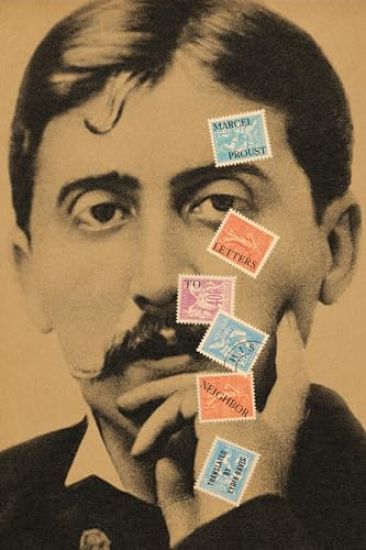
Marcel Proust's genius for illuminating pain is on spectacular display in this recently discovered trove of his correspondence, Letters to His Neighbor. Already suffering from noise within his cork-lined walls, his poor soul was not ready for the fresh hell when his neighbor Dr. Williams married a widow with small children.Chiefly to Mrs. Williams, these ever-polite letters (often accompanied by flowers, compliments, books, even pheasants) are frequently hilarious--Proust couches his fury in a gracious tone. In Lydia Davis's hands, the digressive brilliance of his sentences shines: "Don't speak of annoying neighbors, but of neighbors so charming (an association of words contradictory in principle since Montesquiou claims that most horrible of all are 1) neighbors 2) the smell of post offices) that they leave the constant tantalizing regret that one cannot take advantage of their neighborliness."Proust makes fine distinctions among his auditory torments: "The valet de chambre makes noise and that doesn't matter. But later he knocks with little tiny raps. And that is worse."Lydia Davis has written a generous translator's note, tracing much of what we can know about Proust's perpetually dark room; she details the furnishings as well as the life he lived there: burning his powders, talking with friends, hiring musicians, and, most of all, suffering. Letters to His Neighboris richly illustrated with facsimile letters and photographs--catnip for lovers of Proust.With an Introduction by Jean-Yves Tadi and a translator's note by Lydia Davis.
Letters to His Neighbor

Letters to His Neighbor

Marcel Proust

NEW DIRECTIONS PUBLISHING CORPORATION
2024
nidottu
Marcel Proust's genius for illuminating pain is on spectacular display in this recently discovered trove of his correspondence, Letters to His Neighbor. Already suffering from noise within his cork-lined walls, Proust's poor soul was not ready for the fresh hell of his new upstairs neighbor, Dr. Williams, a dentist with a thriving practice directly above his head.Chiefly to Mme Williams, these ever-polite letters (often accompanied by flowers, books, or compliments) are frequently hilarious--Proust couches his pained frustration in gracious eloquence. In Lydia Davis's hands, the digressive brilliance of his sentences shines: "Don't speak of annoying neighbors, but of neighbors so charming (an association of words contradictory in principle since Montesquiou claims that most horrible of all are 1: neighbors and 2: the smell of post offices) that they leave the constant tantalizing regret that one cannot take advantage of their neighborliness." Richly illustrated with facsimile letters and photographs, Letters to His Neighbor is catnip for lovers of Proust.
In Search of Lost Time

In Search of Lost Time

Marcel Proust

Modern Library Inc
2003
pokkari
For this authoritative English-language edition, D. J. Enright has revised the late Terence Kilmartin's acclaimed reworking of C. K. Scott Moncrieff's translation to take into account the new definitive French editions of A la recherche du temps perdu (the final volume of these new editions was published by the Bibliotheque de la Pleiade in 1989).
Religious Experience in the Work of Richard Wagner

Religious Experience in the Work of Richard Wagner

Marcel Hébert; Stephen Schloesser

The Catholic University of America Press
2015
sidottu
Enthusiasm for the operas of composer Richard Wagner (1813-1883) flourished in fin-de-siècle France, fed by fascination for the medieval history and literature that inspired his work. By the 1890s, ""pilgrimages"" to Wagner's burial city of Bayreuth, Germany, home of a regular festival of his work, were a rite of passage for musicians and the upper crust. French admirers promoted Wagner's ideas in journals such as La Revue wagnérienne, launched in 1885. These writings fueled a mystique about Wagner, his music, and his beliefs.Philosopher Marcel Hébert developed his Religious Experience in the Work of Richard Wagner (1895) from this background of sustained popular interest in Wagner, an interest that had intensified with the return of his operas to the Paris stage. Newspaper debates about the impact of Wagner's ideas on French society often stressed the links between Wagner and religion. These debates inspired works like Hébert's, intended to explain the complex myth and allegory in Wagner's work and to elucidate it for a new generation of French spectators.Hébert's discussion of Wagner, written for a popular audience, might seem an anomaly in light of his better-known academic philosophical writings. Yet Wagner's use of myth and symbol, as well as his ability to write musical dramas that evoked emotional as well as cognitive response, resonated with Hébert's symbolist approach to dogma, and the appeal to religious experience characteristic of Modernist thinkers in general. By writing about Wagner to discuss these themes, Hébert caught the interest of the educated readership who shared his concern about the clash of ancient faith and modern thinking, and who were receptive to his argument that both could be reconciled through his revisionist approach. Thus, Hébert turned Wagner and his work into a vehicle for popularizing the Modernist vision of framing religion through experience as well as knowledge.
After Emmaus

After Emmaus

Marcel Dumais

Liturgical Press
2014
pokkari
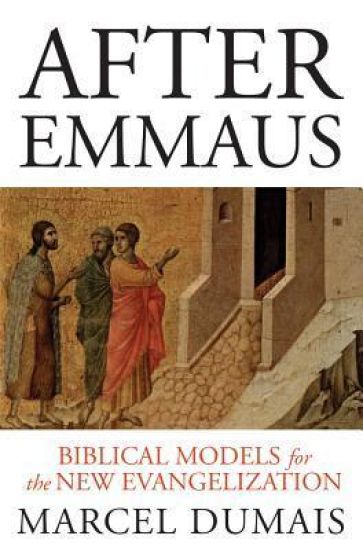
The New Evangelization calls Christians to return to the New Testament to understand its essential content but also to discover different ways of proclaiming the Good News. By exploring the witness and different missionary approaches of Jesus and the apostles Marcel Dumais, OMI, offers foundational models to apply to the context and circumstances of our own times. After Emmaus considers the Bible from the point of view of models of evangelization and faith. These biblical approaches include the direct proclamation proposed in the Acts of the Apostles, the enculturated discourses of St. Paul, the humanism of Jesus’ beatitudes, and the accompaniment of the risen Christ by the disciples of Emmaus. *Dumais teaches us to regard the biblical texts as lessons in evangelization by introducing us to the rich diversity of paths to God. These biblical models for the New Evangelization will inspire all those who wish to share their faith today.
Sade

Sade

Marcel Henaff

University of Minnesota Press
1999
nidottu
In this long-awaited translation of a book regarded by many as the best on the subject, Henaff says that Sade should be discussed less for the sensual heat of his writing and more for the larger poetic and economic model his work represents'
Public Space And Democracy

Public Space And Democracy

Marcel Henaff

University of Minnesota Press
2001
nidottu
Moving from classical Greece to the present, Public Space and Democracy provides both historical accounts and a comparative analytical framework for understanding public space both as a place and as a product of various media, from speech to the Internet. These essays make a powerful case for thinking of modern technological developments not as the end of public space, but as an opportunity for reframing the idea of the public and of the public space as the locus of power.
Necromedia

Necromedia

Marcel O'Gorman

University of Minnesota Press
2015
nidottu
In Necromedia, media activist Marcel O’Gorman takes aim at “the collusion of death and technology,” drawing on a broad arsenal that ranges from posthumanist philosophy and social psychology to digital art and handmade “objects-to-think-with.” Throughout, O’Gorman mixes philosophical speculation with artistic creation, personal memoir, and existential dread. He is not so much arguing against technoculture as documenting a struggle to embrace the technical essence of human being without permitting technology worshippers to have the last word on what it means to be human.Inspired in part by the work of cultural anthropologist Ernest Becker, O’Gorman begins by suggesting that technology provides human beings with a cultural hero system built on the denial of death and a false promise of immortality. This theory adds an existential zest to the book, allowing the author not only to devise a creative diagnosis of what Bernard Stiegler has called the malaise of contemporary technoculture but also to contribute a potential therapy-one that requires embracing human finitude, infusing care into the process of technological production, and recognizing the vulnerability of all things, human and nonhuman. With this goal in mind, Necromedia prescribes new research practices in the humanities that involve both written work and the creation of objects-to-think-with that are designed to infiltrate and shape the technoculture that surrounds us.
Problem-Solving in Mathematics

Problem-Solving in Mathematics

Marcel Danesi

Peter Lang Publishing Inc
2008
nidottu
Problem-solving in mathematics is seen by many students as a struggle. Since the capacity to count and understand basic arithmetical concepts (adding, taking away, etc.) is innate and emerges effortlessly in childhood, why does this negative perception and fear of problem-solving exist? This book counteracts this perception by providing a semiotic analysis of problem-solving and, from this analysis, constructing a pedagogical framework for teaching problem-solving that is consistent with the psychology of how humans learn to use signs and symbols. It is based on an experimental math course designed to impart fluency in problem-solving through semiotic training. The positive results of that course inspired the writing of this book.
The Philosophers' Gift

The Philosophers' Gift

Marcel Hénaff

Fordham University Press
2019
pokkari
Winner, French Voices Award for excellence in publication and translation. When it comes to giving, philosophers love to be the most generous. For them, every form of reciprocity is tainted by commercial exchange. In recent decades, such thinkers as Derrida, Levinas, Henry, Marion, Ricoeur, Lefort, and Descombes, have made the gift central to their work, haunted by the requirement of disinterestedness. As an anthropologist as well as a philosopher, Hénaff worries that philosophy has failed to distinguish among various types of giving. The Philosophers' Gift returns to Mauss to reexamine these thinkers through the anthropological tradition. Reciprocity, rather than disinterestedness, he shows, is central to ceremonial giving and alliance, whereby the social bond specific to humans is proclaimed as a political bond. From the social fact of gift practices, Hénaff develops an original and profound theory of symbolism, the social, and the relationship between self and other, whether that other is an individual human being, the collective other of community and institution, or the impersonal other of the world.
The Philosophers' Gift

The Philosophers' Gift

Marcel Hénaff

FORDHAM UNIVERSITY PRESS
2019
sidottu
Winner, French Voices Award for excellence in publication and translation. When it comes to giving, philosophers love to be the most generous. For them, every form of reciprocity is tainted by commercial exchange. In recent decades, such thinkers as Derrida, Levinas, Henry, Marion, Ricoeur, Lefort, and Descombes, have made the gift central to their work, haunted by the requirement of disinterestedness. As an anthropologist as well as a philosopher, Hénaff worries that philosophy has failed to distinguish among various types of giving. The Philosophers' Gift returns to Mauss to reexamine these thinkers through the anthropological tradition. Reciprocity, rather than disinterestedness, he shows, is central to ceremonial giving and alliance, whereby the social bond specific to humans is proclaimed as a political bond. From the social fact of gift practices, Hénaff develops an original and profound theory of symbolism, the social, and the relationship between self and other, whether that other is an individual human being, the collective other of community and institution, or the impersonal other of the world.
Inulin-Type Fructans

Inulin-Type Fructans

Marcel Roberfroid

CRC Press Inc
2004
sidottu
Inulin and oligofructose are naturally occurring resistant carbohydrates that have a variety of uses as functional food ingredients. In addition to their role as prebiotics that selectively stimulate the growth of beneficial bacteria in the intestines, these inulin-type fructans act as dietary fiber in the digestive system and have applications as a sugar substitute and fat replacer.Written by one of the leading researchers in the field, Inulin-Type Fructans: Functional Food Ingredients describes inulin-type fructans and explains how they can be analyzed, quantified, and used in a wide variety of food products. The text evaluates the nutritional properties of inulin-type fructans, focusing on their behavior in the upper gastrointestinal tract that have led to their classification as dietary fiber and low calorie carbohydrates. Following a review of the selective and beneficial modification of the intestinal microflora that led to the discovery of prebiotics, the book concentrates on the relationship of inulin and oligofructose to lipid metabolism, carcinogenesis, mineral absorption, and the immune system. The text concludes with a general discussion of the classification of inulin-type fructans as functional food ingredients. Each chapter begins with background information on the physiology and biochemistry of the particular function covered as well as on the methodology used to assess these functions, and concludes with a summary of the results and perspectives on future development. The combination of authoritative research data and insightful perspectives provides a comprehensive overview of this growing field.
Colour Your Life

Colour Your Life

Marcel Flier

Monarch Books
2015
muu
By focusing on the wide variety of illustrations and the selection of inspirational Bible verses Colour Your Life and Colour Your Day will enable the reader to spend time in meditation and pray as they create pages of beauty. While coloring was once reserved for children, it is now used as a means to help adults relieve stress and anxiety. Engaging the mind with the present, it is an ideal way to take a break in the day and meditate on the Word of God. The book includes four pages of postcards, allowing you to share your illustrations with friends and loved ones.
Colour Your Day

Colour Your Day

Marcel Flier

Monarch Books
2015
muu
By focusing on the wide variety of illustrations and the selection of inspirational Bible verses Colour Your Life and Colour Your Day will enable the reader to spend time in meditation and pray as they create pages of beauty. While coloring was once reserved for children, it is now used as a means to help adults relieve stress and anxiety. Engaging the mind with the present, it is an ideal way to take a break in the day and meditate on the Word of God. The book includes a calendar, allowing you to illustrate each month of the year.
Colour Your World

Colour Your World

Marcel Flier

Monarch Books
2016
nidottu
By focusing on the wide variety of illustrations and the selection of inspirational Bible verses Colour Your World will enable the reader to spend time in meditation and pray as they create pages of beauty. While coloring was once reserved for children, it is now used as a means to help adults relieve stress and anxiety. Engaging the mind with the present, it is an ideal way to take a break in the day and meditate on the Word of God.
Hieronymus Bosch

Hieronymus Bosch

Marcel Ruijters

Knockabout Comics
2015
nidottu
A fictionalised biography of the iconic Medieval painter Hieronymus Bosch, by respected Dutch artist Marcel Ruijters. It is a commissioned work for the Bosch500 Foundation and the Mondriaan Art Fund, as a part of a large program of festivities scheduled for his 500th anniversary in 2016.
My Father's Glory & My Mother's Castle

My Father's Glory & My Mother's Castle

Marcel Pagnol; Alice Waters

Farrar, Strauss Giroux-3pl
1986
pokkari
Bathed in the warm clarity of the summer sun in Provence, Marcel Pagnol's childhood memories celebrate a time of rare beauty and delight.Called by Jean Renoir "the leading film artist of his age," Pagnol is best known for such films as The Baker's Wife, Harvest, Fanny, and Topaze, as well as the screen adaptations of his novels Jean de Florette and Manon of the Springs (North Point, 1988). But he never forgot the magic of his Provencal childhood, and when he set his memories to paper late in life the result was a great new success. " My Father's Glory and My Mother's Castle" appeared on the scene like a fresh breeze, captivating readers with its sweet enchantments. Pagnol recalls his days hunting and fishing in the hill country, his jaunts about Marseilles, his schoolboy diversions, and above all his family: his anticlerical father and sanctimonious uncle, his mild and beautiful mother, and many others. This bright and lively book sparkles with the charm and magic that were Marcel Pagnol's own.
Jean de Florette and Manon of the Springs: Two Novels
In Jean de Florette and Manon of the Springs, Marcel Pagnol (called by Andre Malraux "one of the great writers of our generation" and by Jean Renoir "the leading film artist of his age") achieves the fullest and most satisfying expression of a story that haunted him for years, a Provencal legend of vengeance exacted by a mysterious shepherdess. Pagnol brings to his treatment of this powerful, moving story his dramatist's sense of place, ambience, and character and his keen understanding of the Provencal countryside and its people. Rich with twists and ramifications, Jean de Florette and Manon of the Springs sets an idealistic city man against two secretive and deceitful Provencal country men in a superbly realized story of a struggle for life, of crime and punishment, of betrayal and revenge, and of judgment and forgiveness. In this edition, illustrated with images from the acclaimed film adaptation by Claude Berri, North Point presents Pagnol's enduring story in W.E. van Heyningen's exact and sensitive translation. Biblical in its cadences, epic in its sweep to destiny, and old fashioned in development of character and plot, this saga charts the destruction of a Provencal family.