Kirjojen hintavertailu. Mukana 11 342 296 kirjaa ja 12 kauppaa.

Kirjahaku

Etsi kirjoja tekijän nimen, kirjan nimen tai ISBN:n perusteella.

1000 tulosta hakusanalla Mario Jacoby

Culture, Brain, and Analgesia

Culture, Brain, and Analgesia

Mario Incayawar; Knox H. Todd

Oxford University Press Inc
2013
sidottu
In this book, the authors have placed culture in the forefront of their approach to study pain in an integrative manner. Culture should not be considered solely for knowing more about patients' values, beliefs, and practices. It should be studied with the purpose of unveiling its effects upon biological systems and the pain neuromatrix. The book discusses how a multidisciplinary and integrative approach to pain and analgesia should be considered. Some familiarity with the cultural background of patients and awareness of the provider's own cultural characteristics will allow the pain practitioner to better understand patients' values, attitudes and preferences. Knowledge of patients' cultural practices will allow determining the impact of culture on biological processes, including the origin and development of pain-related disease, and the patients' response to pharmacological and non-pharmacological treatments. Acknowledging the interactions of molecules, genes and culture could yield a more appropriate and effective personalized pain medicine. Furthermore, this approach has the potential to transform the way pain medicine is taught to young students and future pain professionals, and in so doing meet the need of trained clinicians who are versed in multiple disciplines and are able to use an integrative approach to diagnose and treat pain. A personalized medicine will have non-negligible positive effects in improving doctor patient relationships, patient satisfaction, adherence to treatment plans, and health outcomes and inequities. It is hoped that the material in this volume will appeal to a broad cross-section of health practitioners, students and academicians, including pain medicine specialists, psychiatrists, psychologists, social workers, mental health, community and public health workers, health policy makers, and health administrators.

New Parade, Level 6

New Parade, Level 6

Mario Herrera

Pearson Education (US)
2000
nidottu
New Parade is a seven-level, communicative language program, that features Total Physical Response (TPR), rhymes, songs, chants, pair work, cooperative learning, and hands-on projects. Each level of New Parade contains the following components: A Student Book, Workbook, Teacher's Edition, Audio Program, Picture Cards, Posters, and Video and Video Guide.
Galileo, Courtier

Galileo, Courtier

Mario Biagioli

University of Chicago Press
1994
nidottu
In the court of the Medicis and the Vatican, Galileo fashioned both his career and his science to the demands of patronage and its complex systems of wealth, power, and prestige. In this fascinating cultural and social history of science, Biagioli argues that Galileo's courtly role was integral to his science - the questions he chose to examine, his methods, even his conclusions.
Galileo's Instruments of Credit

Galileo's Instruments of Credit

Mario Biagioli

University of Chicago Press
2006
sidottu
In six short years, Galileo Galilei went from being a somewhat obscure mathematics professor running a student boarding house in Padua to a star in the court of Florence to the recipient of dangerous attention from the Inquisition for his support of Copernicanism. In that brief period, Galileo made a series of astronomical discoveries that reshaped the debate over the physical nature of the heavens: he deeply modified the practices and status of astronomy with the introduction of the telescope and pictorial evidence, proposed a radical reconfiguration of the relationship between theology and astronomy, and transformed himself from university mathematician into court philosopher. "Galileo's Instruments of Credit" proposes radical new interpretations of several key episodes of Galileo's career, including his early telescopic discoveries of 1610, the dispute over sunspots, and the conflict with the Holy Office over the relationship between Copernicanism and Scripture. Galileo's tactics during this time shifted as rapidly as his circumstances, argues Mario Biagioli, and the pace of these changes forced him to respond swiftly to the opportunities and risks posed by unforeseen inventions, further discoveries, and the interventions of his opponents. Focusing on the aspects of Galileo's scientific life that extend beyond the framework of court culture and patronage, Biagioli offers a revisionist account of the different systems of exchanges, communication, and credibility at work in various phases of Galileo's career. "Galileo's Instruments of Credit" will find grateful readers among scholars of science studies, historical epistemology, visual studies, Galilean science, and late Renaissance astronomy.
Galileo's Instruments of Credit

Galileo's Instruments of Credit

Mario Biagioli

University of Chicago Press
2007
nidottu
In six years, Galileo Galilei went from being a mathematics professor to a star in the court of Florence to a target of the Inquisition. And during that time, he made a series of astronomical discoveries that reshaped the ideas of the physical nature of the heavens and transformed him from a university mathematician into a court philosopher. Galileo's "Instruments of Credit" proposes radical new interpretations of key episodes of Galileo's career, including his telescopic discoveries of 1610, the dispute over sunspots, and the conflict with the Holy Office over the relationship between Copernicanism and Scripture. Galileo's tactics shifted as rapidly as his circumstances, argues Mario Biagioli, and these changes forced him to respond swiftly to the opportunities and risks posed by unforeseen inventions, other discoveries, and his opponents. Focusing on the aspects of Galileo's scientific life that extended beyond court culture and patronage, Biagioli offers a revisionist account of the different systems of exchanges, communication, and credibility at work in Galileo's career. Galileo's "Instruments of Credit" will fascinate readers interested in the history of astronomy and the history of science in general.
Aristophanes and the Cloak of Comedy

Aristophanes and the Cloak of Comedy

Mario Telo

University of Chicago Press
2016
sidottu
The Greek playwright Aristophanes (active 427–386 BCE) is often portrayed as the poet who brought stability, discipline, and sophistication to the rowdy theatrical genre of Old Comedy. In this groundbreaking book, situated within the affective turn in the humanities, Mario Telò explores a vital yet understudied question: how did this view of Aristophanes arise, and why did his popularity eventually eclipse that of his rivals? Telò boldly traces Aristophanes’s rise, ironically, to the defeat of his play Clouds at the Great Dionysia of 423 BCE. Close readings of his revised Clouds and other works, such as Wasps, uncover references to the earlier Clouds, presented by Aristophanes as his failed attempt to heal the audience, who are reflected in the plays as a kind of dysfunctional father. In this proto-canonical narrative of failure, grounded in the distinctive feelings of different comic modes, Aristophanic comedy becomes cast as a prestigious object, a soft, protective cloak meant to shield viewers from the debilitating effects of competitors’ comedies and restore a sense of paternal responsibility and authority. Associations between afflicted fathers and healing sons, between audience and poet, are shown to be at the center of the discourse that has shaped Aristophanes’s canonical dominance ever since.
The Wealth and Poverty of Regions – Why Cities Matter

The Wealth and Poverty of Regions – Why Cities Matter

Mario Polèse

University of Chicago Press
2010
sidottu
Why do some places prosper while others lag behind? Surely the advent of the Internet and ever newer communications technologies will level the playing field. Not so, argues Mario Polese in "The Wealth and Poverty of Regions"; rather, geography will matter more than ever before in a world where distance is allegedly dead. This provocative book surveys the globe, from London and Cape Town to New York and Beijing, contending that regions rise - or fall - due to their location, not only within nations but also on the world map. Polese reveals how initial concentrations of industries and populations in specific locales often result in minor advantages that accumulate over time, resulting in reduced costs, improved transportation networks, higher productivity, and, not least of all, "buzz" - the excitement and vitality that attracts ambitious people. However, these are attributes that can also be lost. Even big cities can falter. And small places can succeed, given the right conditions. "The Wealth and Poverty of Regions" maps out how a heady mix of size, proximity, technological change, and just plain chance will determine which places become the thriving metropolises of the future, and which become the deserted backwaters of the past. Engagingly written, the book provides insight into the past, present, and future of regions.
The Wealth and Poverty of Regions

The Wealth and Poverty of Regions

Mario Polèse

University of Chicago Press
2011
nidottu
Why do some places prosper while others lag behind? Surely the advent of the Internet and ever newer communications technologies will level the playing field. Not so, argues Mario Polese in "The Wealth and Poverty of Regions"; rather, geography will matter more than ever before in a world where distance is allegedly dead. This provocative book surveys the globe, from London and Cape Town to New York and Beijing, contending that regions rise - or fall - due to their location, not only within nations but also on the world map. Polese reveals how initial concentrations of industries and populations in specific locales often result in minor advantages that accumulate over time, resulting in reduced costs, improved transportation networks, higher productivity, and, not least of all, "buzz" - the excitement and vitality that attracts ambitious people. However, these are attributes that can also be lost. Even big cities can falter. And small places can succeed, given the right conditions. "The Wealth and Poverty of Regions" maps out how a heady mix of size, proximity, technological change, and just plain chance will determine which places become the thriving metropolises of the future, and which become the deserted backwaters of the past. Engagingly written, the book provides insight into the past, present, and future of regions.
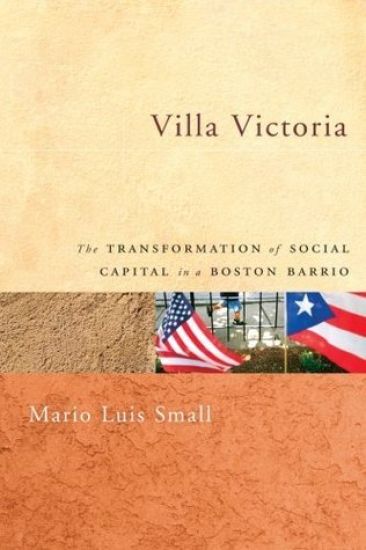
Villa Victoria

Villa Victoria

Mario Luis Small

University of Chicago Press
2004
sidottu
For decades now, scholars and politicians alike have argued that the concentration of poverty in city housing projects would produce distrust, alienation, apathy, and social isolation - the disappearance of what sociologists call social capital. But relatively few have examined precisely how such poverty affects social capital or have considered for what reasons living in a poor neighborhood results in such undesirable effects. This book examines a neglected Puerto Rican enclave in Boston to consider the pros and cons of social scientific thinking about the true nature of ghettos in America. Mario Luis Small dismantles the theory that poor urban neighborhoods are inevitably deprived of social capital. He shows that the conditions specified in this theory are vaguely defined and variable among poor communities. According to Small, structural conditions such as unemployment or a failed system of familial relations must be acknowledged as affecting the urban poor, but individual motivations and the importance of timing must be considered as well. Brimming with fresh theoretical insights, Villa Victoria is an elegant work of sociology that will be essential to students of urban poverty.
Villa Victoria

Villa Victoria

Mario Luis Small

University of Chicago Press
2004
nidottu
For decades now, scholars and politicians alike have argued that the concentration of poverty in city housing projects would produce distrust, alienation, apathy, and social isolation - the disappearance of what sociologists call social capital. But relatively few have examined precisely how such poverty affects social capital or have considered for what reasons living in a poor neighborhood results in such undesirable effects. This book examines a neglected Puerto Rican enclave in Boston to consider the pros and cons of social scientific thinking about the true nature of ghettos in America. Mario Luis Small dismantles the theory that poor urban neighborhoods are inevitably deprived of social capital. He shows that the conditions specified in this theory are vaguely defined and variable among poor communities. According to Small, structural conditions such as unemployment or a failed system of familial relations must be acknowledged as affecting the urban poor, but individual motivations and the importance of timing must be considered as well. Brimming with fresh theoretical insights, Villa Victoria is an elegant work of sociology that will be essential to students of urban poverty.
Knowledge Regulation and National Security in Postwar America

Knowledge Regulation and National Security in Postwar America

Mario Daniels; John Krige

THE UNIVERSITY OF CHICAGO PRESS
2022
sidottu
The first historical study of export control regulations as a tool for the sharing and withholding of knowledge. In this groundbreaking book, Mario Daniels and John Krige set out to show the enormous political relevance that export control regulations have had for American debates about national security, foreign policy, and trade policy since 1945. Indeed, they argue that from the 1940s to today the issue of how to control the transnational movement of information has been central to the thinking and actions of the guardians of the American national security state. The expansion of control over knowledge and know-how is apparent from the increasingly systematic inclusion of universities and research institutions into a system that in the 1950s and 1960s mainly targeted business activities. As this book vividly reveals, classification was not the only—and not even the most important—regulatory instrument that came into being in the postwar era.
Knowledge Regulation and National Security in Postwar America

Knowledge Regulation and National Security in Postwar America

Mario Daniels; John Krige

THE UNIVERSITY OF CHICAGO PRESS
2022
nidottu
The first historical study of export control regulations as a tool for the sharing and withholding of knowledge. In this groundbreaking book, Mario Daniels and John Krige set out to show the enormous political relevance that export control regulations have had for American debates about national security, foreign policy, and trade policy since 1945. Indeed, they argue that from the 1940s to today the issue of how to control the transnational movement of information has been central to the thinking and actions of the guardians of the American national security state. The expansion of control over knowledge and know-how is apparent from the increasingly systematic inclusion of universities and research institutions into a system that in the 1950s and 1960s mainly targeted business activities. As this book vividly reveals, classification was not the only—and not even the most important—regulatory instrument that came into being in the postwar era.
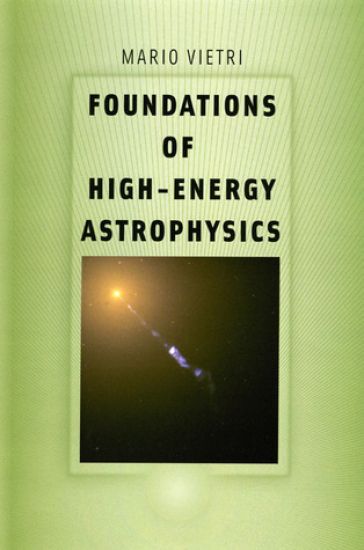
Foundations of High-Energy Astrophysics

Foundations of High-Energy Astrophysics

Mario Vietri

University of Chicago Press
2008
sidottu
Written by one of today's most highly respected astrophysicists, "Foundations of High-Energy Astrophysics" is an introduction to the mathematical and physical techniques used in the study of high-energy astrophysics. Here, Mario Vietri approaches the basics of high-energy astrophysics with an emphasis on underlying physical processes as opposed to a more mathematical approach. Alongside more traditional topics, Vietri presents new subjects increasingly considered crucial to understanding high-energy astrophysical sources, including the electrodynamics of cosmic sources, new developments in the theory of standard accretion disks, and the physics of coronae, thick disks, and accretion onto magnetized objects.The most thorough and engaging survey of high-energy astrophysics available today, "Foundations of High-Energy Astrophysics" introduces the main physical processes relevant to the field in a rigorous yet accessible way, while paying careful attention to observational issues. Vietri's book will quickly become a classic text for students and active researchers in astronomy and astrophysics. Those in adjoining fields will also find it a valuable addition to their personal libraries.
MARRIAGE GOD'S IDEA How to Make it Last

MARRIAGE GOD'S IDEA How to Make it Last

Mario C Alleckna

Tellwell Talent
2020
pokkari
Marriage GOD'S IDEA How to Make it Last Mario Alleckna draws the insights he shares in this little book from first-hand experience. He went through a divorce and has been remarried now for twenty-eight years. As a keen student of God's Word, and author of numerous Bible-based articles, in Marriage - God's Idea he shows practical ways of how to apply God's wisdom for relationships in general and marriage in particular. We find out what to look for when dating - how to deal with marital problems before and after they arise - how to re-kindle the sweet fire of romance - and how to get onto the road of a growing and lasting marriage.
Europe: A Civilian Power?

Europe: A Civilian Power?

Mario Telo

Palgrave Macmillan
2005
nidottu
What is the European Union international role and identity becoming after the cold war, September 11th and the transatlantic rift? Is the second global actor challenging the trends towards a 'pax americana'? EUROPE: A CIVILIAN POWER? provides an original account of the features and the external relations of the EU as a civilian power in the making. It addresses the key questions on the new security threat, world emergencies challenging the EU, not only as a peace and democracy stablizer on a continental scale, but also as an actor which shares responsibility for global governance and world order. MARIO TELO provides a comparative analysis of regional cooperation in Europe, Africa, Asia and Latin America and focuses on the interregional relations with the EU. He highlights the international relevance of the current EU constitutionalization process and gives a critical review of the concepts of civilian power, soft power, civilizing power, multilateralism, multipolarism, international fragmentation, empire, hegemonic stability and global legitimacy. Analysis of the best literature on international relations and European integration is completed by MARIO's practical experience as an advisor to the EU institutions and a lecturer in Asia and Americas.
Springtime in a Broken Mirror

Springtime in a Broken Mirror

Mario Benedetti

Penguin Classics
2019
pokkari
An extraordinary story of love and exile, from one of the great masters of the Latin American novel'Having news from you is like opening a window'Santiago is trapped. Taken political prisoner in Montevideo after a brutal military coup, he can do nothing but write letters to his family, and try to stay sane. Far away in a different country, his father tries to adjust to life in exile, his daughter marvels at the big city, and his beautiful, careworn wife finds herself irresistibly drawn to another man, as day by day Santiago edges closer to freedom. Told with tenderness and fury through the voices of a family torn apart by history, Springtime in a Broken Mirror asks whether shattered lives can ever truly be mended. 'A masterful novel ... a remarkable collage of unique perspectives - or shards from that eponymous broken mirror' The National