Kirjahaku
Etsi kirjoja tekijän nimen, kirjan nimen tai ISBN:n perusteella.
876 tulosta hakusanalla Michaelangelo Rodriguez

This work has been selected by scholars as being culturally important, and is part of the knowledge base of civilization as we know it. This work was reproduced from the original artifact, and remains as true to the original work as possible. Therefore, you will see the original copyright references, library stamps (as most of these works have been housed in our most important libraries around the world), and other notations in the work.This work is in the public domain in the United States of America, and possibly other nations. Within the United States, you may freely copy and distribute this work, as no entity (individual or corporate) has a copyright on the body of the work.As a reproduction of a historical artifact, this work may contain missing or blurred pages, poor pictures, errant marks, etc. Scholars believe, and we concur, that this work is important enough to be preserved, reproduced, and made generally available to the public. We appreciate your support of the preservation process, and thank you for being an important part of keeping this knowledge alive and relevant.
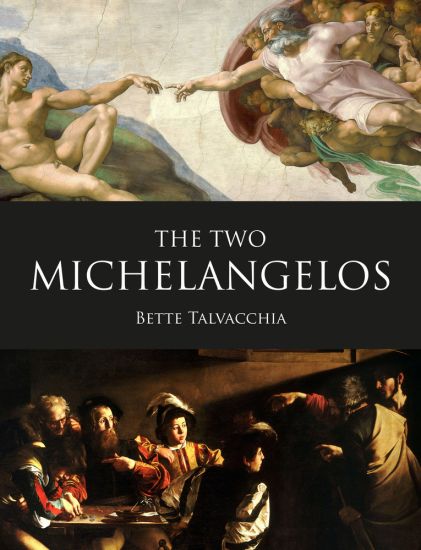
Through historical coincidence that almost takes on a mythical character, 'Michelangelo' was the given name not only of the Florentine sculptor, but also of the painter who grew up in Caravaggio, a provincial town in Lombardy, about 25 miles east of Milan. Michelangelo Merisi da Caravaggio, commonly called by reference to his hometown, produced revolutionary paintings whose impact was as great — at the beginning of the 1600s — as the other Michelangelo’s art had been a century earlier. In this book, author Bette Talvacchia explores the significant, but little-discussed, connection between the 'two Michelangelos'. She exposes the dynamic relationship between their work through looking at the ways in which Caravaggio creatively responded to the art of his namesake from the start of his youthful arrival in Rome. In addition, she suggests how Michelangelo’s overwhelming achievement was a model that helped to drive the young Caravaggio’s powerful ambition and shape his identity as an artist.With lucid and intelligent prose, this fascinating book sheds light on the similar 'artistic temperament' constructed in the biographies of each artist — glorifying their rebellious, anti-social behaviour and uncompromising artistic principles — examined both in its historical and contemporary configurations. Why does our culture find these two artists so compelling, and how were they seen in their time and in the intervening centuries until our own day? Linking the past to the present, Talvacchia encourages readers to appreciate more fully the individual works discussed, and to reflect upon the continuing relevance of these two artists to the culture of the present day.
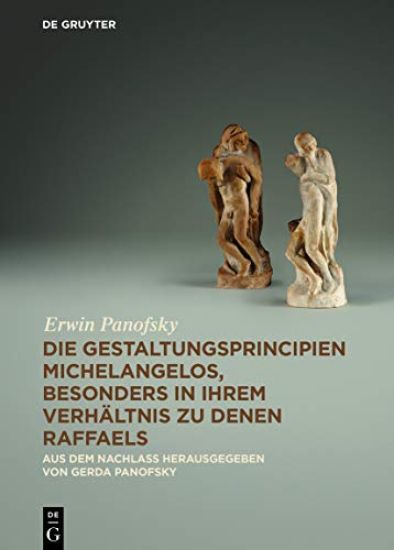
Die Gestaltungsprincipien Michelangelos, besonders in ihrem Verhältnis zu denen Raffaels
Erwin Panofsky
De Gruyter
2014
sidottu
Die wiederentdeckte Habilitation Erwin Panofskys 1920 reichte Erwin Panofsky, einer der einflussreichsten Kunsthistoriker des 20. Jahrhunderts, in Hamburg seine Habilitationsschrift zu Michelangelo ein. In den folgenden Jahren arbeitete Panofsky stetig an dem Manuskript weiter, doch veröffentlicht wurde es nie. Seit seiner Emigration 1934 galt es als verschollen. Nach seiner Wiederentdeckung im Zentralinstitut für Kunstgeschichte in München im Jahr 2012 wurde das Manuskript von Panofskys Witwe, der Kunsthistorikerin Gerda Panofsky, ediert. Die Habilitation Panofskys liegt nun erstmals in gedruckter Fassung vor, ergänzt durch eine Einführung der Herausgeberin und das Faksimile des kompletten, handschriftlich korrigierten und ergänzten Manuskriptes.

1936 stellte der Kunsthistoriker und Philosoph Edgar Wind sein Manuskript zu Michelangelos Deckenfresken der Sixtinischen Kapelle fertig. Wind begriff den christlichen Erlösungsgedanken als fundamentales Thema des gesamten Raumes und erkannte ein polares Beziehungsgeflecht, welches ihm das Bildprogramm vollständig erschloss. Methodische Ansätze Aby Warburgs aufnehmend, dessen Mitarbeiter Wind in Hamburg war, analysierte er die Themenwahl Michelangelos. Obwohl fertiggestellt, wurde das Werk nie veröffentlicht. Es liegt nun erstmals in gedruckter Fassung vor, begleitet von einem ausführlichen Nachwort des Herausgebers.


Unver nderter Nachdruck der Originalausgabe von 1926.

Unver nderter Nachdruck der Originalausgabe von 1926.
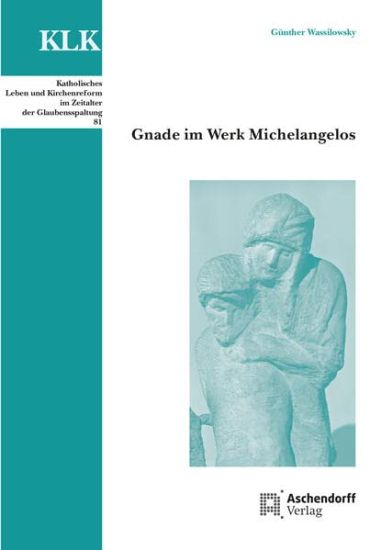
Gnade Im Werk Michelangelos: Gnade Im Werk Michelangelos
Gunther Wassilowsky
Aschendorff Verlag
2023
nidottu
In allen Theorien des Schonen und der Kunst, die in der italienischen Renaissance entwickelt wurden, nimmt der Begriff der grazia eine Schlusselstellung ein. Ebenso gab es in der Theologie des 16. Jahrhunderts keinen anderen Gegenstand, der so kontrovers diskutiert wurde wie der der gratia. Sowohl in der Asthetik als auch in der Religion verweist grazia/gratia auf eine Gabe, die vom Menschen nicht hergestellt, verdient oder eingefordert werden kann. Gnade ist in Kunst wie Theologie eine Figur der Unverfugbarkeit, der Unbegreiflichkeit und einer nicht regulierbaren Freiheit. Das gilt auch fur das Nachdenken uber Gnade vor der Reformation. Die vielen unterschiedlichen Theologien des spaten Mittelalters und der fruhen Neuzeit unterscheiden sich nicht hinsichtlich des grundsatzlichen Charakters, den sie der gratia als unverdienbarer, volatiler, alles menschliche Maa sprengender Gabe zuschreiben, sondern in der Frage nach der Bedeutung der menschlichen Werke. Stellen diese Werke und die Anstrengungen des Menschen vor und nach der Gnadengabe - auch wenn sie die Gnade nicht erzwingen oder produzieren konnen - einen integralen und notwendigen Bestandteil des Heilsgeschehens und des Kunstschaffens dar? In der vorliegenden Studie wird der Versuch unternommen, das bildnerische wie dichterische Werk von Michelangelo Buonarroti (1475-1564) mittels einer Untersuchung seiner Vorstellung von Gnade einzuordnen in das komplexe Feld der Religionsgeschichte Italiens im 16. Jahrhundert.
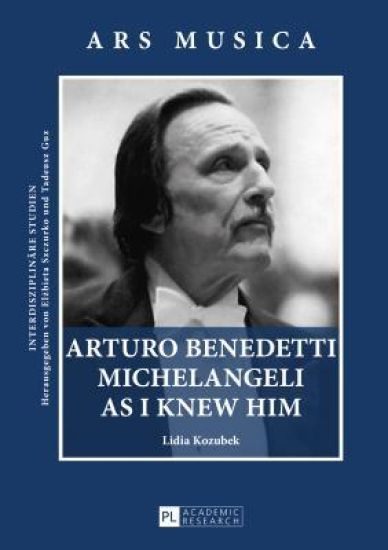
This book explores the artistic principles of Arturo Benedetti Michelangeli, his concert activities, his art of piano playing, as well as his pedagogy and his attitude towards his students. The author presents the biographical data of the artist as well as the list of his recordings and introduces this extraordinary artist to a wider audience, especially to admirers of beautiful music and its performers. The book aims at encouraging in particular the young to follow the high artistic principles required in such a refined and unique art.