Kirjojen hintavertailu. Mukana 11 717 486 kirjaa ja 12 kauppaa.

Kirjahaku

Etsi kirjoja tekijän nimen, kirjan nimen tai ISBN:n perusteella.

1000 tulosta hakusanalla Monet Thompson

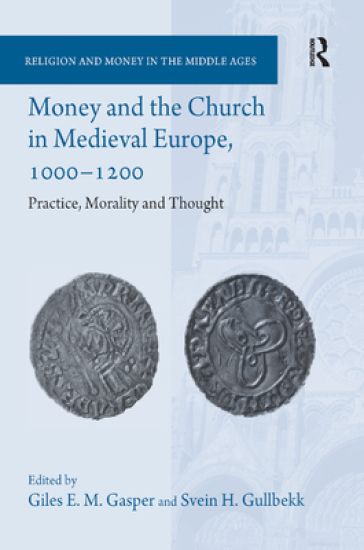
Money and the Church in Medieval Europe, 1000-1200

Money and the Church in Medieval Europe, 1000-1200

Giles E. M. Gasper; Svein H. Gullbekk

Routledge
2020
nidottu
Bringing together essays from experts in a variety of disciplines, this collection explores two of the most important facets of life within the medieval Europe: money and the church. By focusing on the interactions between these subjects, the volume addresses four key themes. Firstly it offers new perspectives on the role of churchmen in providing conceptual frameworks, from outright condemnation, to sophisticated economic theory, for the use and purpose of money within medieval society. Secondly it discusses the dichotomy of money for the church and its officers: on one hand voices emphasise the moral difficulties in engaging with money, on the other the reality of the ubiquitous use of money in the church at all levels and in places within Christendom. Thirdly it places in dialogue interdisciplinary perspectives and approaches, and evidence from philosophy, history, literature and material culture, to the issues of money and church. Lastly, the volume provides new perspectives on the role of the church in the process of monetization in the High Middle Ages. Concentrating on northern Europe, from the early eleventh century to the beginning of the thirteenth century, the collection is able to explore the profound changes in the use of money and the rise of a money-economy that this period and region witnessed. By adopting a multi-disciplinary approach, the collection challenges current understanding of how money was perceived, understood and used by medieval clergy in a range of different contexts. It furthermore provides wide-ranging contributions to the broader economic and ethical issues of the period, demonstrating how the church became a major force in the process of monetization.
Money, Politics and Power

Money, Politics and Power

Richard A. Kleer

Routledge
2019
nidottu
The Nine Years’ War with France was a period of great institutional innovation in public finance and of severe monetary turmoil for England. It saw the creation of the Bank of England; a sudden sharp fall in the external value of the pound; a massive undertaking to melt down and recoin most of the nation’s silver currency; a failed attempt to create a National Land Bank as a competitor to the Bank of England; and the ensuing outbreak of a sharp monetary and financial crisis.Histories of this period usually divide these events into two main topics, treated in isolation from one another: the recoinage debate and ensuing monetary crisis and a ‘battle of the banks’. The first is often interpreted as the pyrrhic victory of a creditor-dominated parliament over the nation’s debtors, one that led very predictably to the ensuing monetary crisis. The second has been construed as a contest between whig-merchant and tory-gentry visions of the proper place of banking in England’s future. This book binds the two strands into a single narrative, resulting in a very different interpretation of both. Parliamentary debate over the recoinage was superficial and misleading; beneath the surface, it was just another front for the battle of the banks. And the latter had little to do with competing philosophies of economic development; it was rather a pragmatic struggle for profit and power, involving interlocking contests between two groups of financiers and two sets of politicians within the royal administration. The monetary crisis of summer 1696 was not the result of poor planning by the Treasury; rather it was a continuation of the battle of the banks, fought on new ground but with the same ultimate intent – to establish dominance in the lucrative business of private lending to the crown.
Monte Carlo in Heavy Charged Particle Therapy
This book explores the current difficulties and unsolved problems in the field of particle therapy and, after analysing them, discusses how (and if) innovative Monte Carlo approaches can be used to solve them. Each book chapter is dedicated to a different sub-discipline, including multi-ion treatments, flash-radiotherapy, laser-accelerated beams, nanoparticles effects, binary reactions to enhance radiobiology, and space-related issues. This is the first book able to provide a comprehensive insight into this exciting field and the growing use of Monte Carlo in medical physics. It will be of interest to graduate students in medicine and medical physics, in addition to researchers and clinical staff.Key Features:Explores the exciting and interdisciplinary topic of Monte Carlo in particle therapy and medicineAddresses common challenges in the fieldEdited by an authority on the subject, with chapter contributions from specialists
Money Boy (16pt Large Print Edition)
An American Library Association Youth Media Award Stonewall Honor Book Ray Liu knows he should be happy. He lives in a big suburban house with all the latest electronic gadgets, and even finds plenty of time to indulge in his love of gaming. He needs the escape. It's tough getting grades that will please his army veteran father, when speaking English is still a struggle. And he can't quite connect with his peers at high school - Chinese immigrants like himself but who seem to have adjusted to North American life more easily. Then comes the fateful day when his father accesses Ray's internet account, and discovers Ray has been cruising gay websites. Before Ray knows what has hit him, his belongings have been thrown on the front lawn, and he has been kicked out. Angry, defiant, Ray heads to downtown Toronto. In short order he is robbed, beaten up and seduced, and he learns the hard realities of life on the street. Could he really sell himself for sex? Lots of people use their bodies to make money - athletes, actors, models, pop singers. If no one gets hurt, why should anyone care?
Money, Money, Honey Bunny!

Money, Money, Honey Bunny!

Sadler Marilyn; Bollen Roger

RANDOM HOUSE USA INC
2006
muu
This delightful book about saving and spending is a perfect addition to your child's reading list Honey Bunny Funnybunny has lots and lots and lots of money. Some she saves, some she spends on herself, and some she spends on her friends. In this delightful rhyming book about spending and saving, the bear gets a chair, the fly gets some pie and, of course, the fox gets some socks.
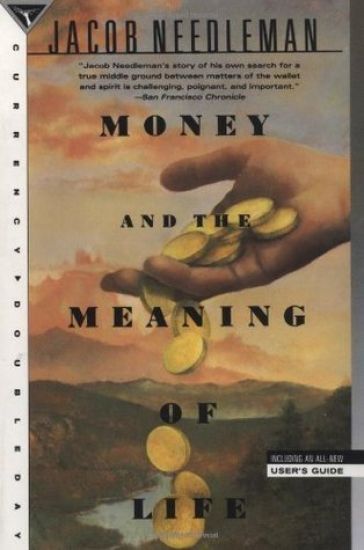
Money and the Meaning of Life

Money and the Meaning of Life

Needleman Jacob

Bantam Doubleday Dell Publishing Group
1994
pokkari
If we understood the true role of money in our lives, writes philosopher Jacob Needleman, we would not think simply in terms of spending it or saving it. Money exerts a deep emotional influence on who we are and what we tell ourselves we can never have. Our long unwillingness to understand the emotional and spiritual effects of money on us is at the heart of why we have come to know the price of everything, and the value of nothing. Money has everything to do with the pursuit of an idealistic life, while at the same time, it is at the root of our daily frustrations. On a social level, money has a profound impact on the price of progress. Needleman shows how money slowly began to haunt us, from the invention of coins in Biblical times (when money was created to rescue the community good, not for self gain), through its hypnotic appeal in our money-obsessed era. This is a remarkable book that combines myth and psychology, the poetry of the Sufis and the wisdom of King Solomon, along with Jacob Needleman's searching of his own soul and his culture to explain how money can become a unique means of self-knowledge. As part of the Currency paperback line, it includes a "User's Guide" an introduction and discussion guide created for the paperback by the author -- to help readers make practical use of the book's ideas.
Monte Carlo Methods in Financial Engineering

Monte Carlo Methods in Financial Engineering

Paul Glasserman

Springer-Verlag New York Inc.
2003
sidottu
Monte Carlo simulation has become an essential tool in the pricing of derivative securities and in risk management. These applications have, in turn, stimulated research into new Monte Carlo methods and renewed interest in some older techniques. This book develops the use of Monte Carlo methods in finance and it also uses simulation as a vehicle for presenting models and ideas from financial engineering. It divides roughly into three parts. The first part develops the fundamentals of Monte Carlo methods, the foundations of derivatives pricing, and the implementation of several of the most important models used in financial engineering. The next part describes techniques for improving simulation accuracy and efficiency. The final third of the book addresses special topics: estimating price sensitivities, valuing American options, and measuring market risk and credit risk in financial portfolios. The most important prerequisite is familiarity with the mathematical tools used to specify and analyze continuous-time models in finance, in particular the key ideas of stochastic calculus. Prior exposure to the basic principles of option pricing is useful but not essential. The book is aimed at graduate students in financial engineering, researchers in Monte Carlo simulation, and practitioners implementing models in industry. Mathematical Reviews, 2004: "... this book is very comprehensive, up-to-date and useful tool for those who are interested in implementing Monte Carlo methods in a financial context."
Monte Carlo Statistical Methods

Monte Carlo Statistical Methods

Christian Robert; George Casella

Springer-Verlag New York Inc.
2004
sidottu
Monte Carlo statistical methods, particularly those based on Markov chains, are now an essential component of the standard set of techniques used by statisticians. This new edition has been revised towards a coherent and flowing coverage of these simulation techniques, with incorporation of the most recent developments in the field. In particular, the introductory coverage of random variable generation has been totally revised, with many concepts being unified through a fundamental theorem of simulation There are five completely new chapters that cover Monte Carlo control, reversible jump, slice sampling, sequential Monte Carlo, and perfect sampling. There is a more in-depth coverage of Gibbs sampling, which is now contained in three consecutive chapters. The development of Gibbs sampling starts with slice sampling and its connection with the fundamental theorem of simulation, and builds up to two-stage Gibbs sampling and its theoretical properties. A third chapter covers the multi-stage Gibbs sampler and its variety of applications. Lastly, chapters from the previous edition have been revised towards easier access, with the examples getting more detailed coverage. This textbook is intended for a second year graduate course, but will also be useful to someone who either wants to apply simulation techniques for the resolution of practical problems or wishes to grasp the fundamental principles behind those methods. The authors do not assume familiarity with Monte Carlo techniques (such as random variable generation), with computer programming, or with any Markov chain theory (the necessary concepts are developed in Chapter 6). A solutions manual, which covers approximately 40% of the problems, is available for instructors who require the book for a course. Christian P. Robert is Professor of Statistics in the Applied Mathematics Department at Université Paris Dauphine, France. He is also Head of the Statistics Laboratoryat the Center for Research in Economics and Statistics (CREST) of the National Institute for Statistics and Economic Studies (INSEE) in Paris, and Adjunct Professor at Ecole Polytechnique. He has written three other books and won the 2004 DeGroot Prize for The Bayesian Choice, Second Edition, Springer 2001. He also edited Discretization and MCMC Convergence Assessment, Springer 1998. He has served as associate editor for the Annals of Statistics, Statistical Science and the Journal of the American Statistical Association. He is a fellow of the Institute of Mathematical Statistics, and a winner of the Young Statistician Award of the Société de Statistique de Paris in 1995. George Casella is Distinguished Professor and Chair, Department of Statistics, University of Florida. He has served as the Theory and Methods Editor of the Journal of the American Statistical Association and Executive Editor of Statistical Science. He has authored three other textbooks: Statistical Inference, Second Edition, 2001, with Roger L. Berger; Theory of Point Estimation, 1998, with Erich Lehmann; and Variance Components, 1992, with Shayle R. Searle and Charles E. McCulloch. He is a fellow of the Institute of Mathematical Statistics and the American Statistical Association, and an elected fellow of the International Statistical Institute.
Monte Carlo Strategies in Scientific Computing

Monte Carlo Strategies in Scientific Computing

Jun S. Liu

Springer-Verlag New York Inc.
2008
nidottu
This book provides a self-contained and up-to-date treatment of the Monte Carlo method and develops a common framework under which various Monte Carlo techniques can be "standardized" and compared. Given the interdisciplinary nature of the topics and a moderate prerequisite for the reader, this book should be of interest to a broad audience of quantitative researchers such as computational biologists, computer scientists, econometricians, engineers, probabilists, and statisticians. It can also be used as a textbook for a graduate-level course on Monte Carlo methods.
Monte Carlo and Quasi-Monte Carlo Sampling

Monte Carlo and Quasi-Monte Carlo Sampling

Christiane Lemieux

Springer-Verlag New York Inc.
2009
sidottu
Quasi–Monte Carlo methods have become an increasingly popular alternative to Monte Carlo methods over the last two decades. Their successful implementation on practical problems, especially in finance, has motivated the development of several new research areas within this field to which practitioners and researchers from various disciplines currently contribute. This book presents essential tools for using quasi–Monte Carlo sampling in practice. The first part of the book focuses on issues related to Monte Carlo methods—uniform and non-uniform random number generation, variance reduction techniques—but the material is presented to prepare the readers for the next step, which is to replace the random sampling inherent to Monte Carlo by quasi–random sampling. The second part of the book deals with this next step. Several aspects of quasi-Monte Carlo methods are covered, including constructions, randomizations, the use of ANOVA decompositions, and the concept of effective dimension. The third part of the book is devoted to applications in finance and more advanced statistical tools like Markov chain Monte Carlo and sequential Monte Carlo, with a discussion of their quasi–Monte Carlo counterpart. The prerequisites for reading this book are a basic knowledge of statistics and enough mathematical maturity to follow through the various techniques used throughout the book. This text is aimed at graduate students in statistics, management science, operations research, engineering, and applied mathematics. It should also be useful to practitioners who want to learn more about Monte Carlo and quasi–Monte Carlo methods and researchers interested in an up-to-date guide to these methods.
Monte Carlo

Monte Carlo

George Fishman

Springer-Verlag New York Inc.
1996
sidottu
This book provides an introduction to the Monte Carlo method suitable for a one-or two-semester course for graduate and advanced undergraduate students in the mathematical and engineering sciences. It also can serve as a reference for the professional analyst. In the past, my inability to provide students with a single­ source book on this topic for class and for later professional reference had left me repeatedly frustrated, and eventually motivated me to write this book. In addition to focused accounts of major topics, the book has two unifying themes: One concerns the effective use of information and the other concerns error control and reduction. The book describes how to incorporate information about a problem into a sampling plan in a way that reduces the cost of estimating its solution to within a specified error bound. Although exploiting special structures to reduce cost long has been a hallmark of the Monte Carlo method, the propen­ sity of users of the method to discard useful information because it does not fit traditional textbook models repeatedly has impressed me. The present account aims at reducing the impediments to integrating this information. Errors, both statistical and computational, abound in every Monte Carlo sam­ pling experiment, and a considerable methodology exists for controlling them.
Monte Carlo and Quasi-Monte Carlo Methods in Scientific Computing
Scientists and engineers are increasingly making use of simulation methods to solve problems which are insoluble by analytical techniques. Monte Carlo methods which make use of probabilistic simulations are frequently used in areas such as numerical integration, complex scheduling, queueing networks, and large-dimensional simulations. This collection of papers arises from a conference held at the University of Nevada, Las Vegas, in 1994. The conference brought together researchers across a range of disciplines whose interests include the theory and application of these methods. This volume provides a timely survey of this field and the new directions in which the field is moving.
Monte Carlo and Quasi-Monte Carlo Methods 1996
Monte Carlo methods are numerical methods based on random sampling and quasi-Monte Carlo methods are their deterministic versions. This volume contains the refereed proceedings of the Second International Conference on Monte Carlo and Quasi-Monte Carlo Methods in Scientific Computing which was held at the University of Salzburg (Austria) from July 9--12, 1996. The conference was a forum for recent progress in the theory and the applications of these methods. The topics covered in this volume range from theoretical issues in Monte Carlo and simulation methods, low-discrepancy point sets and sequences, lattice rules, and pseudorandom number generation to applications such as numerical integration, numerical linear algebra, integral equations, binary search, global optimization, computational physics, mathematical finance, and computer graphics. These proceedings will be of interest to graduate students and researchers in Monte Carlo and quasi-Monte Carlo methods, to numerical analysts, and to practitioners of simulation methods.
Monte Carlo Methods in Bayesian Computation

Monte Carlo Methods in Bayesian Computation

Ming-Hui Chen; Qi-Man Shao; Joseph G. Ibrahim

Springer-Verlag New York Inc.
2000
sidottu
Sampling from the posterior distribution and computing posterior quanti­ ties of interest using Markov chain Monte Carlo (MCMC) samples are two major challenges involved in advanced Bayesian computation. This book examines each of these issues in detail and focuses heavily on comput­ ing various posterior quantities of interest from a given MCMC sample. Several topics are addressed, including techniques for MCMC sampling, Monte Carlo (MC) methods for estimation of posterior summaries, improv­ ing simulation accuracy, marginal posterior density estimation, estimation of normalizing constants, constrained parameter problems, Highest Poste­ rior Density (HPD) interval calculations, computation of posterior modes, and posterior computations for proportional hazards models and Dirichlet process models. Also extensive discussion is given for computations in­ volving model comparisons, including both nested and nonnested models. Marginal likelihood methods, ratios of normalizing constants, Bayes fac­ tors, the Savage-Dickey density ratio, Stochastic Search Variable Selection (SSVS), Bayesian Model Averaging (BMA), the reverse jump algorithm, and model adequacy using predictive and latent residual approaches are also discussed. The book presents an equal mixture of theory and real applications.
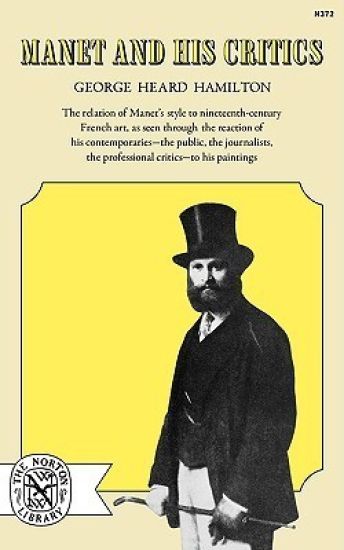
Manet and His Critics

Manet and His Critics

Hamilton George Heard

WW NORTON CO
1980
nidottu
Some of the criticism was bitter and some ridiculous (one critic wrote, Manet, who ought not to have forgotten the panic caused by his black cat in Olympia, has borrowed a parrot from his friend Courbet and placed it on a perch beside a young lady in a pink dressing gown. These realists are capable of anything ), some knowledgeable and some not. Mr. Hamilton's book assesses the range of these reactions, and the result is an illuminating study of the relation of Manet's painting and its principles to the contemporary practices of 19th-century French art.
Money, Love

Money, Love

Brad Barkley

WW Norton Co
2001
pokkari
Ever since sixteen-year-old Gabe Strickland can remember, his father, Roman, has believed in the sale: that magical moment on the customer's porch, the deal about to close. But with each dizzying success comes an equally memorable failure, and Gabe's mother, Gladys, has grown tired of waiting for a life of financial stability. So in the summer of 1975 she leaves Roman and goes to live with his dependable brother Dutch. Confident he can win Gladys back, Roman pins all his hopes on a barnstorming tour of Southern carnivals, hawking tickets for "Death Cars of Celebrities." Gabe finds his own truth somewhere between Roman's quixotic dreaming and Gladys's newfound stability, and he learns that love is, ultimately, the one thing that can't be bought or sold. Reading group guide included.
Money and Outpatient Psychiatry

Money and Outpatient Psychiatry

Cecilia M. Mikalac

WW Norton Co
2005
sidottu
Designed for psychiatric clinicians of every profession (including psychologists, psychiatrists, social workers, and nurses) as well as for psychiatric educators and their trainees, Money and Outpatient Psychiatry moves readers toward new, effective, and money-wise practices. The book begins by offering a hands-on approach to assessing money management issues in a professional practice. Mikalac shows readers how to do an overall assessment of their financial situation (including how to estimate how much money must be earned to cover expenses) and how to plan for the inevitable financial ups and downs of private practice. The remainder of the first section deals with core issues such as legal and ethical issues (patient contract; informed consent; ethical principles for billing), accounting (understanding cash flow and keeping proper records), and taxes (including how to select the best form of business proprietorship). In the second section of the book Mikalac covers larger matters that affect the financial health of a psychiatric practice. Insurance, managed care, the effects of drug companies, the role of; incentives, kickbacks, and other potential conflicts of interest—all of these have an impact of the finances and stability of a practice. These issues are also often of paramount importance to patients, but less often thought about by the practitioner. The final part of the book discusses managing money with patients. Mental health professionals need to know how to discuss money and billing with patients, how to negotiate patient fee reductions (and handle increases), how to manage non-payment (how to avoid this happening as well as what to do when it does), and issues of money transference. Mikalac offers guidelines for how to be money-smart when it comes to working with patients. Money and Outpatient Psychiatry is a resource for psychiatric clinicians of every profession. Whether you are new to private practice or have been working for years without a strong financial plan, this book contains all the information you need to make money matters easier and money management more efficient.
Monte Carlo Simulation of Semiconductor Devices
Particle simulation of semiconductor devices is a rather new field which has started to catch the interest of the world's scientific community. It represents a time-continuous solution of Boltzmann's transport equation, or its quantum mechanical equivalent, and the field equation, without encountering the usual numerical problems associated with the direct solution. The technique is based on first physical principles by following in detail the transport histories of indi­ vidual particles and gives a profound insight into the physics of semiconductor devices. The method can be applied to devices of any geometrical complexity and material composition. It yields an accurate description of the device, which is not limited by the assumptions made behind the alternative drift diffusion and hydrodynamic models, which represent approximate solutions to the transport equation. While the development of the particle modelling technique has been hampered in the past by the cost of computer time, today this should not be held against using a method which gives a profound physical insight into individual devices and can be used to predict the properties of devices not yet manufactured. Employed in this way it can save the developer much time and large sums of money, both important considerations for the laboratory which wants to keep abreast of the field of device research. Applying it to al ready existing electronic components may lead to novel ideas for their improvement. The Monte Carlo particle simulation technique is applicable to microelectronic components of any arbitrary shape and complexity.
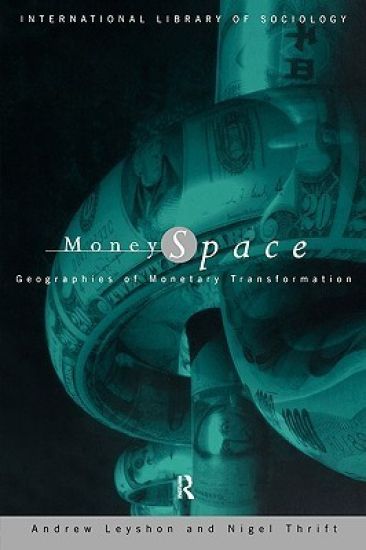
Money/Space

Money/Space

Andrew Leyshon; Nigel Thrift

Routledge
1997
nidottu
Bringing together in one volume the most important writings of Andrew Leyshon and Nigel Thrift on money and finance, including the unpublished classic "Sexy-Greedy" this collection examines the economic, social and cultural manifestations that go to make up the multiple vision of money. Money, it seems is the great God of our age. It is also an economy, a sociology, an anthropolgy and a geography. Linking money with the emergent patterns of global spatial order. Money/Space analyses the restructuring of financial markets in a range of spatial scales; global, national and local.