

Kirjahaku
Etsi kirjoja tekijän nimen, kirjan nimen tai ISBN:n perusteella.
1000 tulosta hakusanalla Moore Stephanie Perry

A Unified Treatment of Moore's Paradox is the culmination of a decades-long engagement with Moore's paradox by the world's leading authority on the subject, the late John Williams. The book offers a comprehensive account of Moore's paradox in thought and speech, both in its comissive and omissive forms. Williams argues that Moorean absurdity comes in degrees, and shows that contrary to one tradition in the literature on Moore's Paradox, we cannot explain Moorean absurdity in speech in terms of Moorean absurdity in thought, but must account for each form of absurdity in its own terms. Williams also explores the extent to which Moore's paradox may arise for attitudes other than belief, such as desire. Written with Williams' trademark clarity and wit, the book is packed with arguments bearing on a wide range of topics in epistemology, the philosophy of language, and the philosophy of mind.
Metaethics after Moore
Clarendon Press
2006
sidottu
Metaethics, understood as a distinct branch of ethics, is often traced to G. E. Moore's 1903 classic, Principia Ethica. Whereas normative ethics is concerned to answer first-order moral questions about what is good and bad, right and wrong, metaethics is concerned to answer second-order non-moral questions about the semantics, metaphysics, and epistemology of moral thought and discourse. Moore has continued to exert a powerful influence, and the sixteen essays here (most of them specially written for the volume) represent the most up-to-date work in metaethics after, and in some cases directly inspired by, the work of Moore. Contributors include Robert Audi, Stephen Barker, Paul Bloomfield, Panayot Butchvarvov, Jonathan Dancy, Stephen Darwall, Jamie Dreier, Allan Gibbard, Brad Hooker, Terry Horgan, Connie Rosati, Russ Shafer-Landau, Walter Sinnott-Armstrong, Michael Smith, Philip Stratton-Lake, Sigrun Svavarsdottir, Mark Timmons, and Judith Jarvis Thompson.
Metaethics after Moore
Clarendon Press
2006
nidottu
Metaethics, understood as a distinct branch of ethics, is often traced to G. E. Moore's 1903 classic, Principia Ethica. Whereas normative ethics is concerned to answer first order moral questions about what is good and bad, right and wrong, metaethics is concerned to answer second order non-moral questions about the semantics, metaphysics, and epistemology of moral thought and discourse. Moore has continued to exert a powerful influence, and the sixteen essays here (most of them specially written for the volume) represent the most up-to-date work in metaethics after, and in some cases directly inspired by, the work of Moore.

One Hundred Steps: The Story of Captain Sir Tom Moore
Captain Tom Moore
Penguin Random House Children's UK
2022
nidottu
The story of the man who captured the heart of a nation in its darkest days, Captain Sir Tom Moore. This fully illustrated book is about life's ups and downs, about family, about never giving up, and about what we can achieve when we work together.This is an inspirational picture book which tells the incredible story of the man who walked 100 laps of his garden and captured the heart of a nation. Fully illustrated for younger readers, and following the key moments from Captain Tom's incredible life, the book shows what is possible when we come together and never, ever give up.A book to encourage you with Captain Tom's inspirational words on the highs and lows that life has in store for us all."A wonderful book, fit for a hero of the people" - Michael Morpurgo

. Ridevano i compagni di scuola mentre mi lanciavano l'insulto e correvano giu dalle scale invadendo la piazza. Io camminavo lentamente, fingendo indifferenza, ma avevo il cuore pesante.Questo mi dicevo, mentre la macchina correva verso casa. E quando arrivai a Cremona il mio cuore era leggero, pieno di speranza. Che sia stato questo il miracolo del Santo?

How, beginning in the mid 1960s, the US semiconductor industry helped shape changes in American science, including a new orientation to the short-term and the commercial.Since the mid 1960s, American science has undergone significant changes in the way it is organized, funded, and practiced. These changes include the decline of basic research by corporations; a new orientation toward the short-term and the commercial, with pressure on universities and government labs to participate in the market; and the promotion of interdisciplinarity. In this book, Cyrus Mody argues that the changes in American science that began in the 1960s co-evolved with and were shaped by the needs of the "civilianized" US semiconductor industry. In 1965, Gordon Moore declared that the most profitable number of circuit components that can be crammed on a single silicon chip doubles every year. Mody views "Moore's Law" less as prediction than as self-fulfilling prophecy, pointing to the enormous investments of capital, people, and institutions the semiconductor industry required-the "long arm" of Moore's Law that helped shape all of science. Mody offers a series of case studies in microelectronics that illustrate the reach of Moore's Law. He describes the pressures on Stanford University's electrical engineers during the Vietnam era, IBM's exploration of alternatives to semiconductor technology, the emergence of consortia to integrate research across disciplines and universities, and the interwoven development of the the molecular electronics community and associated academic institutions as the vision of a molecular computer informed the restructuring of research programs.
Milcah Martha Moore's Book
Pennsylvania State University Press
1997
sidottu
Milcah Martha Moore (1740–1829) lived and flourished in the Philadelphia area during its peak, when it was the center of commerce, politics, social life, and culture in the young republic. A well-educated woman, disowned by her Quaker Meeting for an unauthorized marriage, Moore knew and corresponded with many of the leading lights of her day. From her network of acquaintances, she created a commonplace book, which is published here for the first time. Moore compiled her commonplace book during the American Revolution, carefully selecting works of poetry and prose that she and her friends most enjoyed reading and wanted to remember. Contained are 126 works of prose and poetry by at least sixteen different authors, mostly women. Catherine Blecki and Karin Wulf have edited and reproduced the entire collection, adding helpful annotations and interpretive essays that set the collection in historical and literary context. Moore's Book will be a treasure trove for feminist and early American scholars, for it includes two of the most avidly sought-after bodies of writing from British America: sixteen new poems (twenty-four in all) by the Quaker polymath Susanna Wright and a previously lost portion of the journal kept by Elizabeth Graeme Fergusson during her trip to England. There is also a remarkable selection of pieces by Hannah Griffitts, the Quaker moralist and wit who commented on politics, society, and domesticity during the Revolution. Moore also included writings by Benjamin Franklin, Patrick Henry, and Samuel Fothergill. While scholars have speculated about the extent to which elite women exchanged ideas through reading and writing during this period, Moore's Book is the richest surviving body of evidence revealing the nature and substance of women's intellectual community in British America. The quality of the writing is high and reflects a range of popular literary genres including religious and meditational poetry, elegies, verse epistles and extempore verse, hymns, occasional poems, letters, and journal writing. Topics range from family and friends to religion and mortality, to politics and war—belying the notion that women's concerns were limited only to a domestic sphere. Taken as a whole, Moore's collection presents an unparalleled view of the interests and tastes of educated women in early America.
Milcah Martha Moore's Book
Pennsylvania State University Press
1997
pokkari
Milcah Martha Moore (1740–1829) lived and flourished in the Philadelphia area during its peak, when it was the center of commerce, politics, social life, and culture in the young republic. A well-educated woman, disowned by her Quaker Meeting for an unauthorized marriage, Moore knew and corresponded with many of the leading lights of her day. From her network of acquaintances, she created a commonplace book, which is published here for the first time. Moore compiled her commonplace book during the American Revolution, carefully selecting works of poetry and prose that she and her friends most enjoyed reading and wanted to remember. Contained are 126 works of prose and poetry by at least sixteen different authors, mostly women. Catherine Blecki and Karin Wulf have edited and reproduced the entire collection, adding helpful annotations and interpretive essays that set the collection in historical and literary context. Moore's Book will be a treasure trove for feminist and early American scholars, for it includes two of the most avidly sought-after bodies of writing from British America: sixteen new poems (twenty-four in all) by the Quaker polymath Susanna Wright and a previously lost portion of the journal kept by Elizabeth Graeme Fergusson during her trip to England. There is also a remarkable selection of pieces by Hannah Griffitts, the Quaker moralist and wit who commented on politics, society, and domesticity during the Revolution. Moore also included writings by Benjamin Franklin, Patrick Henry, and Samuel Fothergill. While scholars have speculated about the extent to which elite women exchanged ideas through reading and writing during this period, Moore's Book is the richest surviving body of evidence revealing the nature and substance of women's intellectual community in British America. The quality of the writing is high and reflects a range of popular literary genres including religious and meditational poetry, elegies, verse epistles and extempore verse, hymns, occasional poems, letters, and journal writing. Topics range from family and friends to religion and mortality, to politics and war—belying the notion that women's concerns were limited only to a domestic sphere. Taken as a whole, Moore's collection presents an unparalleled view of the interests and tastes of educated women in early America.
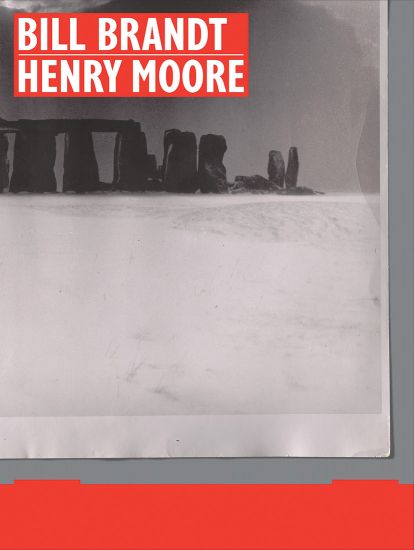
Bill Brandt | Henry Moore
Yale University Press
2020
sidottu
A close look at the work, relationship, and shared influences of two masterful 20th-century artists “The camera,” said Orson Welles, “is a medium via which messages reach us from another world.” It was the camera and the circumstances of the Second World War that first brought together Henry Moore (1898–1986) and Bill Brandt (1904–1983). During the Blitz, both artists produced images depicting civilians sheltering in the London Underground. These “shelter pictures” were circulated to millions via popular magazines and today rank as iconic works of their time. This book begins with these wartime works and examines the artists’ intersecting paths in the postwar period. Key themes include war, industry, and the coal mine; landscape and Britain’s great megalithic sites; found objects; and the human body. Special photographic reproduction captures the materiality of the print as a three-dimensional object rather than a flat, disembodied image on the page.Published by the Yale Center for British Art/Distributed by Yale University PressExhibition Schedule:The Hepworth Wakefield (February 7–November 1, 2020)Sainsbury Centre for Visual Arts, Norwich (November 21, 2020–February 28, 2021)Yale Center for British Art (November 17, 2022–February 26, 2023)
Once regarded as Ireland’s national bard, Thomas Moore's lasting reputation rests on the ten immensely popular collections of drawing-room songs known as the Irish Melodies, published between 1808 and 1834. Moore drew on anthologies of ancient music, breathing new life into the airs and bringing them before a global audience for the very first time. Recognizing the unique beauty of the airs as well as their symbolic significance, these qualities were often interwoven into the verses providing potent political commentary along with a new cultural perspective. At home and abroad, Moore’s Melodies created a realm of influence that continued to define Irish culture for many decades to come. Notwithstanding the far-reaching appeal and success of the collections, Moore has only recently begun to receive serious attention from scholars. Una Hunt provides the first detailed study of Moore’s Irish Melodies from a combined musical and literary standpoint by drawing on a practical understanding and an unrivalled performance experience of the songs. The initial two chapters contextualize Moore and his songs through a detailed examination of their sources and style while the following chapters concentrate on the collaborative work provided by the composers Sir John Stevenson and Henry Rowley Bishop. Chapters 5 and 6 reappraise musical sources and Moore’s adaptation of these, supported and illustrated by the Table of Sources in the Appendix.
The Reputations of Thomas Moore
Routledge
2019
sidottu
This collection of eleven essays positions Moore within a developing and expanding international readership during the course of the nineteenth century. In accounting for the successes he achieved and the challenges he faced, recurring themes include: Moore’s influence and reputation; modes of dissemination through networks and among communities; also, the articulation of personal, political, and national identities. This book, the product of an international team of scholars, is the first to focus explicitly on the reputations of Thomas Moore in different parts of the world, including Bombay, Dublin, Leipzig, and London, as well as America, Canada, Greece, and the Hispanic world. Through it, we will understand more about Moore’s reception, and also appreciate how the publication and dissemination of poetry and song in the romantic and Victorian eras operated in different parts of the world—in particular considering how artistic and political networks effected the transmission of cultural products.
More than Moore
Springer-Verlag New York Inc.
2009
sidottu
In the past decades, the main stream of microelectronics progress has been mainly powered by Moore's law which focuses on IC miniaturization down to nanoscale. While the microelectronics community around the world continues to invent new solutions to keep Moore's law alive, there is a fast increasing need for non-digital and mixed-signal “More than Moore” (MtM) type technologies that are still based upon or derived from silicon technologies, but do not simply scale with Moore's law. Typical examples are devices incorporating RF, power/high voltage, passive components, sensors and actuators, MEMS, Bio-chip/bio-systems, microfluidics, solid-state lighting, etc.. The increasing momentum of MtM is triggered by the increasing needs for high level heterogeneous system integration including non-digital functions, the necessity to speed up innovative product creation and to broaden the product portfolio of IC fabs, and the limiting cost and time factors of advanced system-on-chip (SoC) development. It is believed that MtM will add value to society on top of and beyond advanced semiconductors technologies, with fast increasing marketing potentials, and that it will drive paradigm shift for technologies, applications and business models.


G E Moore
Routledge
2002
sidottu
This is Volume III of twenty-two volumes on 20th Century Philosophy. Originally published in 1970, this is a collection of essays of George Edward Moore (1873-1958) who was one of the most influential philosophers of the twentieth century, and the outcome of the changes he introduced into our ways of thinking in philosophy cannot yet be foreseen.

G E Moore
Routledge
2013
nidottu
This is Volume III of twenty-two volumes on 20th Century Philosophy. Originally published in 1970, this is a collection of essays of George Edward Moore (1873-1958) who was one of the most influential philosophers of the twentieth century, and the outcome of the changes he introduced into our ways of thinking in philosophy cannot yet be foreseen.

This book traces the development of Marianne Moore's poetry throughout her sixty-year career as one of America's finest poets. Margaret Holley examines changes in Moore's approach to moral and artistic values, and discusses how language and form were distinctive in each of the poet's major phases. The study shows how the solitary, satirical voice of Moore's early verses matured into the wise observer of the later, major poems. Holley demonstrates how the virtuoso work of the middle years, infused with compassion and a sense of community, relaxed into the playful meditations of Moore's old age, when fame had brought her wide readership and acclaim. In exploring how shifts in Moore's poetic voice reflected important stages of her overall poetic growth, Holley provides detailed readings of the poems. The poetic strategies examined include: Moore's deployment of emblems and mottoes, her blend of overt and covert quotation, changes in her metaphoric language, her use of model stanzas in syllabic verse, her preferences for rhyme and closure, and her distinct spatial imagination.
A Selection Of Moore's Melodies Translated Into The Irish Language
John (TRN) Machale
Kessinger Pub
2007
pokkari

Jam With Gary Moore
Faber Music Ltd
2006
muu
Jam with Gary Moore is part of the series that brings rock icons into your living room. Learn to play these eight classic Gary Moore guitar parts and jam along with a professional session band, courtesy of the online audio. Feel like a rock star and perfect your improvisational skills along the way. The Jam with series allows you to accurately recreate the original, or to use the transcriptions in this book in conjunction with the backing tracks as a basis for your own improvisation.

The Families of Northern Moore County - Abstract of Miscellaneous and Rare Records, Volume I
Morgan Jackson
Morgan Jackson
2018
sidottu
Moore County, NC has long been a challenging place to do genealogical research, even more so if your family lived in Northern Moore County. Due to the immense loss of records in the 1889 Moore County courthouse fire combined with Northern Moore's large mix of Scotch-Irish, German, Swiss, English and other settlers who often kept to themselves and left very little evidence behind - genealogical and historical research on these families generally leaves researchers with no shortage of dead ends, brick walls and ancestors who disappear into genealogical black holes. With this series, Morgan Jackson (www.MooreCountyWallaces.com) seeks to shine a light on these families and piece together the records that survived the fire and the test of time.Utilizing over thirty years of personal research and a multitude of information from numerous sources, he abstracts rare and hard to find land grants, deeds, church records, school records, wills, estates, tax lists, pension records, family bibles, newspaper accounts and court records. This first volume abstracts thousands of these records in a timeline format from the first 85 years of recorded history beginning in 1746 including several hundred images and hard to find maps. A full name index includes over 5,000 individuals and over 750 place names.